Zpacks Hexamid Ultralight Tent Review
A DCF trekking-pole shelter with a bug skirt for solo thru-hikers who prioritize weight above all else
July 8th, 2026
Home > Gear Reviews > Backpacking
Our verdict
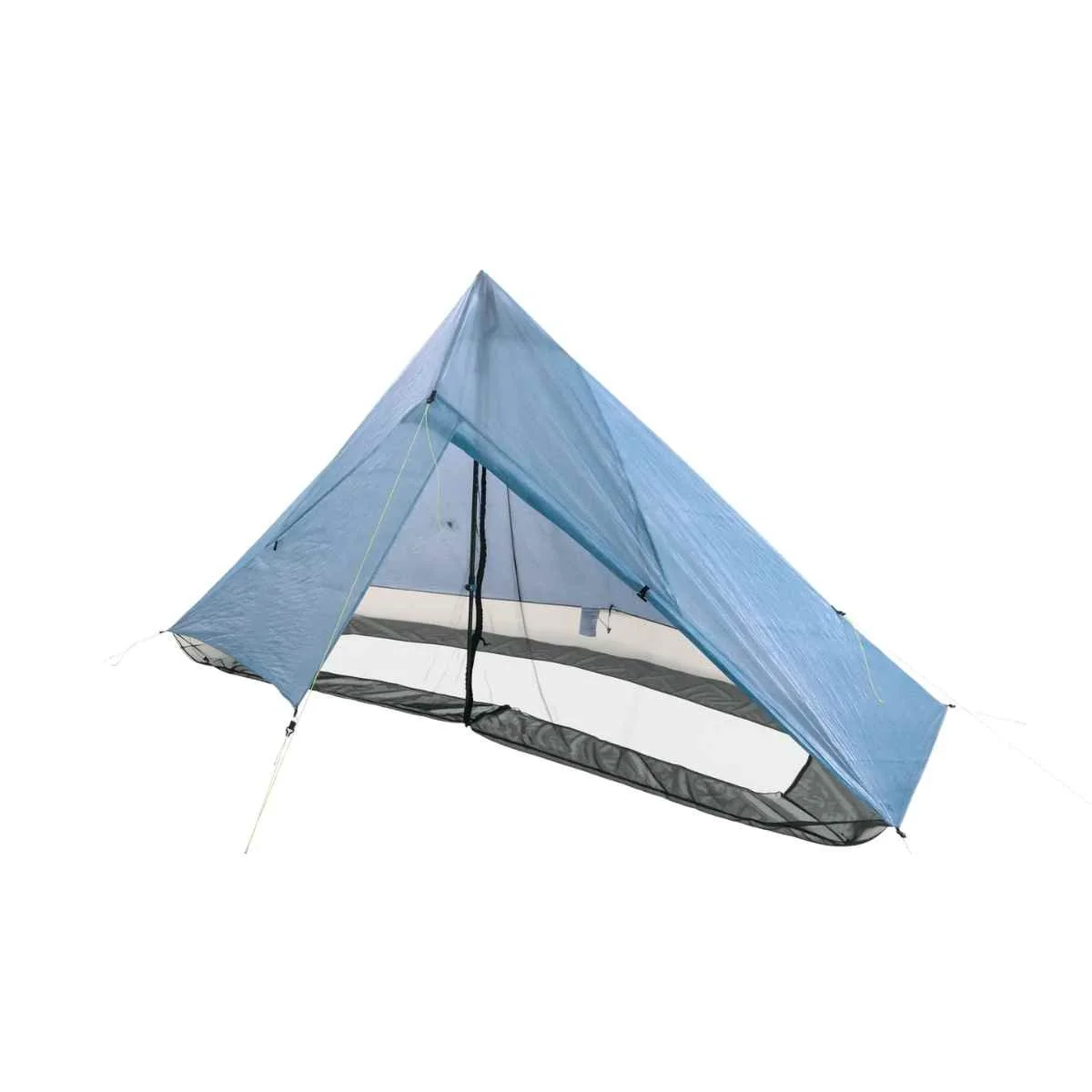
The Zpacks Hexamid is a legendary floorless backpacking shelter that’s extremely lightweight, packable, and modular. This ultralight Dyneema Composite Fabric (DCF) tarp pitches with a single trekking pole and has a bug net that extends along the bottom. Most tarps don’t provide bug protection, and most tents don’t let you choose the floor that works best for the conditions you’ll be facing. The Hexamid gives you both.
The Hexamid has received an update to mark its 20th anniversary. This update removes the portion of the bug net from the area where you put your sleeping pad and ground sheet. This update reduces weight and prevents the bug net from tearing where you lie on it.
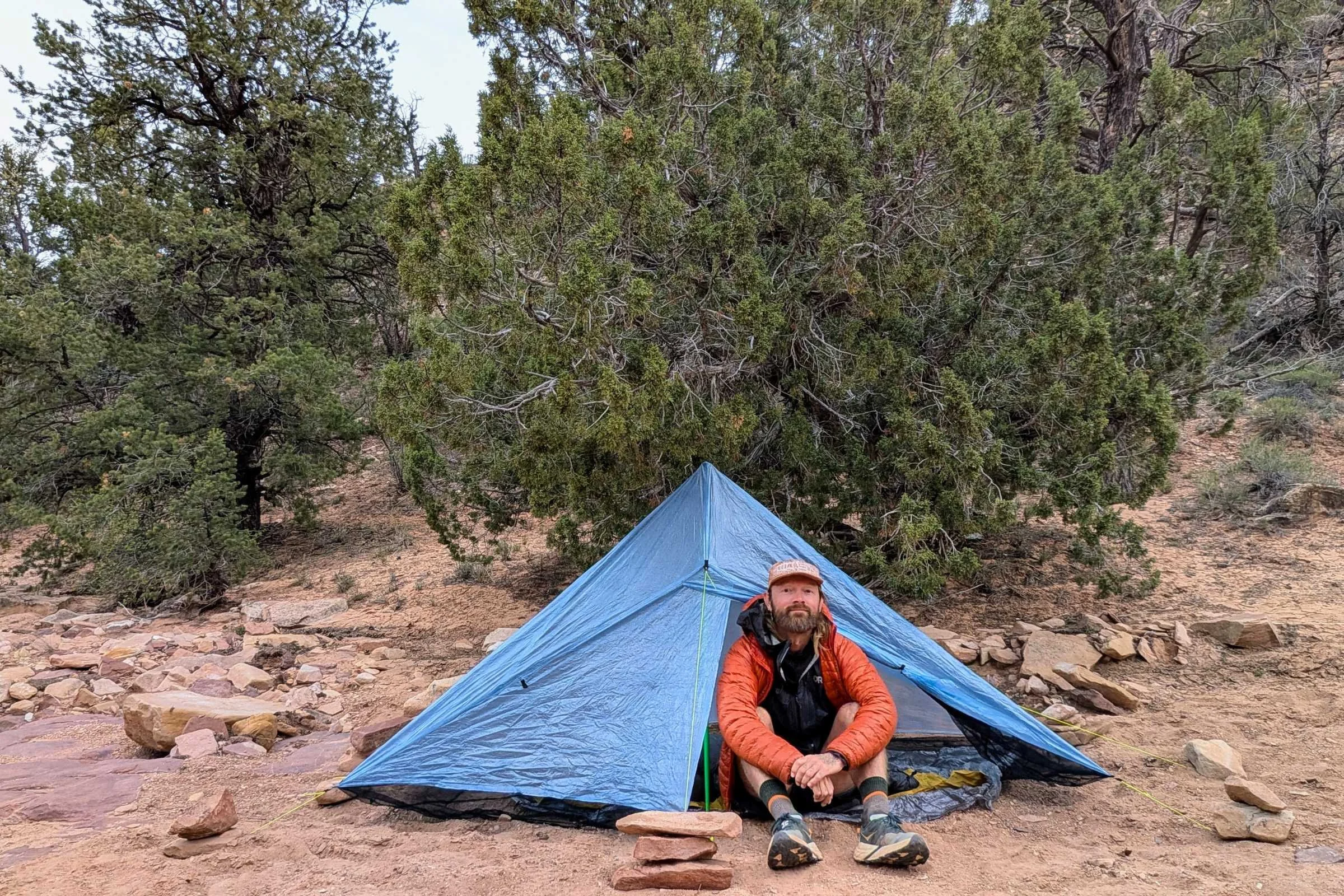
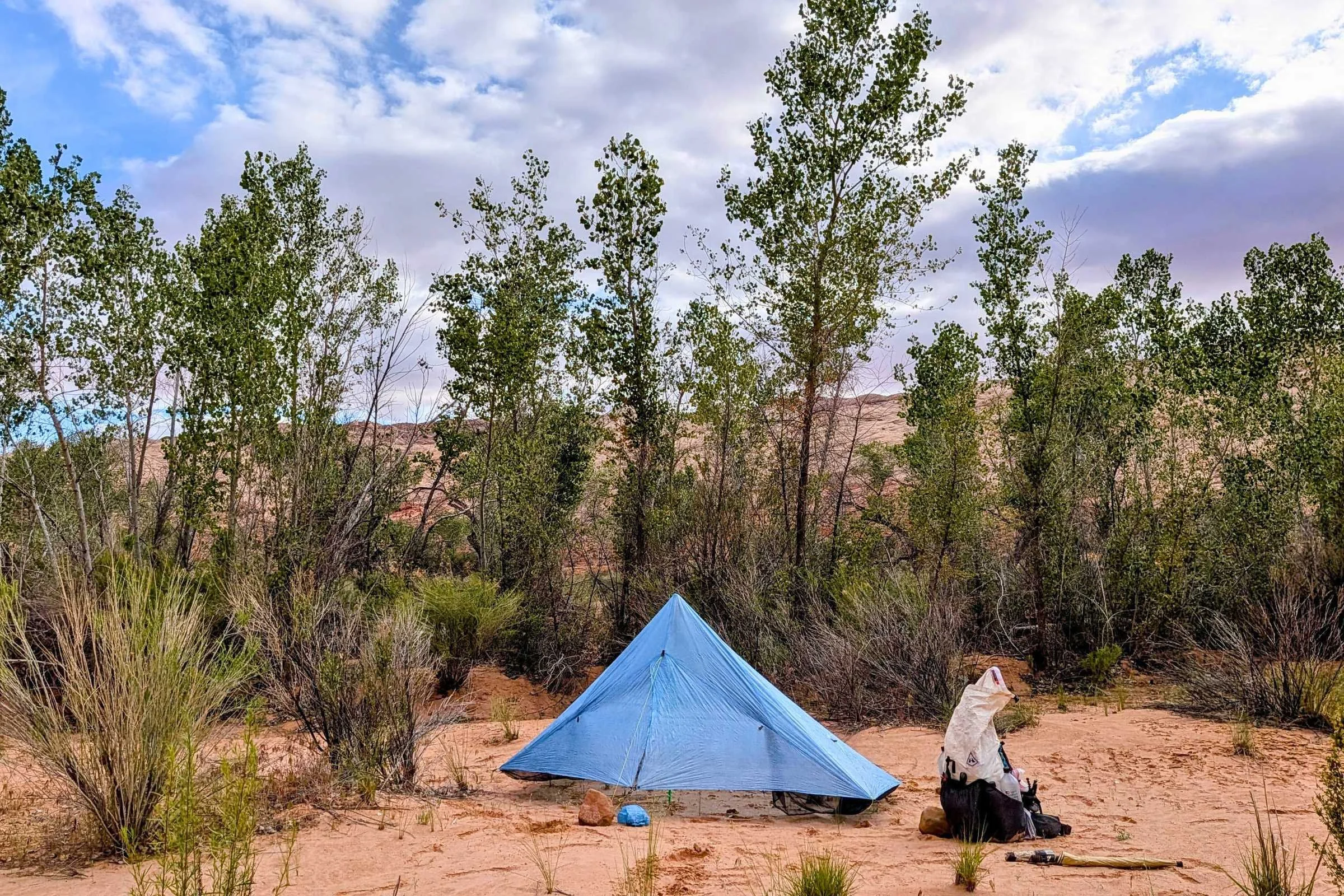
This spring, we tested the newest version of the Hexamid on the Hayduke Trail, an 850-mile thru-hike that crosses Utah. We’ve also tested previous versions of the Hexamid on the West Highland Way, GR20, California Riding and Hiking Trail, Snowdonia Way, and the San Diego Trans County Trail. We’ve tested this shelter in buggy canyon bottoms, spring snowstorms, hail, rain, and windstorms. Also, it’s rumored that our Editor-in-Chief, Liz, sold her original Hexamid to get Treeline Review off the ground in the early days.
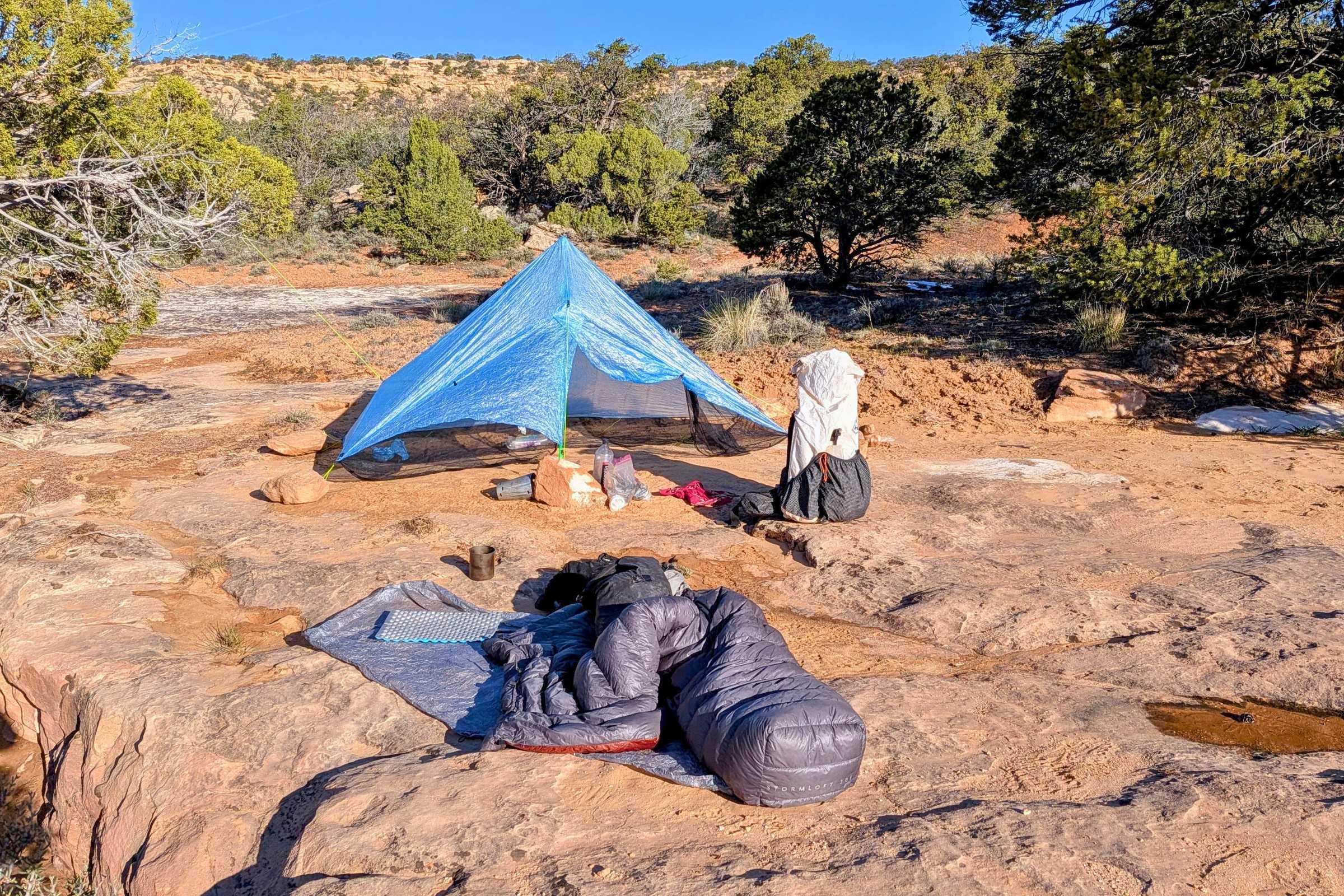
The Hexamid is an ideal shelter for drier trails like the Pacific Crest Trail, Arizona Trail, Hayduke, or other desert thru-hikes where you’ll often be cowboy camping. But “great for cowboy camping” doesn’t mean inadequate shelter when the weather turns. When you need protection from a storm or find yourself camping in a buggy place, it will keep you dry and repel flying bugs.
Zpacks Hexamid Tent
If you’re camping in a rainy location, the Hexamid will likely feel cramped if you have to spend a lot of time inside it. We’ve spent long mornings waiting out a storm in this tent, and you can basically only sit upright directly in the center. This shelter is best when you can cook dinner, hang out outside, and then crawl inside to sleep.
If you’re looking for a Dyneema tarp with bug protection for your next ultralight backpacking trip or thru-hike on a drier trail, we think the newest version of the Hexamid is a great option. It has been, and still is, 20 years later, one of our favorite ultralight shelters overall.
We write mission-driven gear reviews. To find the best gear, we combine expert reviews, everyday user opinions, and rigorous independent trail testing—never pop-up or display ads. We are reader-supported and may make a small commission from some qualifying affiliate links. Learn more.
Zpacks Hexamid Tent Specifications
Price: $499 (no groundsheet), $629 (bathtub)
Type: Single-wall trekking pole shelter
Capacity: 1-person
Weight: 9.7 oz
Material: Dyneema Composite Fabric
Floor space: 18.1 sq ft
Interior length: 100 in
Peak height: 51 in
Vestibules: 1
Doors: 1
Stakes required: 6 required, 10 to stake out
Trekking poles required: Yes, (1 pole, 130mm height needed)
Includes tent poles: No
Variants available: Bathtub, No Groundsheet
Made in: USA
Best for
Ultralight backpacking, fastpacking, bikepacking, and thru-hiking
Anyone looking for an ultralight shelter with bug protection and Dyneema Composite Fabric (DCF) is in your budget
People who are already familiar with single-walled trekking pole shelters, but want a floorless option
Ideal for dry climates, but it’s stormworthy enough for snow, rain, hail, and wind, too
Anyone who wants the lightest floorless DCF tent option
Comparison table
| BACKPACKING TENT | MSRP | FREE-STANDING | WALLS | SLEEPS | DOORS | VESTIBULES | WEIGHT (oz) | LENGTH (in) | WIDTH (in) | PEAK HEIGHT (in) | FLOOR AREA (ft²) |
|---|---|---|---|---|---|---|---|---|---|---|---|
| Zpacks Hexamid | $499 | No | Single | 1 | 1 | 1 | 9.7 | 100 | 36-42 | 51 | 18.1 |
| Zpacks Hexamid + Bathtub Groundsheet | $638 | No | Single | 1 | 1 | 1 | 12.4 | 84 | 26-36 | 51 | 18.1 |
| Mountain Laurel Designs Solomid XL | $295 | No | Single | 1 | 1 | 1 | 15.0 | 110 | 54 | 55 | 44.0 |
| Zpacks Duplex Classic | $749 | No (Yes, with kit) | Single | 2 | 2 | 2 | 18.5 | 90 | 45 | 48 | 28.1 |
| Six Moon Designs Deschutes Tarp | $190 | No | Single | 1 | N/A | N/A | 13.0 | 105 | 43-80 | N/A | N/A |
What we liked
Easy to pitch quickly
Pitch holds up in strong wind
Has a bug net
Minimal condensation, even in cold weather
Floorless design allows you to cowboy camp without a separate ground sheet
DCF is extremely waterproof and dries quickly
Lightweight and packable
What could be better
Expensive
Not great for tall people, even those OK with minimal interior space
Requires 10 stakes to pitch in storms
How we tested
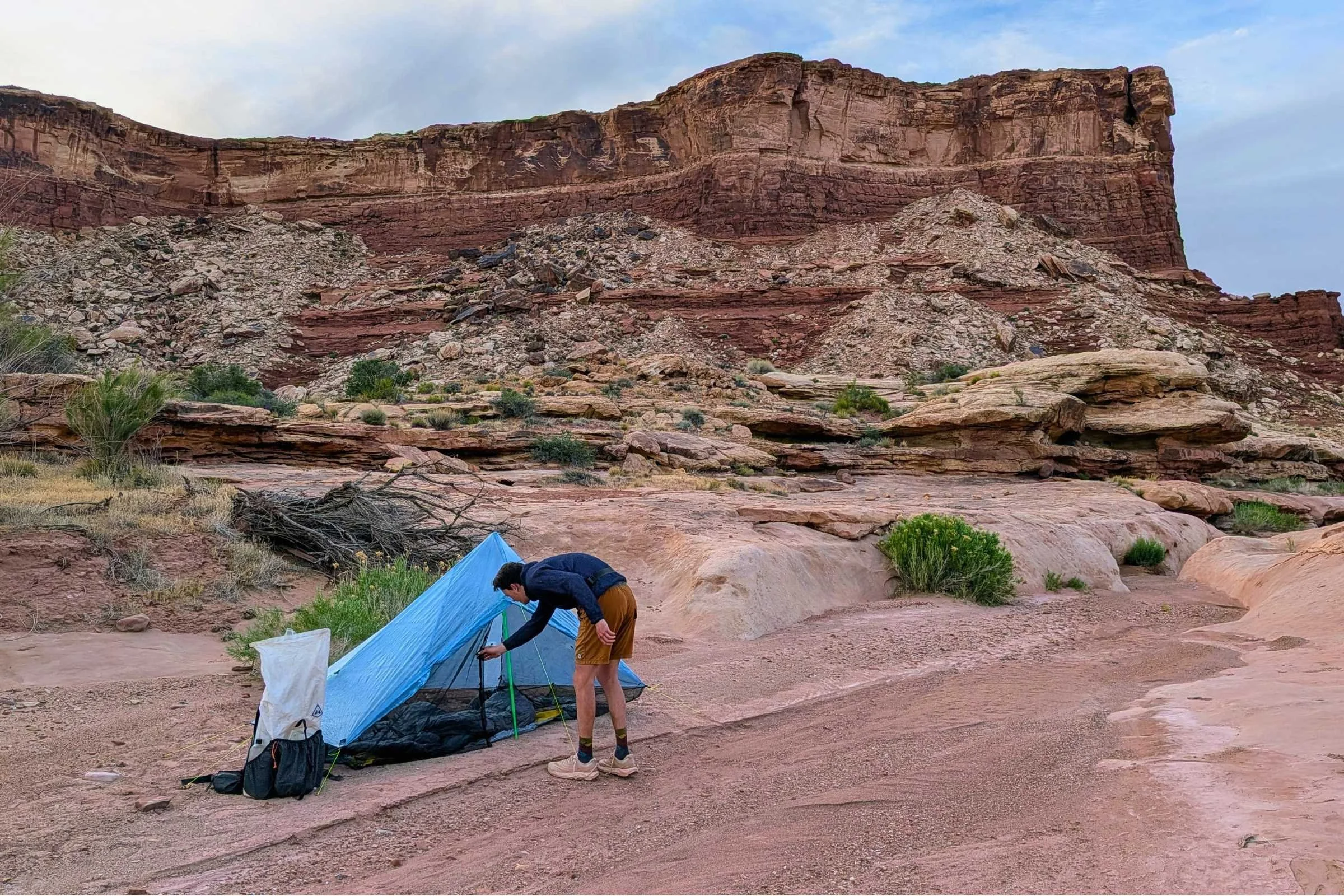
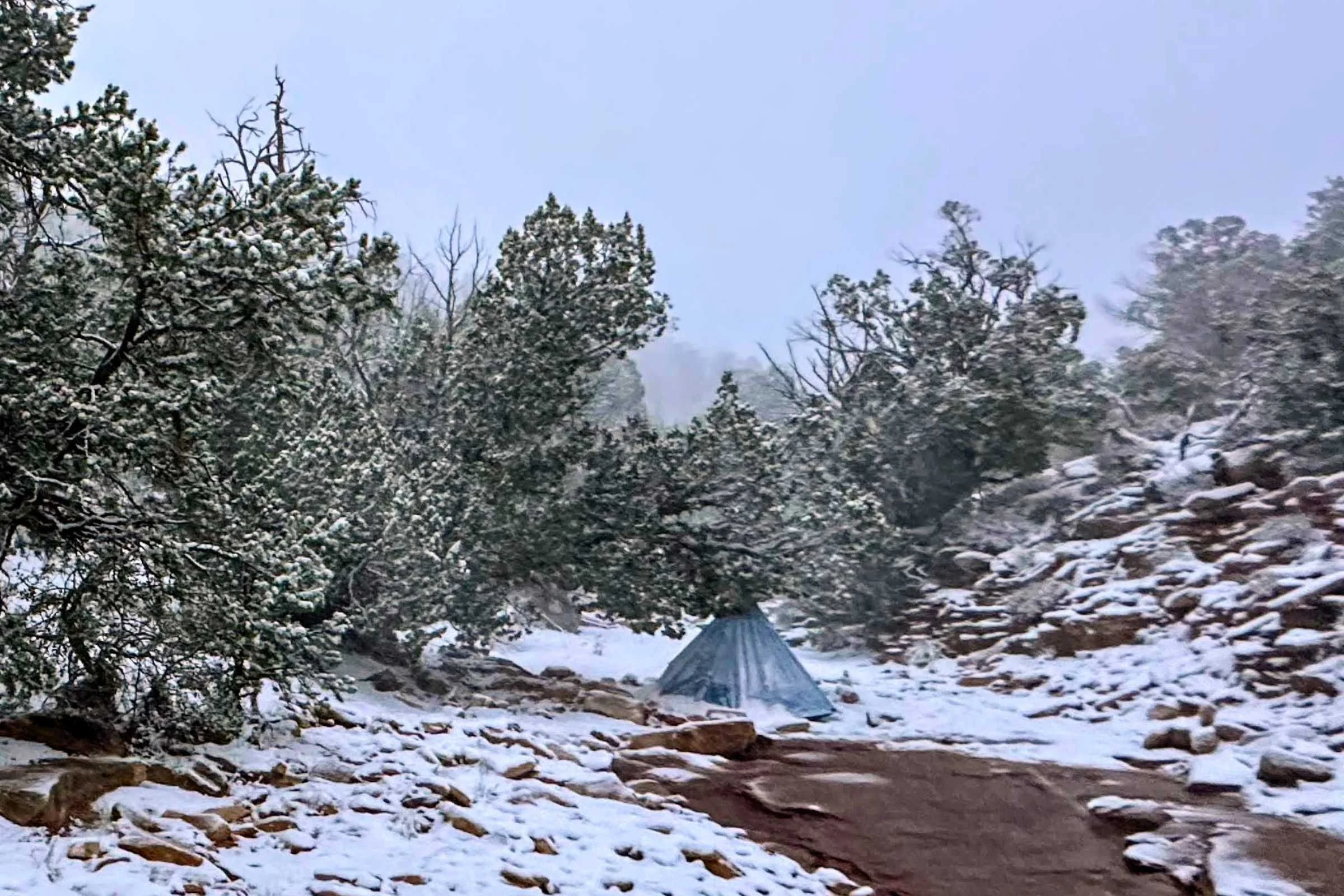
We tested the newest version of the Hexamid on a spring thru-hike on the Hayduke Trail, an 850-mile backpacking route across southern Utah. During our thru-hike, we experienced overnight low temperatures from 15 degrees Fahrenheit to nearly 80 degrees. We regularly dealt with extremely windy conditions, and this shelter helped keep some dust and sand off us as we slept. We weathered a snowstorm, where about 6 inches of heavy, wet snow fell overnight. We also experienced rain and hail. We pitched it on dirt, sand, and even on slick rock with the help of six large rocks.
We have also used previous versions of the Hexamid on the Continental Divide Trail, West Highland Way, GR20, California Riding and Hiking Trail, Snowdonia Way, and the San Diego Trans County Trail.
We’ve also used a variety of other single-walled shelters that pitch with a single trekking pole, like many featured in our Best Ultralight Backpacking Tents guide, so we didn’t have to adapt to pitching a tent with trekking poles.
Performance in the field
Weather protection
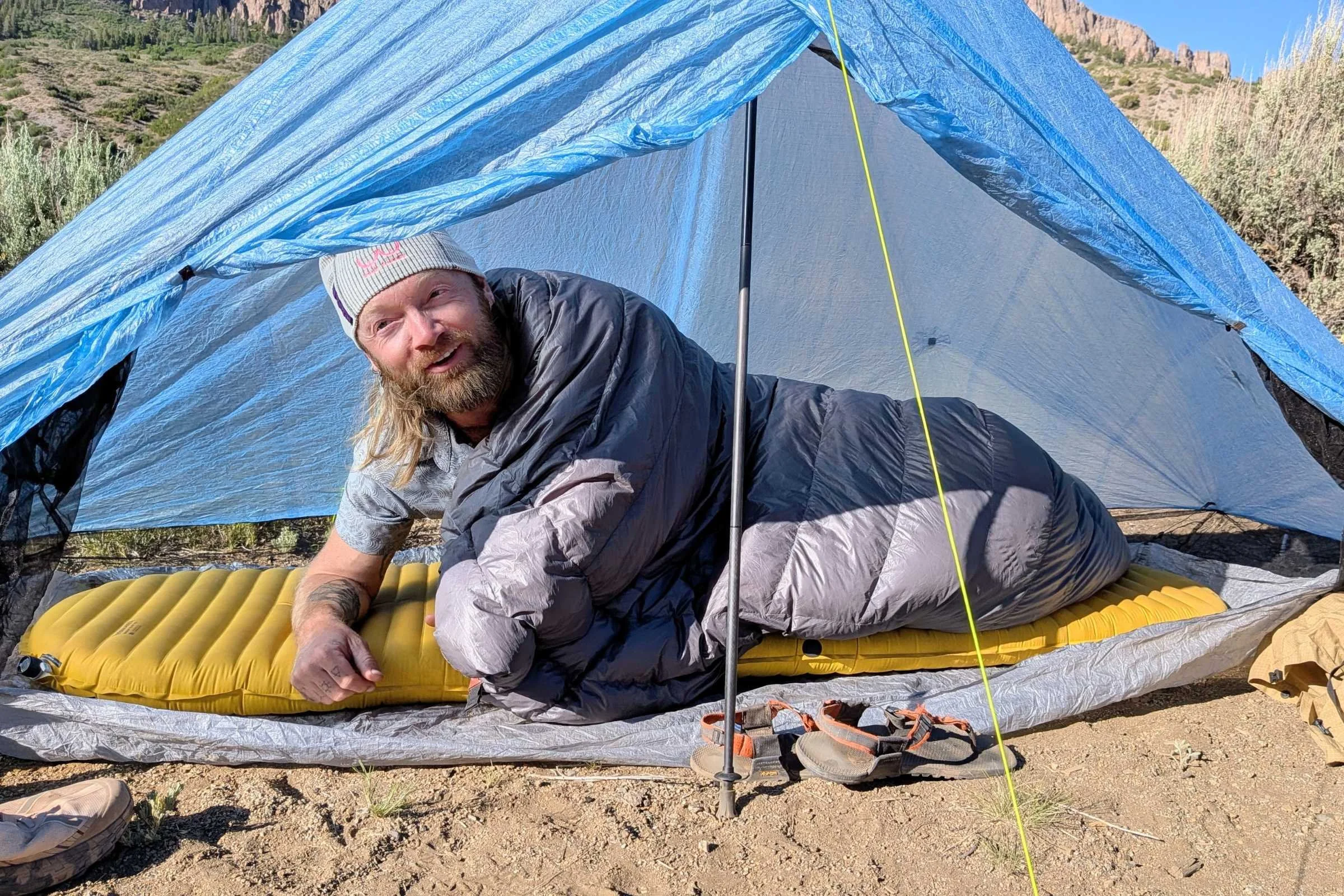
The Zpacks Hexamid performed well in rain, wind, and snow. During rain and snowstorms, it kept us dry, and the Dyneema Composite Fabric (DCF) material dries quickly after the storm.
We only experienced condensation on two very cold and wet nights: once when it snowed and then on the following night when it was even colder and we camped next to a large pool of water in a wash. The amount of condensation we experienced was manageable. The tent walls weren’t dripping wet, just wet to the touch. This level of condensation seemed about on par with other single-walled shelters we’ve tested, and better than the most condensation-prone tents.
Setup and takedown
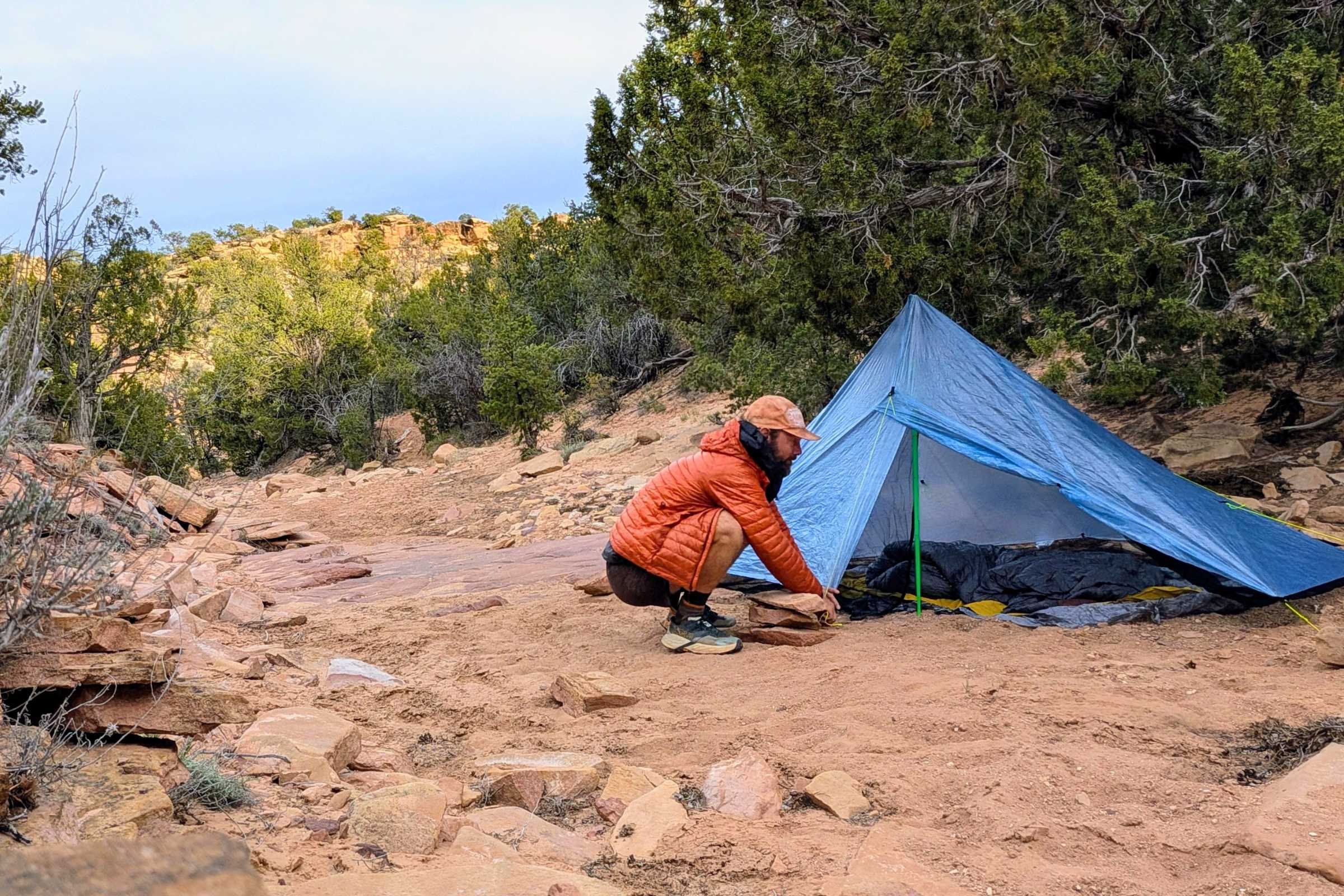
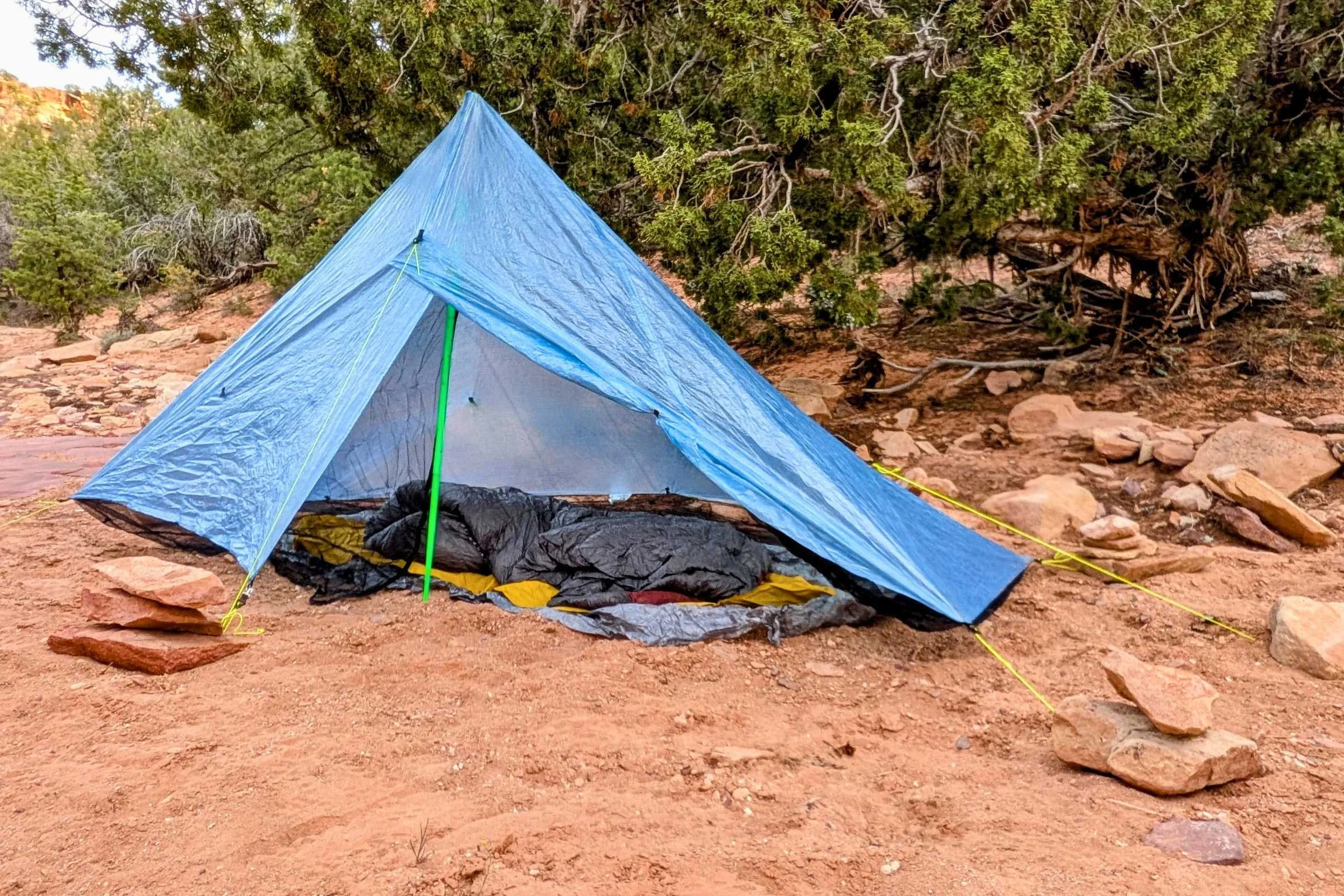
The Hexamid is fairly easy to pitch. If you’ve pitched other single-trekking pole shelters, it will feel familiar. You need a minimum of six stakes to pitch it, and after the sixth stake the tent will stand up. But if you add four more stakes you can pull out the wall halfway up on each of the four panels. Using a full 10 stakes takes longer, but it makes the wall less flappy in high wind and gives you more interior space.
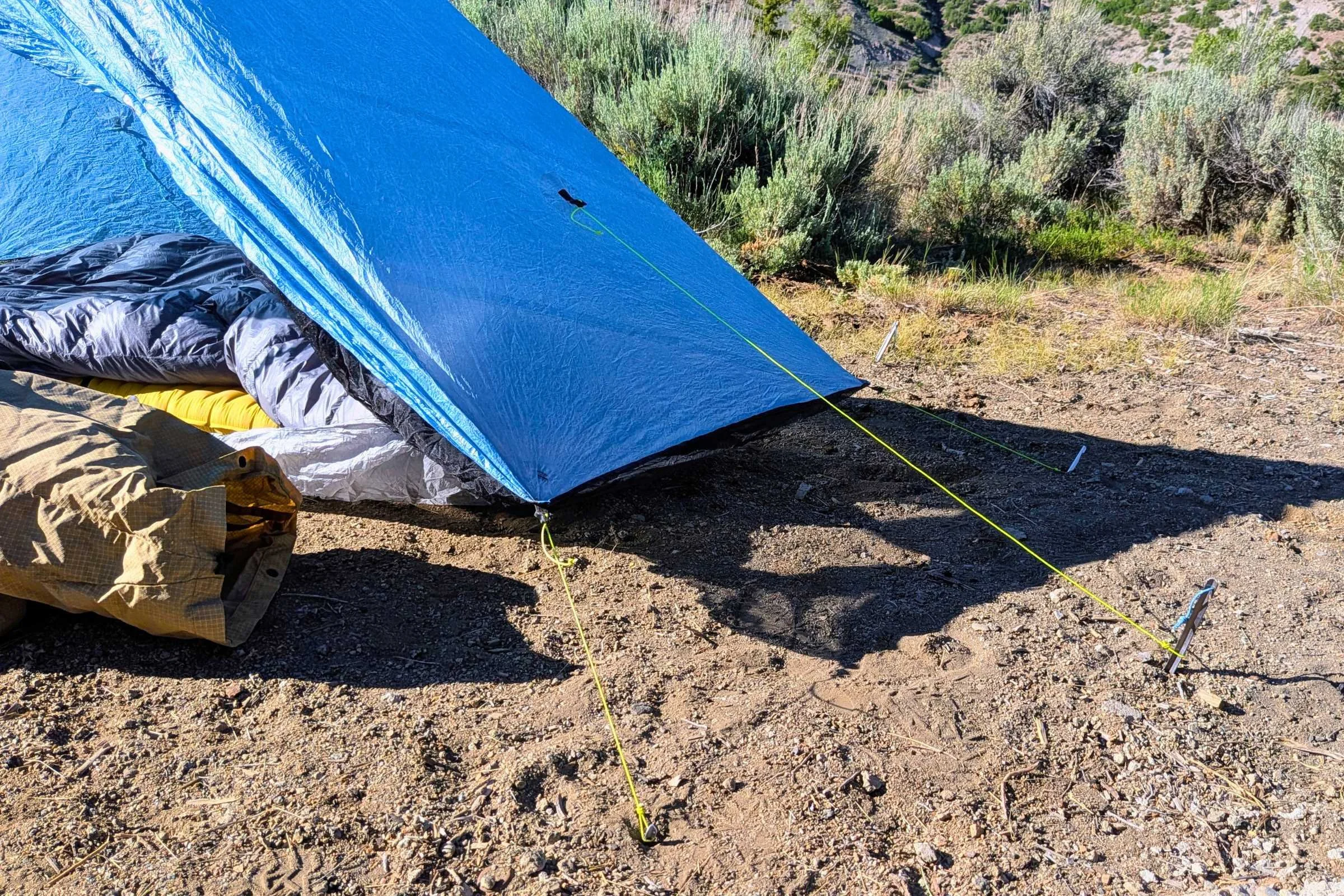
It’s relatively difficult to pitch in high wind, but no more so than any other DCF tent. Packing it up is easier than many DCF tents, too. The stuff sack is intentionally oversized, so you can roll the tent in any way and fit it inside without cramming.
Interior space and livability
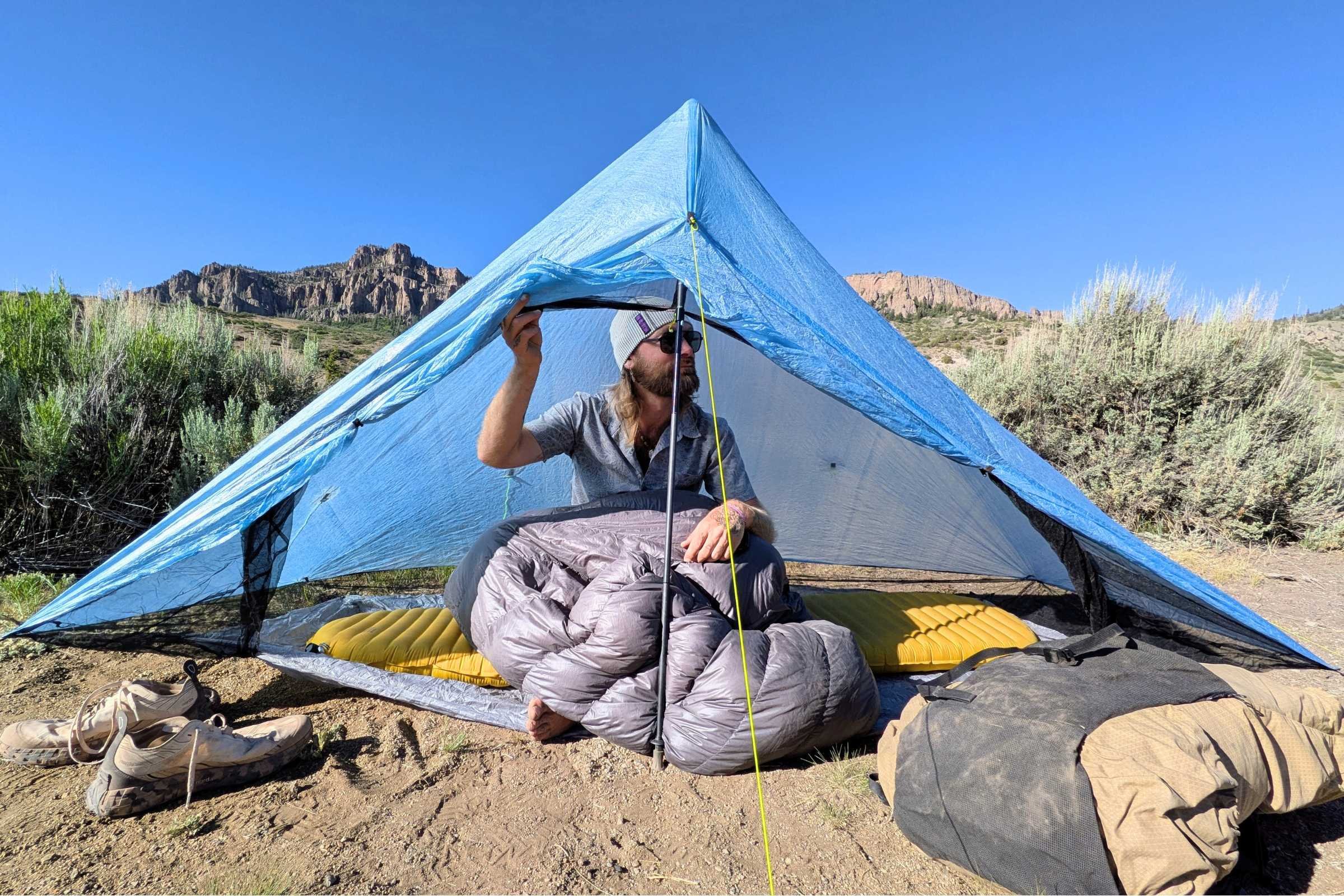
There is enough room inside to fit a 5’ 9” person comfortably. When using it with a 3-inch sleeping pad, there is enough room above your head and feet so you don’t brush against the tent walls, but if you’re taller than 5’11”, your footbox might occasionally touch the wall.
You can sit up comfortably in the Hexamid, but only directly in the center of the tent, next to the trekking pole. We normally keep our gear inside the tent with us, but if our pack and shoes are wet there is just enough room to store them inside the vestibule. This tent wouldn’t feel great if you had to spend an entire day inside it because of rain. You would stay dry, but you’d likely end up laying down for most of the time.
Ventilation and condensation
This is a single-walled tent, so it is more prone to condensation than a double-walled tent. That being said, it breathes fairly well for a single-walled shelter. We only noticed significant condensation on a pair of extremely cold nights when camping in a canyon near water. Even on these nights with some condensation, it was a manageable amount—no water dripping off the walls that were pooling near our feet.
Packability
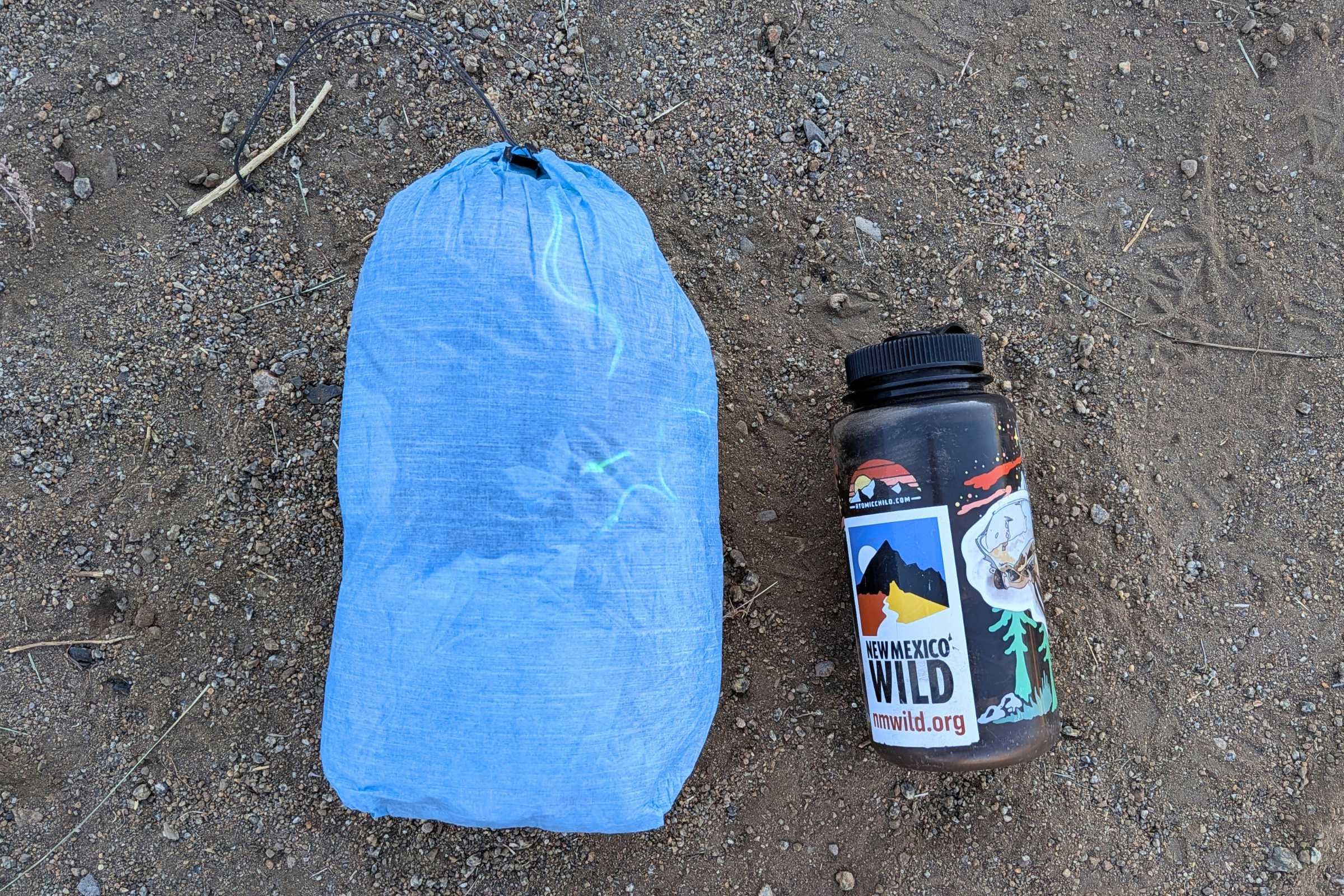
DCF crinkles and is hard to compress consistently, but the Hexamid isn’t terribly difficult to pack despite that. The tent and DCF Hexamid Bathtub Groundsheet easily pack into the included 6” diameter by 12” inch stuff sack, then into an approximately 6” by 8” long tube.
We didn’t have any issue fitting this into a 35-liter backpack with the rest of our ultralight backpacking kit and six days of food. Some DCF shelters affect how you pack the rest of your gear, but this one doesn’t do that.
Because it has less fabric and you can stuff the floor in separately, the floorless design makes it easier to pack than a single-walled DCF tent. The stuff sack is also much larger than it needs to be, which makes it easy to roll up the tent and stuff it inside along with the DCF Bathtub Groundsheet or any other ground cloth (such as Tyvek or Polycro).
Durability
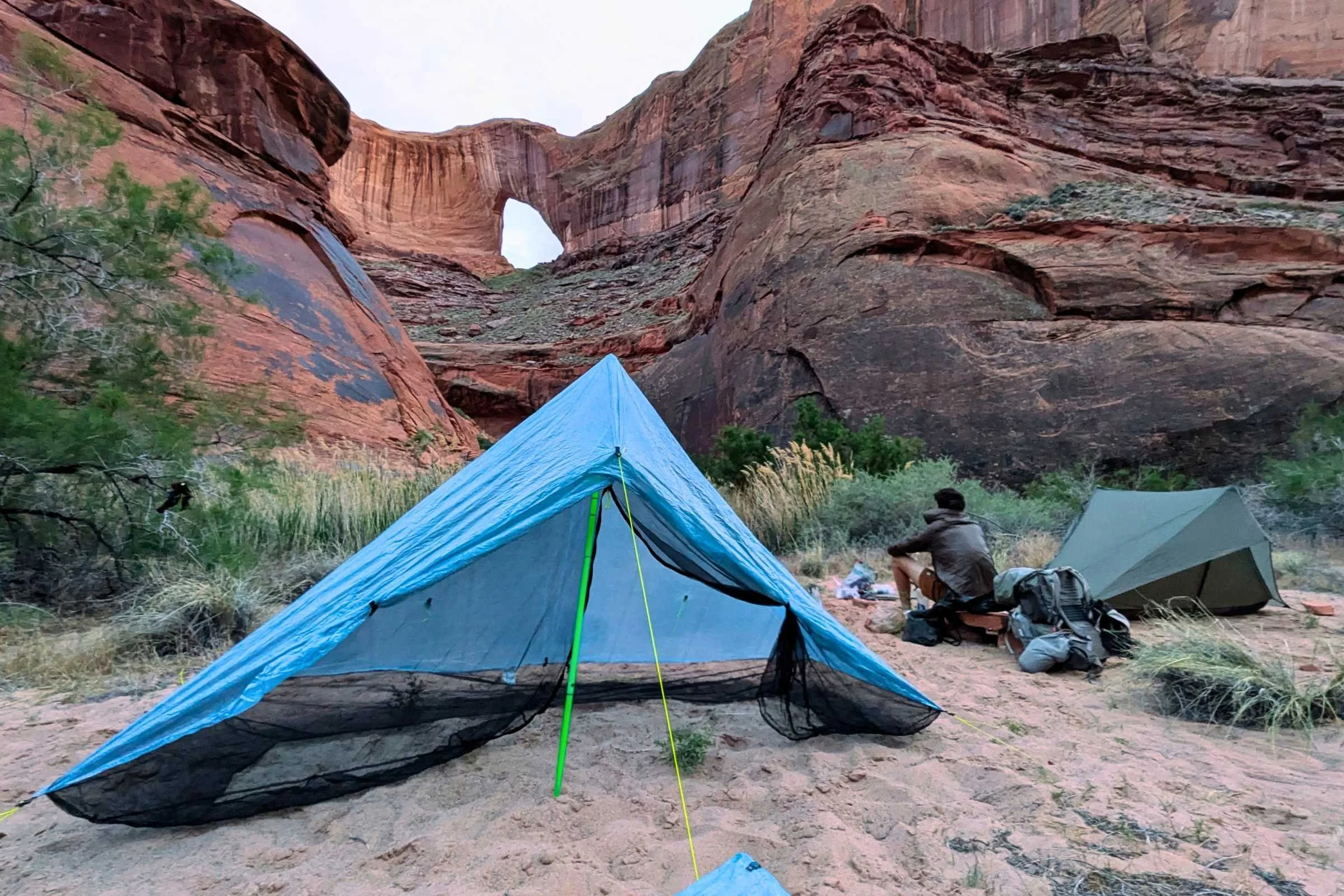
The Hexamid is fairly durable. During the 850-mile testing period, the fabric, stitching, zipper, and stakeout points held up well. This tent still looks like it did when new, but with some extra dirt and sand. We would expect this tent to last for several years of regular use. Treeline Editor-in-Chief Liz used her Hexamid from 2014-2018 regularly, and didn’t stop using it due to failure. Zpacks also has a guarantee that all their products will last for an entire thru-hike.
It is a DCF shelter, however. And DCF commonly gets pinholes, especially if you pack it the same way every day. Fortunately, you don’t have to roll this tent up in a specific way to fit it into the stuff sack. We recommend packing or stuffing this tent in different ways every day to avoid those pinholes that happen when DCF is regularly creased in the same place. Also, if you’re worried about durability, you can get the Hexamid made with thicker Dyneema (.75/yd2), which will weigh 1.7 ounces more but be more durable.
It only has a single zipper for the bug net. The storm doors attach to a double-hooked piece of hardware, and fewer zippers means fewer zippers to fail in the dry, dusty conditions where the Hexamid excels. Over all our years of testing Zpacks tents, the only thing to ever fail was the zipper, and that was after several 2000+ mile thru-hikes. Zpacks includes two replacement zipper sliders with the Hexamid, and they sew the zipper in a way that makes it very easy to replace the slider.
Features
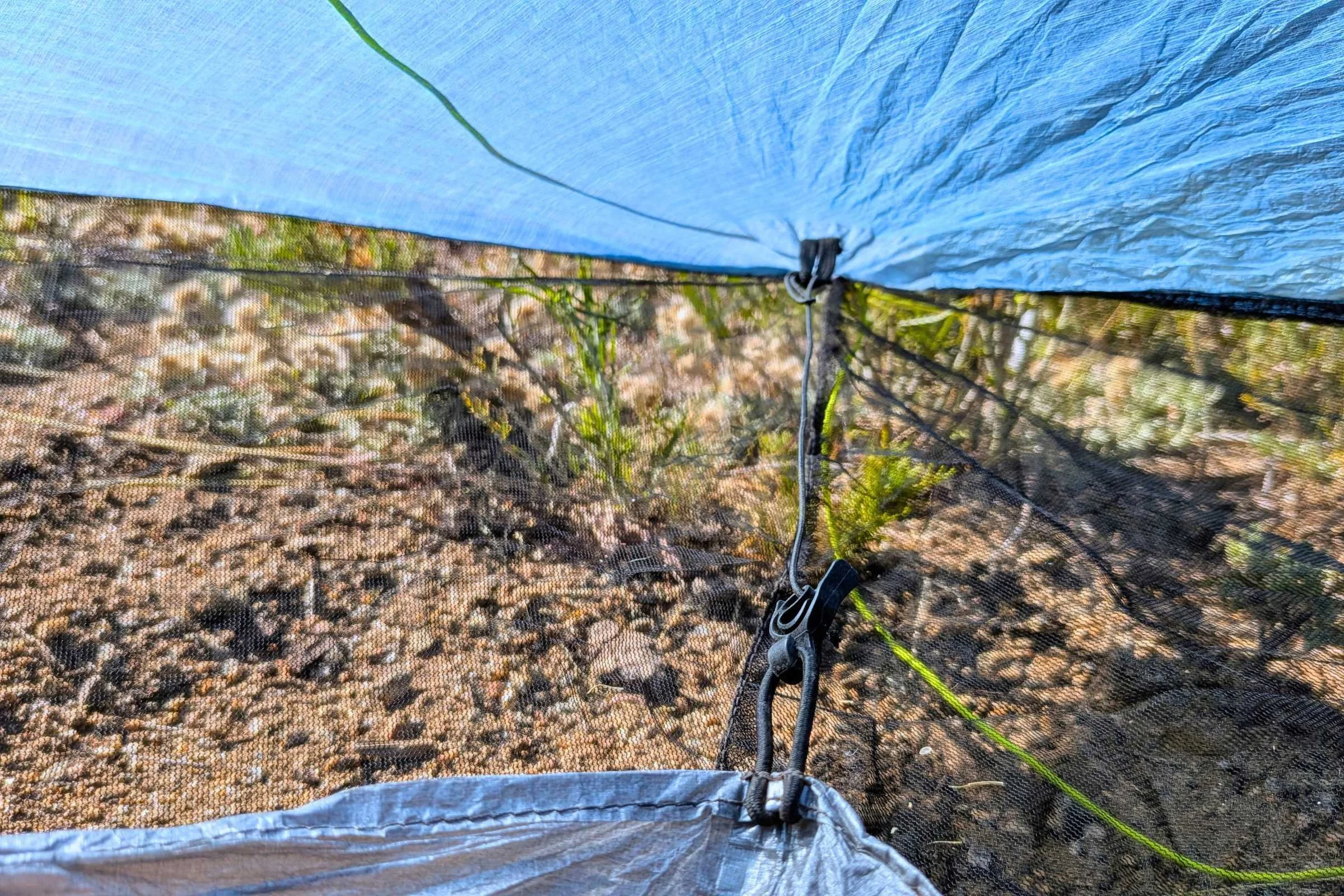
Half Pyramid Floorless Tent
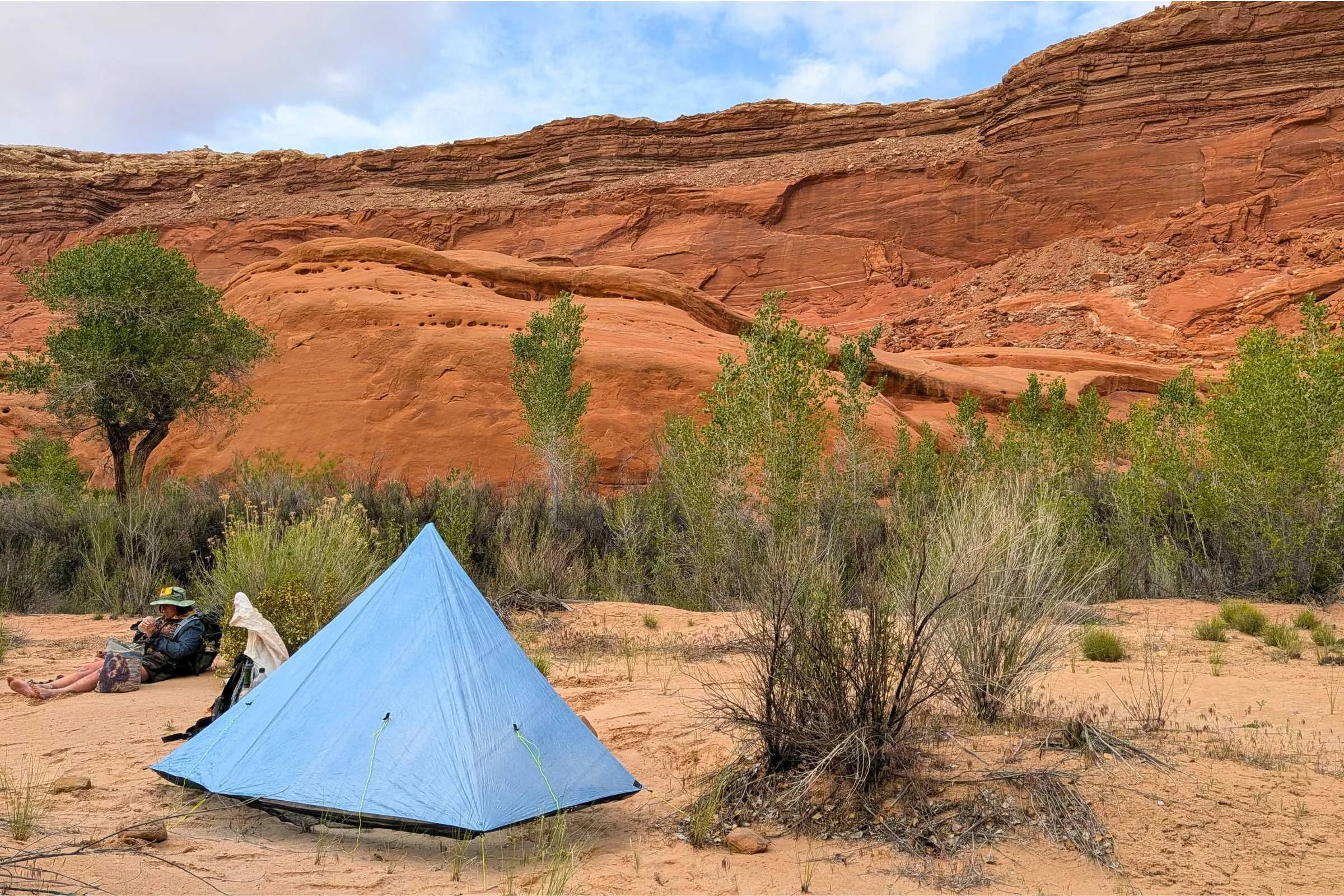
This is a half-pyramid floorless tent with a bug skirt. It is fairly rare to find a floorless tent with bug protection. This isn’t the only tarp with a bug net, though it was one of the first, and definitely the first to get really popular.
Dyneema Composite Fabric Walls
The Hexamid is made with Dyneema Composite Fabric (DCF). It comes in blue 0.55 oz/sqyd DCF for the lightest option, or spruce green 0.75 oz/sqyd DCF, which is more durable but heavier.
Waterproofing
Zpacks shelters all come seam-taped and fully waterproof. DCF is much more waterproof than other materials commonly used in tent rainflies, such as SilNylon and SilPoly. The hydrostatic head of 0.55 oz/sqyd DCF is 15,000mm, and it’s closer to 20,000mm for the thick 0.75/sqyd stuff. For comparison, the hydrostatic head of 20D SilPoly is 5,000mm.
Floorless Design
The Hexamid does not have a bathtub floor, though you can purchase a removable DCF bathtub floor to use with it.
Bug Net Skirt
The Hexamid has a bug net that hangs off the edges of the tent walls and extends underneath your ground sheet.
Overlapping Storm Doors
The Hexamid has one door that opens as two flaps. The doors attach onto a dual-hooked piece of hardware without a zipper, but they overlap to prevent rain from getting through.
#3 YKK Zippered Bug Net
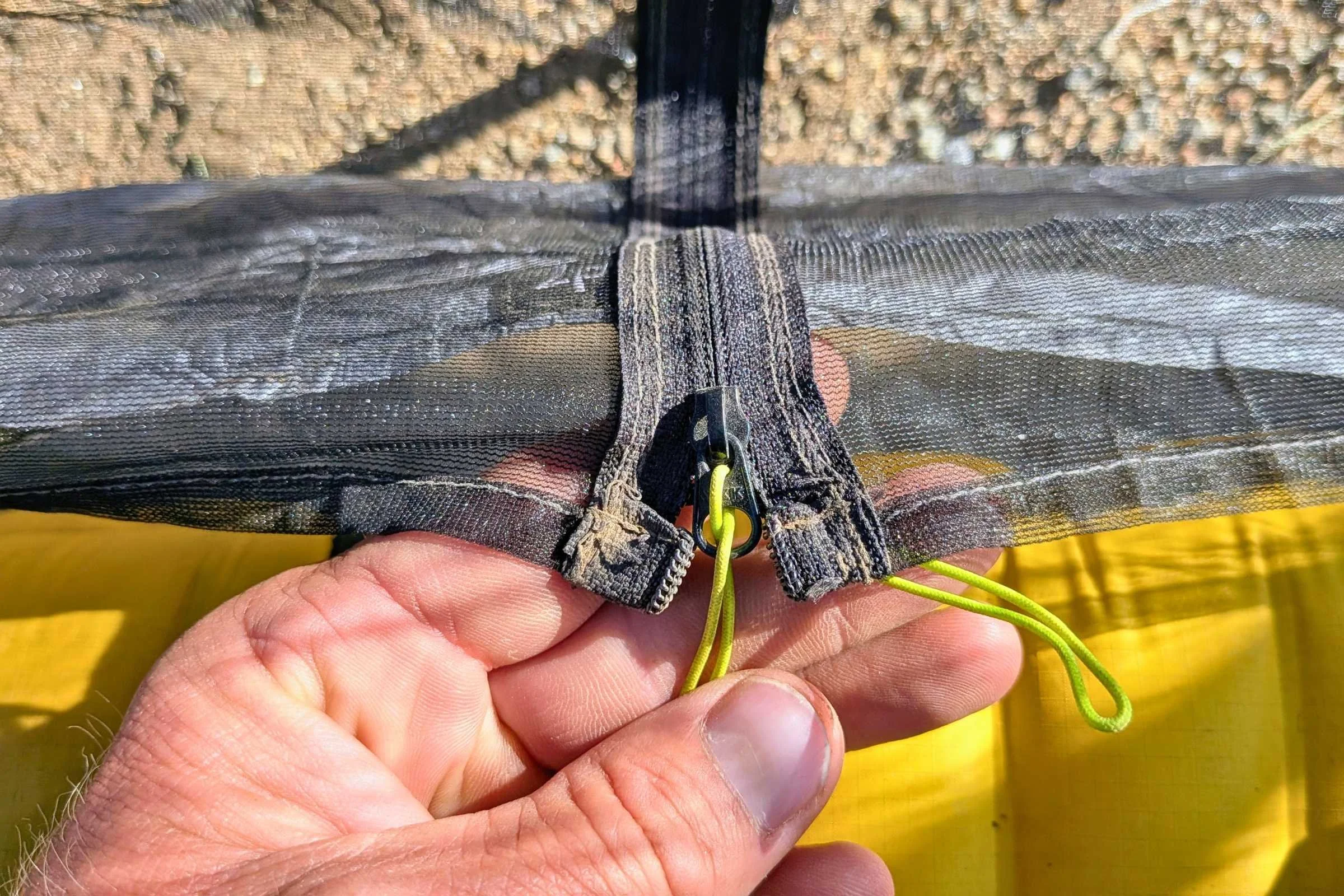
The bug net has a small #3 YKK zipper that runs vertically to enter and exit the inner tent.
Single Vestibule configuration
It has a single vestibule that’s large enough to store a backpack and shoes.
10 Guy-out points
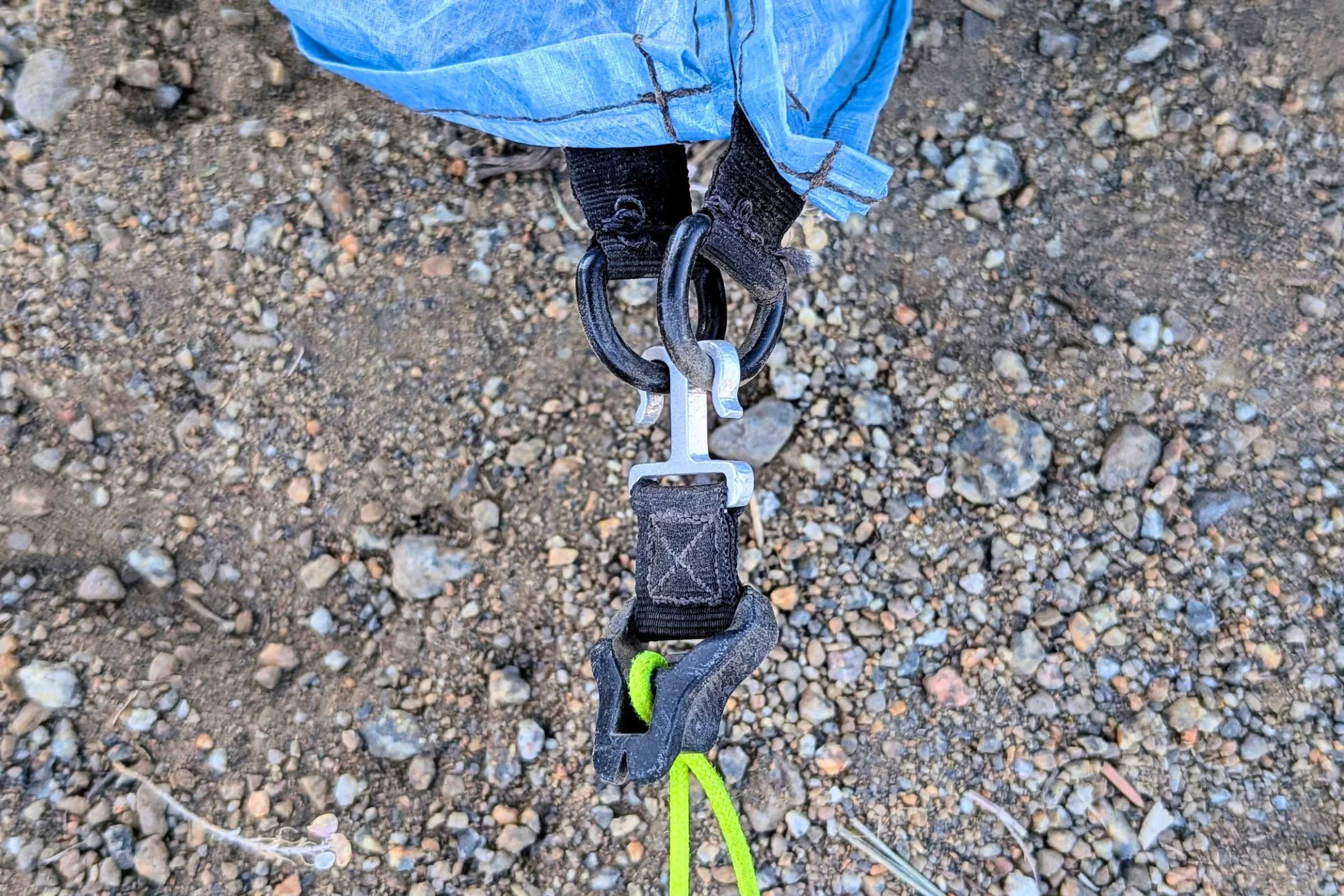
It has 10 total guy-out points. Six of these points are mandatory for pitching the tent, and the remaining four help pull the tent walls out to provide more interior space and better performance in high winds.
Reflective guylines
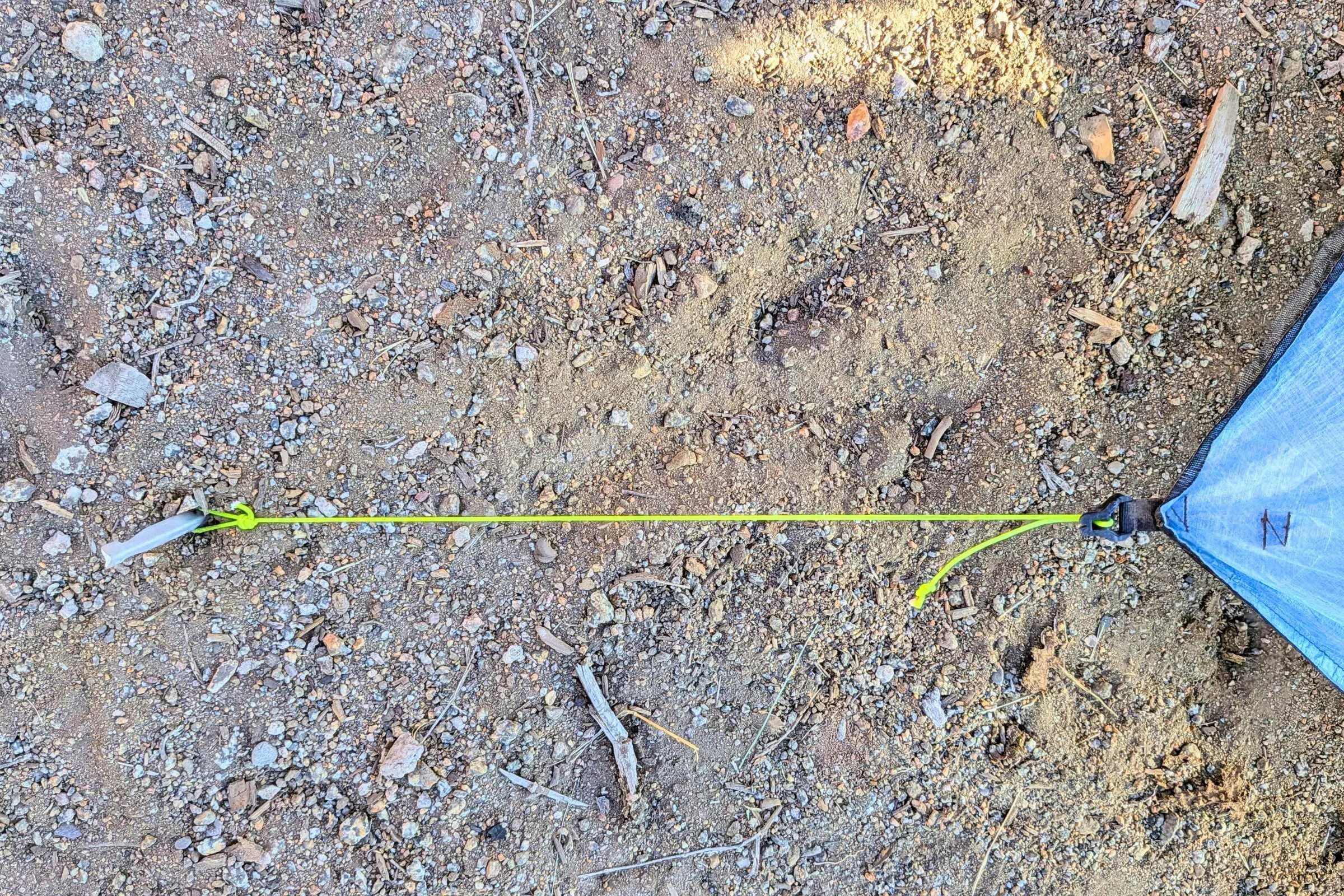
It has bright yellow, reflective 1.6mm guylines that are easy to see in the dark as well as during the day.
Included DCF stuff sack
It comes with an oversized Dyneema stuff sack that makes it easy to pack the tent and a ground sheet.
Repair kit included
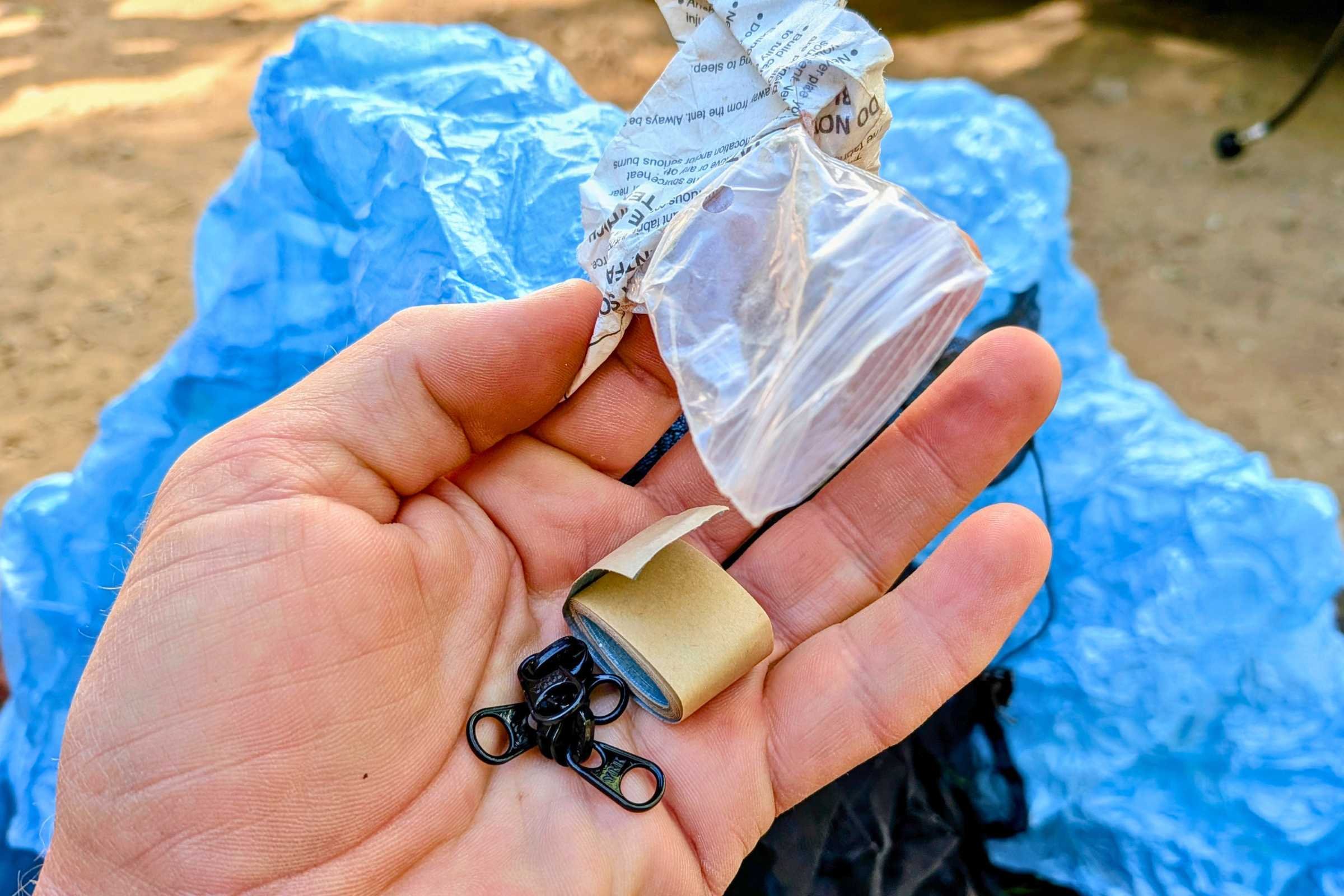
It comes with two spare zipper pulls and DCF repair tape.
Made in USA
The Hexamid, like all other Zpacks products, is made in the USA.
Sustainability
The majority of Zpack’s products feature Avient’s bio-based Dyneema fiber technology. Sourced from renewable, bio-based feedstock, it is the first-ever bio-based ultra-high-molecular-weight polyethylene (HMPE) fiber. You can read more about this on Zpacks’ sustainability page.
What's new in the Zpacks Hexamid Tent
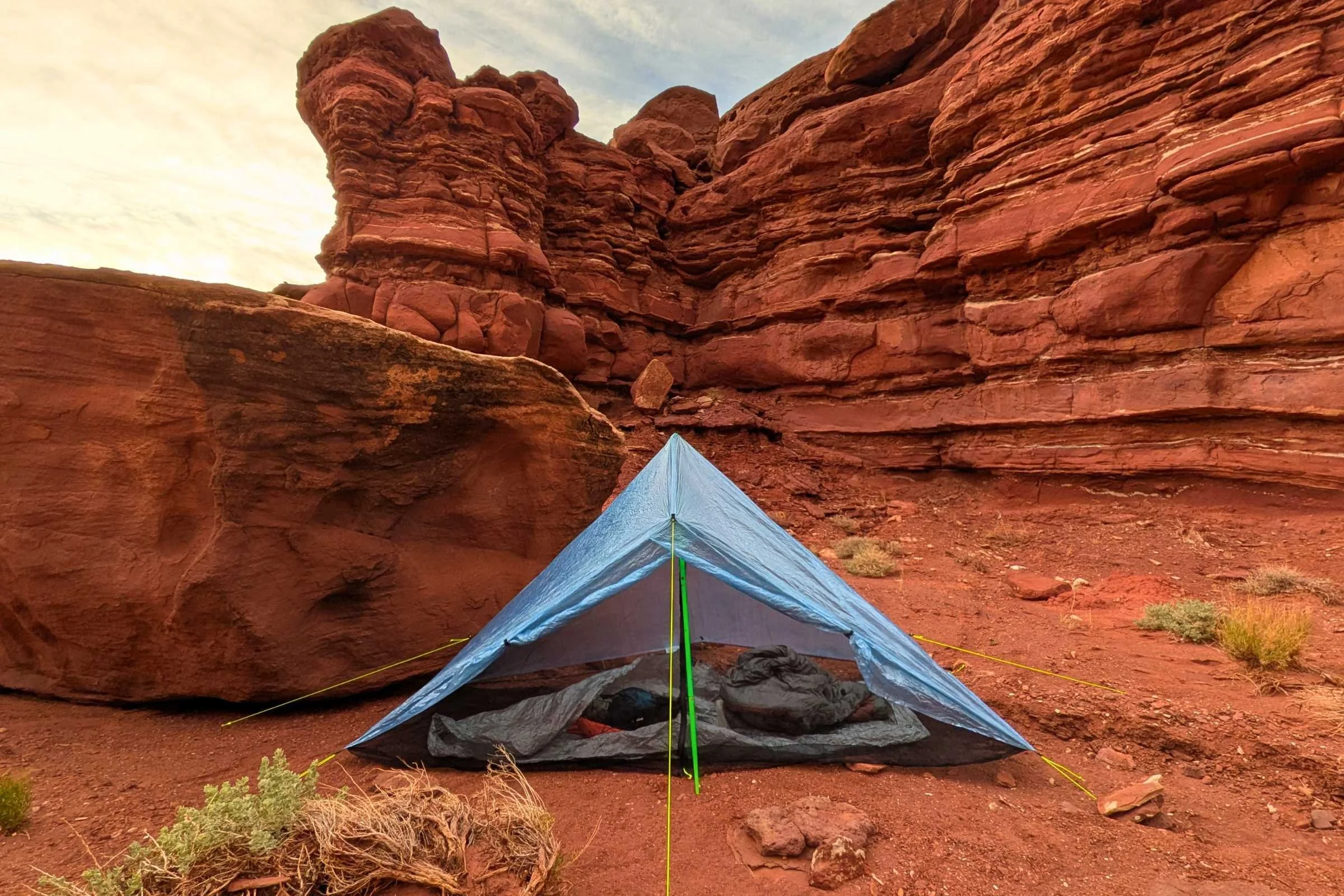
The newest version of the Hexamid has a large sleeping-pad-sized (approximately 72” x 20”) opening at the bottom. This doesn’t mean the bug net won’t wrap underneath you, but it does mean there is a spot without mesh that you’ll cover with your ground sheet. This change prevents the bug net from tearing in the spot where you lie. With the previous version, which had a continuous bug net across the entire floor area, the bug net that sat directly beneath you would eventually wear out and tear. It also allows you to use your groundsheet separately, which is great for cowboy camping and for a sit cloth during breaks.
Should you buy the Zpacks Hexamid?
Buy if:
You want an ultralight one-person DCF shelter that pitches with a single trekking pole
You’re comfortable sleeping in a tent or tarp without a sewn-in bathtub floor
You are no taller than 5’11”
Skip if:
You’re taller than 6 feet
You want a tent with a sewn-in bathtub floor
You want to spend less than $400 on your tent
Where to buy
The Zpacks Hexamid ultralight tent is available on the Zpacks website.
Zpacks
You can sometimes find more options when purchasing directly from the retailer. Sometimes, purchasing directly from the retailer can make it easier if you need to make a warranty return, such as if there is a defect.
Advice on where to buy
In general for gear, we recommend purchasing from a place with easy or free returns.
Similar ultralight tents
Zpacks Hexamid vs Mountain Laurel Designs Solomid XL

Type: Floorless tarp
Weight: 16 oz
Sleeps: 1, also Duo available
Material: Sil-poly, also available as DCF
Vestibules: 1
Stakes required: 8
Trekking poles required: 1
The Zpacks Mountain Laurel Designs Solomid XL is another half-pyramid floorless tent. It’s our pick for best floorless ultralight tent.
The Solomid doesn’t have a bug net like the Hexamid and weighs about 4-6 ounces more on average. You can add on an inner bug net and bathtub floor to the Solomid XL, though it will make the entire shelter even heavier. The Solomid is taller than the Hexamid, so you can more easily pitch it lower to the ground without giving up headroom. The Solomid is also really good in high winds. Though the Hexamid and Solomid look similar, the Solomid does significantly better when the wind is whipping.
The Solomid comes in both a DCF and a SilPolyester version. The SilPoly Solomid costs significantly less than the Hexamid. The DCF Solomid XL is comparable in price to the Hexamid. All MLD products are made to order, so you’ll have to wait at least a few weeks to get your hands on a Solomid.
Both the Solomid and Hexamid are also made in the USA.
Mountain Laurel Designs Solomid XL
Zpacks Hexamid vs. Zpacks Duplex
Type: Single-wall trekking pole shelter
Weight: 17.9 oz
Sleeps: 2
Material: DCF
Vestibules: 2
Stakes required: 8
Trekking poles required: 2
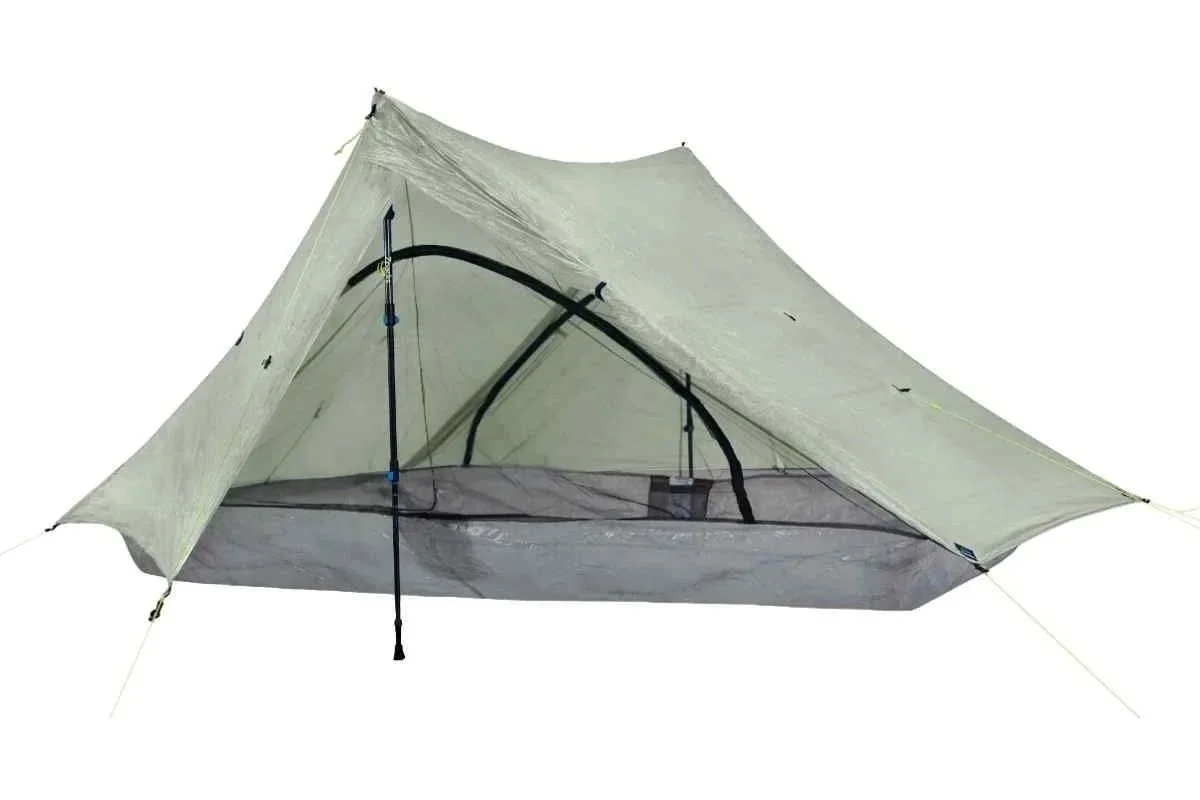
The Duplex is another trekking pole tent from Zpacks. The Duplex is the overall winner in our Best Ultralight Tents guide. Like the Hexamid, the Duplex is made with DCF. It weighs 17 ounces, which is significantly more than the Hexamid. However, the Duplex fits two people and has a sewn-in bathtub floor and bug net. The Duplex pitches with two trekking poles, unlike the Hexmid’s one-trekking-pole pitch design. Learn more in our in-depth review of the Zpacks Duplex backpacking tent.
Zpacks Duplex
Zpacks Hexamid vs. Six Moon Designs Deschutes Tarp
Type: Single-pole pyramid tarp with optional inner
Weight: 13 oz + 11 oz (inner)
Sleeps: 1
Material: Silnylon
Vestibules: 1
Stakes required: 6
Trekking poles required: 1
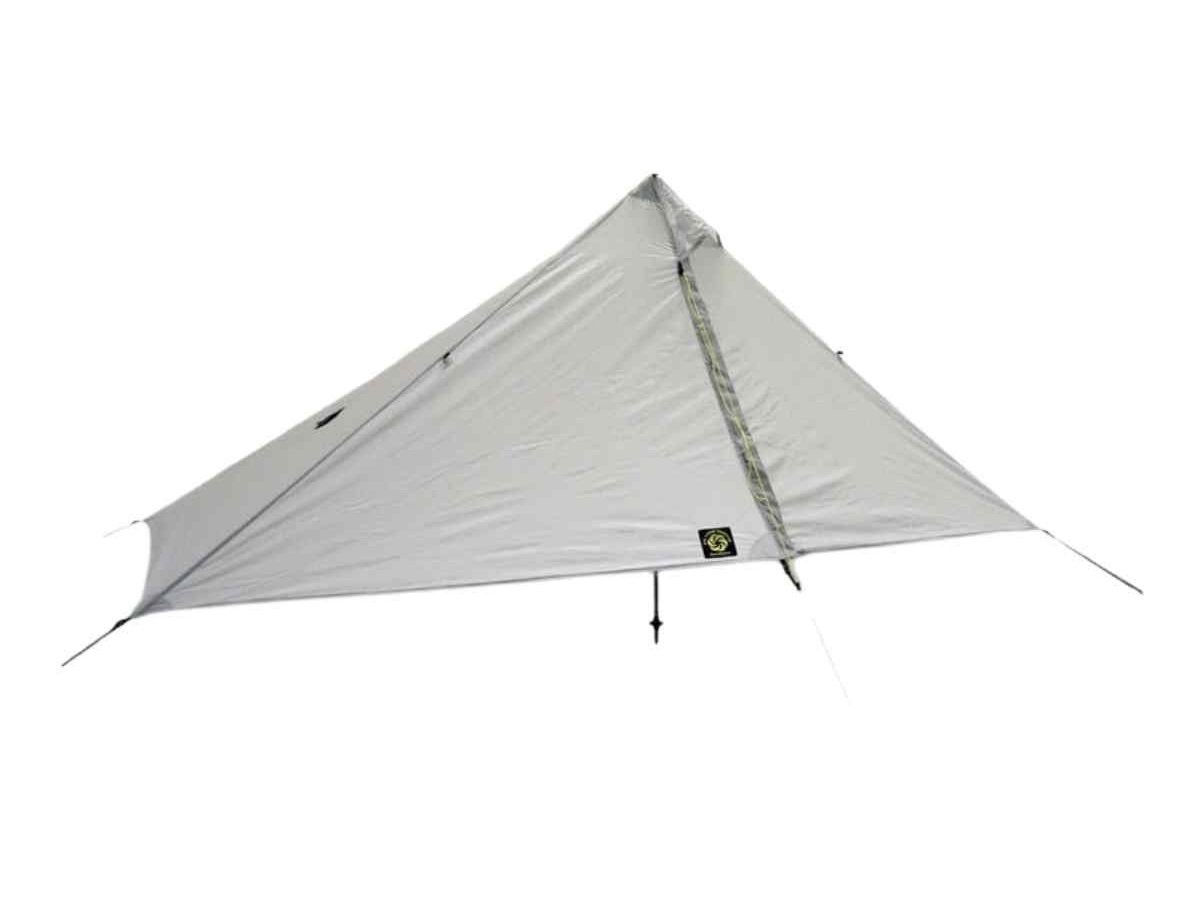
The Six Moon Designs Deschutes is another half-pyramid-shaped tarp, similar to the Hexamid. It’s available with or without a bug skirt, so depending on whether you want bug protection, there's an option for you. The Deschutes weighs 13 ounces without a bug skirt and 16 ounces with one. It’s made of SilPolyester, which packs down much smaller than the DCF Hexamid. The Deschutes is also much less expensive than the Hexamid. The Deschutes isn’t made in the USA, unlike the Hexamid. And the Deschutes doesn’t come seam-sealed.
Six Moon Designs Deschutes Tarp
Zpacks Hexamid vs. Zpacks Hexamid Pocket Tarp
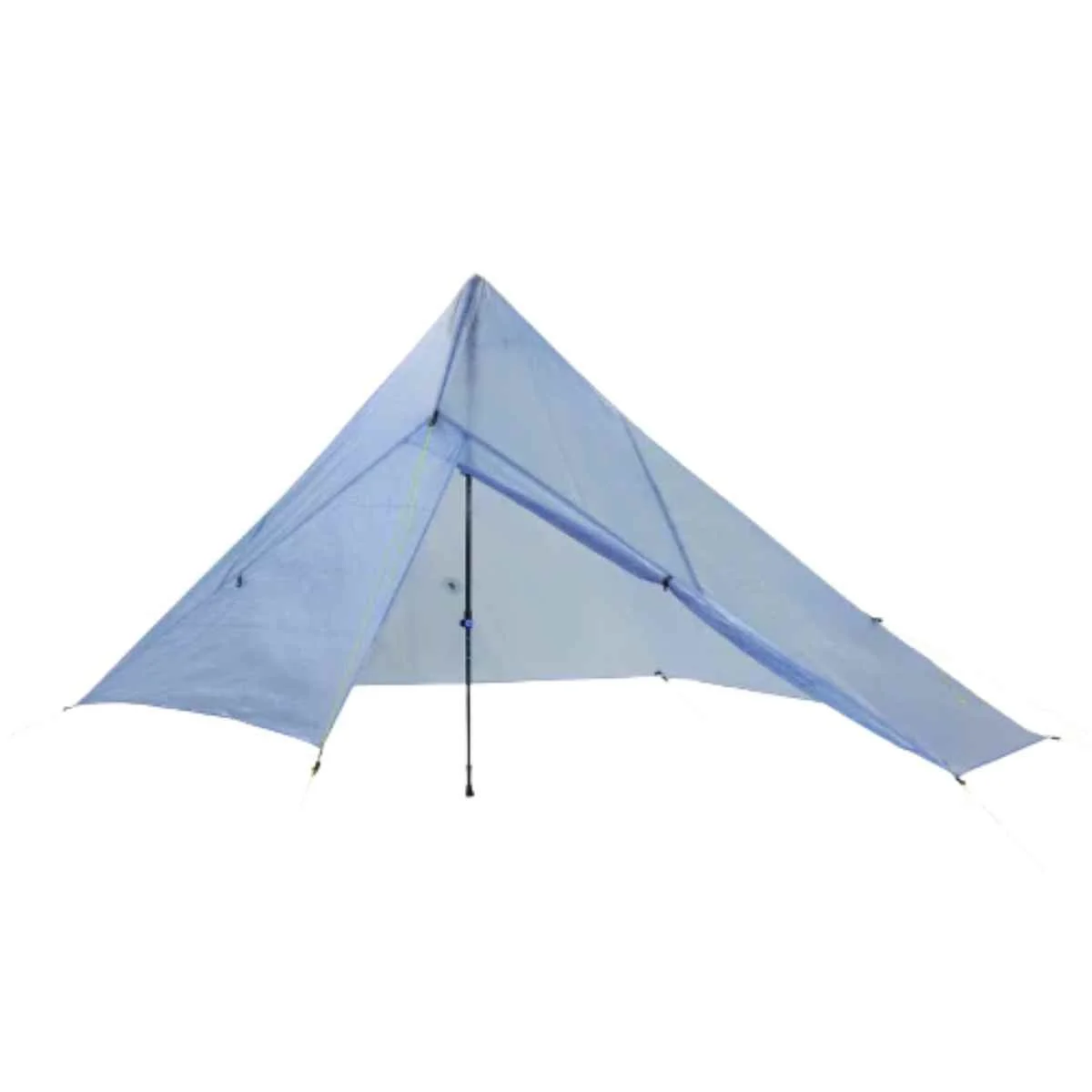
Type: Floorless tarp
Weight: 5.5 oz
Sleeps: 1
Material: Dyneema Composite Fabric
Vestibules: N/A
Stakes required: 6
Trekking poles required: 1
The Zpacks Hexamid Pocket Tarp is the standard Hexamid tarp without the bug net. The Hexamid Pocket Tarp weighs only 5.5 ounces and costs less than the standard Hexamid. The Pocket Tarp is ideal for dry climates without bugs, and the half-pyramid design provides the same storm protection without the added weight of the bug net. You can use the Zpacks bathtub ground sheet with the Hexamid Pocket Tarp or any other groundsheet, but you’ll still need something, and that will add weight. Sam also used the Hexamid Pocket Tarp while thru-hiking the AZT.
Zpacks Hexamid Pocket Tarp
Zpacks Hexamid vs. Zpacks Plex Solo
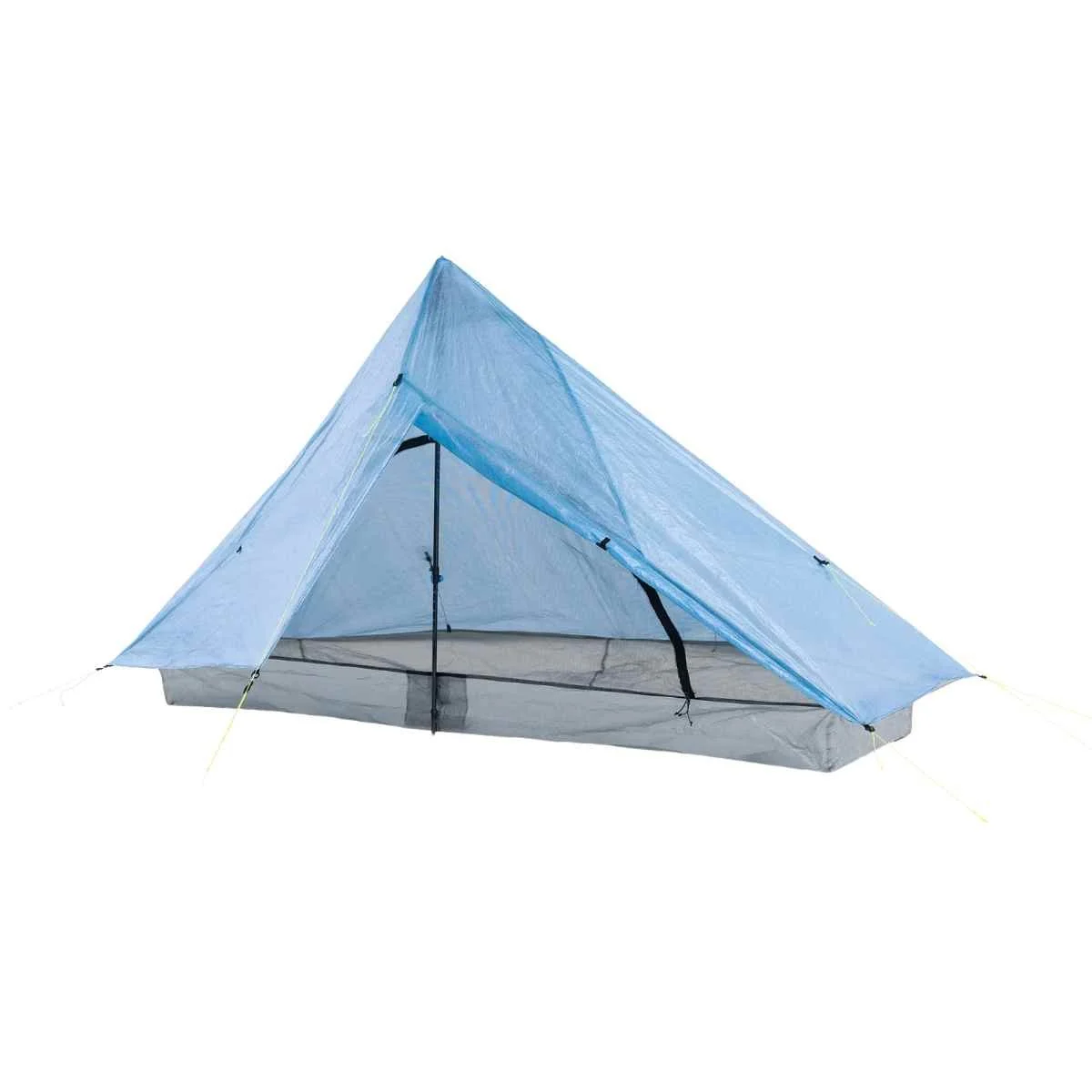
Type: Single-wall trekking pole shelter
Weight: 12.3 oz
Sleeps: 1
Material: Dyneema Composite Fabric
Vestibules: 1
Stakes required: 6
Trekking poles required: 1
The Zpacks Plex Solo is similar to the Hexamid. They both use the same DCF fabric, single-pole setup, and ultralight guylines and hardware.
The main difference is the modularity. The Hexamid has a removable bathtub floor. The PlexSolo has a bathtub floor sewn in, similar to the Duplex. If cowboy camping, you can unhook the bathtub floor on the Hexamid and use that floor as a groundsheet. For the Hexamid, you have to carry a separate groundsheet to cowboy camp.
The Hexamid is arguably better suited for dry climates whereas the Plex Solo is better for wetter climates. They both have a peak of 52", but the Hexamid is surprisingly longer (96" vs. 84"). If you add in the removable bathtub, the Hexamid plus bathtub combo is ~$30 more than a Plexsolo with the bathtub floor sewn in.
Learn more in our in-depth review of the Zpacks Plex Solo ultralight tent.
Zpacks Plex Solo
Why you should trust us / About the author
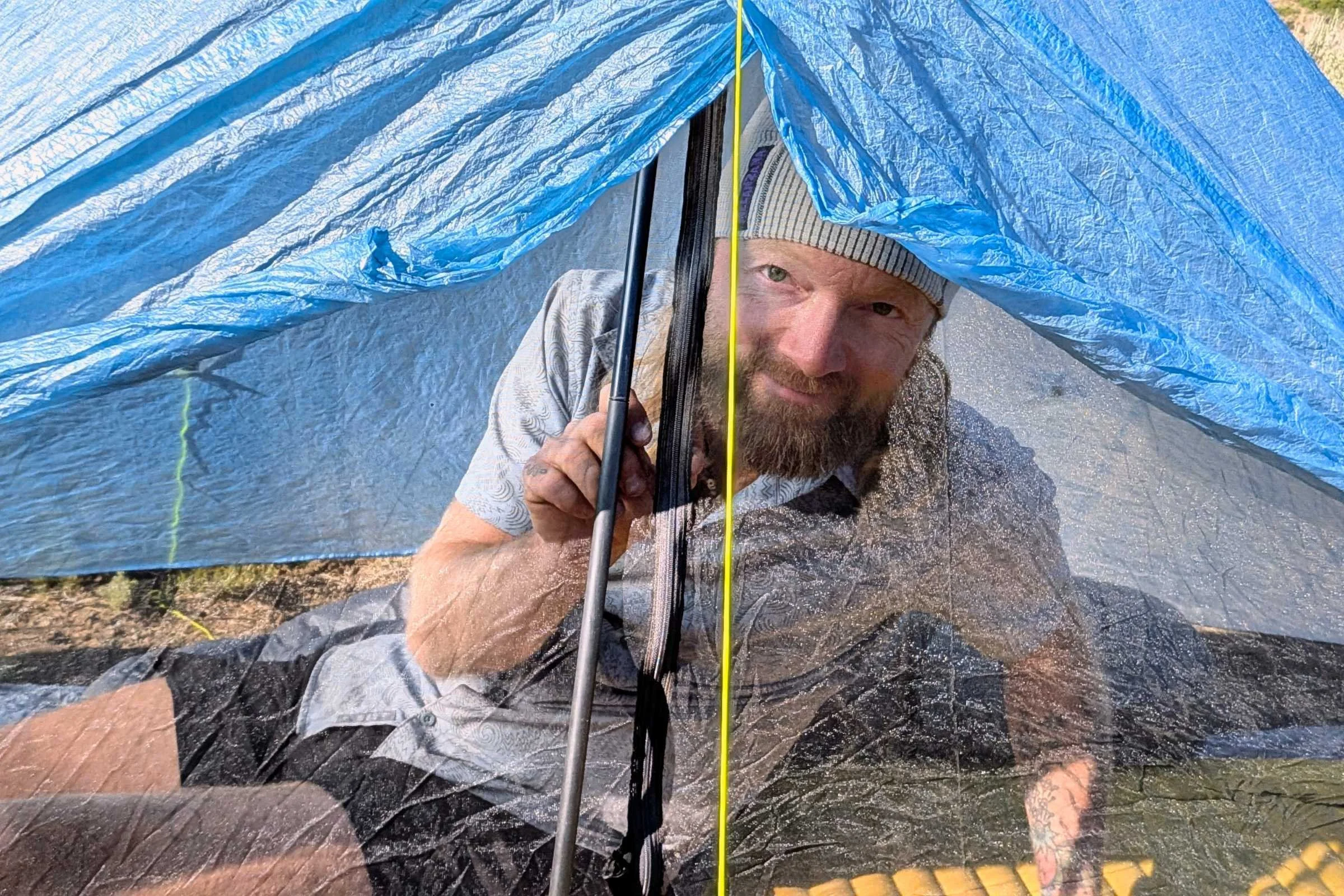
Sam Schild is a thru-hiker, trail runner, bikepacking cyclist, and mountain athlete based in Colorado. He has thru-hiked the Pacific Crest Trail, Continental Divide Trail, Appalachian Trail, Grand Enchantment Trail, Arizona Trail, Hayduke Trail, Pacific Northwest Trail, and the Colorado Trail twice. He has bikepacked across the country and all over the American Southwest, including on the Colorado Trail and Kokopelli Trail. On every trip, he’s used an ultralight tent.
You can read more about Sam on his author page, website, or on Instagram.