Zpacks Plex Solo Review: A Sub-15-Ounce Tent That Still Feels Livable
A DCF trekking pole shelter for solo thru-hikers who prioritize weight and livability
June 30th, 2026
Home → Gear Reviews → Backpacking
Our verdict
The Plex Solo is a single-wall, non-freestanding trekking pole tent ideal for solo thru-hikers, backpackers, bikepackers, and fastpackers looking to save weight without sacrificing livability or weather resistance.
We tested this tent for more than 2 months on the rainy New York Appalachian Trail, the wet and windy Grafton Loop in Southern Maine, 400 miles of the Continental Divide Trail in New Mexico and Colorado, a thru-hike of the Uinta Highline Trail in Utah, the Pacific Crest Trail in the SoCal desert and the Sierra, 400 miles of the Grand Enchantment Trail in Arizona and New Mexico, and 100 miles on the Arizona Trail in hot, cold, windy, and wet conditions.
The Zpacks Plex Solo was a delight to test. It is wind- and weatherproof, withstanding rain and high winds with no problems. The tent is very light, under 15oz, and packs down well for DCF. The setup only requires one trekking pole, so users can get away with solo poling if desired. It has all the features of a more significant tent (bug netting, full bathtub floor) without much of a weight penalty.
Zpacks Plex Solo Tent
The Plex Solo’s interior space is very generous and the ventilation is excellent. Our testers never had any issues with condensation, regardless of how soggy the evening’s campsite was. The bathtub floor is adjustable to keep the inside of the tent dry during rain or to keep out grit and dust when windy.
However, the storm doors and the tent zipper both require two hands to close, the cost of DCF makes this tent a substantial investment, and pitching a DCF tent with optimal tension can be finicky.
Nevertheless, the Plex Solo is a great option for solo thru-hikers, backpackers, bikepackers, and fastpackers comfortable with single-wall, non-freestanding tents looking for a lightweight, fully enclosed, livable, weatherproof shelter. If you’re looking for a single-person alternative to the Zpacks Duplex (best overall winner in our Best Ultralight Tents guide ), this is a great fit!
We write mission-driven gear reviews. To find the best gear, we combine expert reviews, everyday user opinions, and rigorous independent trail testing—never pop-up or display ads. We are reader-supported and may make a small commission from some qualifying affiliate links. Learn more.
Zpacks Plex Solo Tent Specifications
Model Options and Weights
Plex Solo with Standard Floor: 14.6 oz (413g) - 0.75 oz/sq yd DCF canopy, 1.0 oz/sq yd DCF floor. More opaque.
Plex Solo with Lite Floor: 12.3 oz (348g) - 0.55 oz/sq yd DCF canopy, 0.75 oz/sq yd DCF floor. Semi-transparent.
Universal Specifications
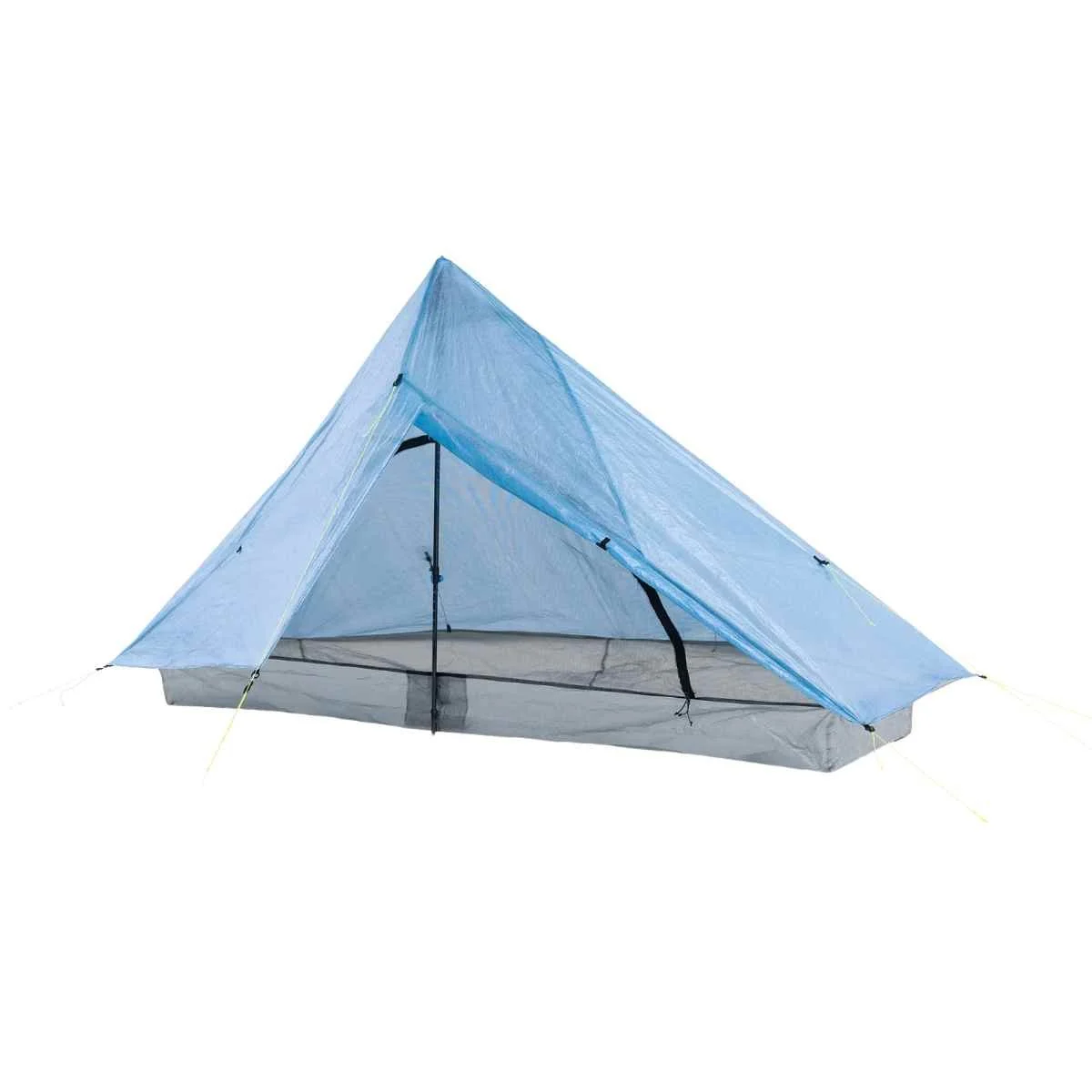
Setup: Single 52" trekking pole or tent pole (sold separately)
Stakes Required: 6-10 stakes (not included)
Interior Dimensions: 90" x 28/38" x 52" (228 x 71/97 x 132 cm)
Floor Area: 20.6 square feet (1.91 square meters)
Packed Size: 5" x 11" (12.7 x 28 cm), 138 cubic inches (2.3L)
Peak Height: 52" (132 cm)
Vestibule Depth: 18.5" (47 cm)
Materials: Dyneema Composite Fabric, bio-based HMPE fiber
Features: Overlapping storm doors, rainbow zipper screen (field-replaceable), bathtub floor
Warranty: 2 years limited
Made in: USA
Price: $599
Comparison table
| BACKPACKING TENT | MSRP | FREE-STANDING | WALLS | SLEEPS | DOORS | VESTIBULES | WEIGHT (oz) | LENGTH (in) | WIDTH (in) | PEAK HEIGHT (in) | FLOOR AREA (ft²) |
|---|---|---|---|---|---|---|---|---|---|---|---|
| Zpacks Plex Solo | $599 | No | Single | 1 | 1 | 1 | 12.3 | 90 | 38 | 52 | 20.6 |
| Gossamer Gear The One | $315 | No | Single | 1 | 2 | 1 | 19.7 | 84 | 21-33 | 45 | 15.8 |
| Gossamer Gear The Two | $375 | No | Single | 2 | 2 | 2 | 28.2 | 84 | 42-28 | 49 | 26.0 |
| Big Agnes Fly Creek UL 2 | $450 | Semi | Double | 1-2 | 1 | 1 | 36.0 | 86 | 42-52 | 42 | 28.0 |
| Zpacks Hexamid | $499 | No | Single | 1 | 1 | 1 | 9.7 | 100 | 36-42 | 51 | 18.1 |
Who is it for?
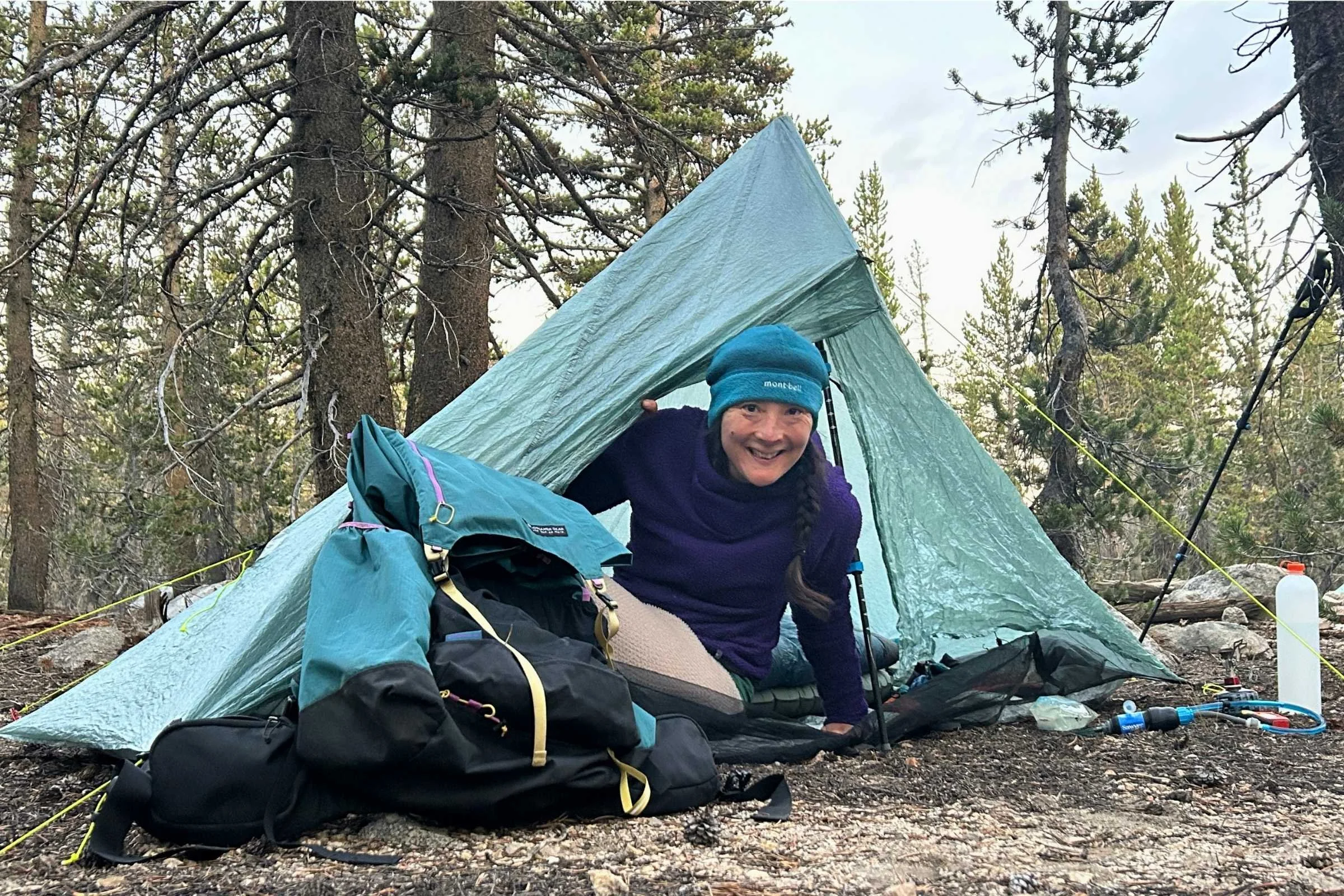
The Plex Solo tent has an excellent livability-to-weight ratio.
Thru-hikers and long-distance backpackers prioritizing weight savings on their tent
Fastpackers and trail runners who want a lightweight but fully enclosed shelter
Experienced ultralight enthusiasts comfortable with a non-freestanding setup
Solo adventurers seeking maximum tent livability-to-weight ratio
Bikepackers looking for a lightweight tent at a minimal packed size
Backpackers willing to pay a premium for cutting-edge Dyneema construction
Backpackers who value USA-made quality and innovative design
How we tested
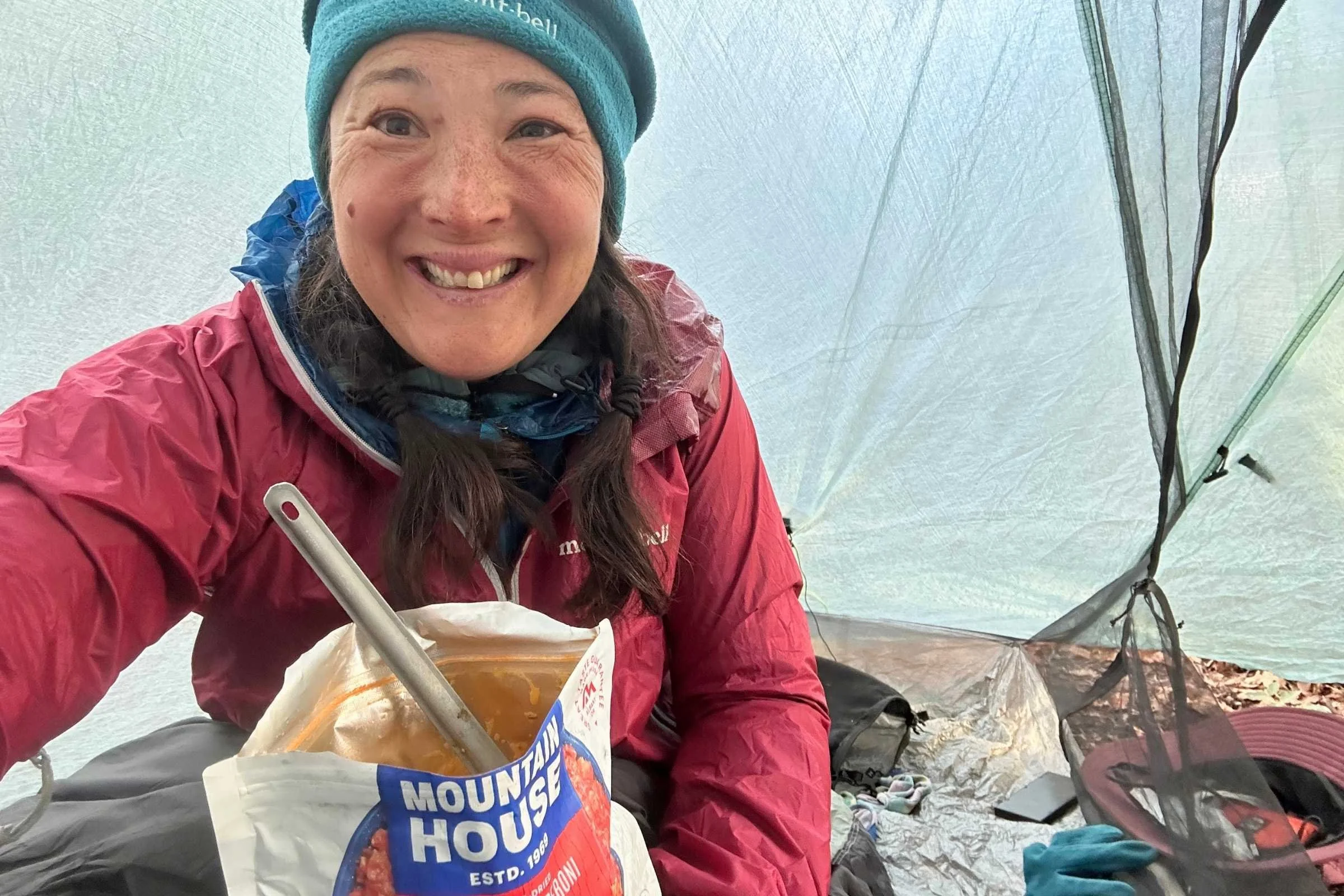
Three Treeline Review writers (Liz Thomas, Aubri Drake, Felicia Hermosillo) tested the Zpacks Plex Solo in a wide variety of trails and locations.
We tested the Zpacks Plez Solo on:
a rainy New York Appalachian Trail
a stormy Grafton Loop in Southern Maine
400 miles of the Continental Divide Trail in New Mexico and Colorado
a thru-hike of the Uinta Highline Trail in Utah
the Pacific Crest Trail in the SoCal desert and the Sierra
400 miles of the Grand Enchantment Trail in Arizona and New Mexico
100 miles on the Arizona Trail
We slept in the tent for months, facing everything from hot 70-degree desert nights to rainy 40-degree mountain nights and 15-degree nights in the desert in winter. We camped next to streams and lakes, in damp meadows, and on the top of dry mesas. We even camped next to a roaring creek in a wooded forest the day after 2” of rain. We already use trekking poles so no additional gear was needed to incorporate this tent into our gear.
What we liked
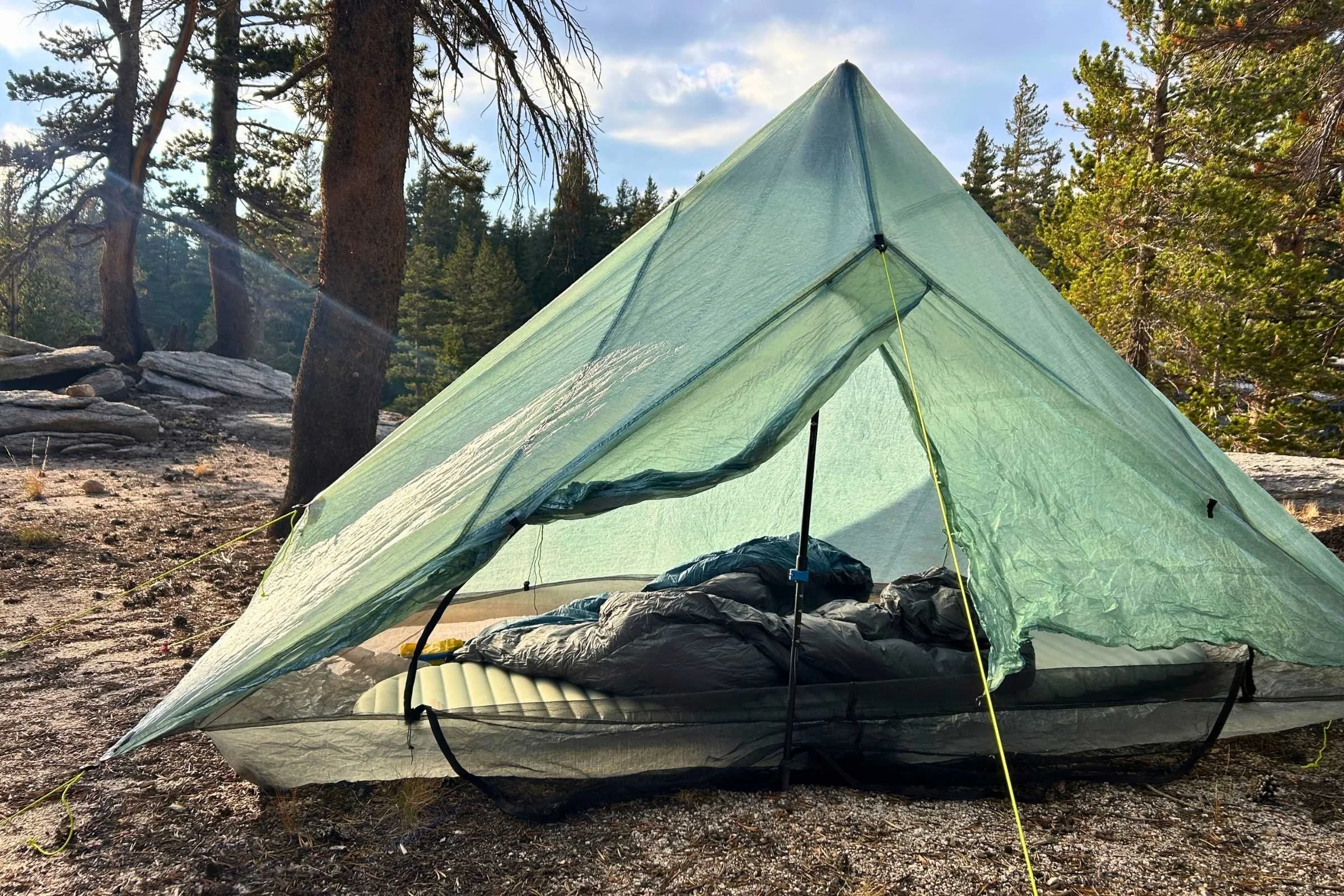
Zpacks Plex Solo set up on the PCT in the Sierra
Excellent waterproofing
No problems with condensation, regardless of where we set up the tent
Adjustable bathtub floor
Relatively intuitive setup
Particularly for those who have owned a tarp tent before, the setup will feel very familiar.
Livability-to-weight ratio
What could be better
Closing the storm doors requires two hands
Opening and closing the tent door requires two hands
Ten (10) stakes are required for optimal setup
Features
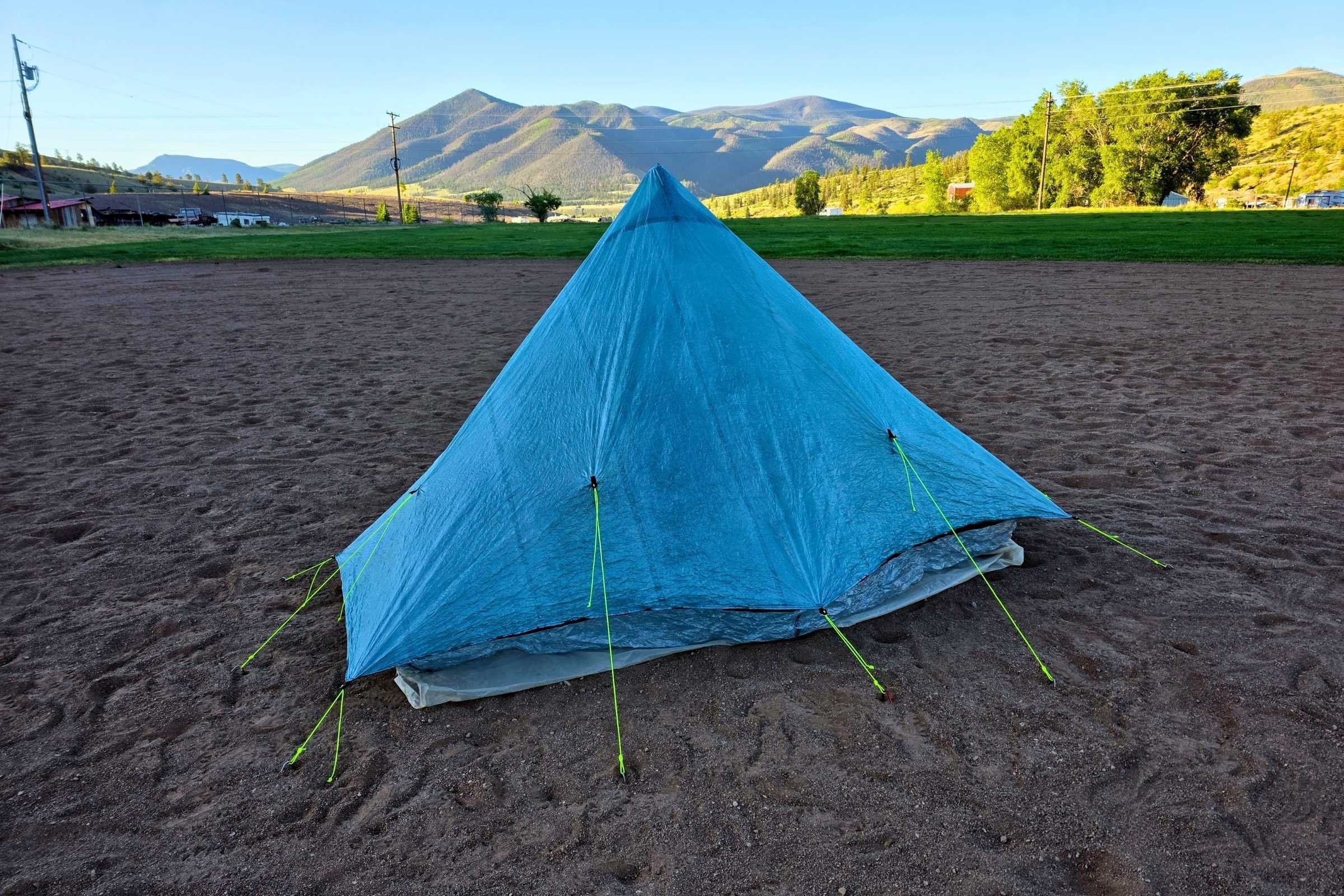
Zpacks Plex Solo on the Colorado CDT. Dyneema Composite Fabric eliminates stretch and provides lifetime waterproofing
Dyneema Composite Fabric (DCF) construction
This tent is made from bio-based HMPE fiber sourced from renewable feedstock. The DCF material is naturally waterproof without DWR coating that can wear off, with zero water absorption eliminates fabric stretch and sag when wet. DCF has an excellent strength-to-weight ratio that handles high wind loads without tearing. It has PFAS-free and chemical-free construction that is environmentally responsible. And the tent has easy field repair with the included DCF tape for punctures or tears
Ultra-minimalist weight
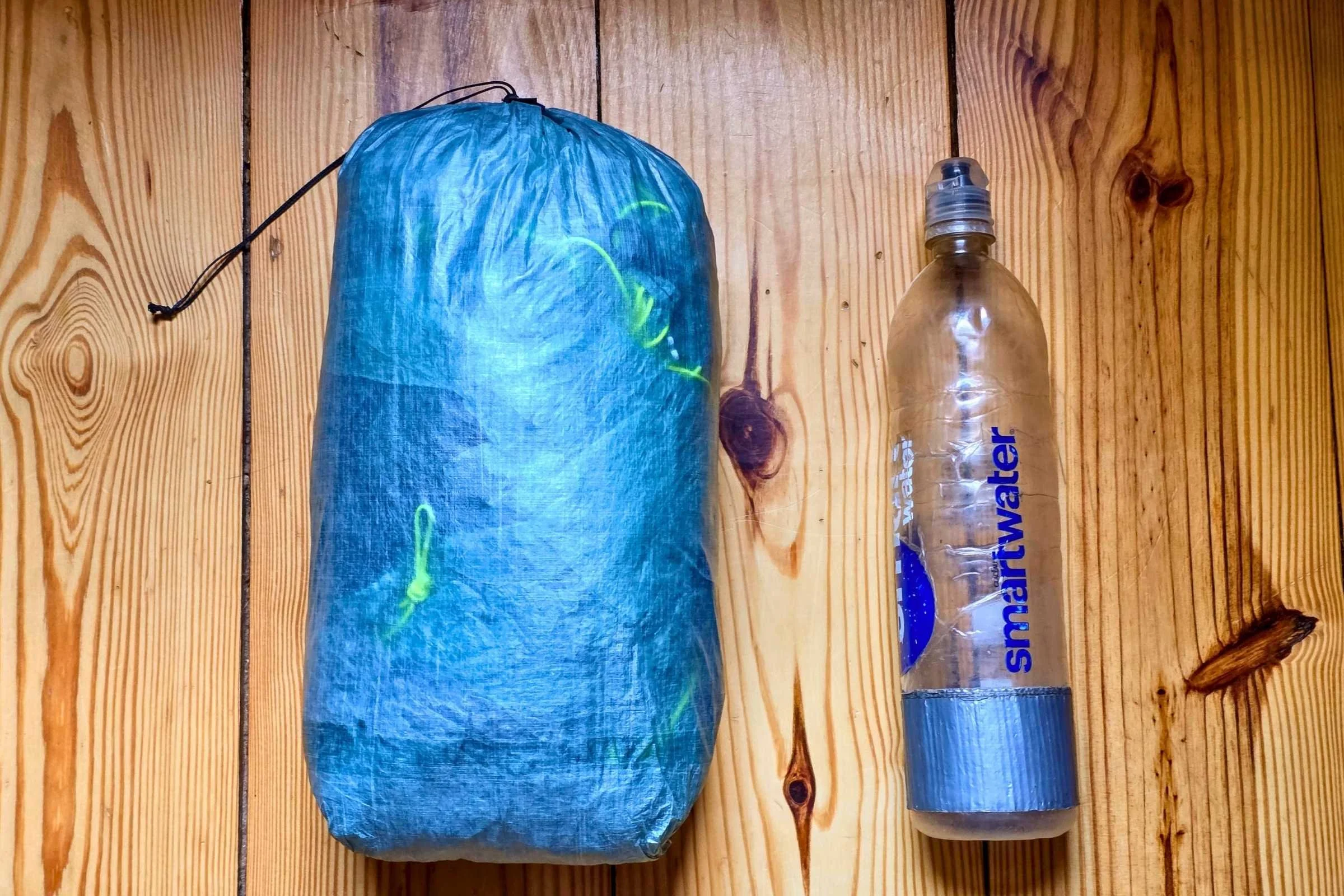
Size comparison shot, with tent and a Smart water bottle
The Plex Solo’s under 15oz total weight achieves the lightest full-featured tent category. It uses a single-pole design to eliminate heavy tent pole hardware. The minimal guyline system uses lightweight 1.6 mm Z-Line, made with a UHMWPE (Ultra High Molecular Weight Polyethylene) core with a braided polyester sheath, comparable to Dyneema. The tent is an efficient pyramid shape maximizing interior volume per ounce of material. The Plex Solo’s weight competes with tarp-and-bivy setups while providing full tent protection.
Spacious single-person interior design
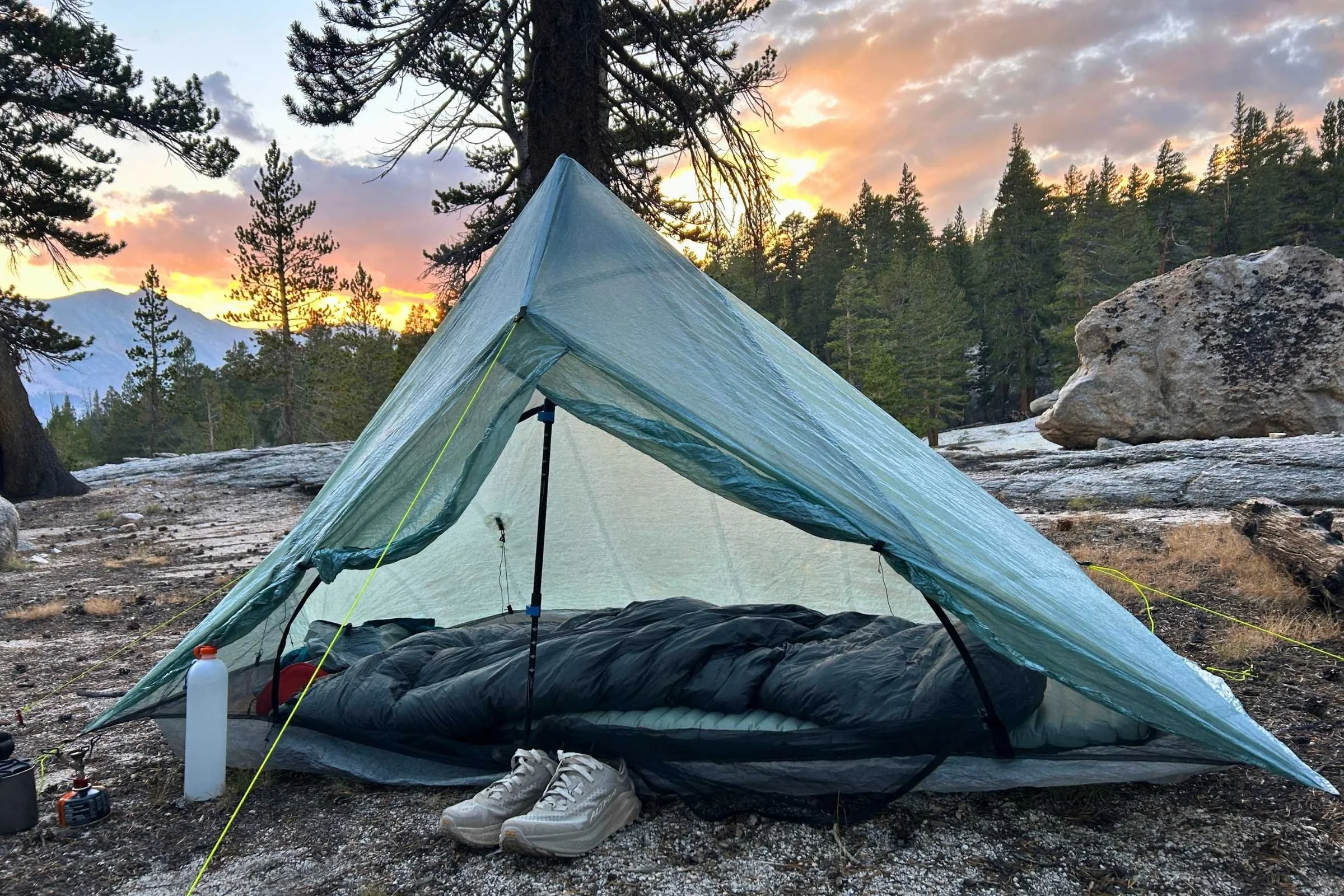
A look inside the relatively spacious interior on the Zpacks Plex Solo on the PCT in the Sierra.
The Plex Solo’s 52" peak height allows comfortable sitting inside the tent. The 90" length accommodates tall hikers with gear storage at the ends. The 38" center width provides ample room for wide sleeping pads. The bathtub floor design with 8" walls protects from ground moisture, with the thoughtful internal geometry maximizes usable living space and a single mesh pocket near the door for essential item storage.
Ventilation and weather protection
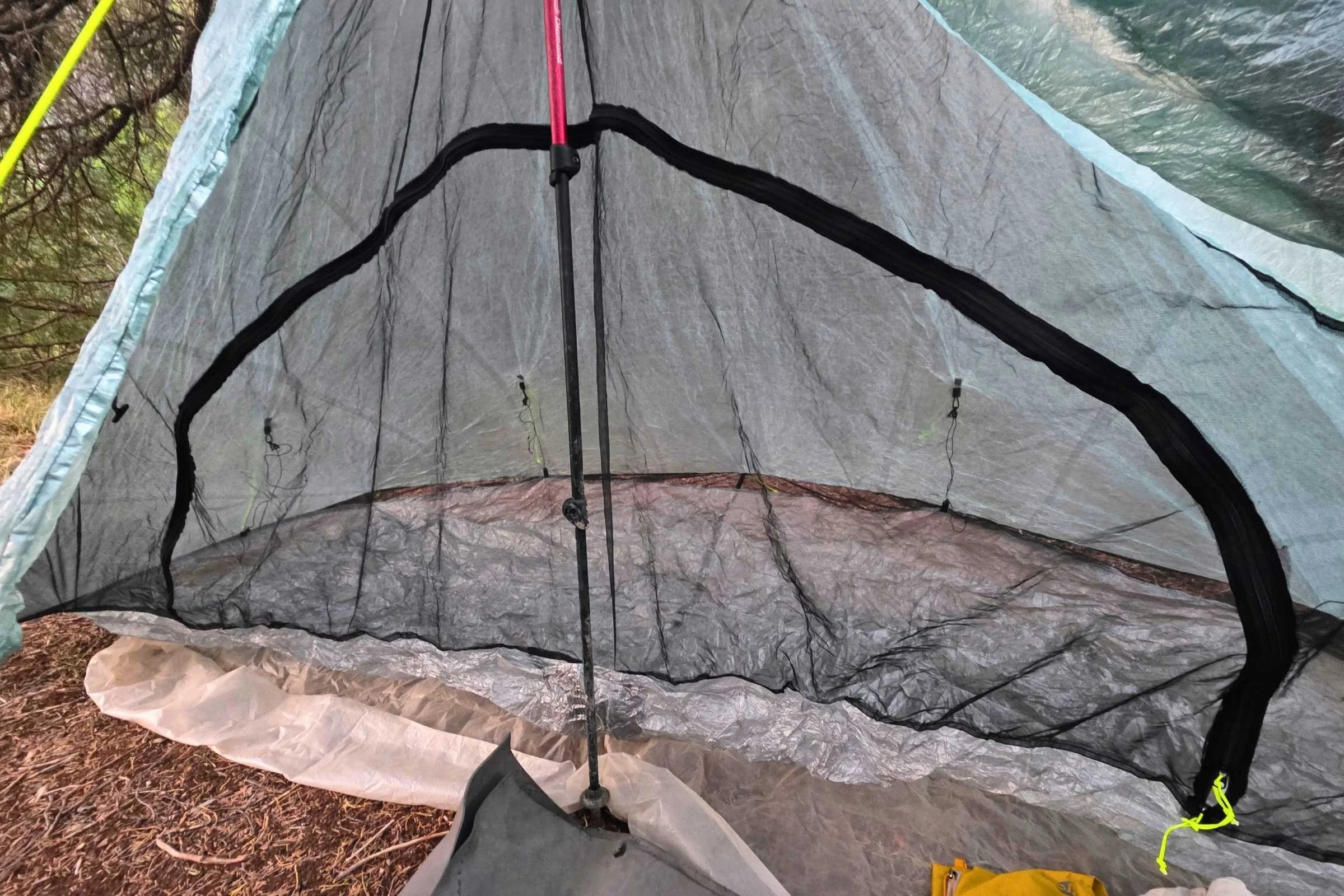
Zpacks Plex Solo’s rainbow zipper door allows entry from either side.
The overlapping storm doors operate independently for airflow control. The rainbow zipper allows entry from either side regardless of door position. The screen door drops inward eliminating the need to tie back or secure. The tent’s 4-5" canopy overhang protects the tent from rain and splash-up when the doors are open. The perimeter insect netting provides excellent ventilation, and the tent’s strategic design reduces single-wall tent condensation issues.
Non-freestanding pyramid architecture
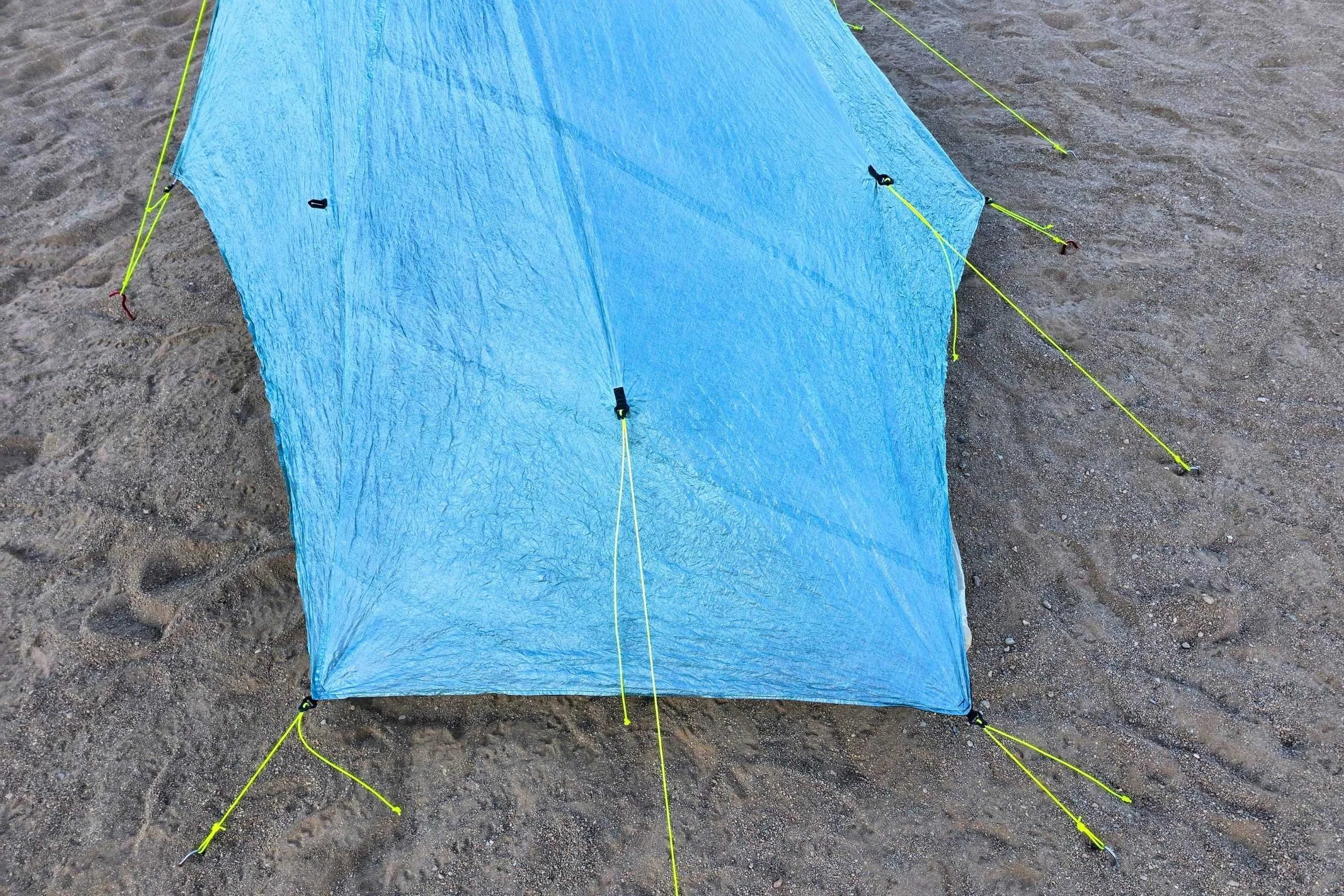
Tent setup showing stake placement and guy-line adjustment.
The single trekking pole setup requires minimal additional hardware. The four corner stake points create a stable platform on varied terrain. The efficient load distribution handles wind gusts up to 60 mph, while the asymmetric shape optimizes material use and internal volume. The tent is compatible with standard trekking poles or optional carbon tent pole. The tent can be set up quickly once the technique is mastered.
Premium construction and durability features
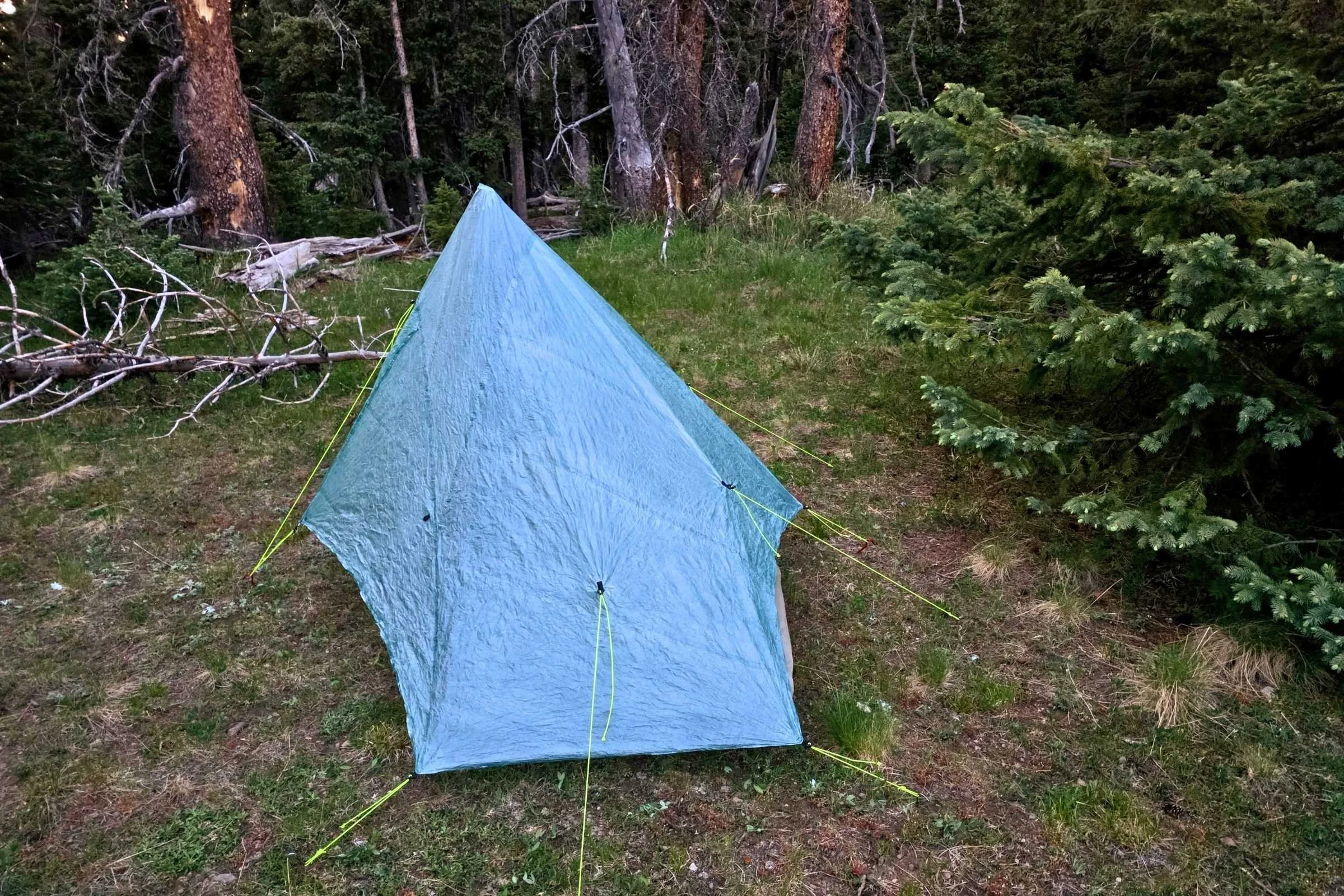
Example of the guylines and tent geometry on the Zpacks Plex Solo on the New Mexico CDT
All seams are factory-taped for waterproof integrity without field sealing, along with bonded tie-out reinforcements provide superior strength at stress points. There are LineLoc V adjusters sewn to all guylines for precise tensioning. The tent has an expected lifespan of a full 2500+ mile thru-hike with proper care. The USA manufacturing ensures quality control and supports domestic production, and includes a two-year limited warranty which covers materials and workmanship defects.
Performance in the field
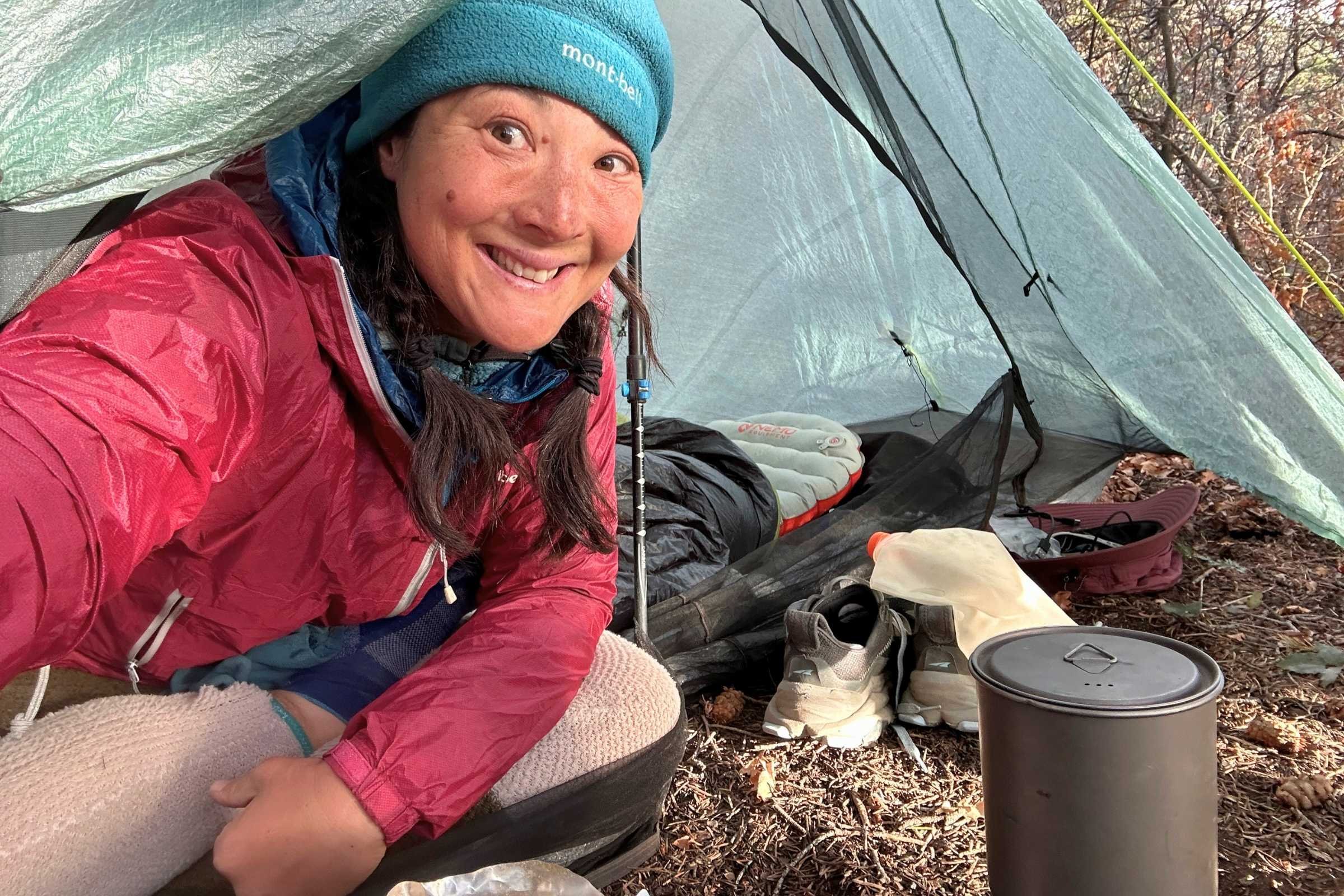
One of many places we tested the Zpacks Plex Solo on the Grand Enchantment Trail in Arizona and New Mexico.
Weight and packability
Zpacks includes a stuff sack that actually fits the tent with no trouble (but be careful, the wind likes to steal this lightweight bag). We deeply appreciated this when packing up early in the morning with cold fingers.
When it arrived, there was a lot of room in the stuff sack. After the first use, it’s harder to get it back into the stuff sack. Without the compression of a stuff sack, the tent takes up a lot of volume in a backpack. It was relatively easy to pack the tent away into the stuff sack without rolling the tent, though rolling did help make the packed size a bit smaller. We put the tent inside our packs. All packed up, the tent was thick enough that it didn’t easily fit in an external side pocket.
Weather protection
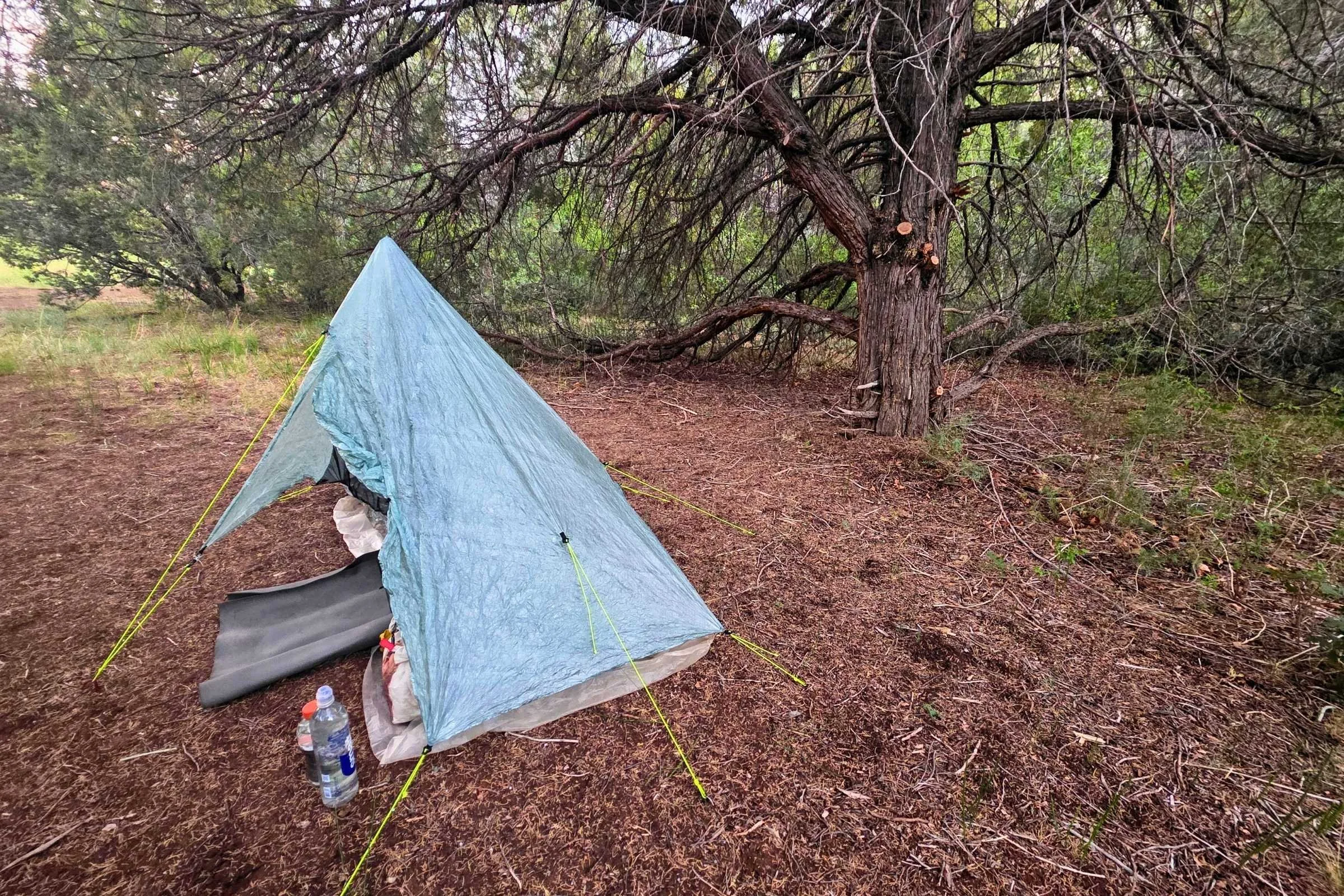
Zpacks Plex Solo’s vestibule overhang provides extra coverage.
We were impressed with the Plex Solo’s weather performance. Despite setting up nearby water, after rain, and in moist mountain meadows on cool nights, we had no problems with condensation. We used the tent multiple rainy nights in a row on the humid New York Appalachian Trail and Maine Grafton Loop and had almost no moisture inside the tent. There was a very small amount of condensation on the inside, but so little we couldn’t be sure it wasn’t just ambient moisture in the air. And we wouldn’t have noticed if we weren’t looking for it specifically.
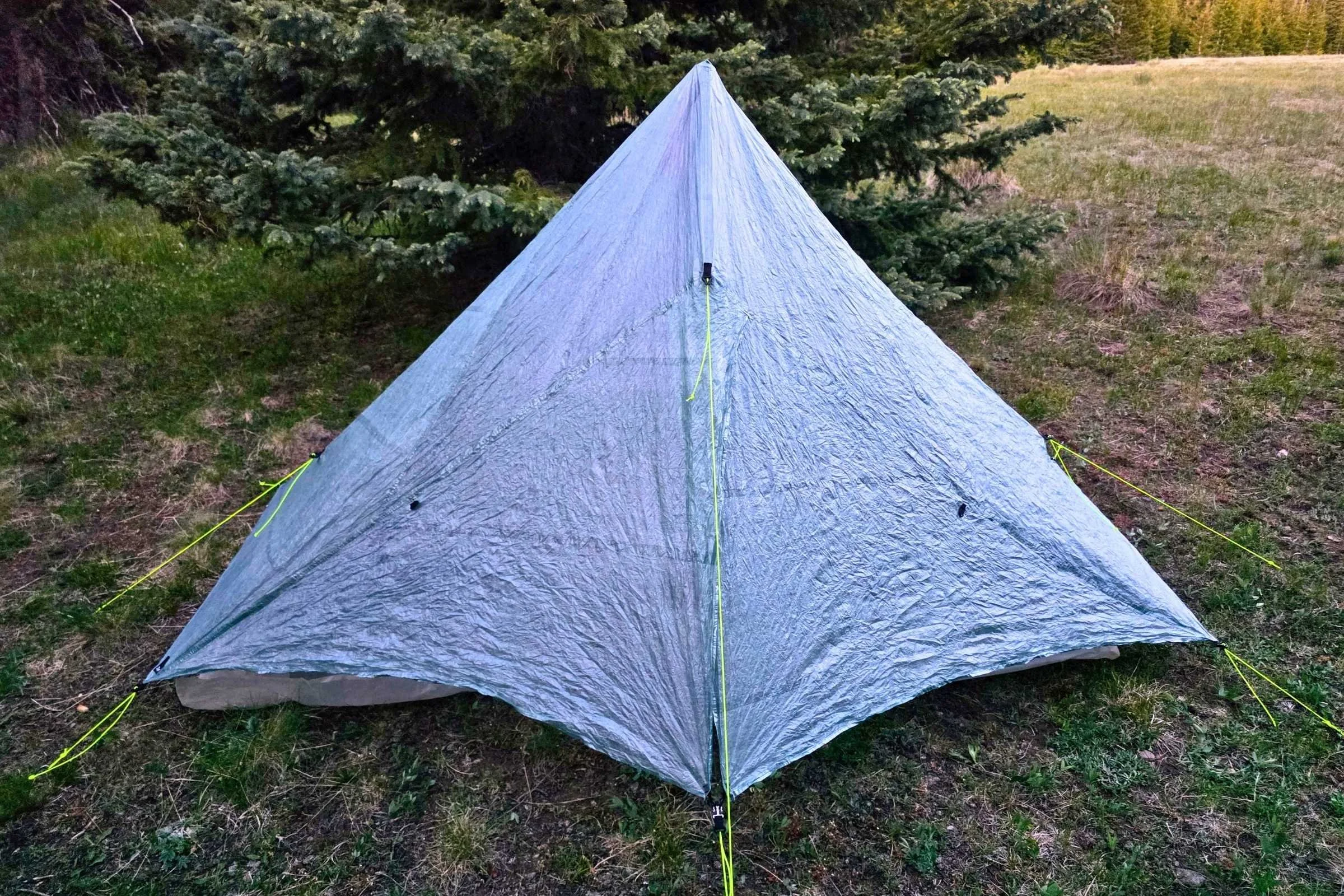
Zpacks Plex Solo’s overlapping storm doors proved useful on humid Appalachian Trail and Maine Grafton Loop backpacking trips.
We appreciated that the storm doors have no zippers. However, while the storm doors can be opened with one hand, closing either of the storm doors requires two hands. Closing the doors also required leaning most of the way out of the tent for our 5’3” tester, propping his elbow on his shoes to avoid lying in the dirt.
In rain, the exterior of the tent shed water very well and kept the inside of the tent dry, even through packing down and setting up later. Between the overlapping storm doors and the insect netting around the entire bathtub floor, optimal airflow was always achieved.
Setup and takedown
For a non-freestanding design, the Plex Solo setup was as expected. Setup involves - one stake placed in each corner, placing the trekking pole into the pocket under the canopy, two stakes to optimize front to back tension, adding another four stakes to pull out the walls, and then adjusting all guylines for optimal tension. Since it is DCF, it doesn’t stretch and more adjustment is needed than a non-DCF tent. This means setup requires a bit of practice to get it right every time. While it took a few times for our testers to find the optimal setup for the tent’s inflexible DCF material, it was a relatively intuitive process.
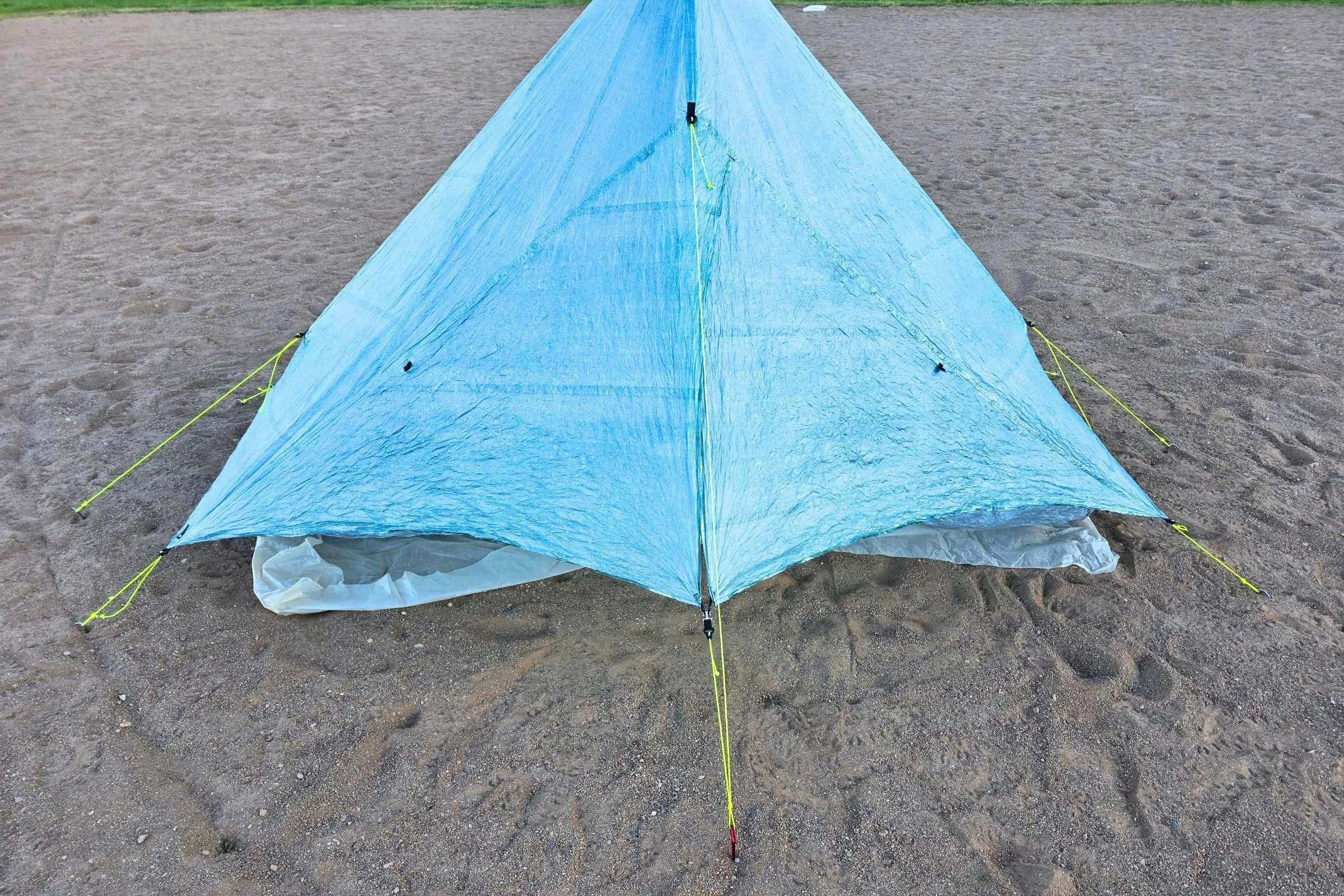
The single-pole setup requires practice but enables ultralight weight savings
Because the tent requires ten stakes, some degree of site selection is advantageous. While it is technically possible to set up the tent with only six stakes, a lot of internal space and weather resistance is lost without the additional four stakes. We set up this tent in many challenging conditions, including when it was windy, in the dark, and after a 15-hour day. With some practice, it took about 5-8 minutes to set up and adjust the tent for optimal tension, depending on how rocky the ground was (rocks interfere with stake placement). In the morning, it took 2-3 minutes to take the tent down and pack up.
Interior space and livability
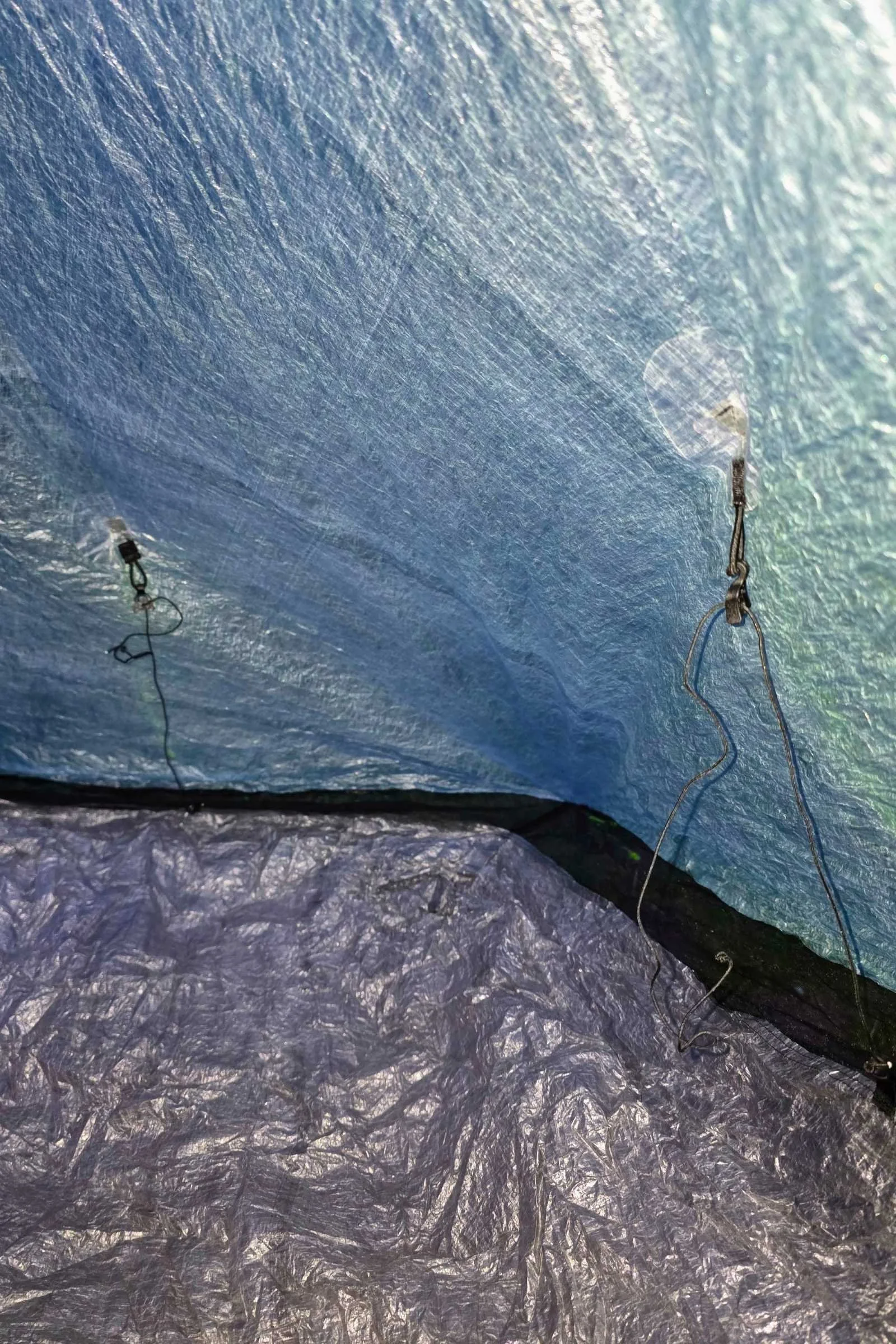
The Zpacks Plex Solo tent’s adjustable bathtub floor
This was one of our favorite features of the tent. There is plenty of space for sitting up, lying down, and stretching out. It had a very spacious feel with excellent headroom, particularly for such an ultra-lightweight shelter. We easily fit all of our gear plus a wide sleeping pad in the tent with plenty of extra space.
The bathtub floor is attached to the body of the tent by a circle of insect netting but also has adjustable cords to pull the bathtub floor up higher for protection on rainy nights. On warm nights, the cords can be relaxed to allow maximum airflow.
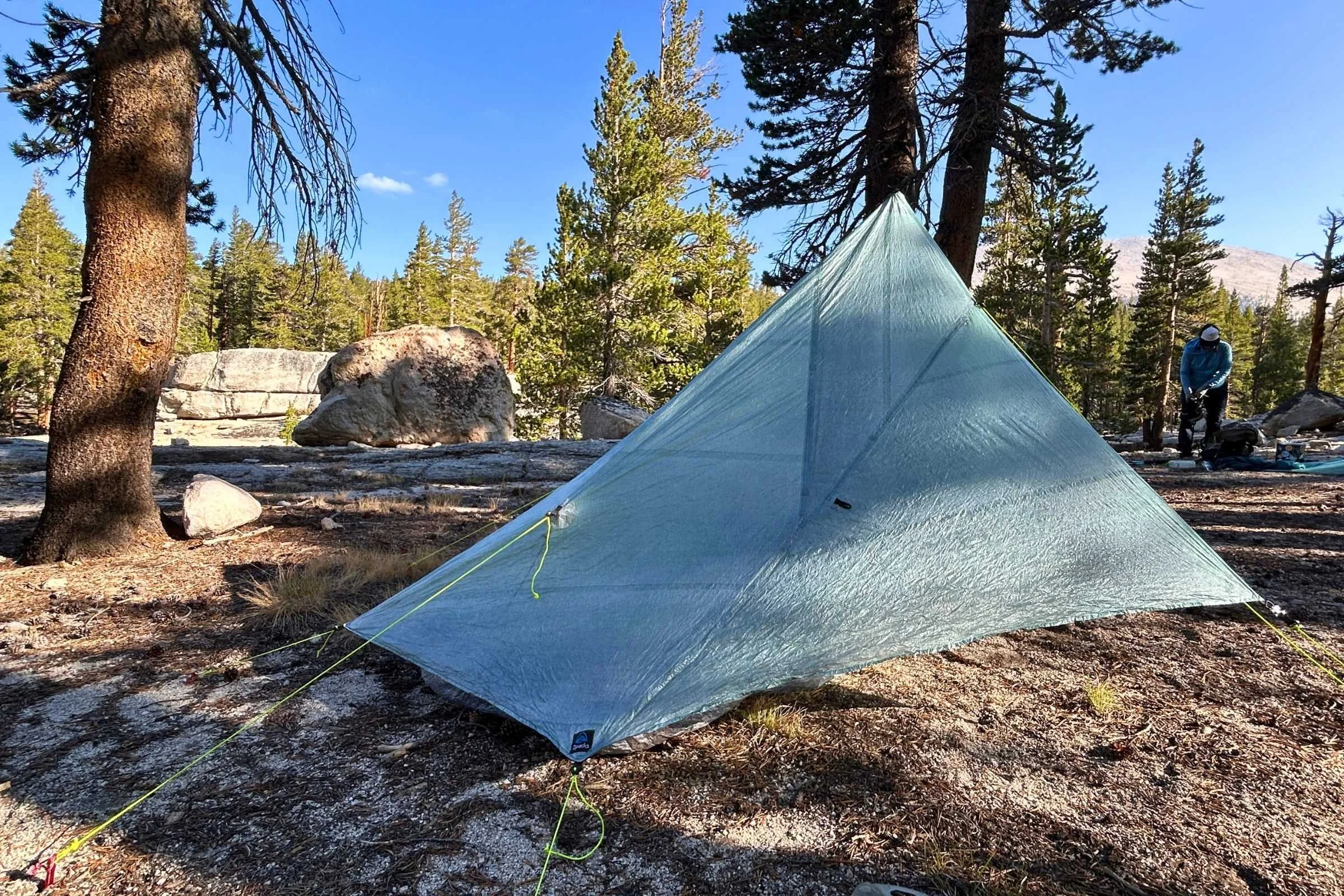
The Plex Solo’s vestibule and overhang provide excellent bad weather storage
Since the bathtub floor can be adjusted to be closer to the canopy from the inside of the tent, it was easy to make adjustments for the weather without leaving the tent. With the promise of a dry night, it was nice to listen to rain pitter-patter against the tent.
The rainbow zipper door was a nice feature, allowing entry from either side of the vestibule. This allowed our testers to decide which end of the tent they’d like their head after setting up the tent with the vestibule in the preferred direction. Unfortunately, the rainbow zipper door requires two hands to open or close. While this is fairly common for ultralight tents, it was one of the few sources of friction for this tent.
This is definitely a solo tent and maybe isn't the best option for folks over 6 feet tall. Still, in a lightning storm on the Uinta Highline, two fit in here (sitting up) while waiting out the rain.
Durability
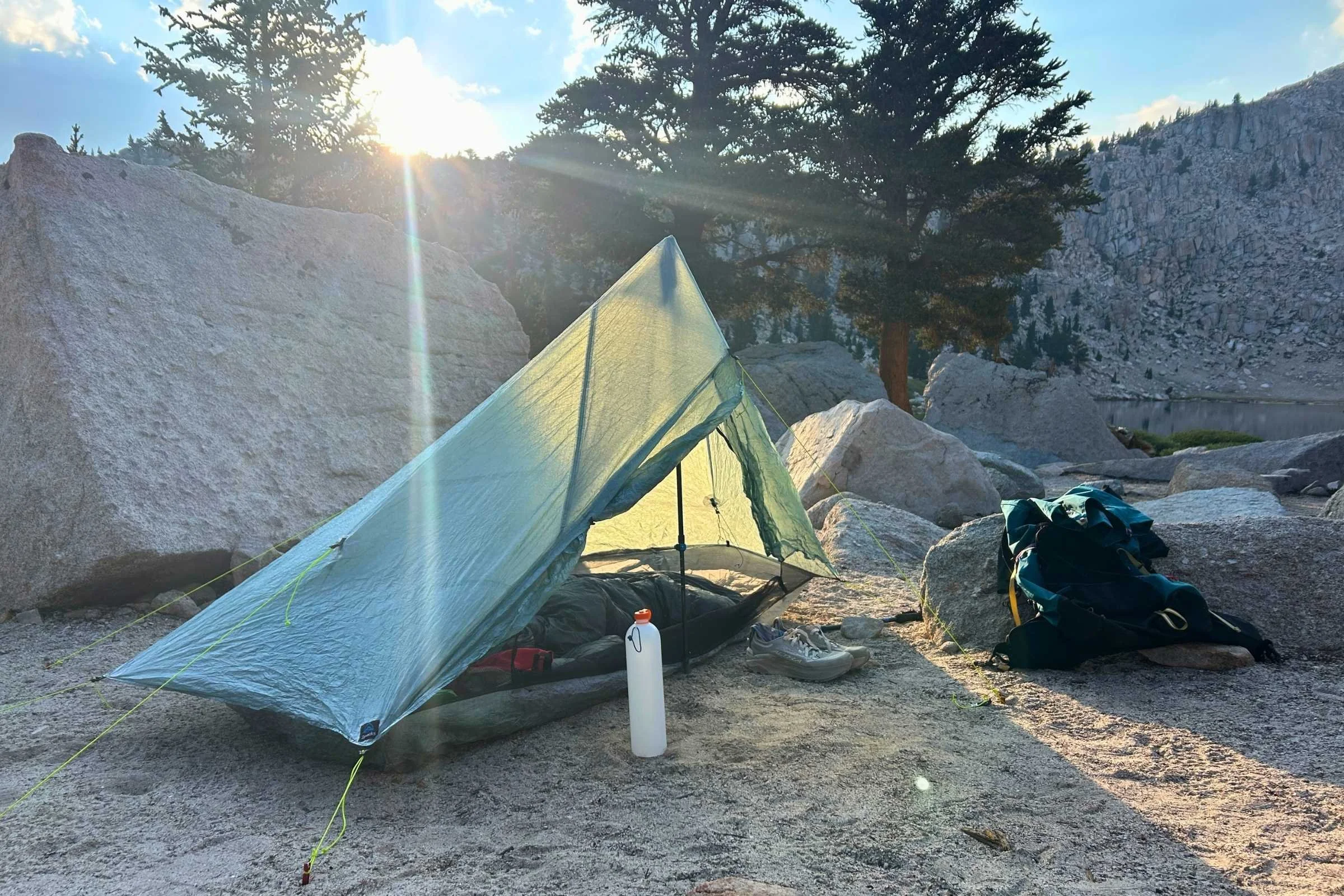
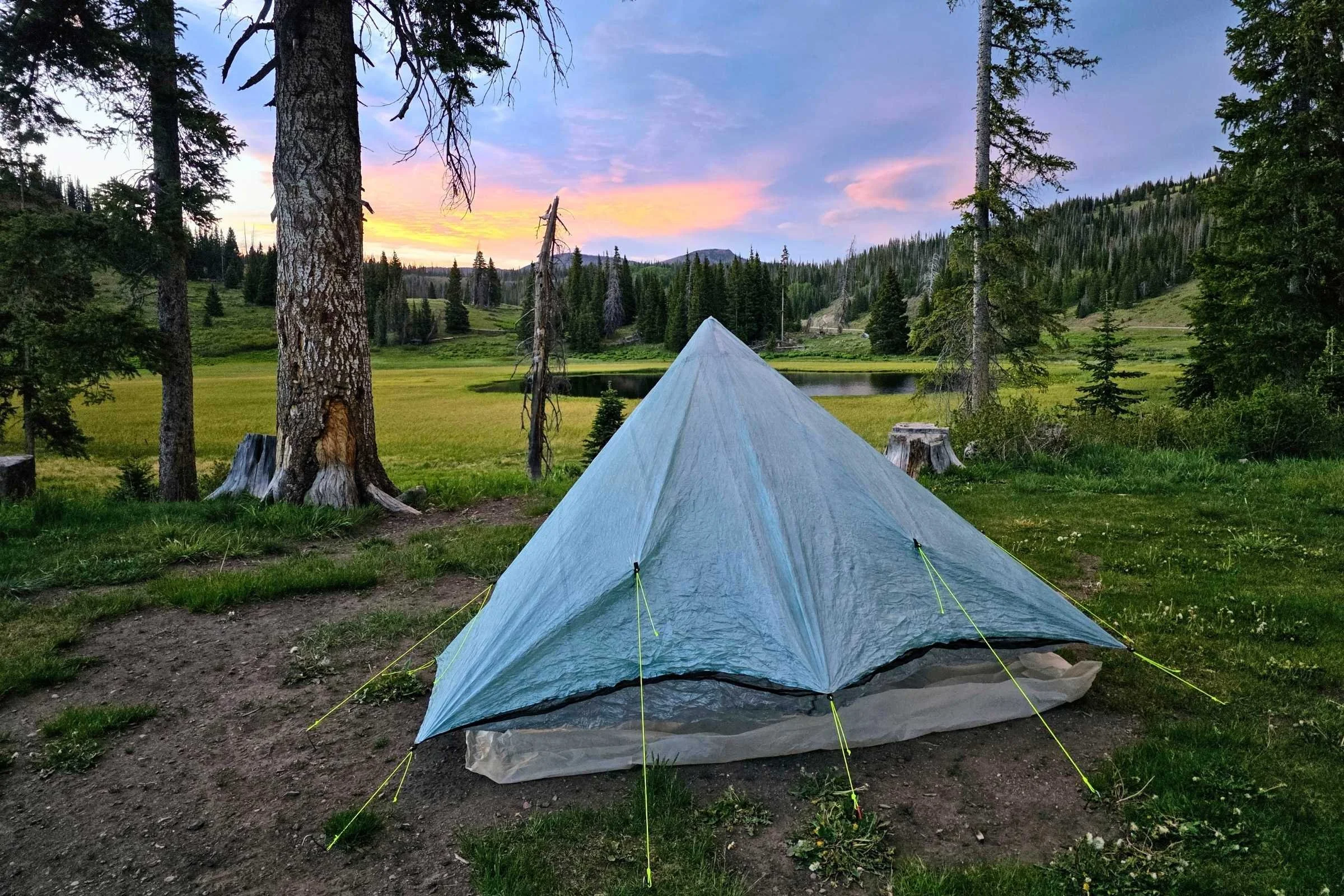
The Zpacks Plex Solo set up by a lake on the PCT in the Sierra. It easily can last at least one PCT thru-hike.
The Plex Solo has excellent DCF construction, proving a reliable shelter for long-distance hiking. We did not see any signs of wear over our 1200+ miles of testing. We chose to loosely stuff the tent into the stuff sack each morning, to avoid pinholes caused by repeatedly folding it the same way each time. Based on its performance so far, we expect this tent will last us for many thousands of miles.
Similar backpacking tents
Zpacks Plex Solo vs. Gossamer Gear The One

Type: Single-wall trekking pole shelter
Weight: 17.7 oz
Sleeps: 1, the Two available
Material: 10D Nylon Ripstop SIL/PU fabric waterproof
Vestibules: 1
Stakes required: 6
Trekking poles required: 2
The Gossamer Gear The One is a similar shape to the Plex Solo with a similar setup. However, The One is silnylon and stretchy, so the setup is a bit easier. The One is a great training tent to get comfortable with setting up trekking pole tents.
Unfortunately, The One has notable issues with condensation regardless of optimizing campsite location and its performance in the rain is poor. The tent quickly lost its waterproofing during our long-term testing and no amount of aftermarket treatment resolved the issue. And once wet, The One relentlessly sags and leaks. By contrast, the Plex Solo has performed incredibly well in rain and high-humidity environments, outshining The One in all weather aspects.
While The One can be set up with only six stakes, it requires eight to have stability in high winds. Since the tent uses two trekking poles and the material is stretchy, it’s very hard to get a taut pitch that’s stable in high wind. Our tester had The One collapse multiple times on windy nights. The Plex Solo is 5-6 oz lighter and is substantially more weather and wind resistant, though it is more expensive and more complex to set up. The One might be preferable for fairweather backpackers unfamiliar with trekking pole tents.
Note that our testing notes are based on the previous version of The One, rather than the current version that uses a new fabric and design, which is reportedly more taut and better at weatherproofing. We are testing the new version and will report back on any updates.
Gossamer Gear The One
Zpacks Plex Solo vs. Gossamer Gear The Two
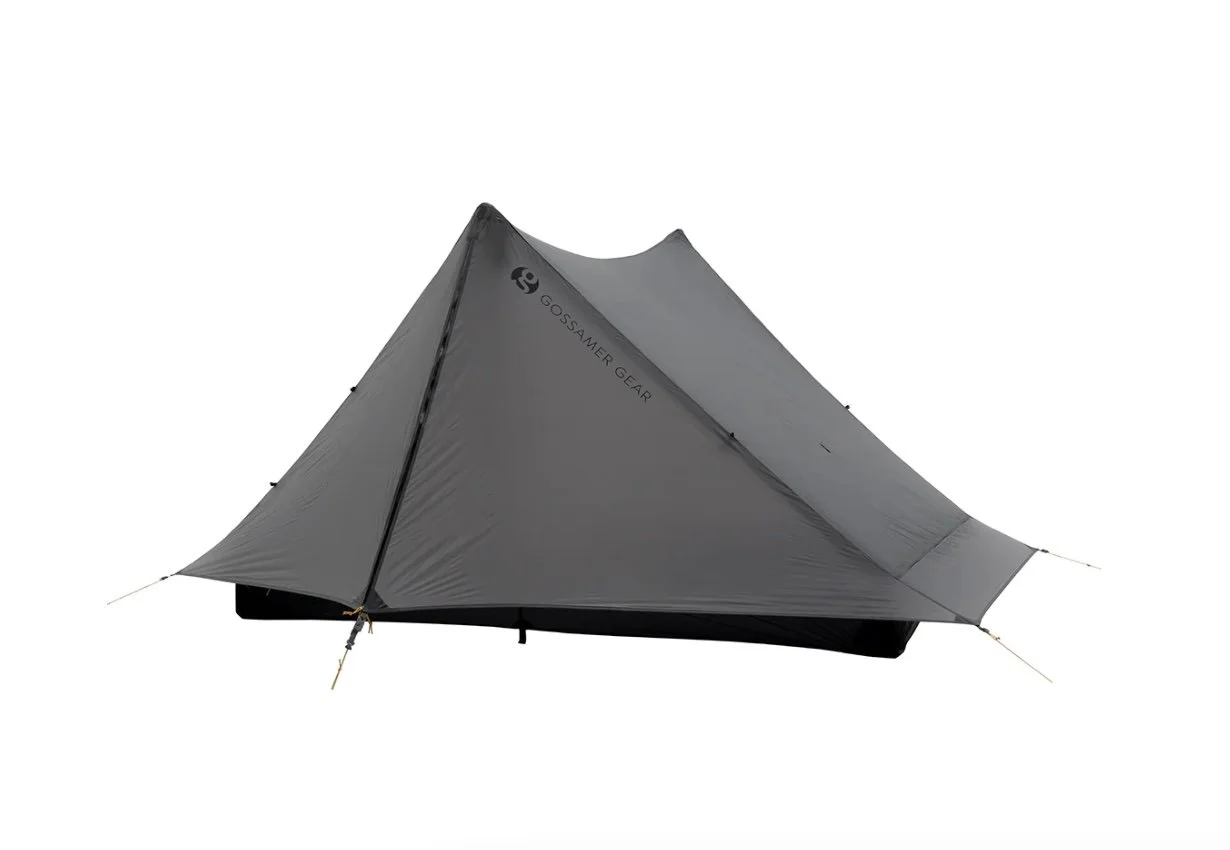
Type: Single
Weight: 27 oz
Sleeps: 2
Material: Custom ClearSkies 15D Recycled Robic
Vestibules: 2
Stakes required: 6
Trekking poles required: 2
The Gossamer Gear The Two (27oz) is similar to The One in many ways. Its increased size makes it much more vulnerable to high winds and doubles the issues with condensation, weather, and sagging. It’s worth noting that the Plex Solo has 4” more headroom and is 6” longer.
The side-entry and non-freestanding nature of the tent are similar to the Plex Solo. However, the Plex Solo’s rainbow zipper allows entry on either right or left side while The Two (and The One) limits entry to the right side. The Two is a decent option for fairweather backpackers seeking an affordable, quick-order 2-person non-freestanding tarp tent.
Note that our testing notes are based on the previous version of The Two, which uses a new fabric and design that is reportedly more taut and better at weatherproofing. We are testing the new version and will report back on any updates.
Gossamer Gear The Two
Zpacks Plex Solo vs. Big Agnes Fly Creek UL2
Type: Double-walled, semi-freestanding
Weight: 30 oz
Sleeps: 1-2
Material: Breathable recycled 15-denier ripstop nylon and polyester mesh; Hyperbead
Vestibules: 1
Stakes required: 6
Trekking poles required: No
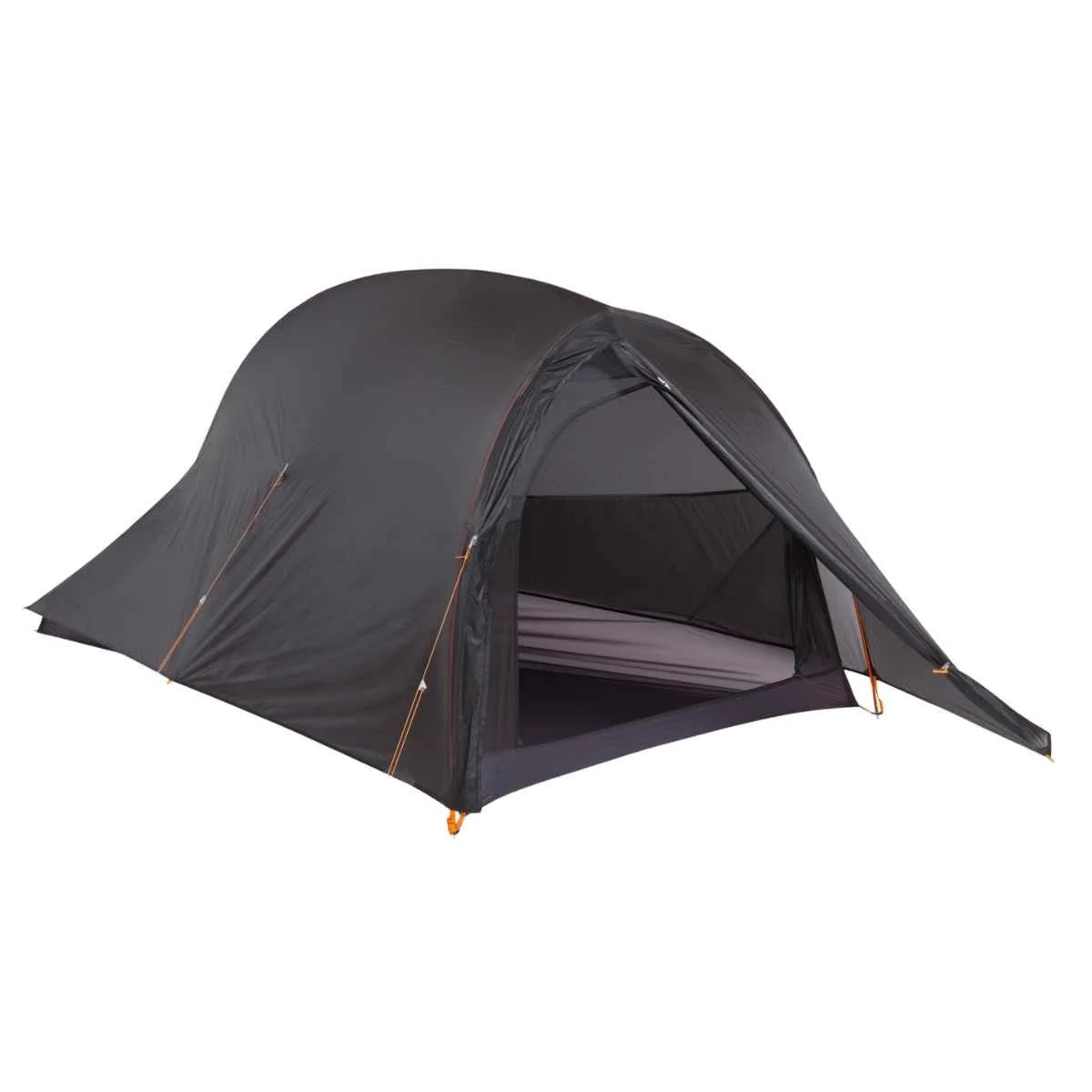
The Big Agnes Fly Creek UL2 (30 oz) is a front-entry double-wall semi-freestanding tent. It has a vestibule in the front, but it’s difficult to access items when inside the tent and it’s difficult to get in and out of the tent with gear in the vestibule. If it's raining, the rain falls directly into the tent when exiting the vestibule. The Zpacks Plex Solo is a side-entry single-wall freestanding tent. This tent has an overhang to prevent rain entering the tent, regardless of whether the vestibule doors are open.
The Fly Creek is double the weight of the Plex Solo, while also being shorter and having less head height. While the Fly Creek is easier to set up than the Plex Solo, it also requires stakes. The Fly Creek would be a better choice than the Plex Solo for those who want to avoid the complexity of setup or need a double-wall tent. This tent is featured in our Best Backpacking Tents guide.
Big Agnes Fly Creek UL2
Zpacks Plex Solo vs. Zpacks Hexamid
Type: Single
Weight:
Sleeps: 1
Material: Dyneema Composite Fabric
Vestibules: 1
Stakes required: 6
Trekking poles required: 1
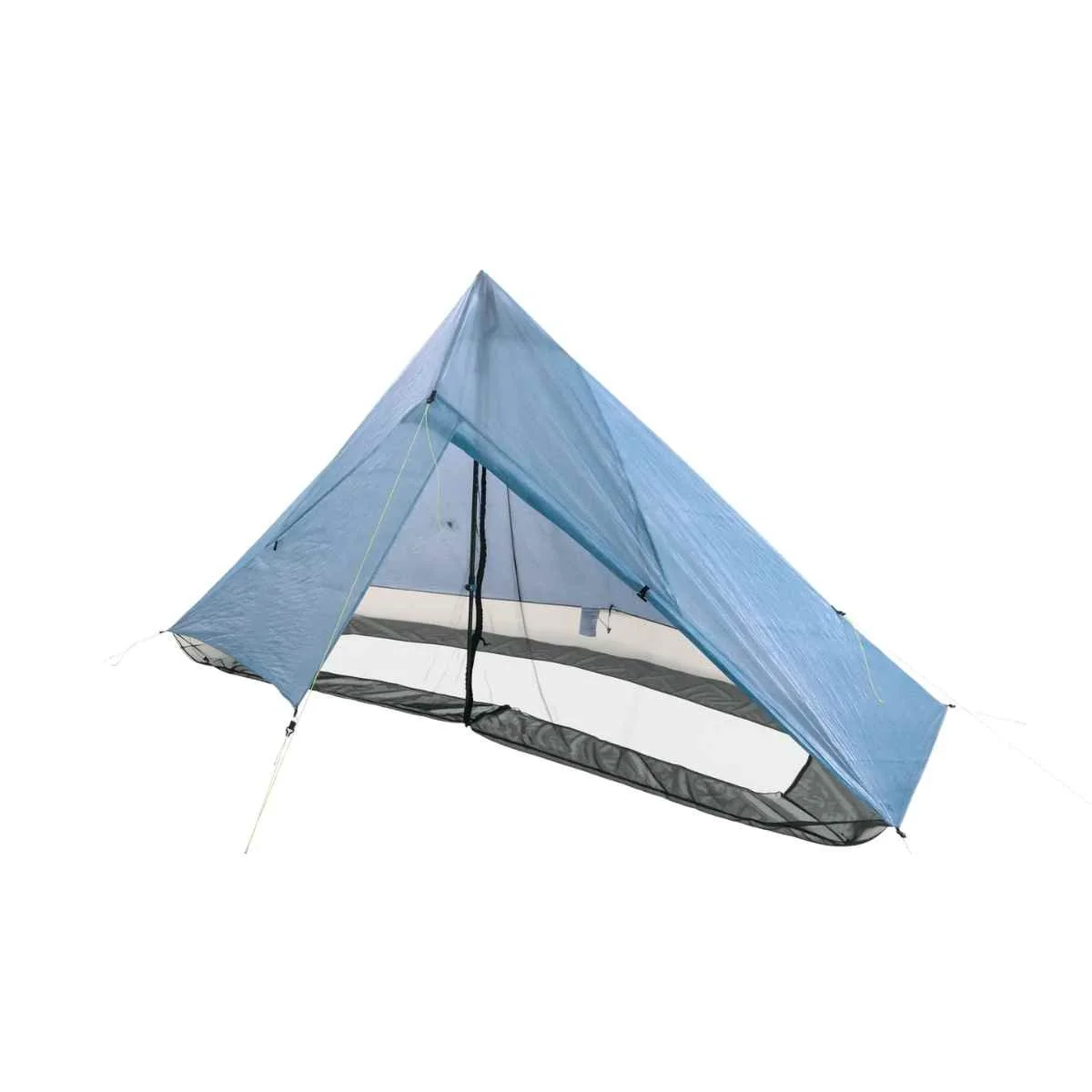
The Zpacks Plex Solo is similar to the Hexamid. They both use the same DCF fabric, single pole set up, and ultralight guylines and hardware. The main difference is the modularity. The Hexamid has a removable bathtub floor. The Plex Solo has a bathtub floor sewn in, similar to the Duplex. If cowboy camping, you can unhook the bathtub floor on the Hexamid and use that floor as a groundsheet. For the Plex Solo, you have to carry a separate groundsheet to cowboy camp.
The Hexamid is arguably better suited for dry climates whereas the Plex Solo is better for wetter climates. They both have a peak of 52", but the Hexamid is surprisingly longer (96" vs. 84") so the Hexamid is a better option for tall hikers. If you add in the removable bathtub, the Hexamid plus bathtub combo is ~$30 more than a Plex Solo with the bathtub floor sewn in.
Zpacks Hexamid
Should I buy the Zpacks Plex Solo?
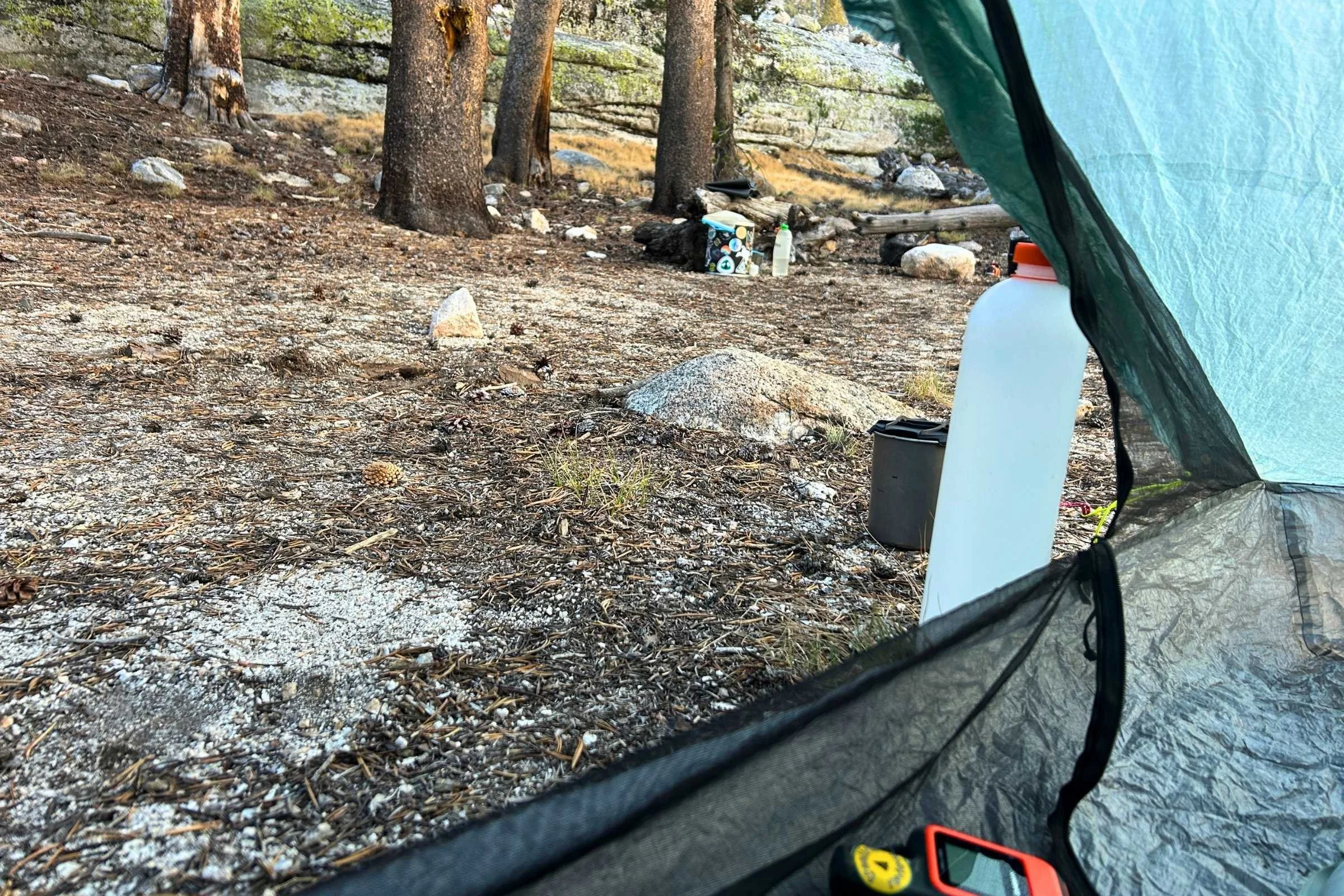
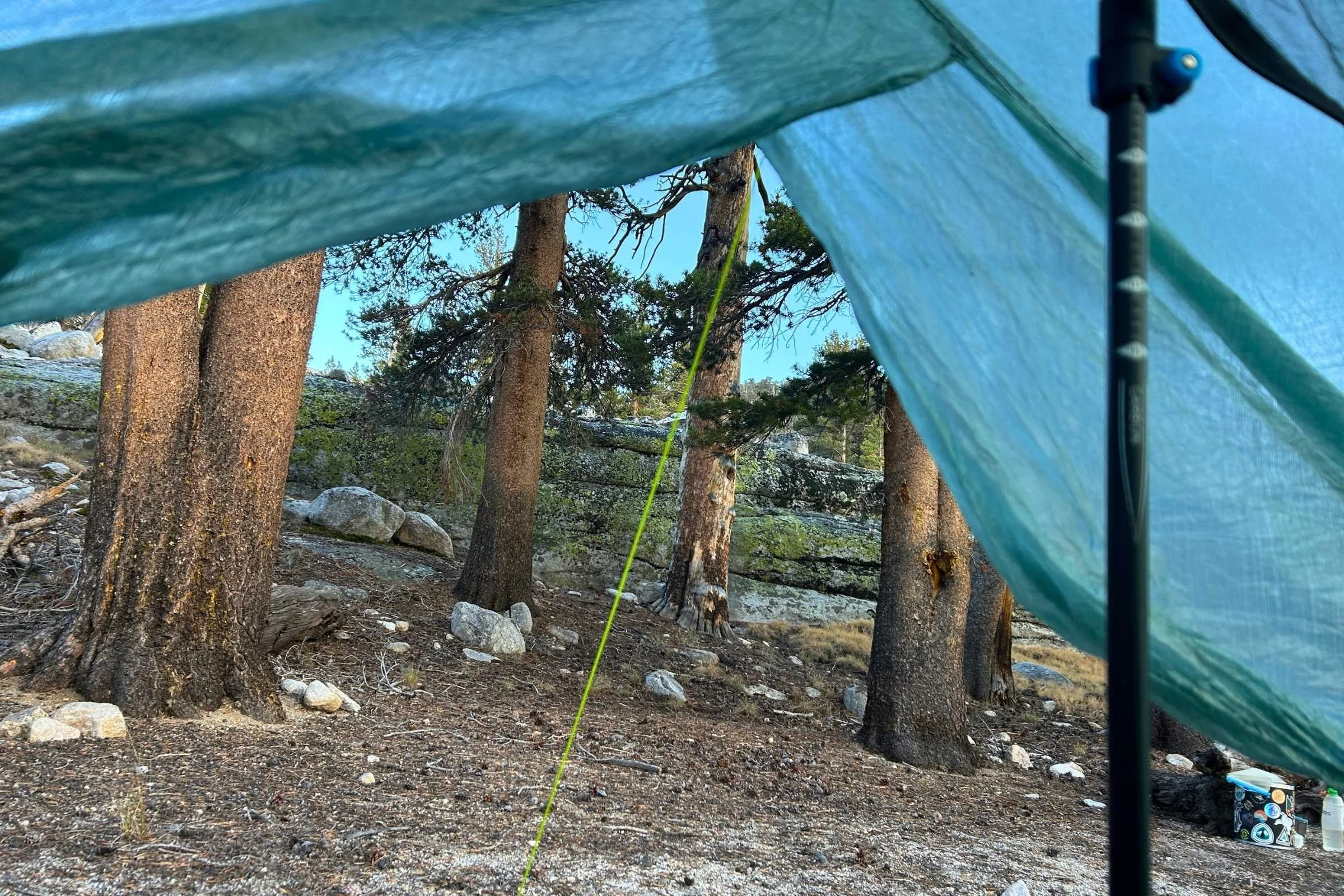
View out the front door of the Plex Solo.
Buy if you want ultralight gear, are comfortable with a non-freestanding setup, looking for a tent with excellent solo livability, value DCF technology, and don't mind paying a little extra for one of the lightest tents with excellent coverage.
Skip if you prefer the convenience of freestanding tents, need more weather protection, want traditional tent features and more interior room, or are budget conscious..
Where to buy the Zpacks Plex Solo?
As a small, made in the USA brand, the Zpacks Arc Haul Ultra can only be purchased on the Zpacks website.
Why you should trust us / About the author
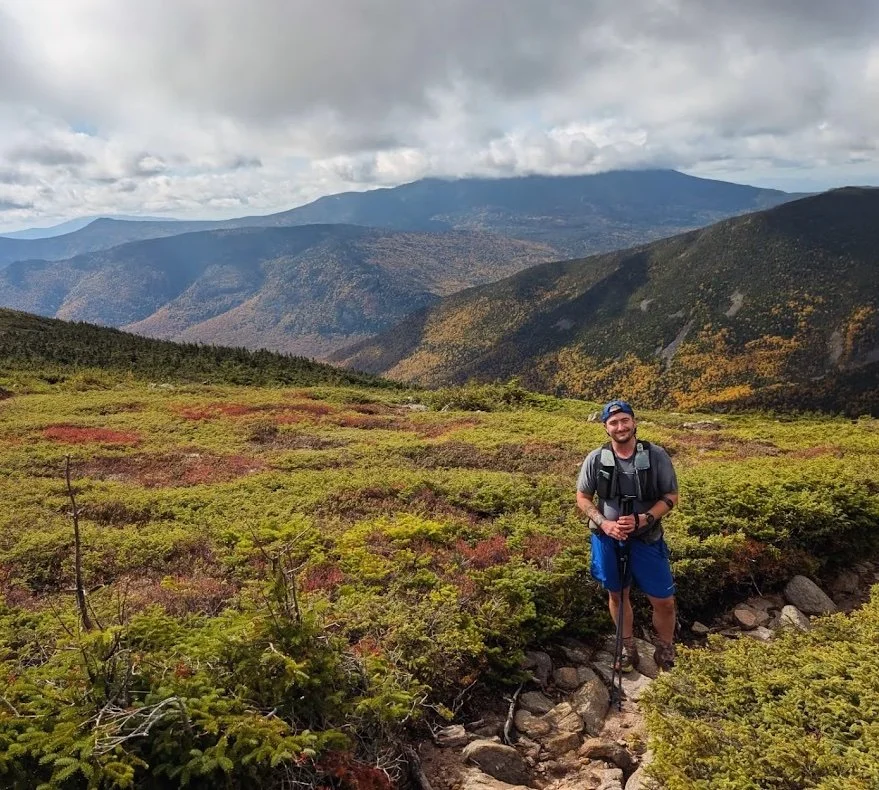
The author hiking the Pemi Loop in the White Mountains. Photo by Eric Hansen.
Aubri ('Data') Drake (he/him) is a white queer and transgender hiker, backpacker, ultrarunner, and writer passionate about making the world a better place. He discovered long-distance backpacking in 2013 and has been running off to the woods ever since. He’s been sleeping in a trekking pole tent since 2019, but still sometimes uses double-walled freestanding tents for backpacking around the Northeast.
He’s always looking forward to his next big outdoor adventure, in between working full-time in research administration. He’s hiked the Appalachian Trail, Pacific Crest Trail, Arizona Trail, Colorado Trail, Vermont's Long Trail, Nüümü Poyo (twice), Europe’s Tour du Mont Blanc, Tahoe Rim Trail, New England Trail, and New Hampshire's Cohos Trail, and is 55% done with the Continental Divide Trail.
Website: https://transcendingmountains.blog/
Instagram: @genderqueer_hiker