Best Trail Running Shoes for Hiking of 2026
Light and flexible shoes for day hikes, backpacking trips, and thru-hikes
June 3rd, 2026
Home → Gear Reviews → Footwear
The real reason hikers reach for trail running shoes: traditional hiking shoes are heavy, slow to dry, and often take miles to break in.
Trail running shoes offer a lighter, more flexible alternative that works for all kinds of hiking. From day hikes on groomed trail to multi-month thru-hikes where foot fatigue compounds over hundreds of miles, trail runners for hiking are a solid bet for many people.
Sure, there are trade-offs: trail runners typically offer less ankle support, less protection against sharp rocks underfoot, and wear through faster than a heavier hiking shoe.
This guide is for hikers who have already decided those trade-offs are acceptable and want to know which trail runners actually hold up on trail, not which ones are fastest on a trail race.
While we have other trail running shoes guides, this story is different.
For trail running shoes for hiking, we asked writers to prioritize all-day comfort with a heavy pack, traction and stability for carrying that pack, and durability over distance rather than speed and energy return.
Nine Treeline Review writers tested trail running shoes for hiking specifically. We wore each shoe on real hikes from day hikes, to overnight trips, and backpacking and thru-hiking. For this guide, we've tested more than 50 pairs of trail running shoes over tens of thousands of miles of hiking and many years. We evaluated traction across terrain types (wet rock, loose dirt, mud, scree), cushioning under a loaded pack over a full day (or weeks or months), fit and whether blisters happen, durability of outsole and upper over 300+ miles, and quick-dry and breathability after river fords or a week of rain.
For trail running shoes for hiking, we also considered value measured in cost-per-mile rather than upfront price. We deliberately did not consider energy return and responsiveness. Those criteria matter for running but are secondary for hikers.
The best overall pick trail running shoe for hiking is the Altra Lone Peak 9+ (men's and women's). It's the most popular trail running shoe for hiking hitting the sweet spot of comfort, light weight, durability, and price per mile covered. It breathes well and won't overheat your feat while offering nimble traction that works for almost any kind of hiking you do in any kind of weather.
We create reader-supported, objective gear reviews independently selected by our editors. This story may contain affiliate links, which help fund our website. When you click on the links to purchase gear, we may get a commission — without costing you an extra cent. Thank you for supporting our work and mission of outdoor coverage for every body! Learn more.
Comparison table
| FAVORITE TRAIL RUNNERS FOR HIKING | TREELINE WRITER | DROP | CUSHION | ROCK PLATE | MSRP |
|---|---|---|---|---|---|
| Altra Lone Peak 9+ Women's Men's |
Sam Schild Read why |
0 mm | Moderate | ❌ | $160 |
| HOKA Speedgoat 7 Women's Men's |
Aubri Drake Read why |
5 mm | Moderate | ❌ | $165 |
| Altra Timp 6 Women's Men's |
Sara "Socks" Read why |
0 mm | Moderate | ❌ | $165 |
| Altra Olympus 6 Women's Men's |
Liz Thomas Read why |
0 mm | Maximum | ❌ | $185 |
| Altra Mont Blanc Carbon Women's Men's |
Mary Murphy Read why |
0 mm | Maximum | ✔ | $275 |
The winners
Altra Lone Peak 9+
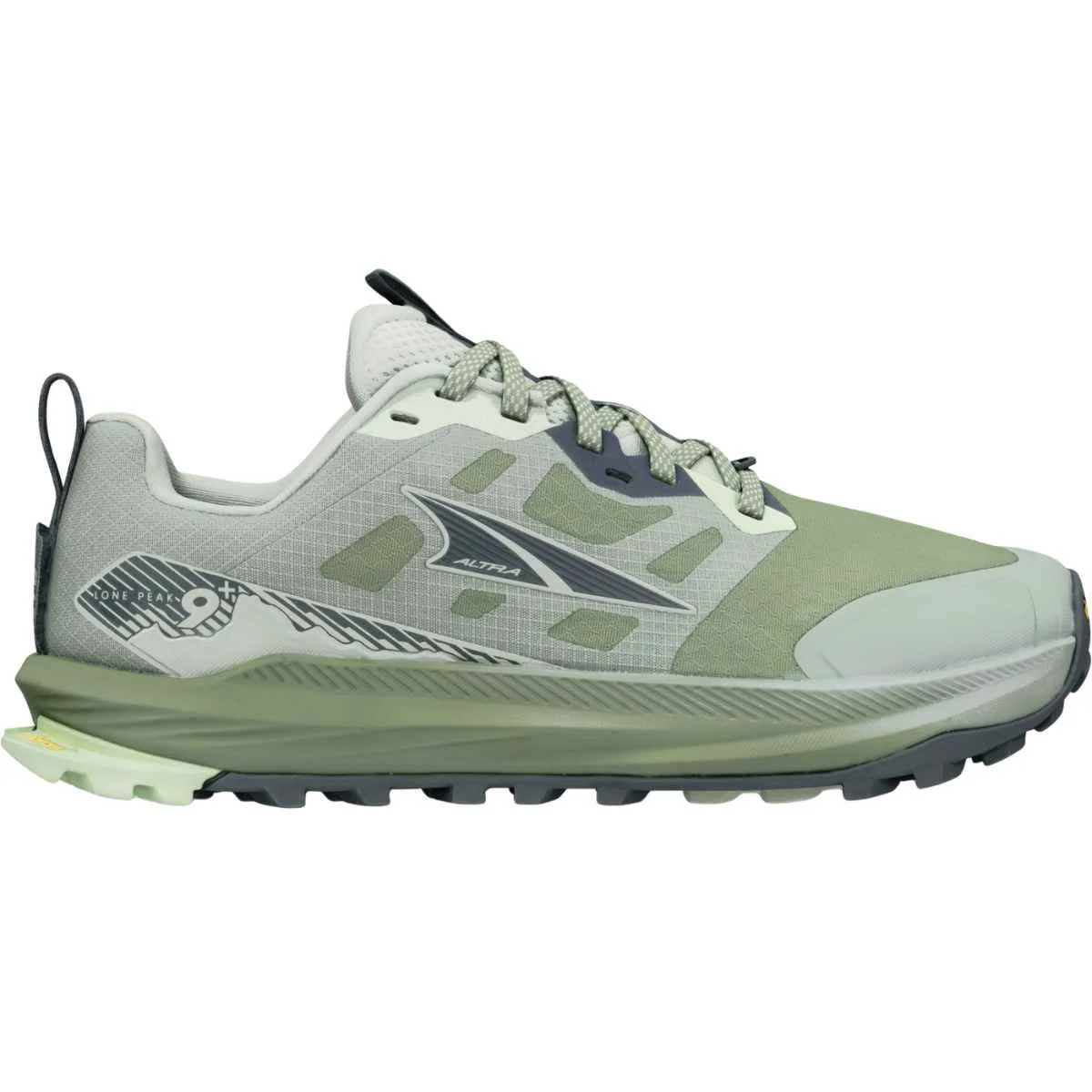
Mileage per pair: ~350 miles (based on my experience)
Outsole material: Vibram Megagrip Rubber (in Lone Peak 9+)
Weight (pair): 22.1 oz (men's 10.5), 18.6 oz (women's 8.5)
Heel-to-toe drop: 0 mm
Cushion level: Moderate
Rock plate: No
Available sizes and widths: Men’s 7-16; Women’s 5.5-12, standard and wide
My favorite features: Wide toe box, width, cushioning, Vibram sole
The Altra Lone Peak, specifically the Lone Peak 9+, is one of my favorite shoes for hiking and backpacking because it's comfortable, nimble, has excellent grip, and provides plenty of space for your toes to spread out. The extra width is especially helpful in hot environments, where your feet swell as the day goes on. I wore Lone Peaks while thru-hiking the Pacific Crest Trail, and have worn them for many other hiking trips since.
Countless Treeline Review writers have worn multiple iterations of the Altra Lone Peak and it has become the standard by which all trail running shoes for hiking are judged.
Altra Lone Peak 9+
men's
Women's
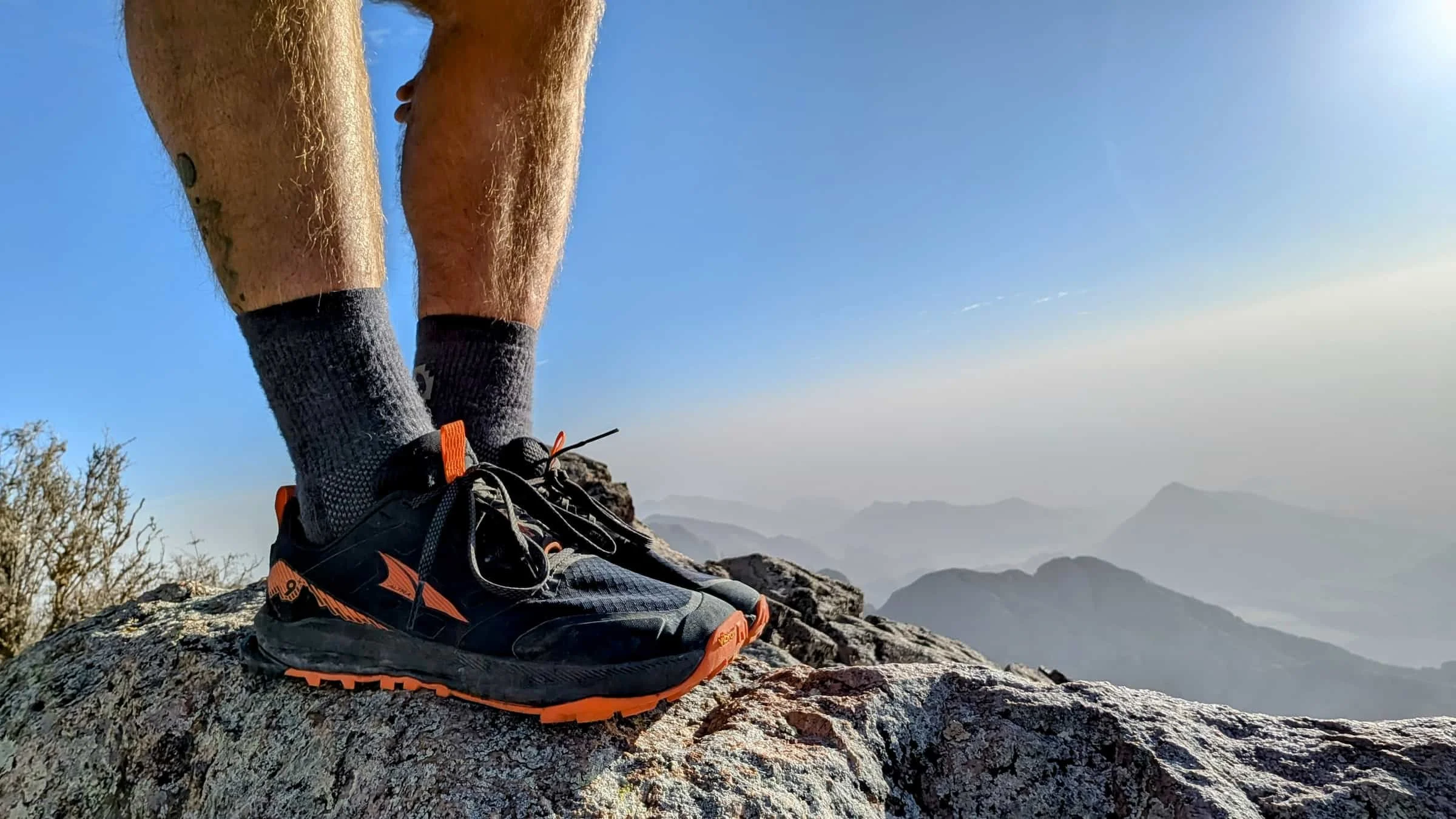
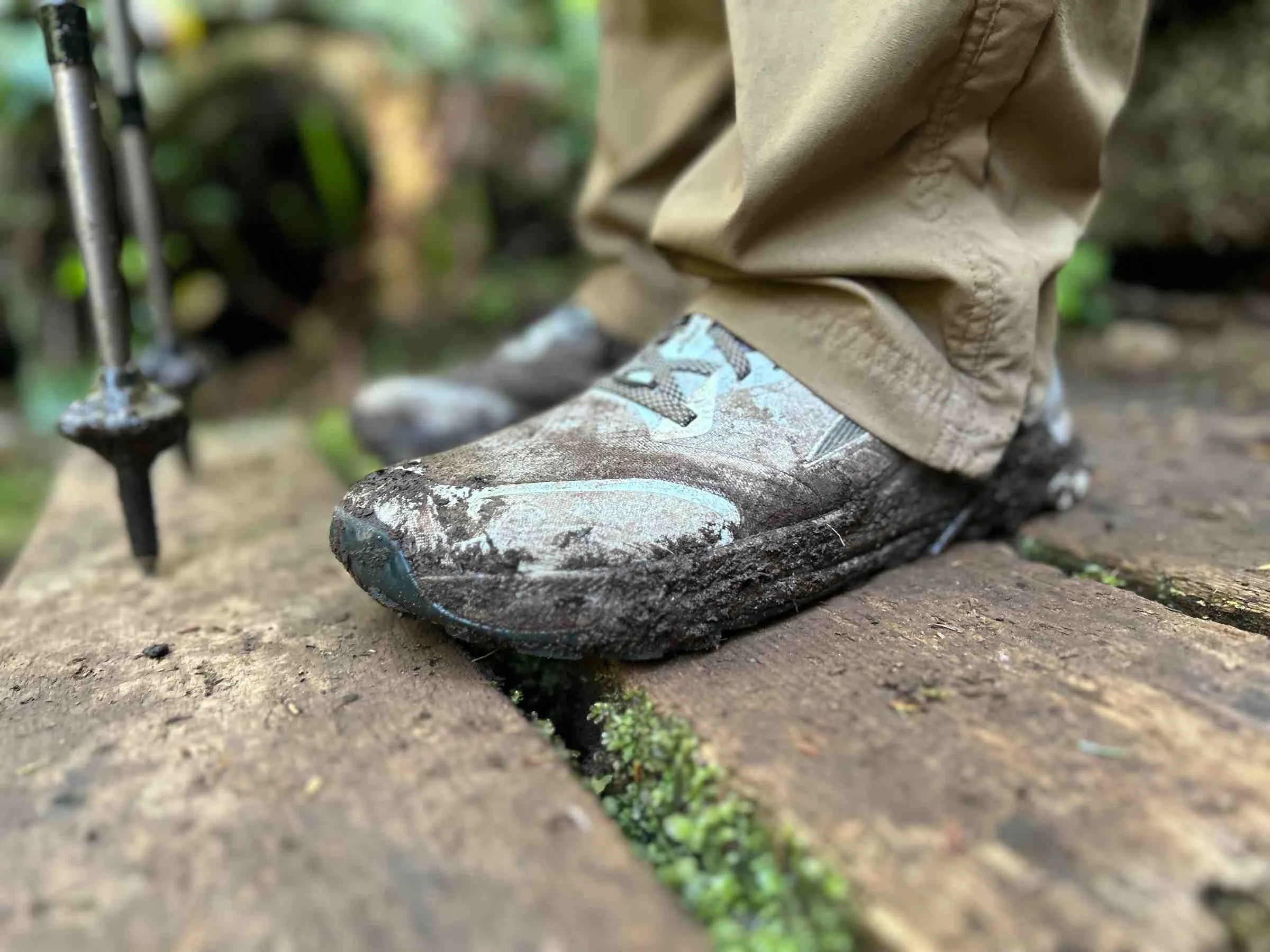
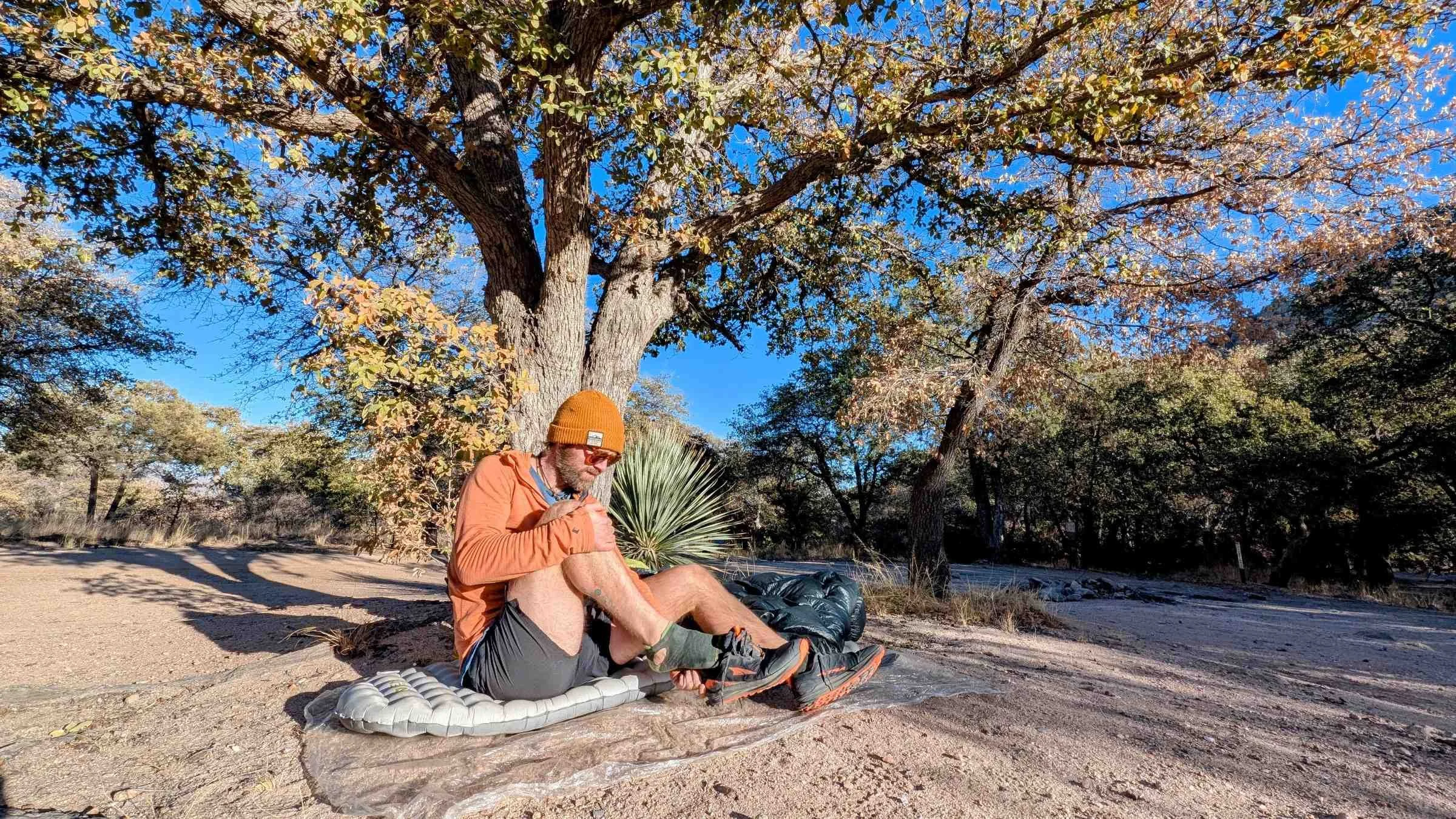
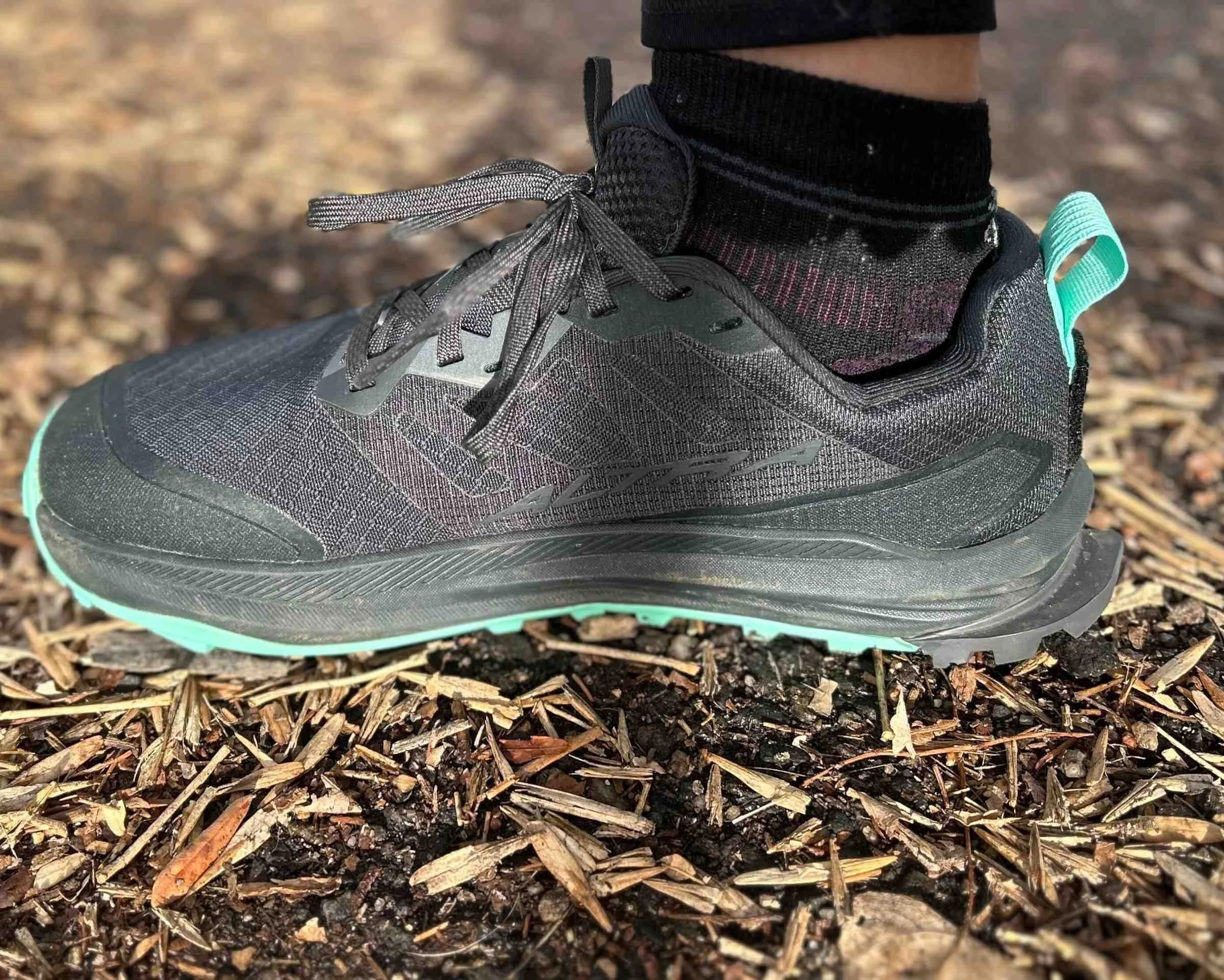
Three models from the Altra trail shoe family—the Lone Peak, Timp, and Olympus—are each on my favorite shoes list because they’re zero drop and have a wide toe box (Sara and Liz talk about the Timp and Olympus more below). The wide toe box allows your feet to splay naturally, thereby promoting foot health. It’s also helpful for people prone to blisters between their toes, because more space for your toes means the shoes won’t smoosh them together. I think the Lone Peak is the widest of the aforementioned three models, too. So if you’re looking for the widest, these are your best bet (or the max-cushion Olympus).
I especially love the Lone Peak 9+ for its Vibram Megagrip outsole. Previously, I preferred the Lone Peak for long, hot trails that are less technical, such as the Pacific Crest Trail. But when the trail got more scrambly, the less sticky rubber wasn’t great for traction. With the addition of the Megagrip outsole, the Lone Peak 9+ is much more capable on technical terrain and in wet conditions, making it more versatile overall. The Lone Peak was already a great shoe, but the Vibram Megagrip on the Lone Peak 9+ makes it even better.
I like the Lone Peak+ so much, I wrote a full review, which you can read here.
HOKA Speedgoat 7
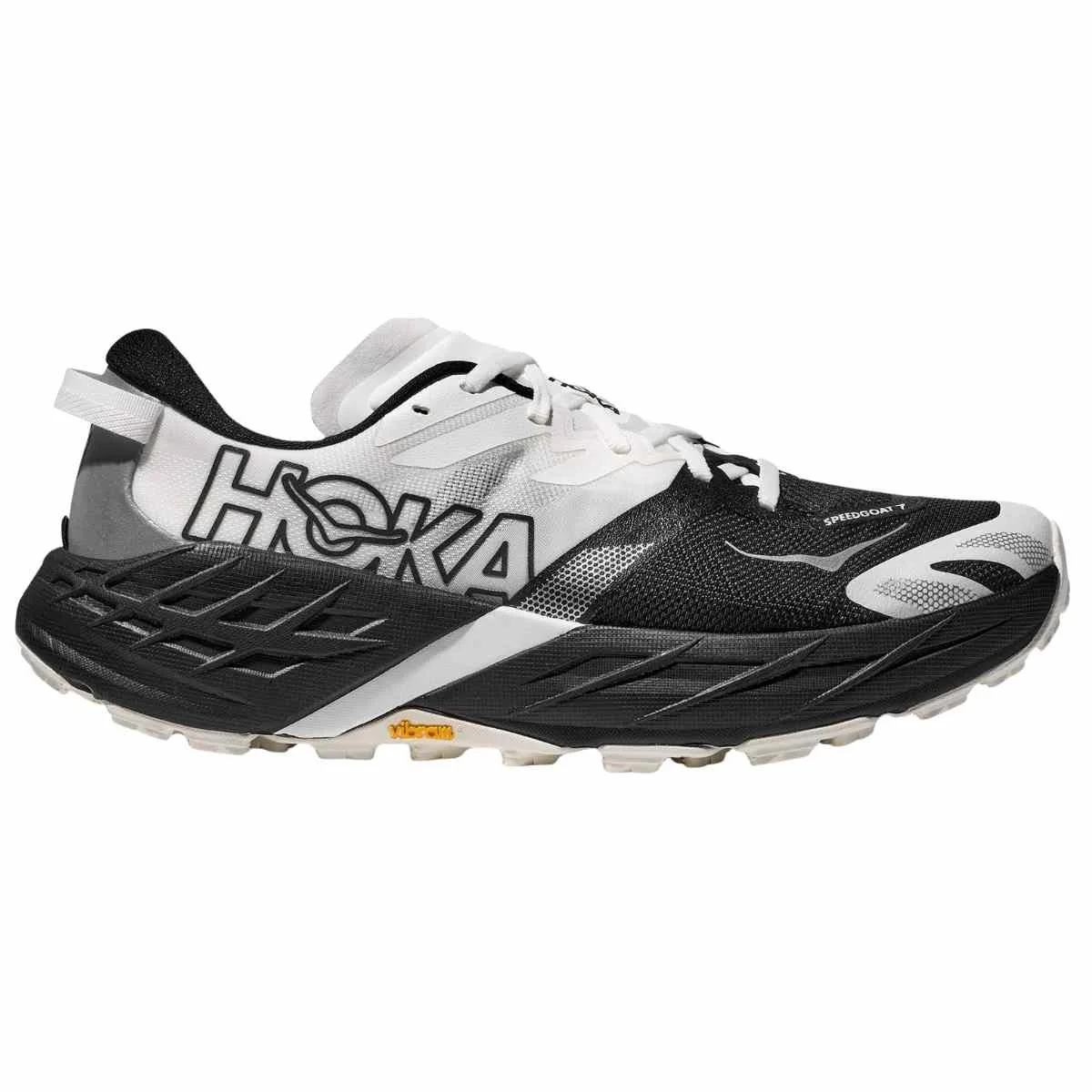
Mileage per pair: 450-500 miles depending on terrain
Outsole material: Vibram Megagrip Rubber
Weight (pair): 1 lb 3.6 oz (men’s); 1 lb 0.4 oz (women’s)
Heel-to-toe drop: 5 mm
Cushion level: Maximum
Rock plate: No
Available sizes and widths: Men’s 7-15, Women’s 5-12; regular and wide
My favorite features: Lightweight, wide midfoot, cushioning, Vibram sole
As someone with wide feet who needs non-zero-drop shoes, I’m always on the lookout for a well-cushioned shoe to meet my long-distance hiking needs. I discovered HOKAs in 2021 and wore my first (and second!) pair of HOKA Speedgoats on a 750-mile long-ass section hike of the Pacific Crest Trail, and I fell in love.
HOKA Speedgoat 7
men's
Women's
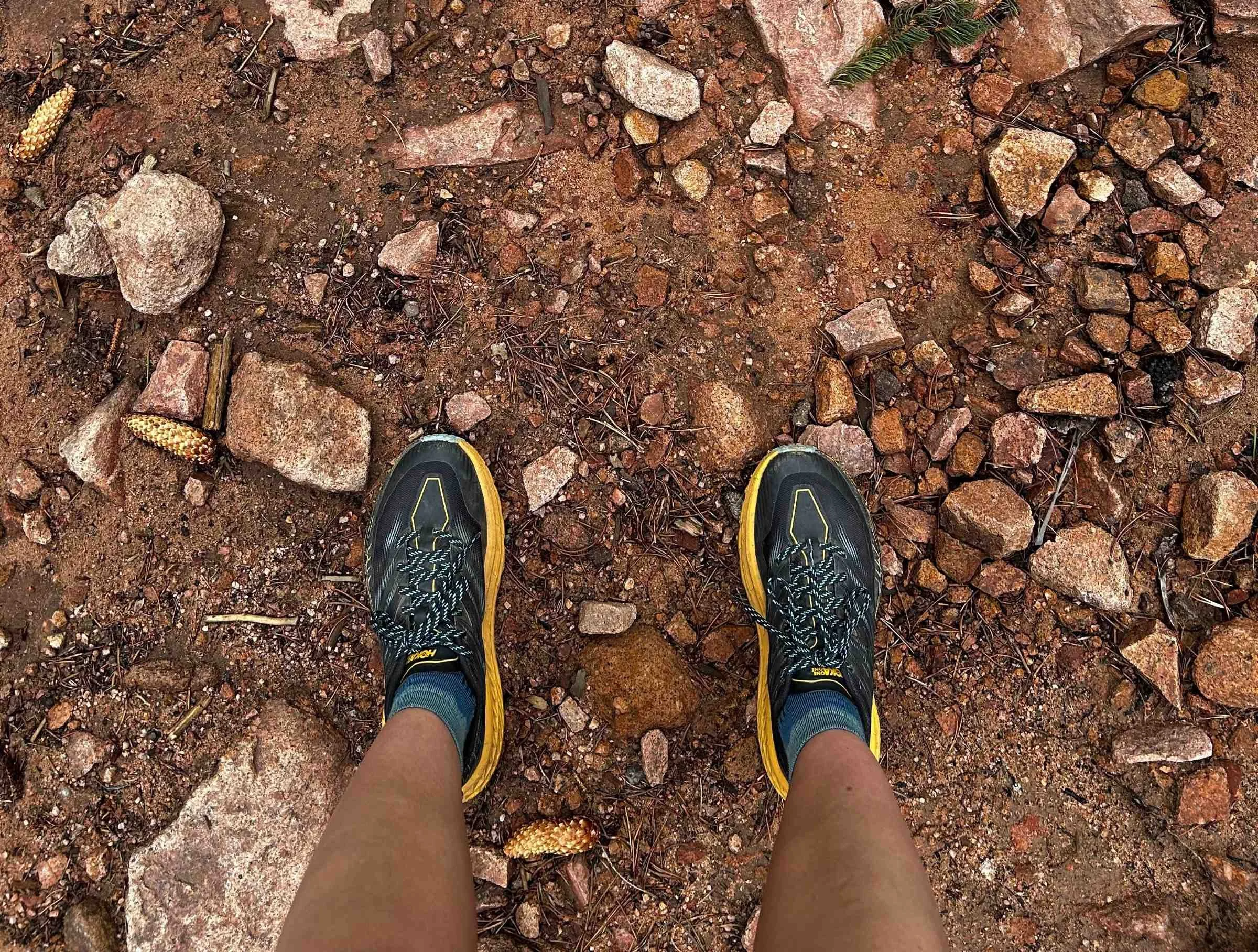
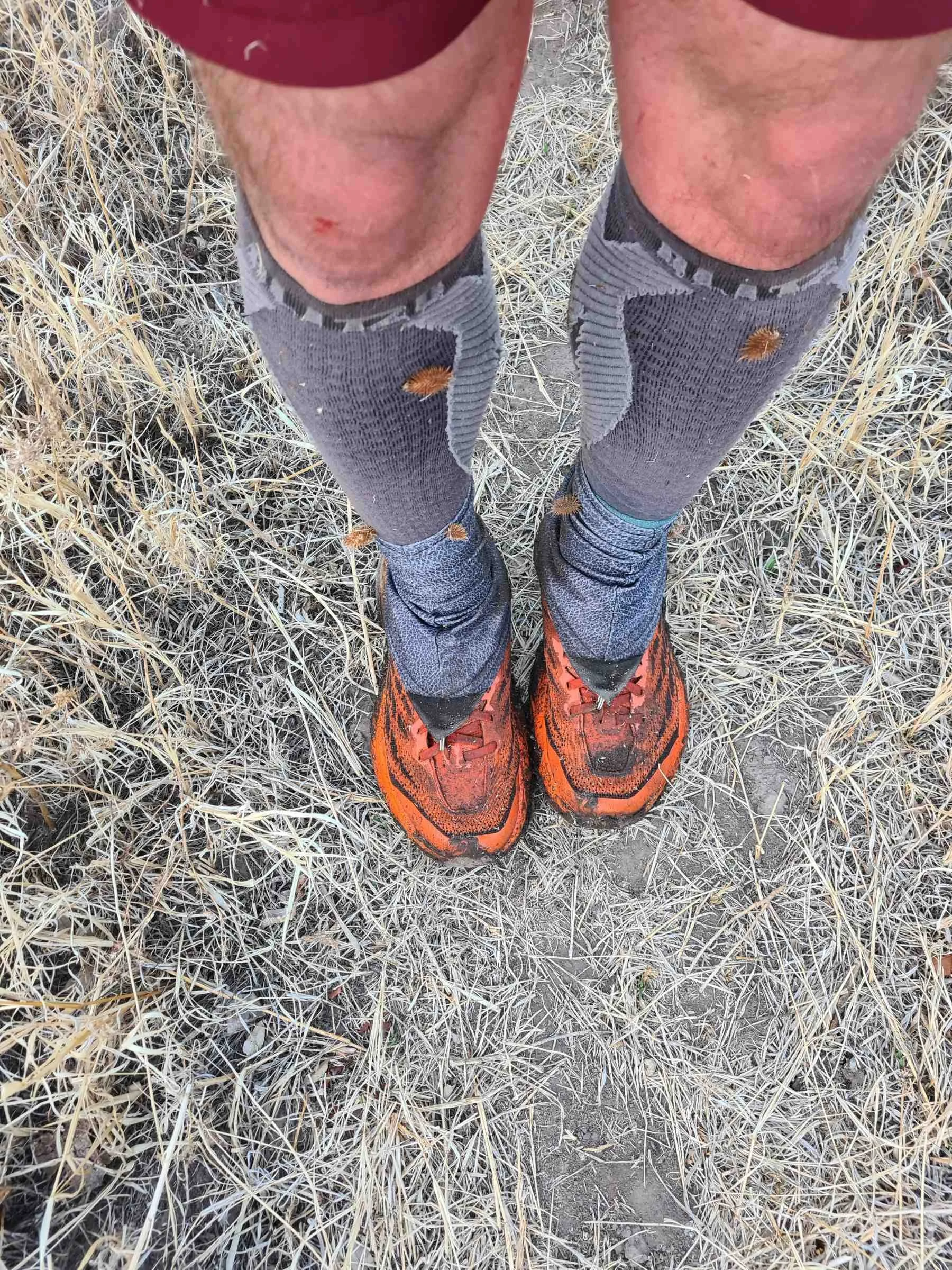
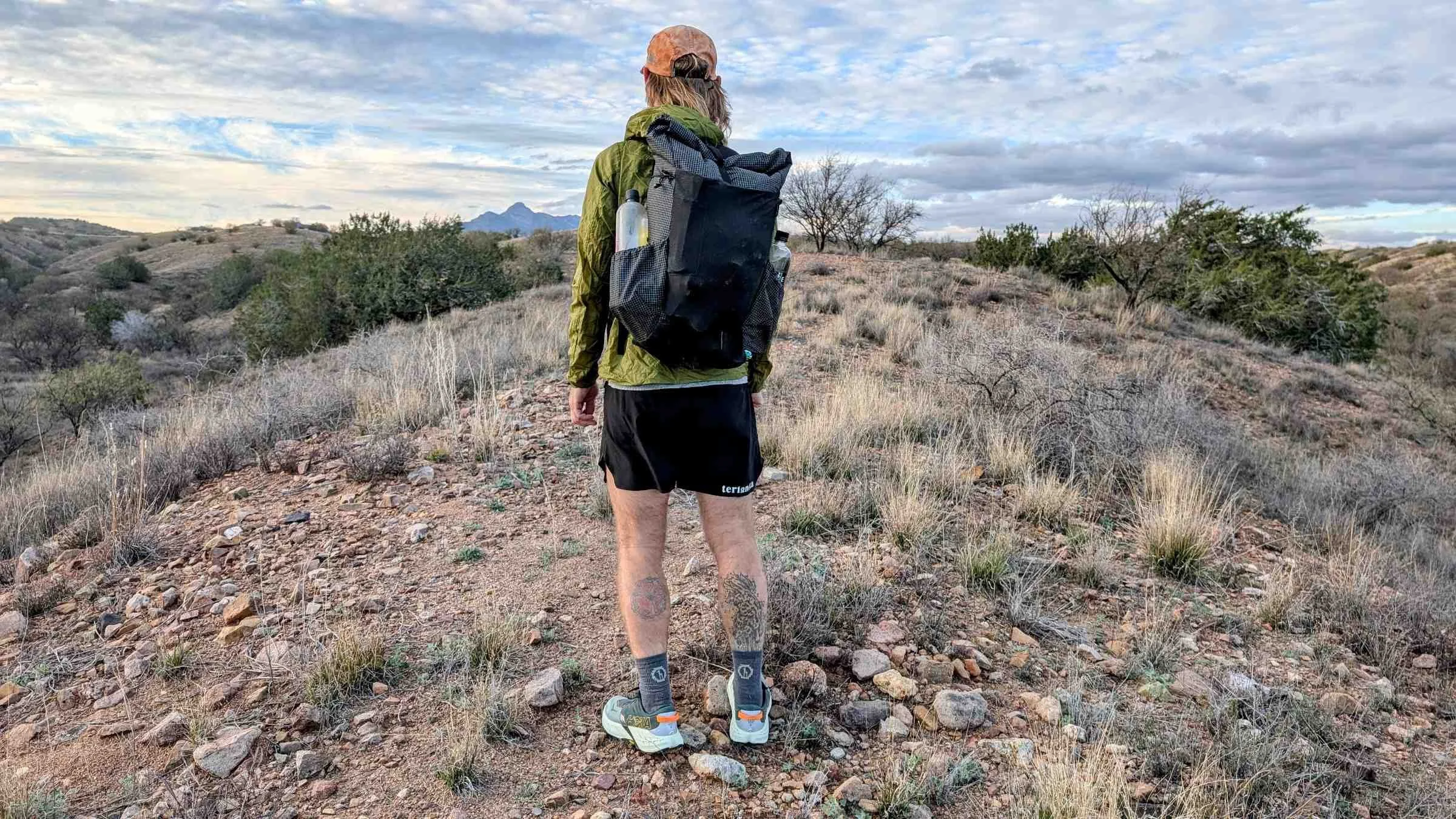
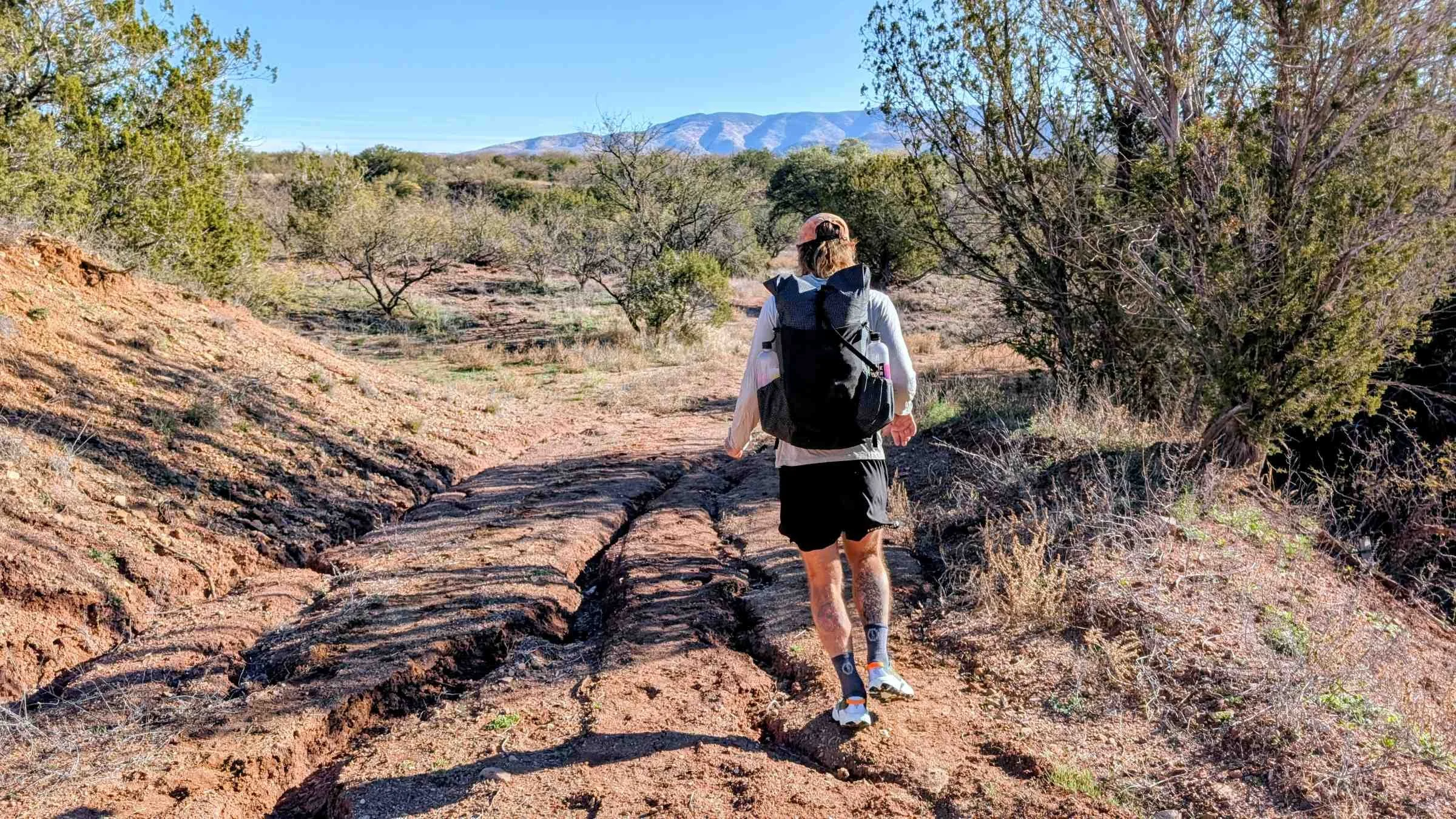
These shoes fit my feet great and feel amazing, with plenty of space in the midfoot for my high and wide arches. The trail running lugs provide good traction. The toe box is roomy, with space for my toes to splay however they’d like.
Over the last five years, I’ve gone through a dozen pairs of Speedgoats, using them for all kinds of long-distance efforts, including the Pacific Crest Trail, Arizona Trail, Colorado Trail, and Continental Divide Trail. I’ve also worn these shoes for ultramarathon efforts, including three 100-milers.
On typical long-trail terrain, these shoes will last me for 500 miles before the lugs and sole wear down and need replacing. Many versions of this shoe have kept my feet safe and happy, from the rugged rocky trails of Arizona to the long paved roadwalks of the New Mexico CDT.
Learn more in our in-depth review of the HOKA Speedgoat 7 trail running shoes.
Altra Timp 6
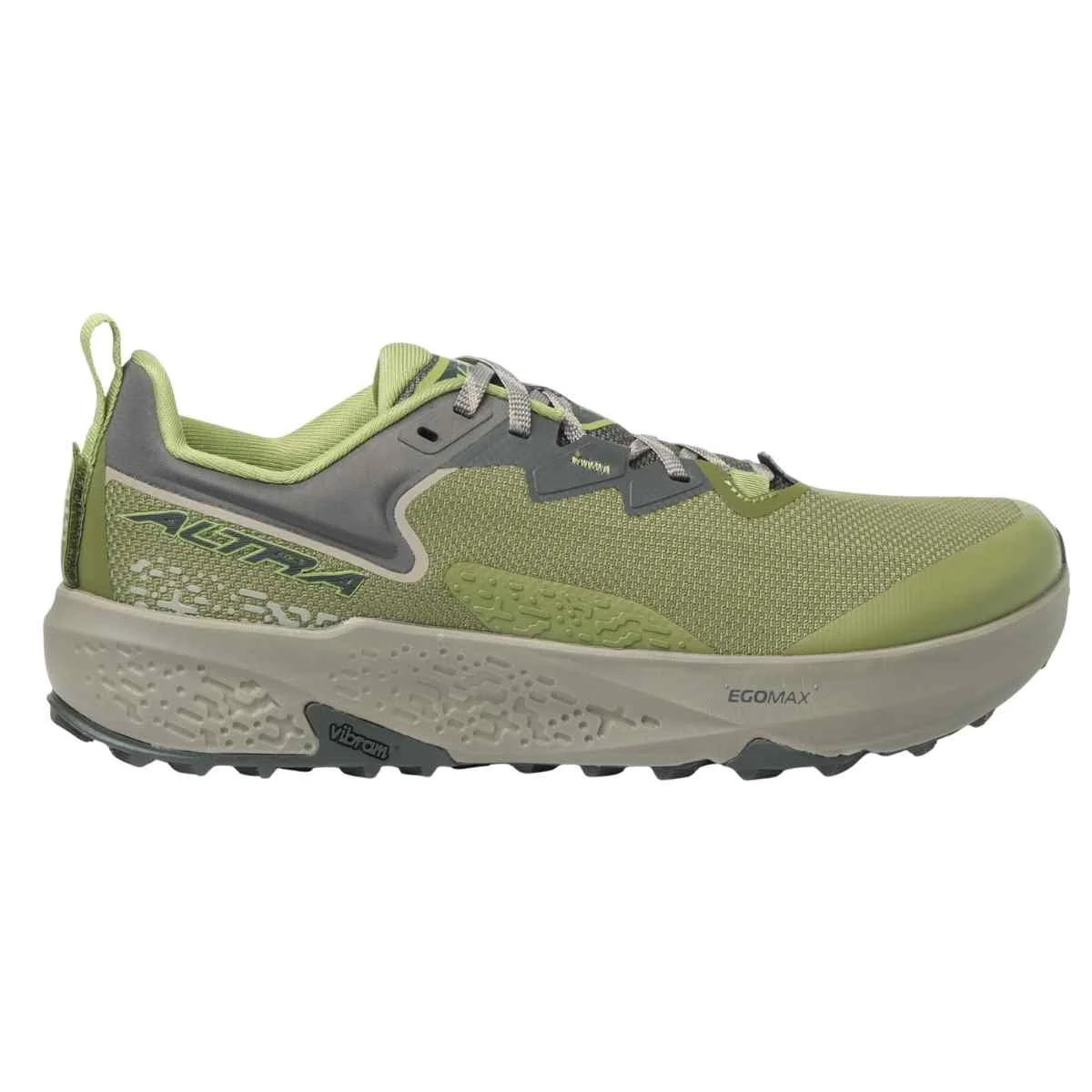
Mileage per pair: 400-500 miles depending on terrain
Outsole material: Vibram Megagrip outsole
Weight (pair): 1 lb 6.9 oz (men’s) 1 lb 3 oz (women’s)
Heel-to-toe drop: 0 mm
Cushion level: Moderate
Rock plate: No
Available sizes and widths: Women’s 5.5-12 and men’s 7-15, regular and wide?
My favorite features: Gaiter trap, lightweight, roomy toe box, Vibram sole
I have long used Altra shoes for thru-hiking, and these are the Goldilocks of the Altra line. I used to be a Lone Peak fan and only hiked in the Lone Peaks until I started hiking on more rocky terrain and didn’t like being able to feel individual rocks underfoot. I tried the first version of the Altra Timp and they had just the right amount of cushion.
Altra Timp 6
Men's
Women's
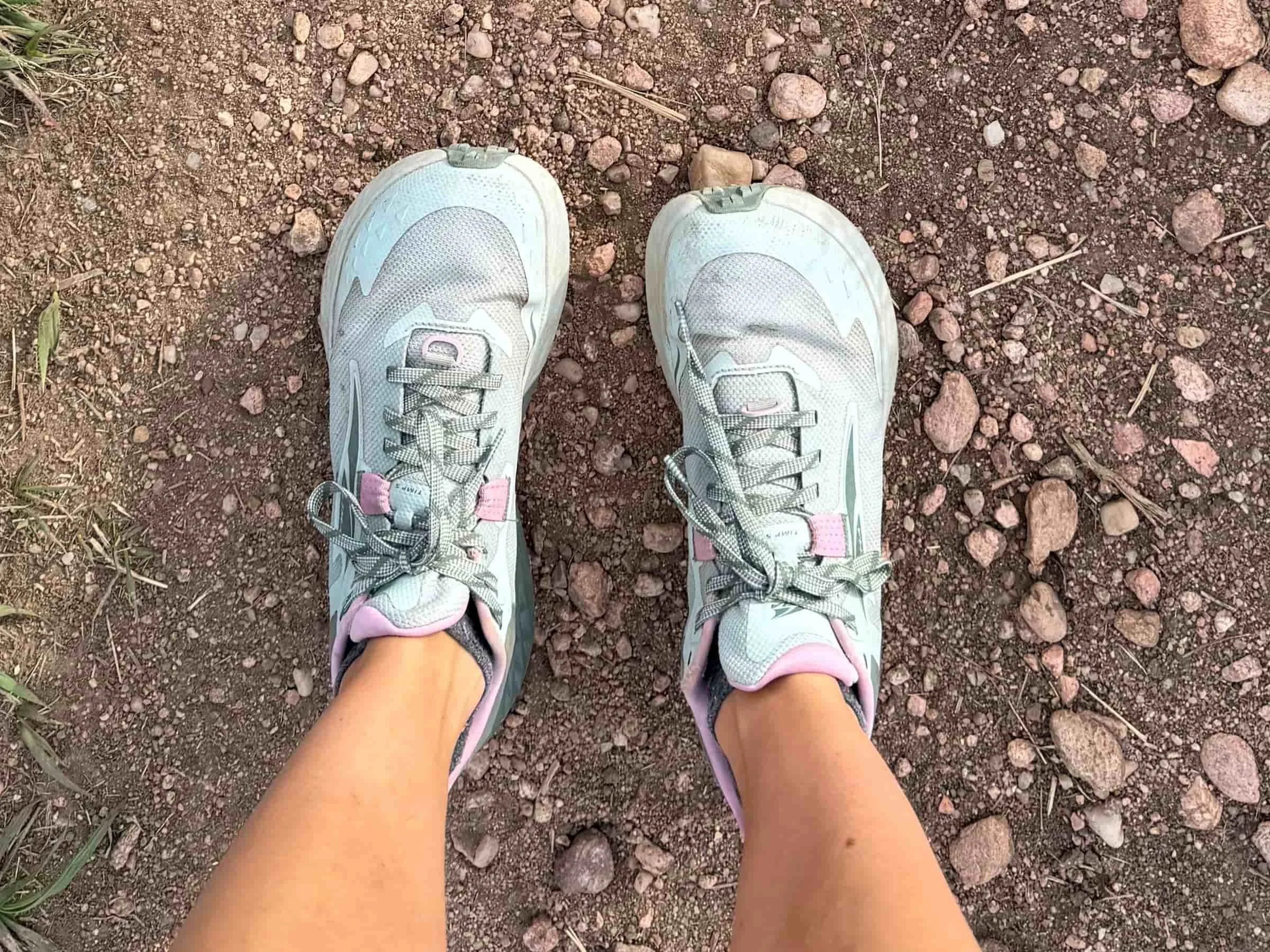
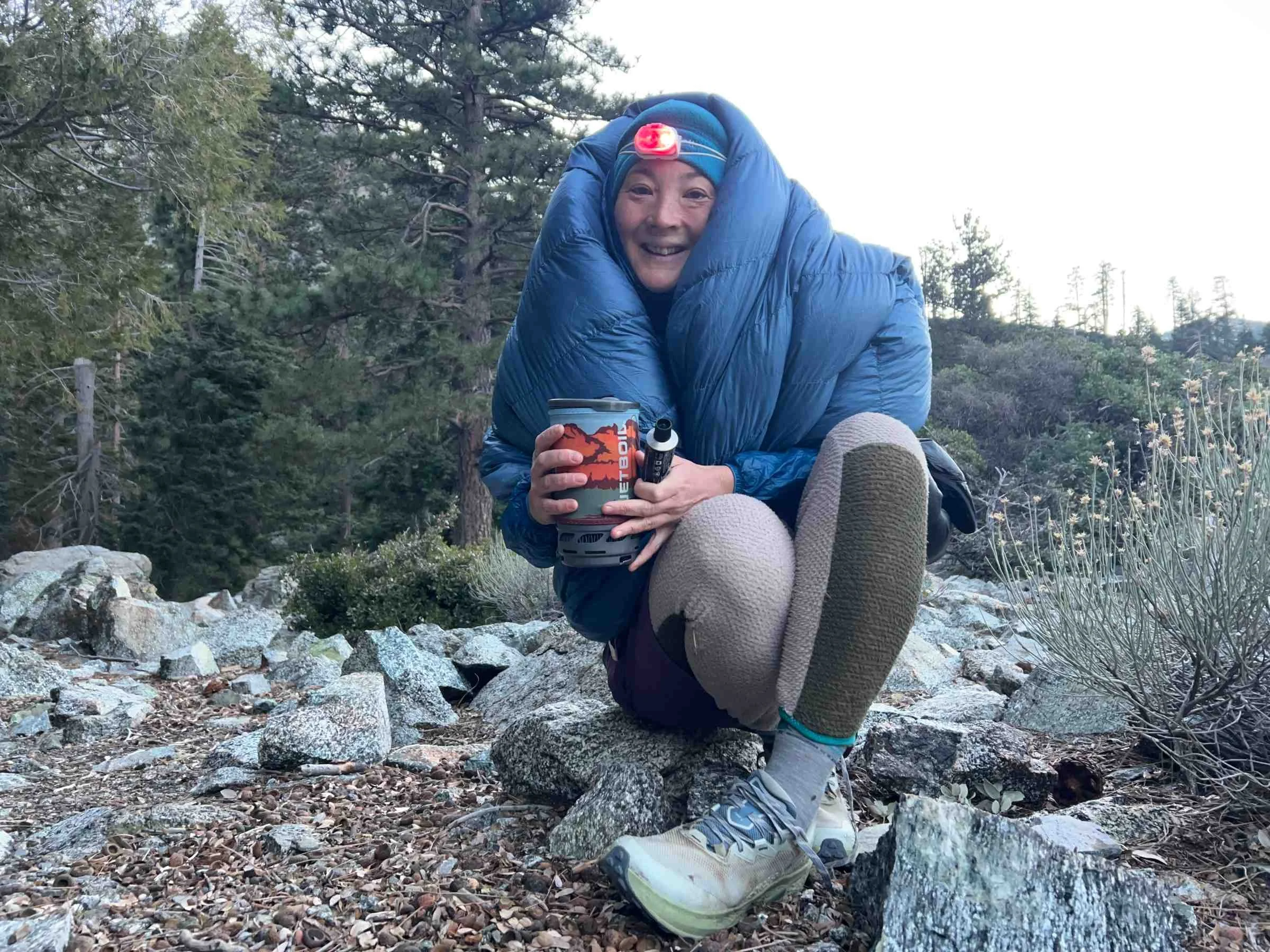
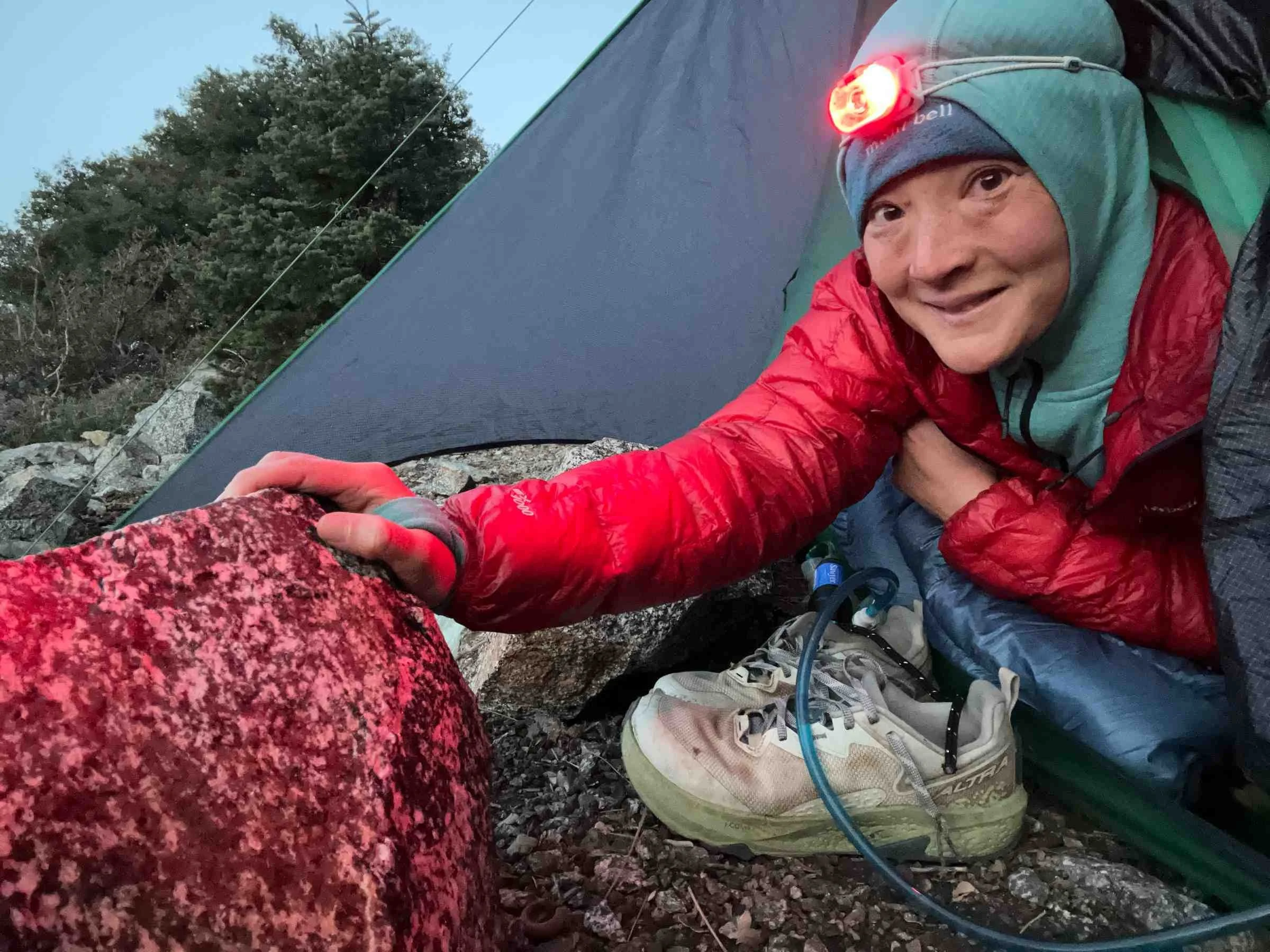
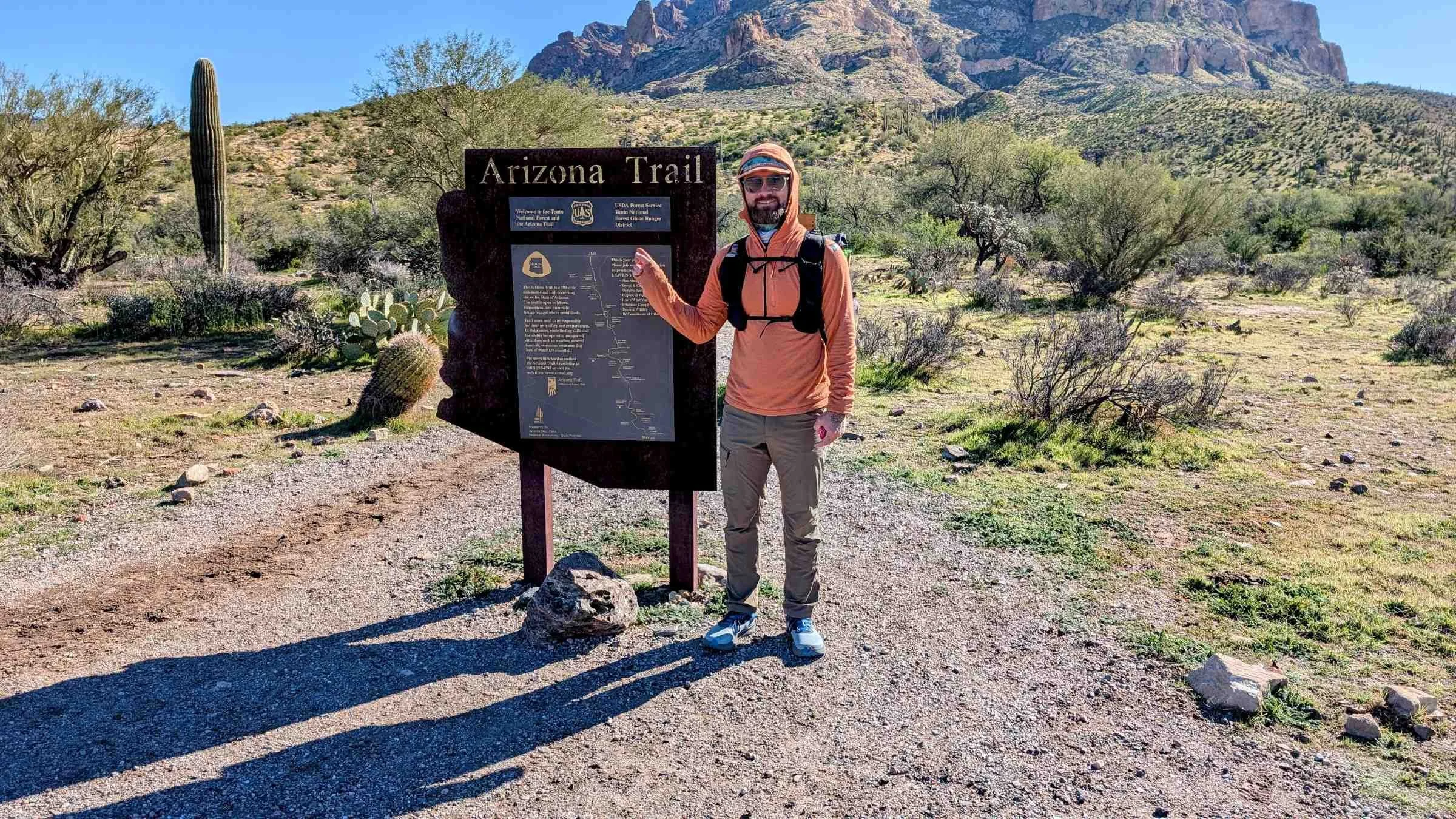
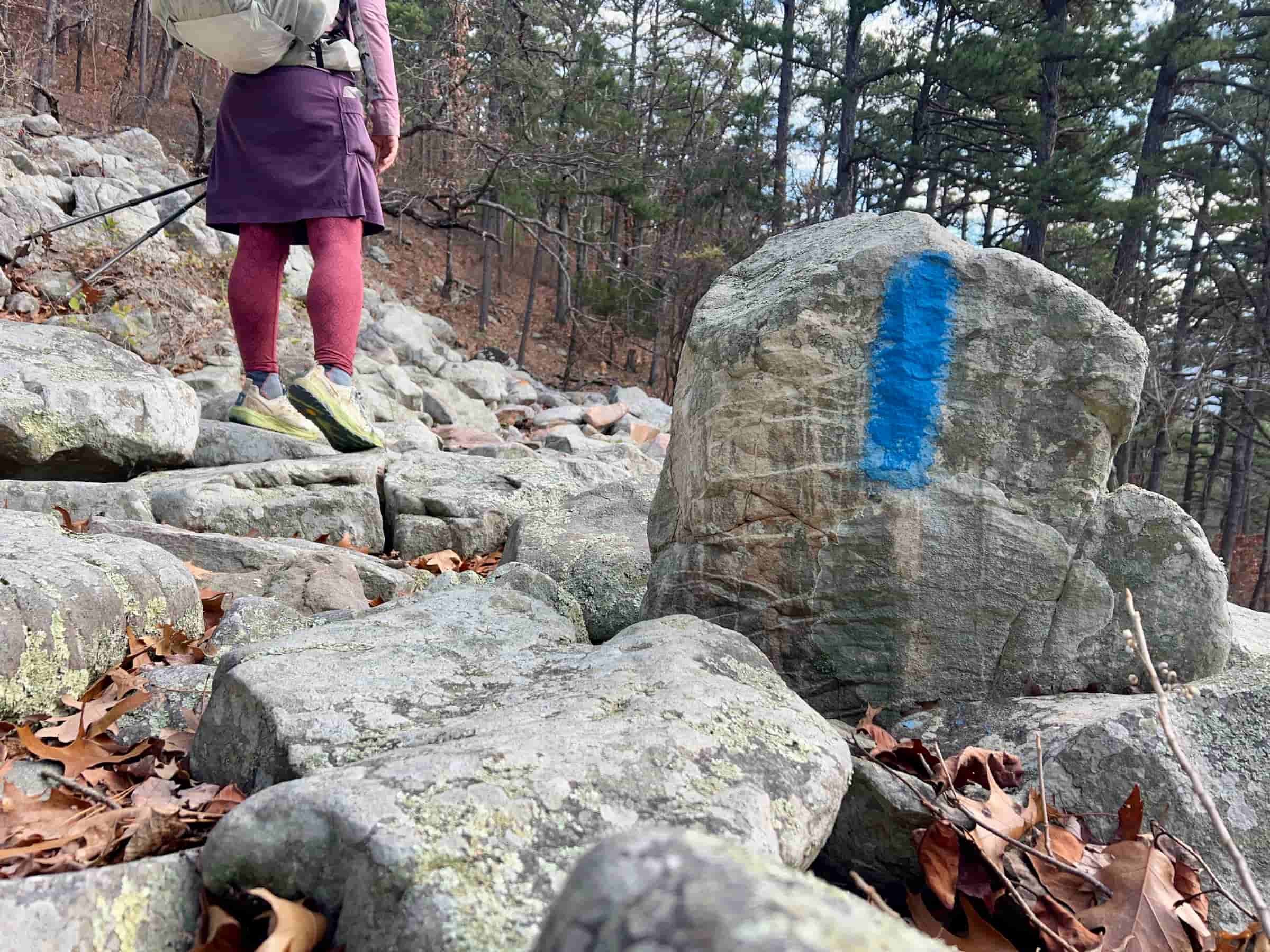
These shoes are perfect for hikes when you aren’t sure what type of terrain lies ahead and you want to be ready for anything. They do well with lava rocks—the cushion is enough to keep you from feeling the uneven surface while still feeling connected to the ground when you are hiking on flat, even terrain. The Timps are also good on wet rocks and dry out fairly quickly after water crossings.
I love wearing the Timps for long days backpacking or thru-hiking because my feet feel less tired at the end of the day than they have been in other shoes. I have also tried the Altra Olympus, which have more cushion than the Timps and can feel overbuilt compared to the Timps (I prefer having a little more ground feel).
I have worn Timps on the Pacific Crest Trail, the Tahoe Rim Trail, and the Timberline Trail. They were really nice to have on the Timberline Trail last summer with all the rocky water crossings, as they had decent grip on the wet rocks and I felt stable crossing streams. If I have to do a hike and I have no idea what the terrain is, I feel confident that the Altra Timp is a great choice and that I will be comfortable with whatever the trail delivers.
Learn more in our in-depth review of the Altra Timp 6 trail running shoes.
- Sara Kruglinski, Operations Coordinator and Contributing Writer
Altra Olympus 6
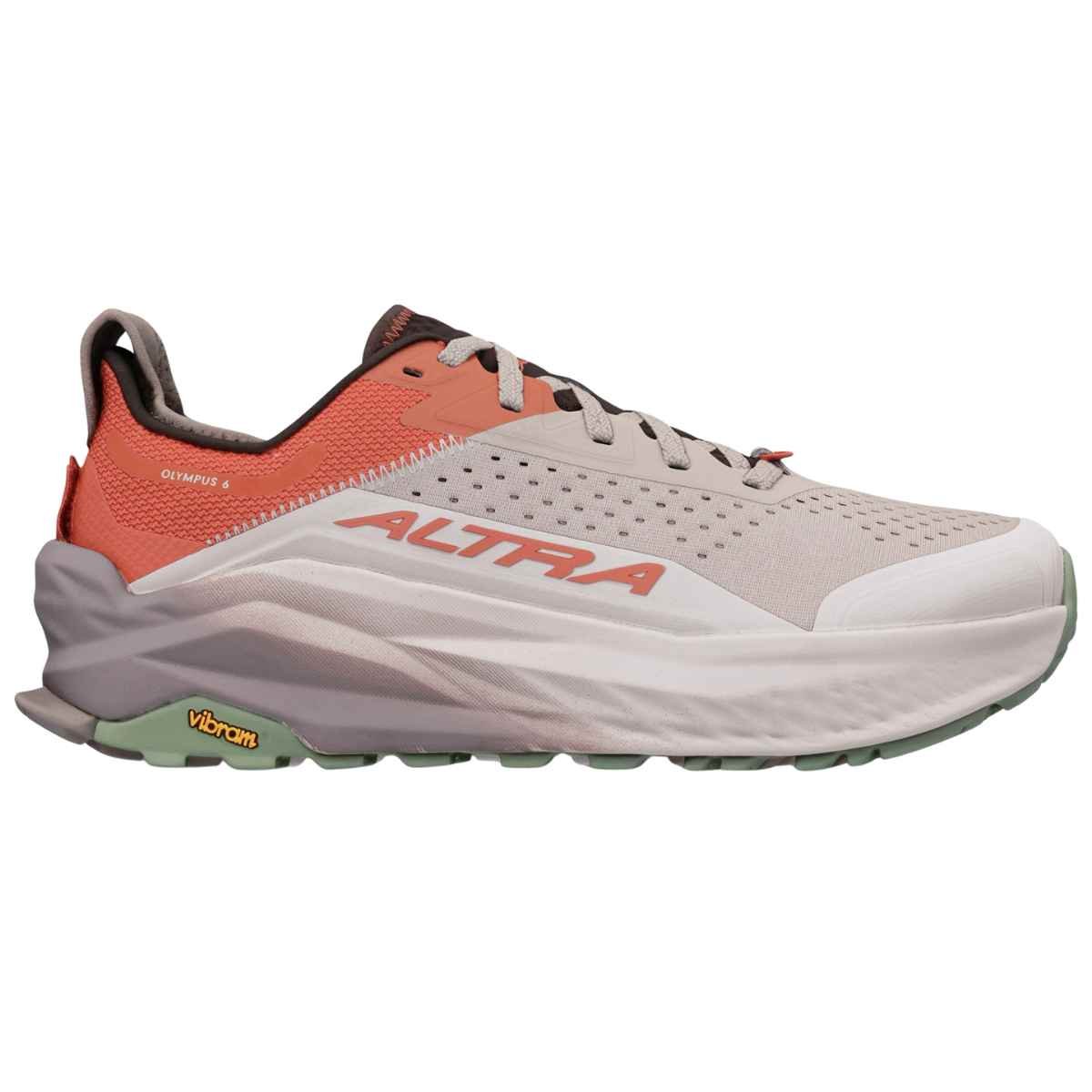
Mileage per pair: ~450 miles (based on my experience)
Outsole material: Vibram Megagrip Rubber
Weight (pair): 1 lb 8.4 oz (men's) 1 lb 4.4 oz ( women's)
Heel-to-toe drop: 0 mm
Cushion level: Maximum
Rock plate: No
Available sizes and widths: Men’s 7-16; Women’s 5.5-12
My favorite features: wide toe box, width, cushioning, Vibram sole
As a long-time Altra Lone Peak devotee (I was literally one of the first thru-hikers in the Lone Peak 1), I switched to the Olympus for the Pacific Northwest Trail. That trail has hundreds of miles of roadwalking on pavement. The extra cushion on the Olympus saved my feet while keeping the same wide toe box and zero drop I'd come to love on the Lone Peak.
Altra Olympus 6
men's
Women's
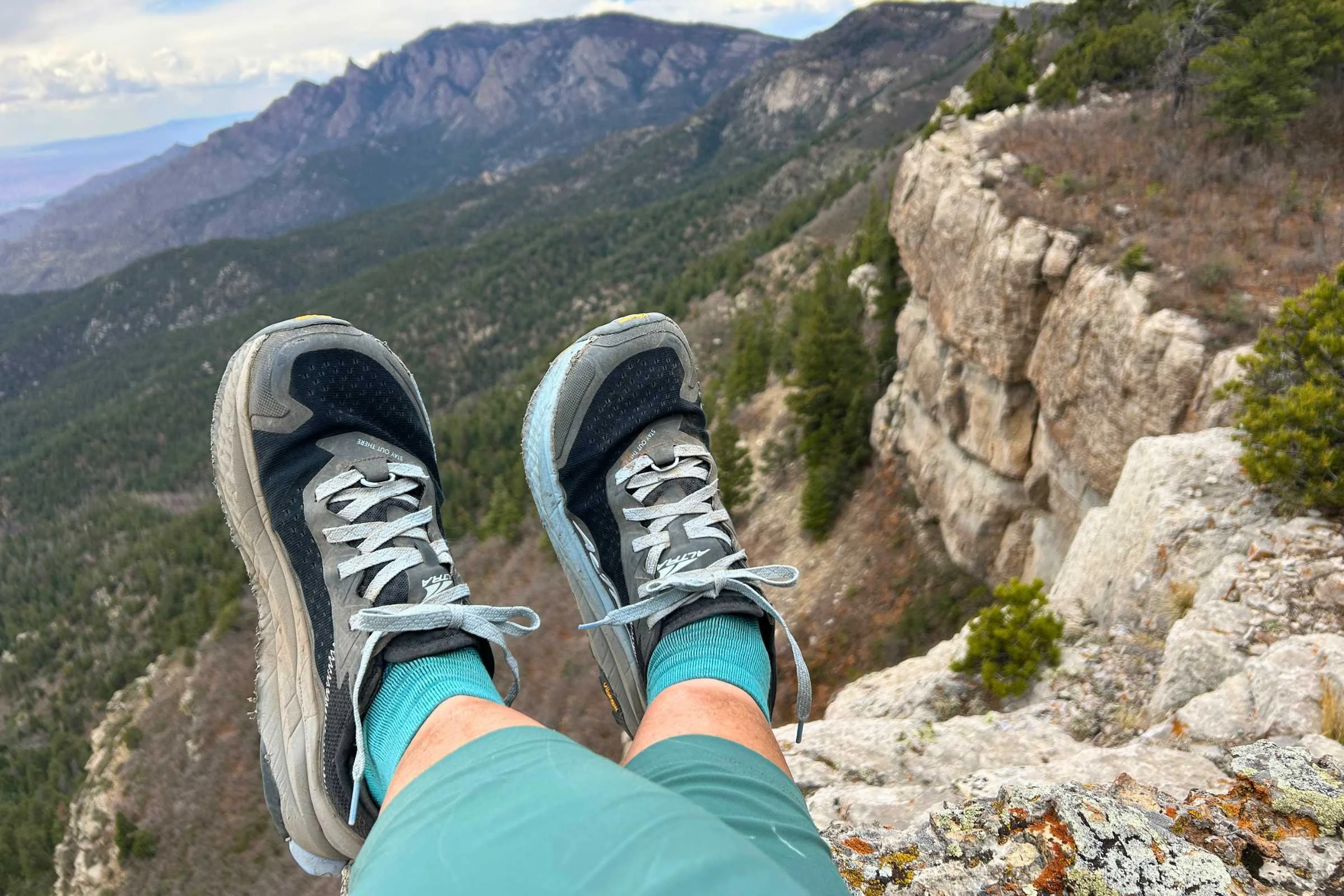
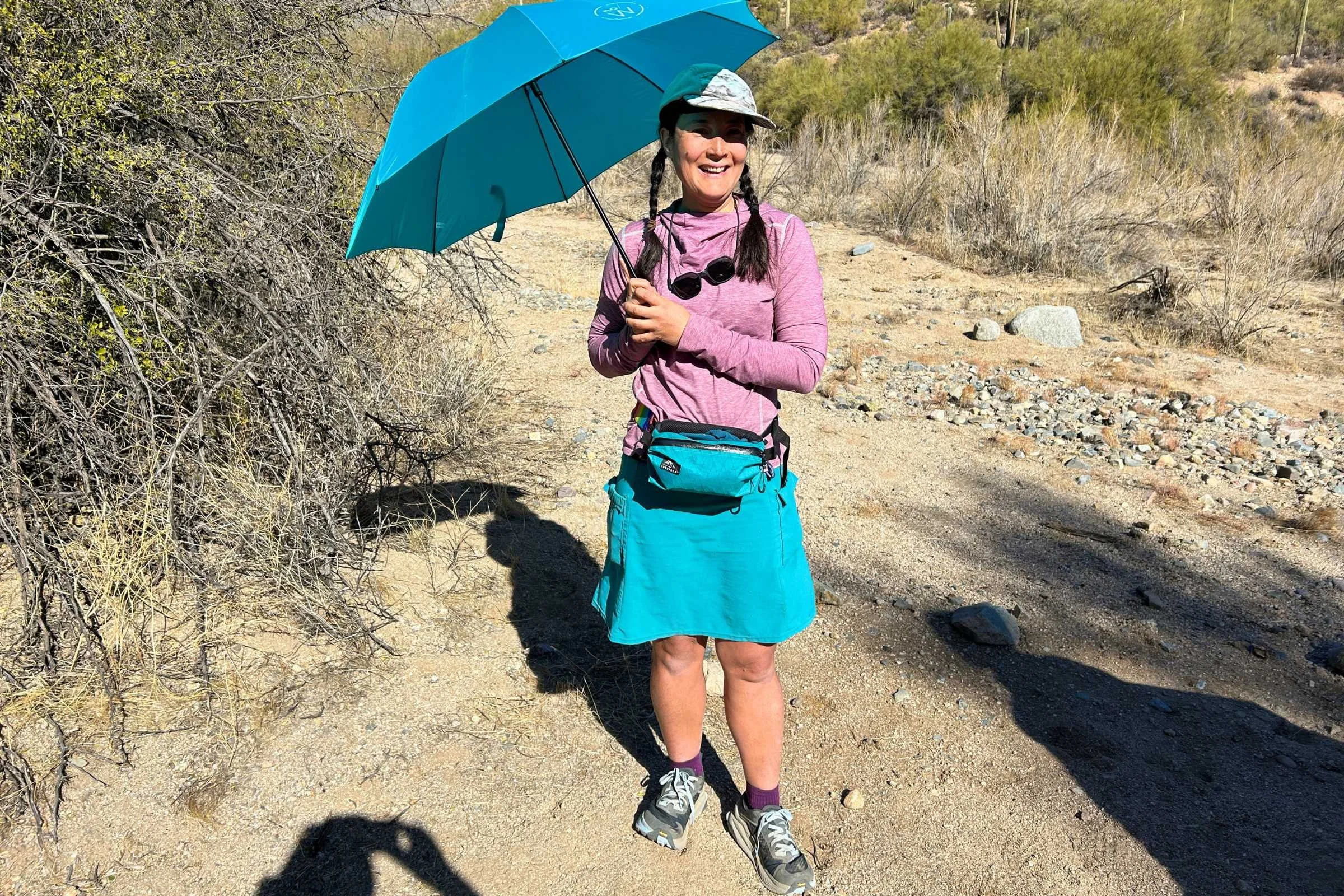
The Olympus has become my go-to thru-hiking shoes for long days, especially if my pack is heavier due to a long water carry or it is a route with a lot of Forest Service road walking. If terrain is rocky, such as the "baby heads" of the Arizona Trail, I found the extra cushion on the Olympus makes a huge difference in reducing foot pain and fatigue.
The Olympus are heavier and less nimble than the Lone Peaks, so I don't like to run in them or do off-trail Sierra talus or peaks where footwork must be precise. But the Vibram sole means they actually have more grip than the standard Lone Peaks and I've been happy with the Olympus on off-trail slickrock and slot canyons where grip matters more than precise foot placement.
If you like the Lone Peaks but want something that can handle bigger miles and less than "PCT-perfect" trail, the Olympus comes with my highest recommendation. While not the cheapest, I've come to appreciate the hard way that keeping feet happy is the one thing a hiker should invest in. I get about 450 miles per pair and keep buying them again and again. See my in-depth review of the Altra Olympus 6 for why I swear by this shoe for thru-hiking.
Since publication, Altra has released the Olympus 7. To learn more, check out our in-depth review of the Altra Olympus 7 trail running shoes.
Altra Mont Blanc Carbon
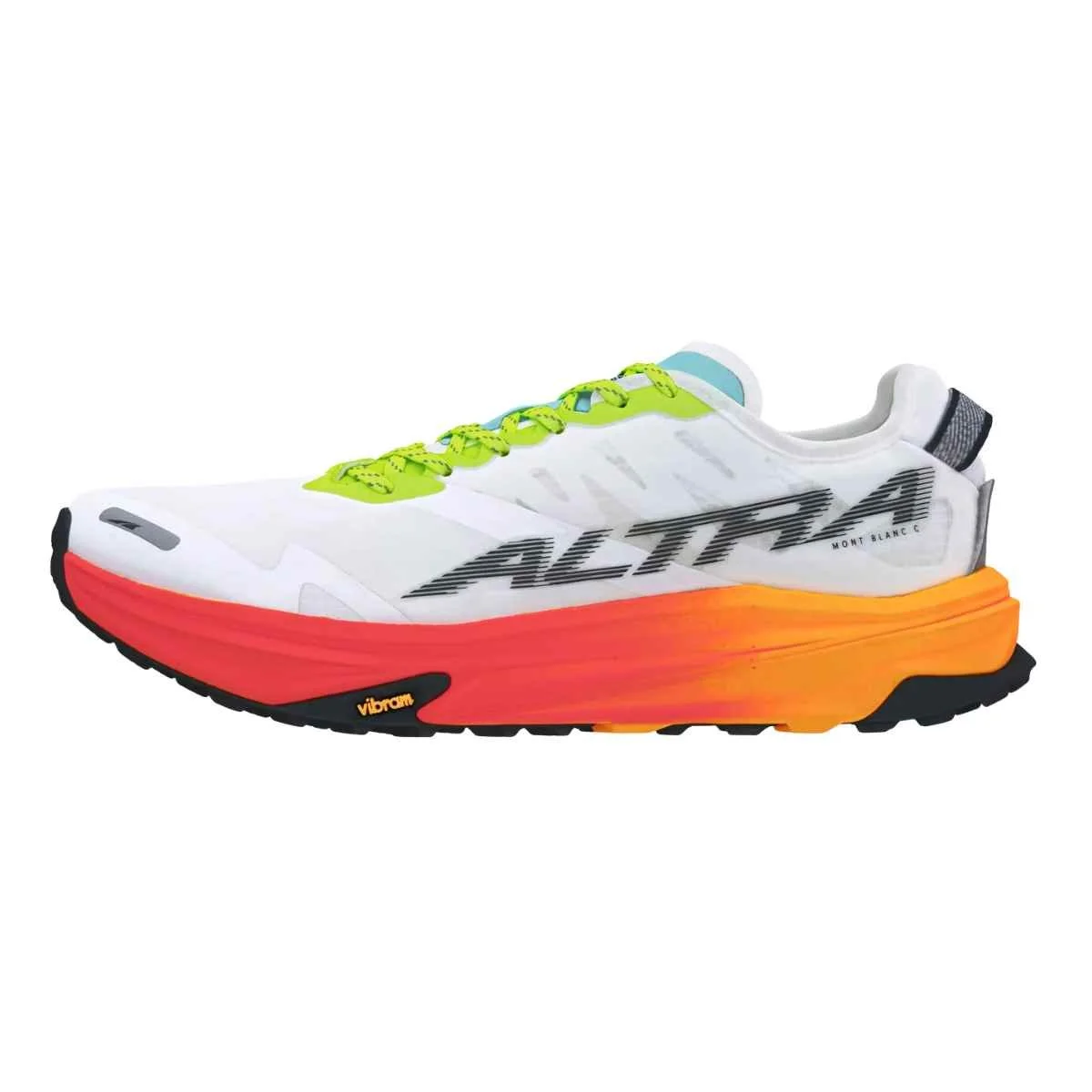
Mileage per pair: 200+ (current pair)
Outsole material: Vibram
Weight (pair): 8.8 oz (advertised)
Heel-to-toe drop: 0 mm
Cushion level: Medium, well-cushioned
Rock plate: Yes
Available sizes and widths: 5.5–12 (women’s); 7–15 (men’s)
My favorite features: The Vibram outsole, and comfortable cushion for long distances
Since Sam beat me to the Altra Lone Peaks (I’ve got over 800 miles on those across two pairs), I’m nominating the Altra Mon Blanc Carbon instead! The Altra Mont Blancs were literally designed for long-distance trail use on the Tour du Mont Blanc (TMB). They feature Altra’s well-known zero-drop and wide toe box design, a full carbon plate, a comfortable midsole, and a super reliable and grippy Vibram Megagrip and Vibram Litebase (to cut weight) outsole.
Altra Mont Blanc Carbon
men's
Women's
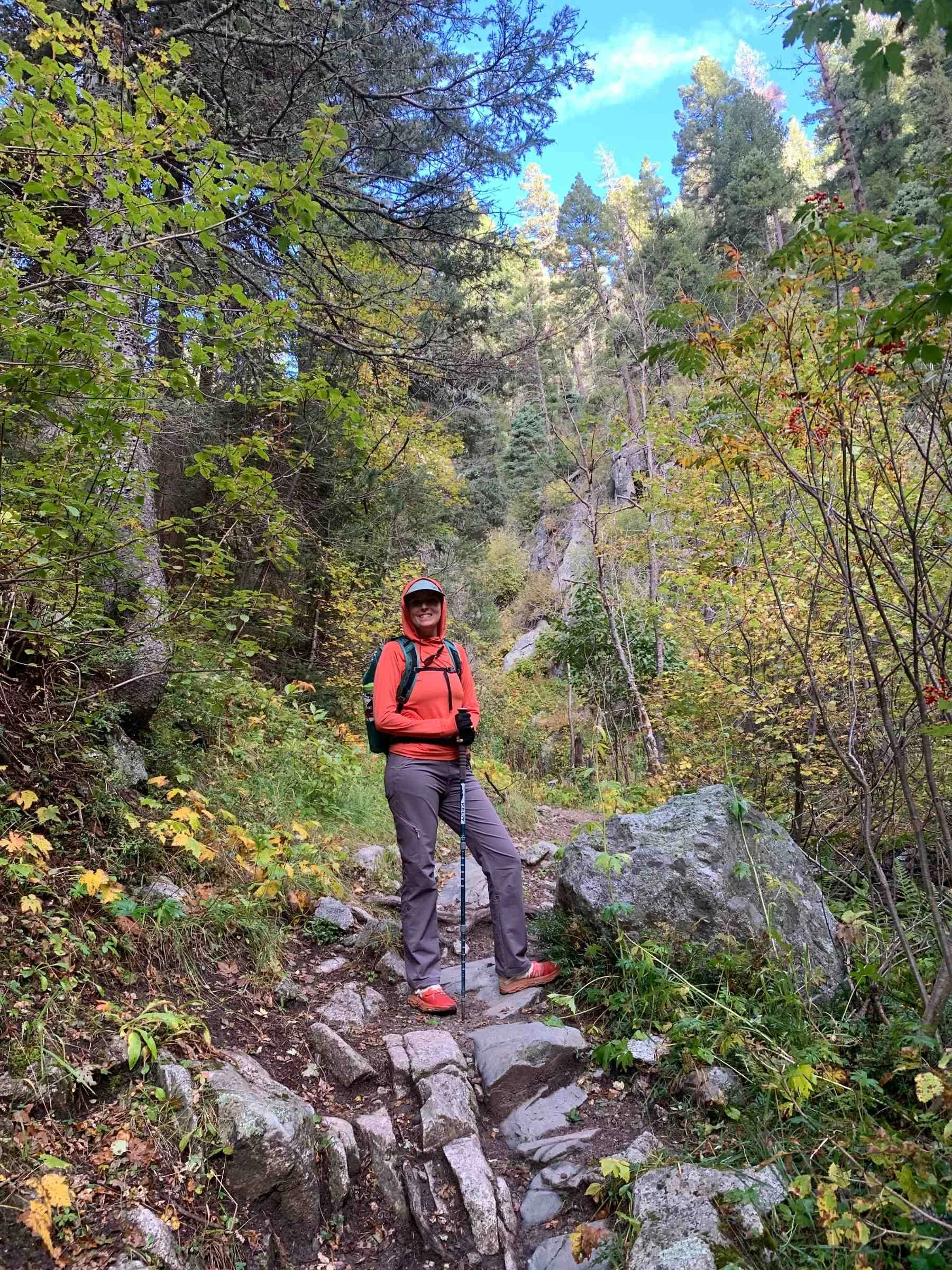
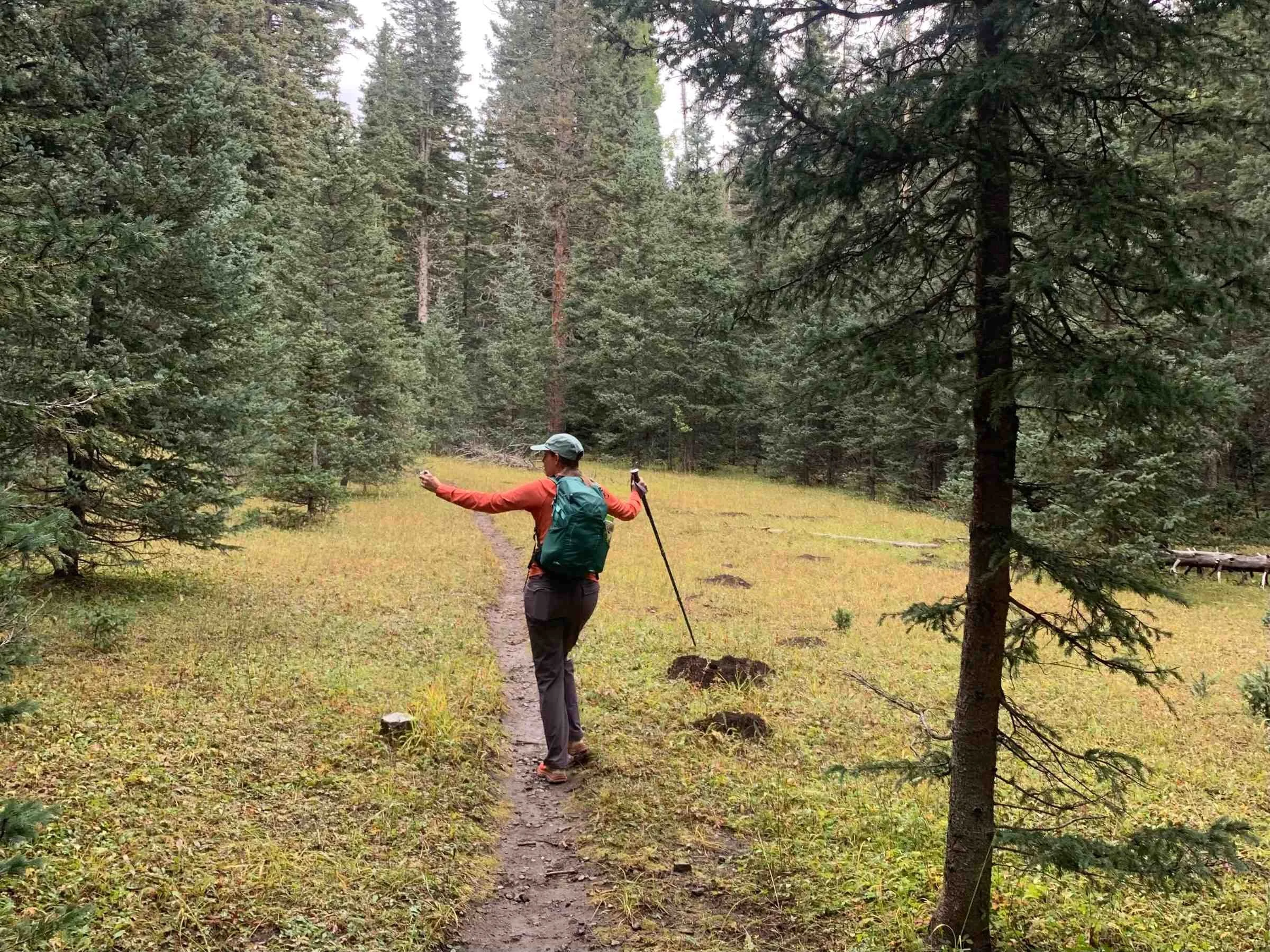
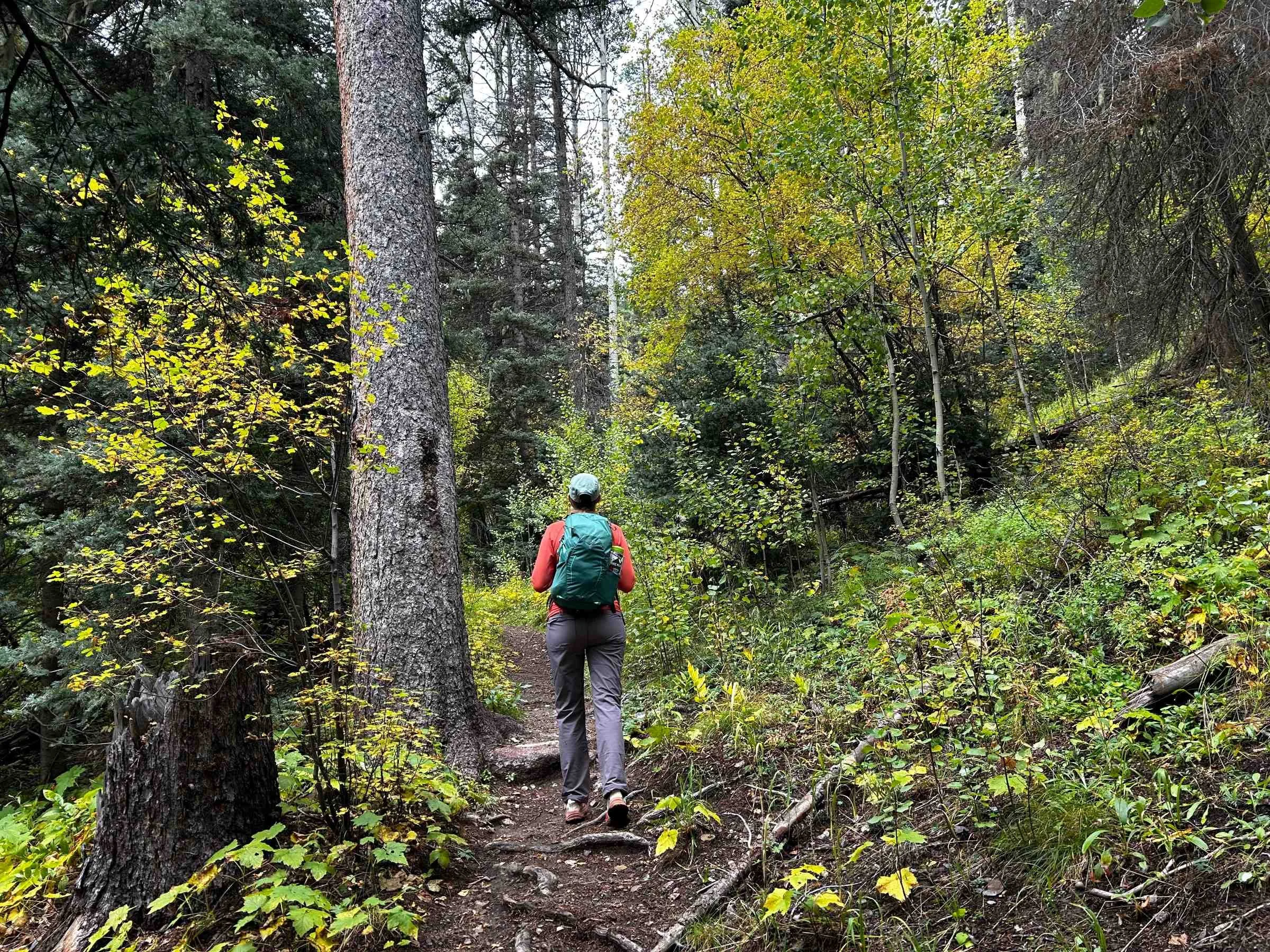
I’m picky about which socks I wear with these shoes due to the height and shape of the heel cup (updated on the Mont Blanc shoes over the years), but I’ve never had problems with rubbing or anything else. From super technical and rocky hikes to longer trail efforts and ultramarathons, these shoes are great. They provide grip, stability, and protection—especially on hard terrain—and they are also awesome in mud and snow.
Honestly, the only thing I don’t like about these shoes is the price. I do believe these shoes are worth the price if you are after a carbon-plated trail shoe, and if they fit your footshape. But if not, other shoes on this list (like the Altra Lone Peak 9+) may be a better choice.
norda 001A
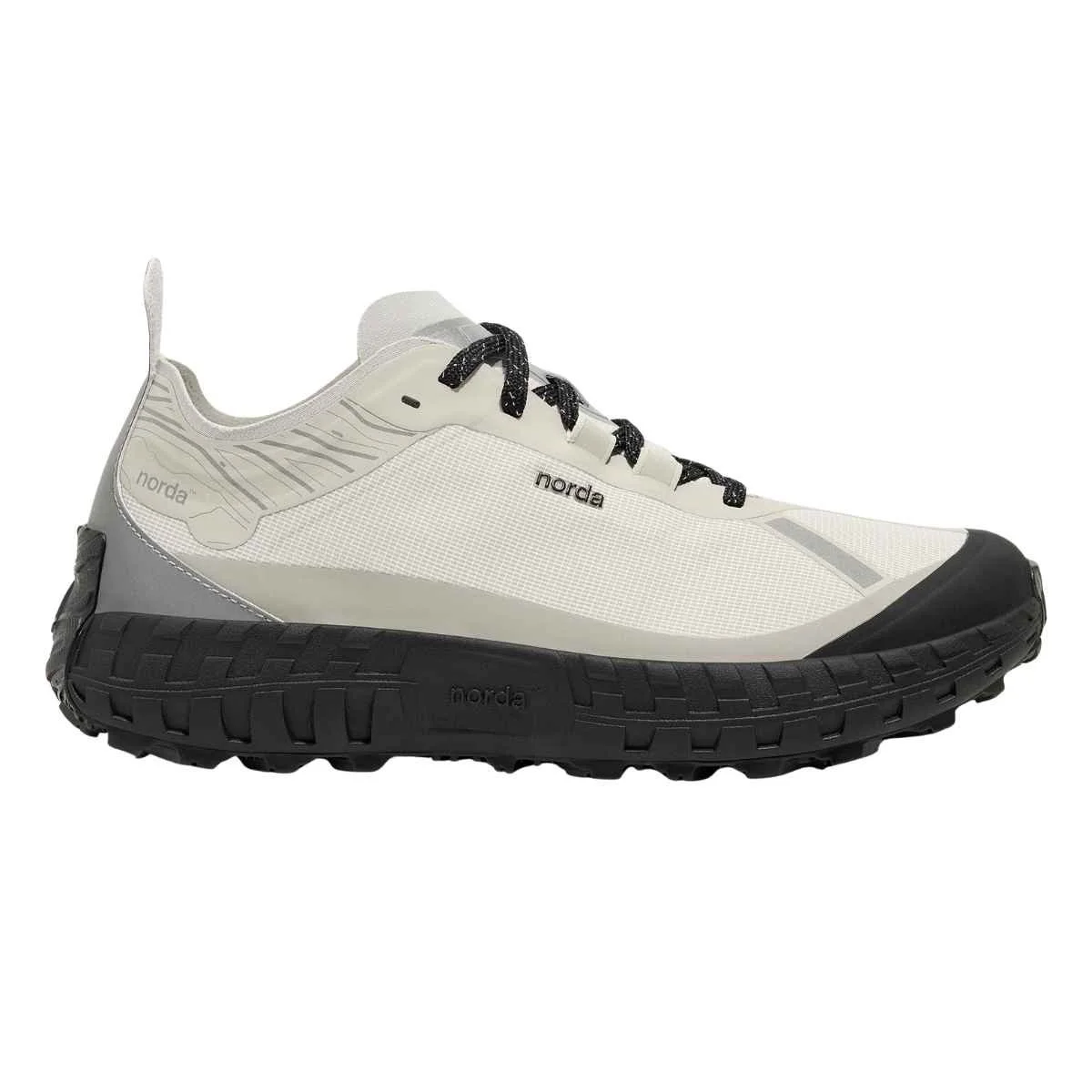
Mileage per pair: 45 miles (expected 500-1,000 miles)
Outsole material: norda x Vibram Megagrip rubber with Litebase Technology
Weight (pair): 1 lb 0.3 oz
Heel-to-toe drop: 5 mm
Cushion level: Moderate
Rock plate: No
Available sizes and widths: 8-15 (men’s), 4-10 (women’s); regular only (runs small)
My favorite features: Durable Dyneema upper, comfortable fit (size up one size), excellent traction
The norda 001a trail running shoes are durable and comfortable with exceptional traction and grip. While I haven’t yet put enough miles on them to assess their longevity and value for the price, I can confidently say their grippy outsole and comfortable fit make these a great choice for hiking and backpacking.
norda 001A
men's
Women's
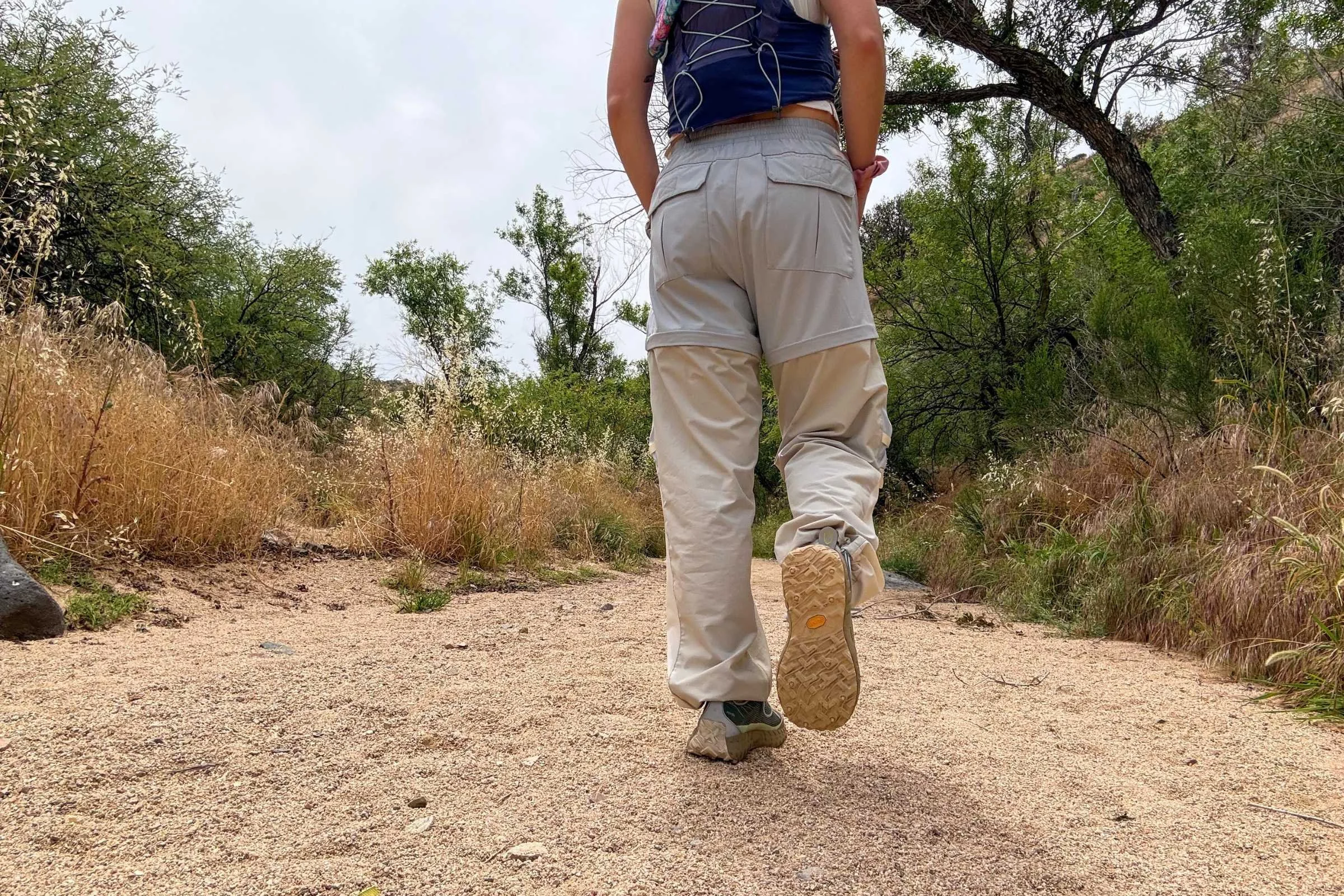
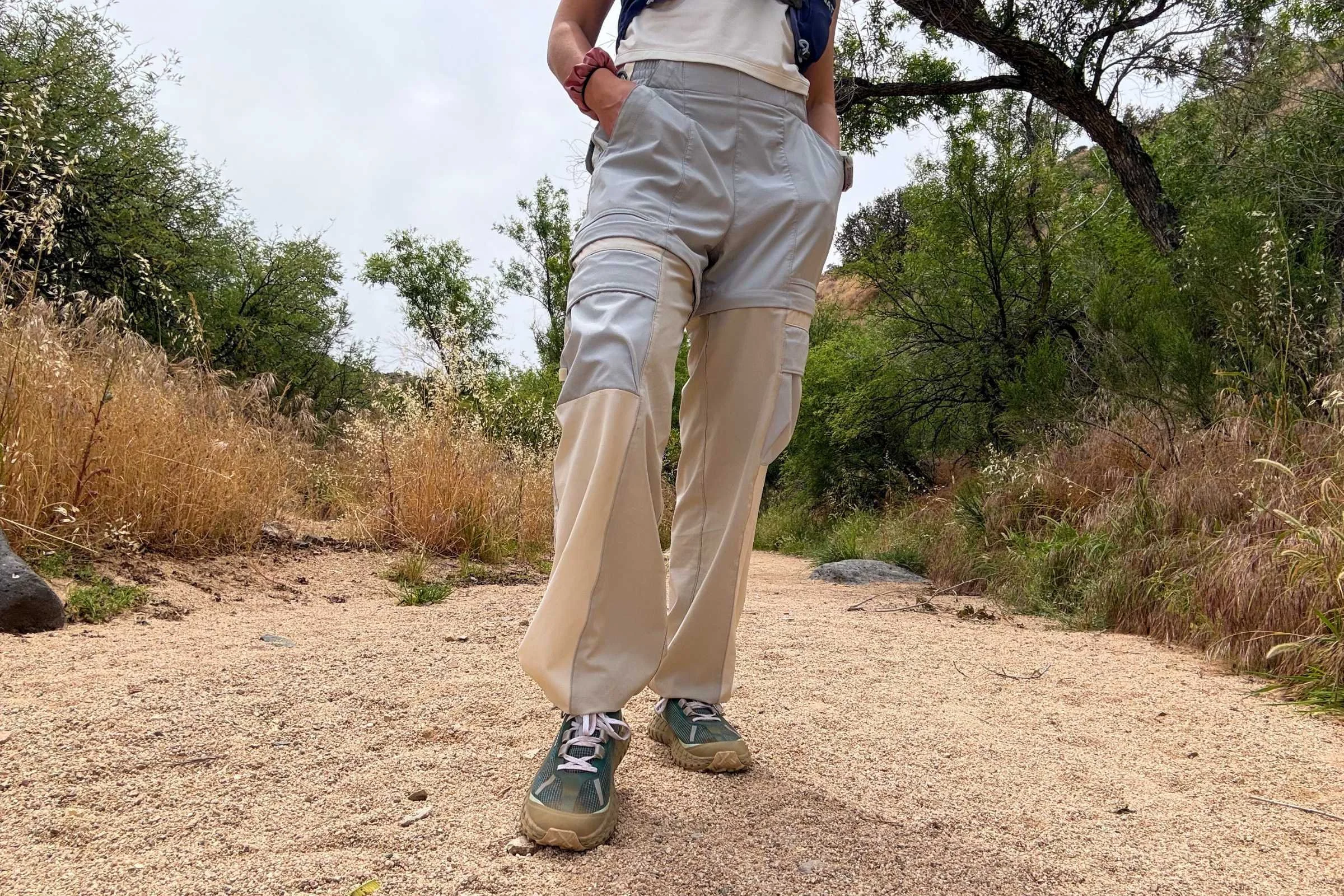
I’ve tested the norda 001a trail shoes on trail runs and hikes in Arizona and Colorado, and other than my usual size being too small, norda’s proprietary EVA/Arnitel TPEE supercritical foam midsole offers plenty of cushion for moderate distances, and the norda x Vibram Megagrip outsole with Litebase Technology is grippy and offers excellent traction on hardpacked dirt, rocks, sand, and wet surfaces.
The price tag for these shoes is high. At $295, these are expensive shoes. You’re paying for the longevity, as they are expected to last at least twice as long as other trail running shoes. While I haven’t tested them long enough to know this yet, I do feel confident in the Dyneema upper and general construction of the shoe, and mostly need to see if the midsole retains its integrity over time.
Norda recommends sizing up a full size, and I agree. Unfortunately, the women’s sizing only goes up to size 10, which is essentially size 9, and they do not come in wide sizing. But if you can find your size and the shoes feel comfortable, these can be a great investment for a thru-hike.
Salomon XA Pro 3D V9 GTX

Mileage per pair: 100 miles+ (current pair)
Outsole material: All-Terrain Contagrip; 3-5mm lugs
Weight (pair): 1 lb 9 oz (men’s), 1 lb 6 oz (women’s)
Heel-to-toe drop: 11 mm
Cushion level: Medium
Rock plate: No, but Salomon’s 3D Advanced Chassis adds underfoot protection
Available sizes and widths: Men’s US 7–14 in regular and wide; Women’s US 5-11
My favorite features: Lighter feel than a traditional hiker; stable on rough terrain; Quicklace system couldn’t be faster; have that signature Salomon look
I tested the Salomon XA Pro 3D V9 GORE-TEX alongside a ton of other shoes for our the best women’s hiking shoes guide and named it the best shoe for hiking and trail running because it nailed that in-between category better than anything else.
Salomon XA Pro 3D V9 GTX
men's
Women's
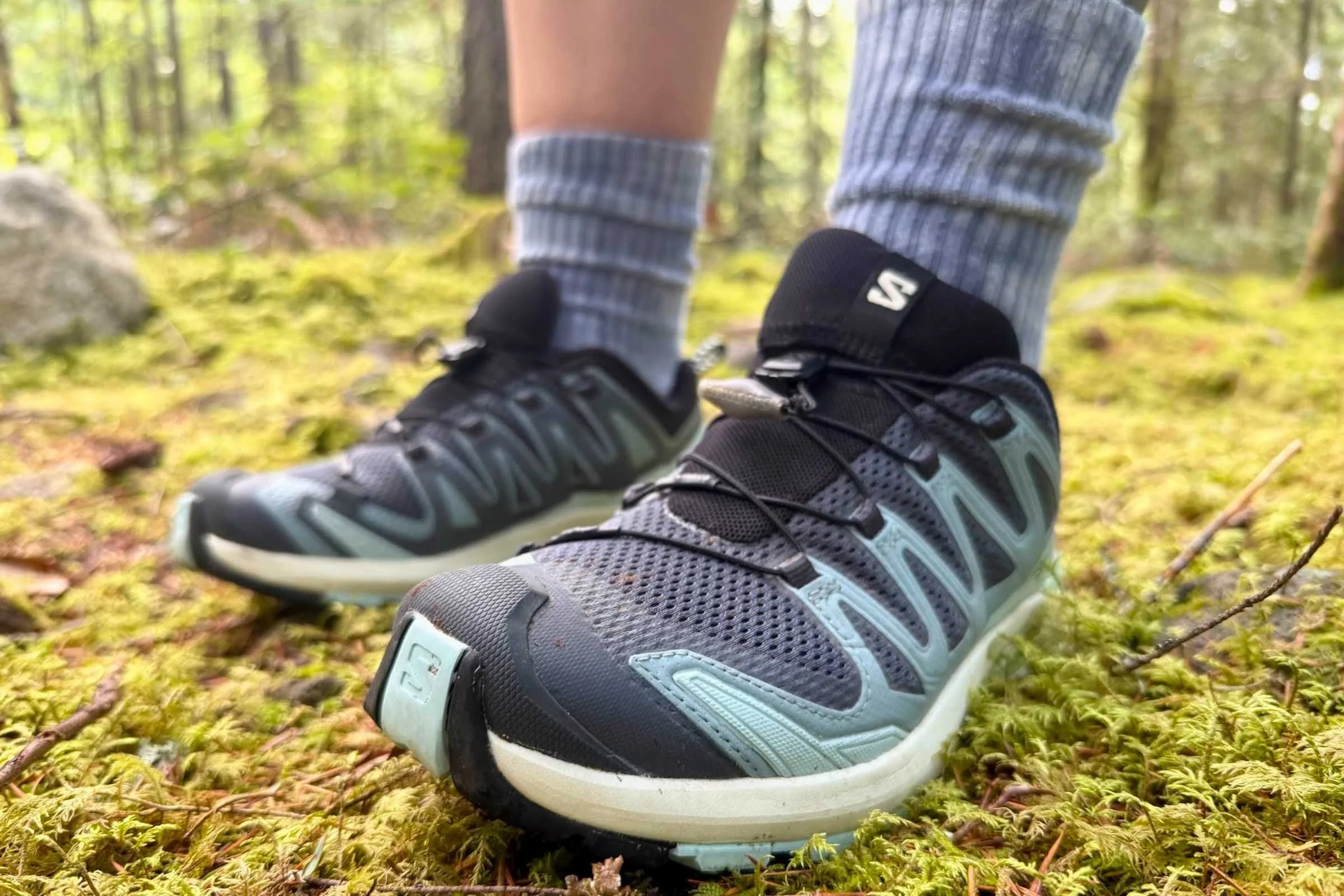
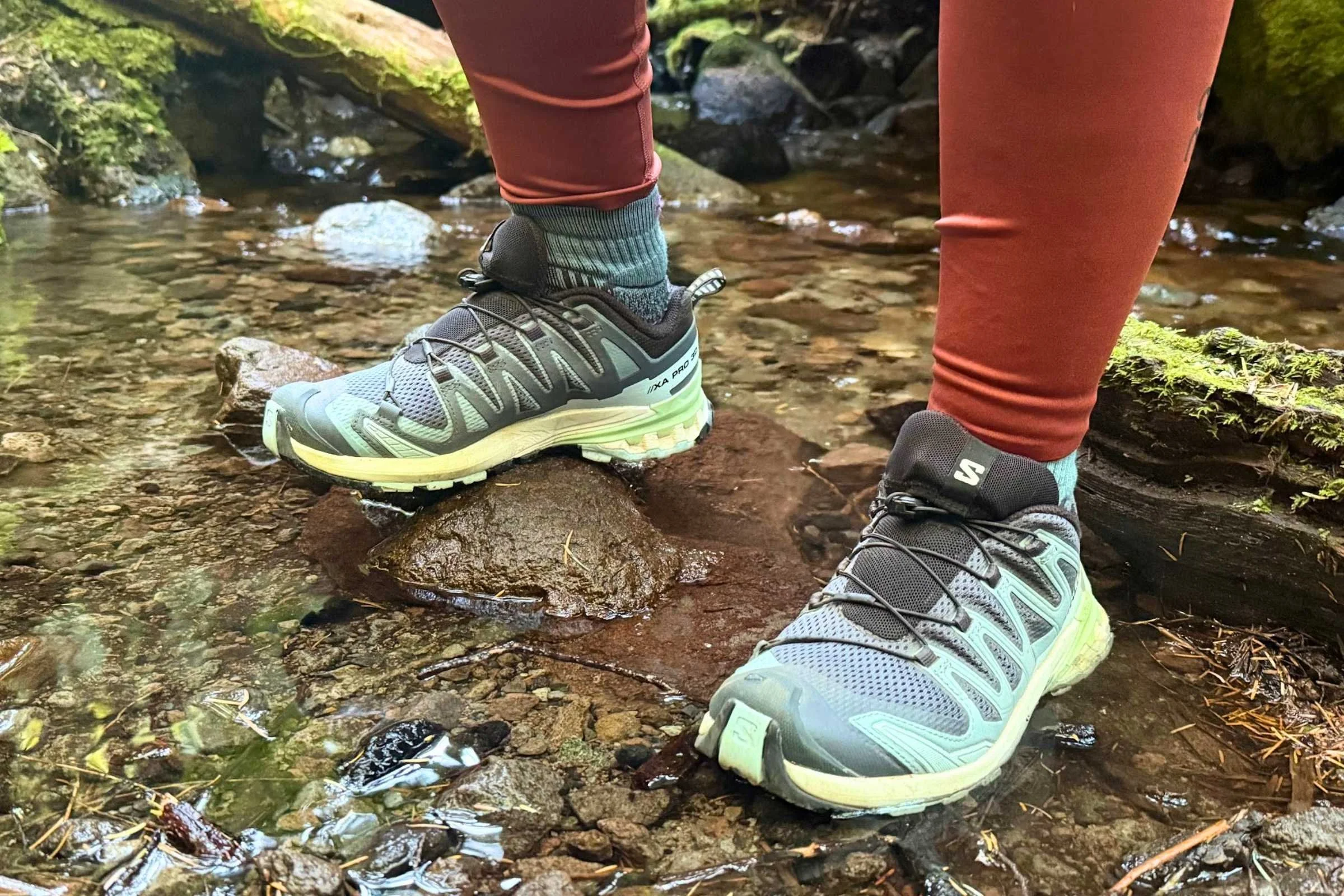
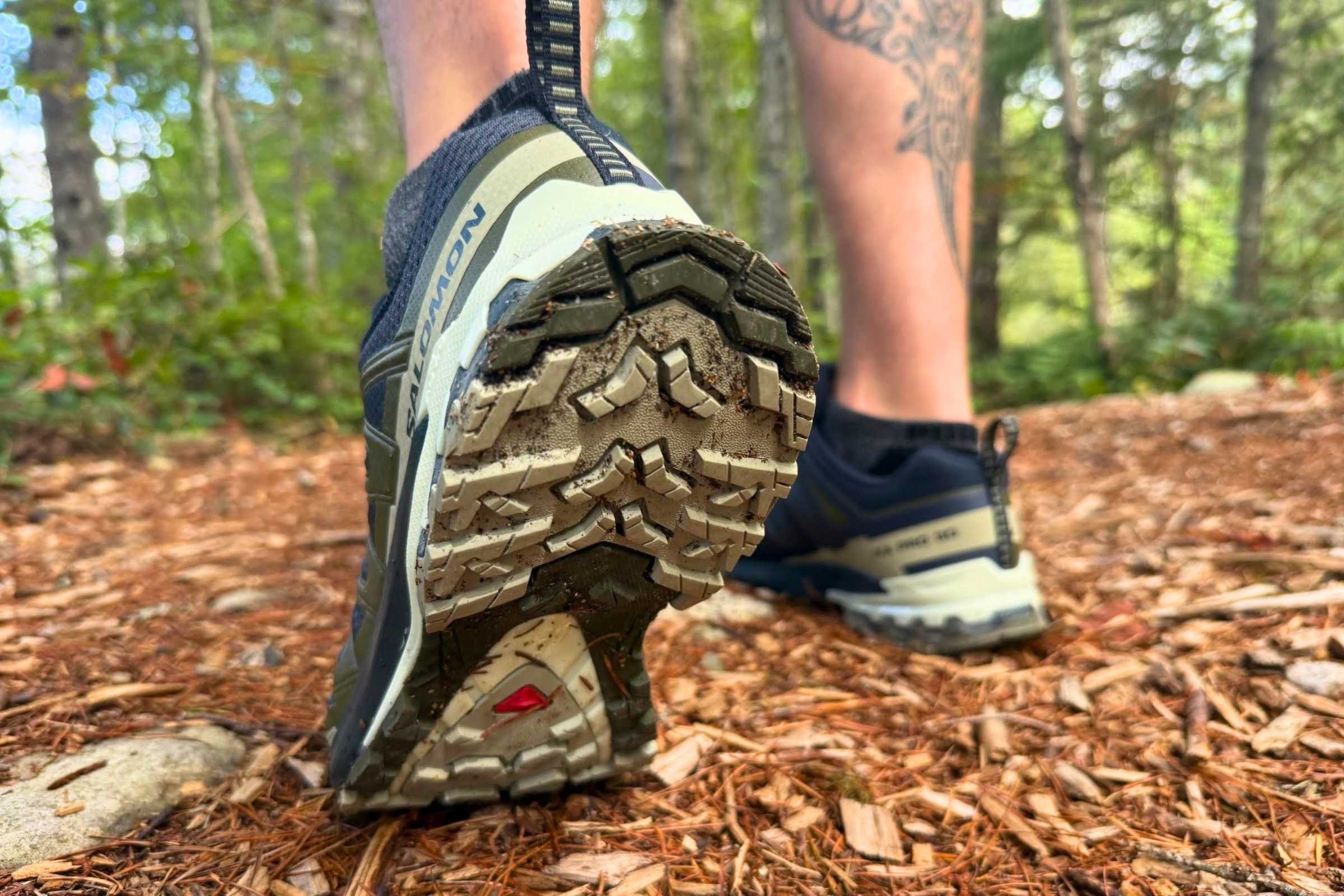
It’s become the shoe I find myself reaching for the most because it’s lighter and more nimble than a lot of hiking shoes, but still has excellent protection, structure, and stability. I love it for mixed days when you’re hiking the uphills, jogging the downhills, or moving quickly over rocks and roots. It has that instantly recognizable Salomon look, the colors are always good, and it also works for everyday wear.
The waterproof GORE-TEX membrane is invaluable in the wet conditions I often hike in around Squamish, B.C., though there’s a non-waterproof version if you want more breathability for hot weather. The XA Pro 3D V9 also features Salomon’s 3D Advanced Chassis, a stability plate between the midsole and outsole that helps the shoe feel more planted. As someone who is always rolling an ankle, I find it gives the shoe a secure feel on rough terrain without making it feel clunky.
The Quicklace system is tidy, fast, and easy to use, and the lace path is interesting: it skips the usual pressure point across the outer toes, which I find gives my wider, high-volume feet a little more breathing room up front. The ride is definitely firm compared to plush trail runners, but if you want something light yet sturdy, the XA Pro 3D V9 hits a really useful middle ground (although the name is a mouthful).
Read more in my in-depth review of the Salomon XA Pro 3D V9 GORE-TEX.
La Sportiva Prodigio Pro

Mileage per pair: 150 + (current pair)
Outsole material: FriXion white rubber outsole with aggressive trail lugs
Weight (pair): 1 lb 1.8 oz (men’s), 15.8 oz (women’s)
Heel-to-toe drop: 6 mm
Cushion level: High cushioning with responsive foam
Rock plate: Yes
Available sizes and widths: 5.5 - 11 (women’s), 7.5 - 15.5 (men’s); standard widths
My favorite features: Grip, fit, responsiveness
I wore Brooks Cascadias for about 1,000 miles of the Appalachian Trail, mainly due to the fact that they were available in nearly every major outdoor retailer. But when I found the La Sportiva Prodigio Pro, I became a quick convert.
La Sportiva Prodigio Pro
men's
Women's
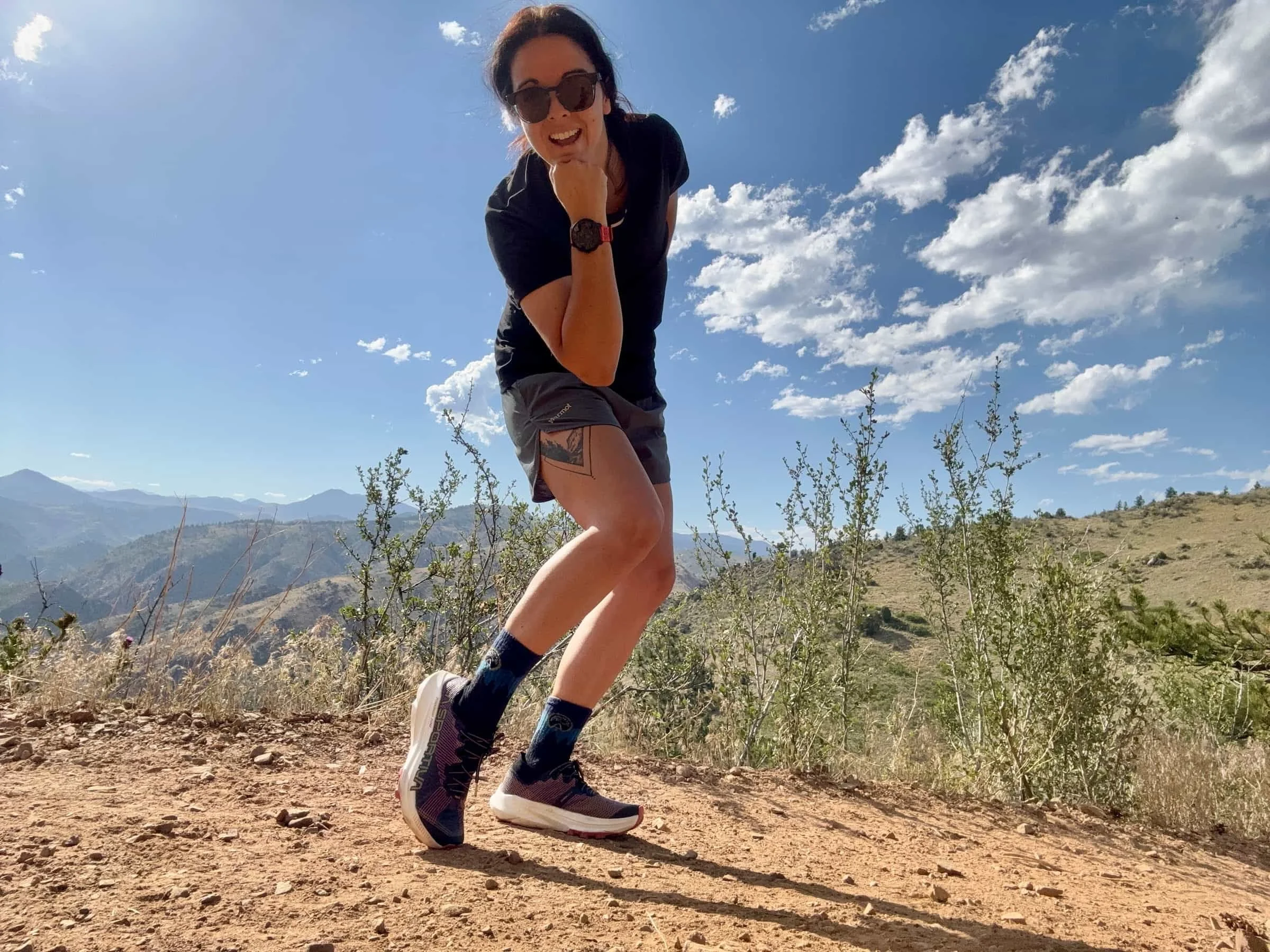
These shoes hug the mid-foot while allowing ample space for my toes to splay and maintain control in the toe box. They’re energetic but stable on steep and uneven trails, and the lightweight structure of the shoe is ideal for reducing fatigue on long mountain hikes in my home state of Colorado.
When paired with their outstanding grip on wet rock and loose dirt, these shoes never cease to amaze me after an arduous day above the alpine zone. And they’re my current go-to trail runner shoe on days when I have an ambitious mission ahead of me. Notably, they also come with the price tag of a premium shoe, but most hikers find that they last about 500 miles even on brutal outdoor terrain, which might make it easier to stomach the cost.
The La Sportiva Prodigio Pro is the suped-up race-day version of the La Sportiva Prodigio trail running shoes, another of our favorites.
norda 002
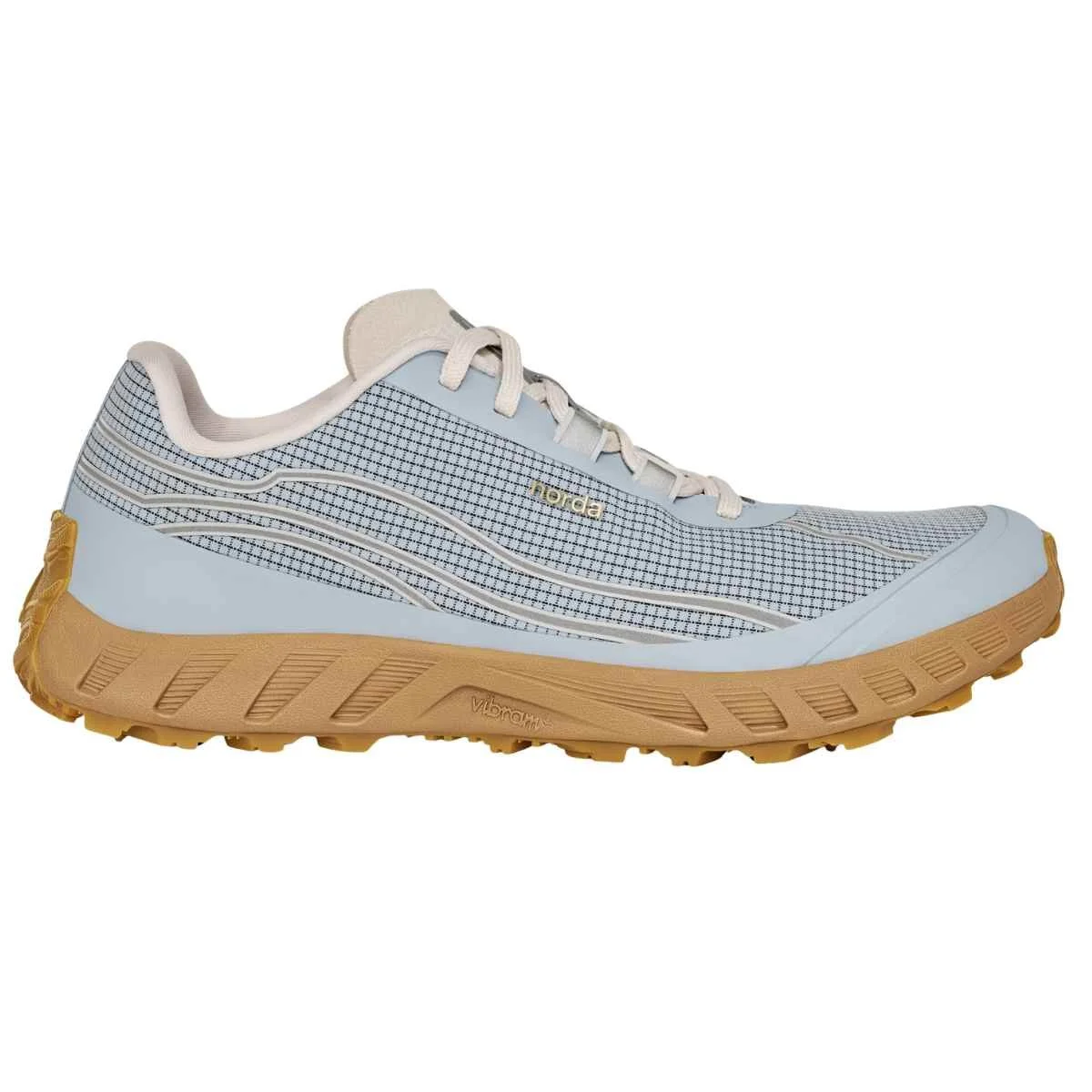
Mileage per pair: 750+
Outsole material: Vibram Litebase and Megagrip
Weight (pair): 1 lb 3 oz (men’s), 1 lb 1.6 oz (women’s)
Heel-to-toe drop: 4 mm
Cushion level: Low-Moderate
Rock plate: No
Available sizes and widths: Women’s 6-10, men’s 7-14; regular size only (runs small)
My favorite features: Low stack height gives great stability in technical terrain; excellent traction; incredibly comfortable
Living at the base of Colorado’s Tenmile Range, I often find myself hiking above treeline in the alpine, along ridgelines or on more technical terrain. While I often prefer more cushion for longer multi-day backpacking trips, those often lack the stability I need when I venture off trail. For adventurous day hikes in my backyard, the norda 002 trail running shoes have been the ideal companion.
norda 002
men's
Women's
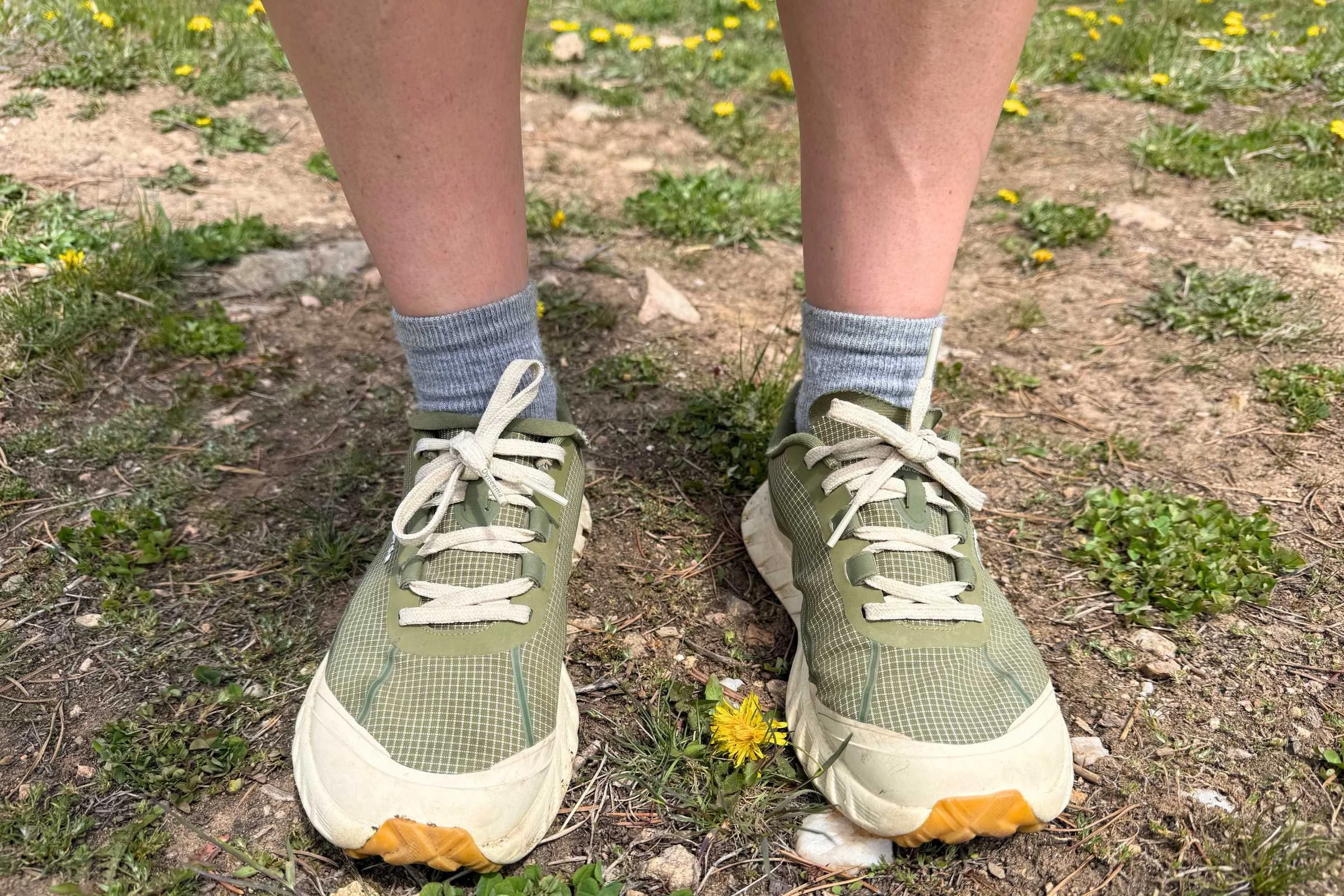
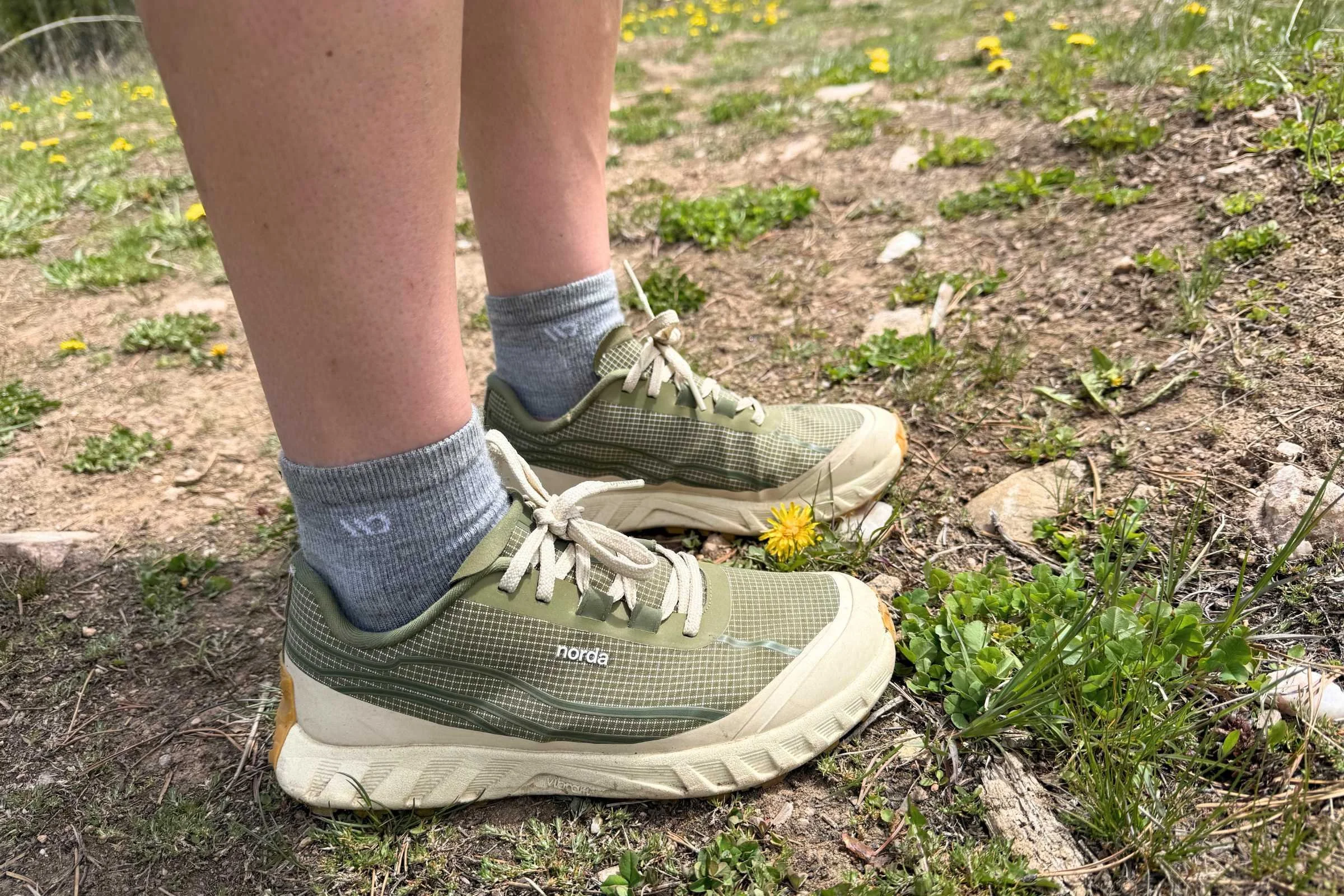
For starters, they’re incredibly comfortable—as long as you get your size right. I found I needed a full size up in these shoes, which norda’s website recommends for this model.
Second, the outsole is made with a combo of Vibram’s Litebase and Megagrip rubbers and has fairly deep lugs, so the traction on the 002 is excellent—another important feature for when hikes often turn into scrambles.
And, the lower stack height and cushioning on the low end of the spectrum gives ample groundfeel. This feature is of course less ideal for long, multi-day treks, but for day hikes in the high alpine, it makes these shoes ideal. And, they’re incredibly light.
There’s no getting around the fact that these shoes are expensive. And, like Becca, I’ve yet to truly put them through the ringer to assess long-term durability. But after over 100 miles of use the Dyneema composite upper material looks completely unscathed and truly almost brand new, so that’s a great indicator so far that these may be worth the splurge.
Topo Athletic Pursuit 2
Mileage per pair: 600+
Outsole material: Vibram Megagrip
Weight (pair): 1 lb 5 oz (men’s), 1 lb 1.2 oz (women’s)
Heel-to-toe drop: 0 mm
Cushion level: Moderate
Rock plate: No
Available sizes and widths: Women’s 6-11, men’s 8-14; regular width only
My favorite features: Wide toe box, zero drop, lateral stability, durability
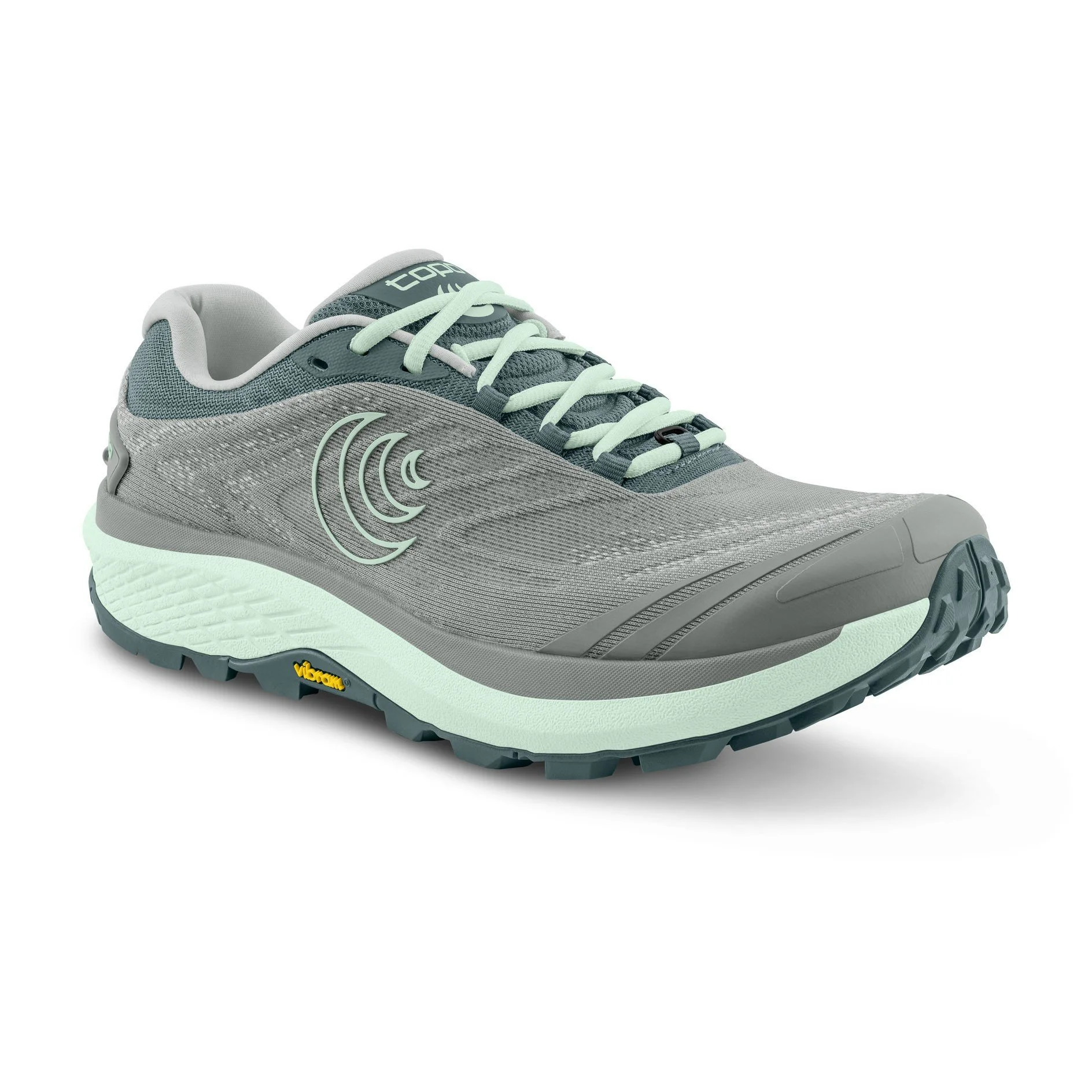
The Topo Athletic Pursuit 2 is a zero-drop, low-stack trail shoe built for both hiking and trail running, and after putting my first pair through a 600-mile thru-hike of the Mogollon Rim Trail in rugged, technical terrain, it’s become my default thru-hiking shoe. I have very specific criteria for a thru-hiking trail running shoe, and the Pursuit 2 is the best shoe I’ve found that meets all of them:
wide toe box
zero drop
ground feel
durability
lateral stability
traction
Topo Athletic Pursuit 2
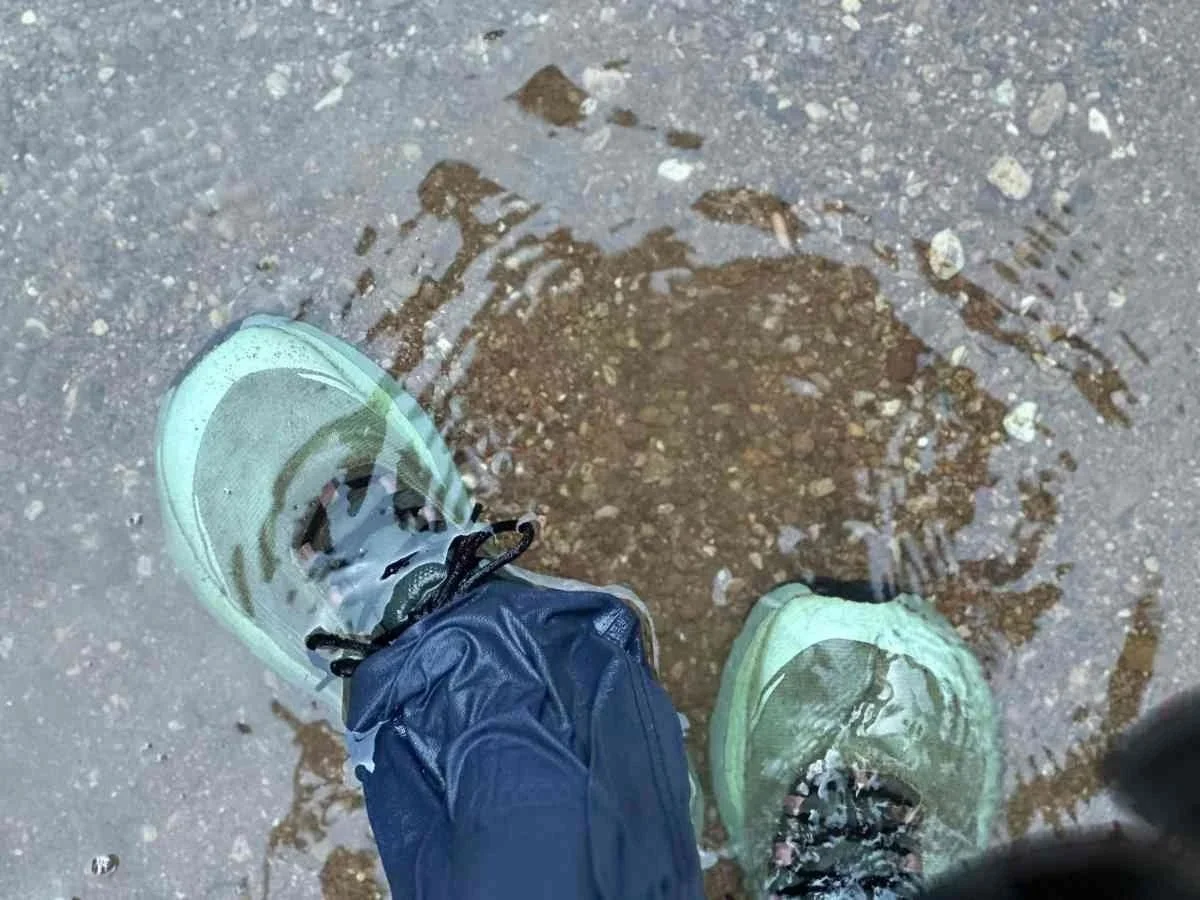
With 28 mm of stack height, a wide toe box, and a Vibram Megagrip outsole, the Pursuit has incredible lateral stability but still has the ground feel that I like. It offers excellent lateral stability, moderate cushioning, and quick drainage on wet runs, all while keeping that close-to-the-ground feel I like. The Mogollon Rim Trail threw rugged, overgrown, scree-covered terrain at me, plus frequent stream crossings and even some unexpected snow, and the Pursuits handled all of it. The traction exceeded my expectations on steep, questionable surfaces, and the shoes drained and dried fast every time my feet got soaked.
What impressed me most was the durability. After 600 miles, the tread still looked surprisingly good, the uppers had almost no punctures or tears, and the midsole still had some bounce left. At $150, that longevity makes it a genuinely good value.
For zero-drop fans who want a moderately cushioned shoe for thru-hiking or trail running, the Pursuit 2 is my top choice. For more, read my in-depth review of the Topo Pursuit 2.
What to look for in trail running shoes for hiking
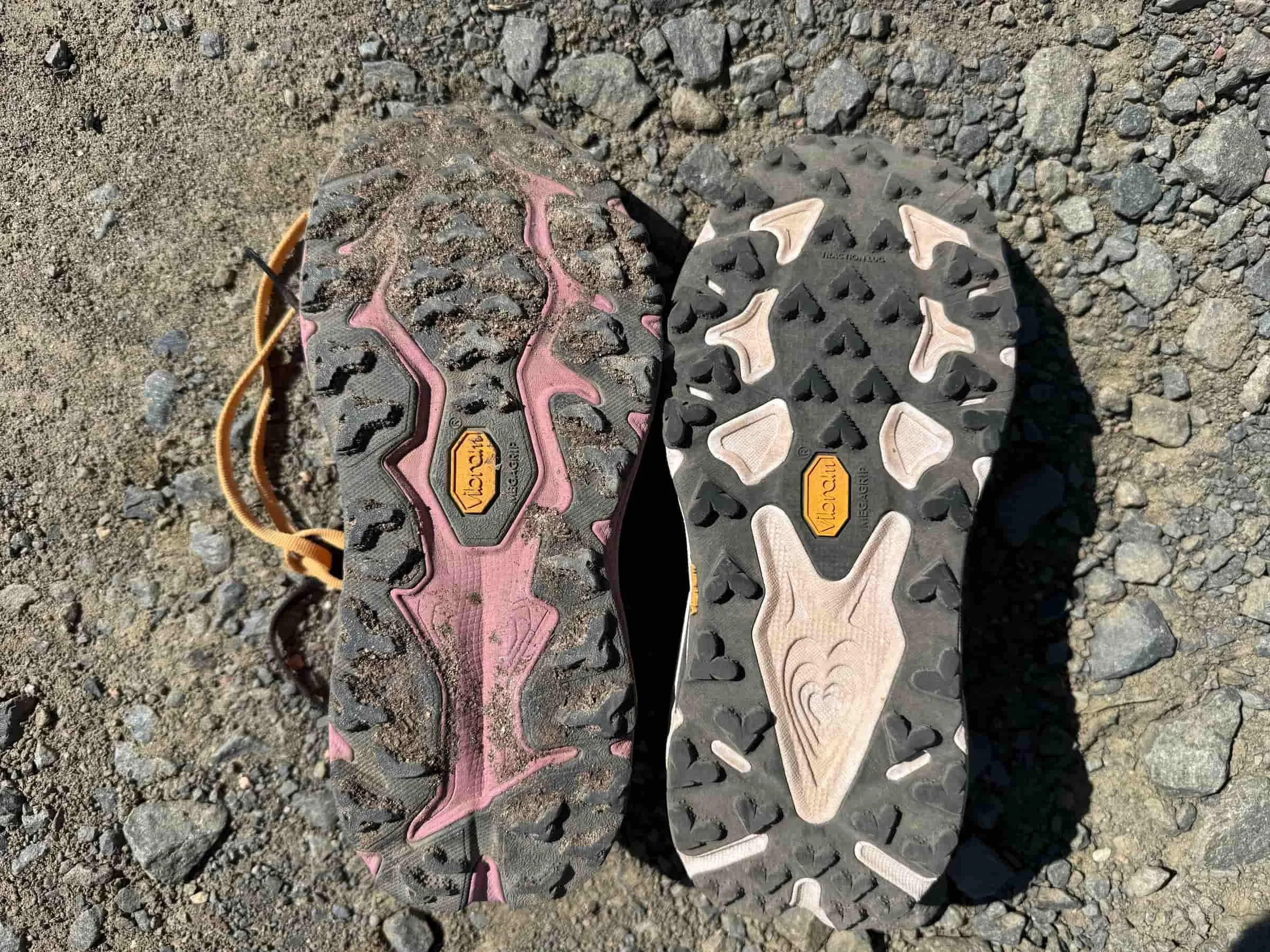
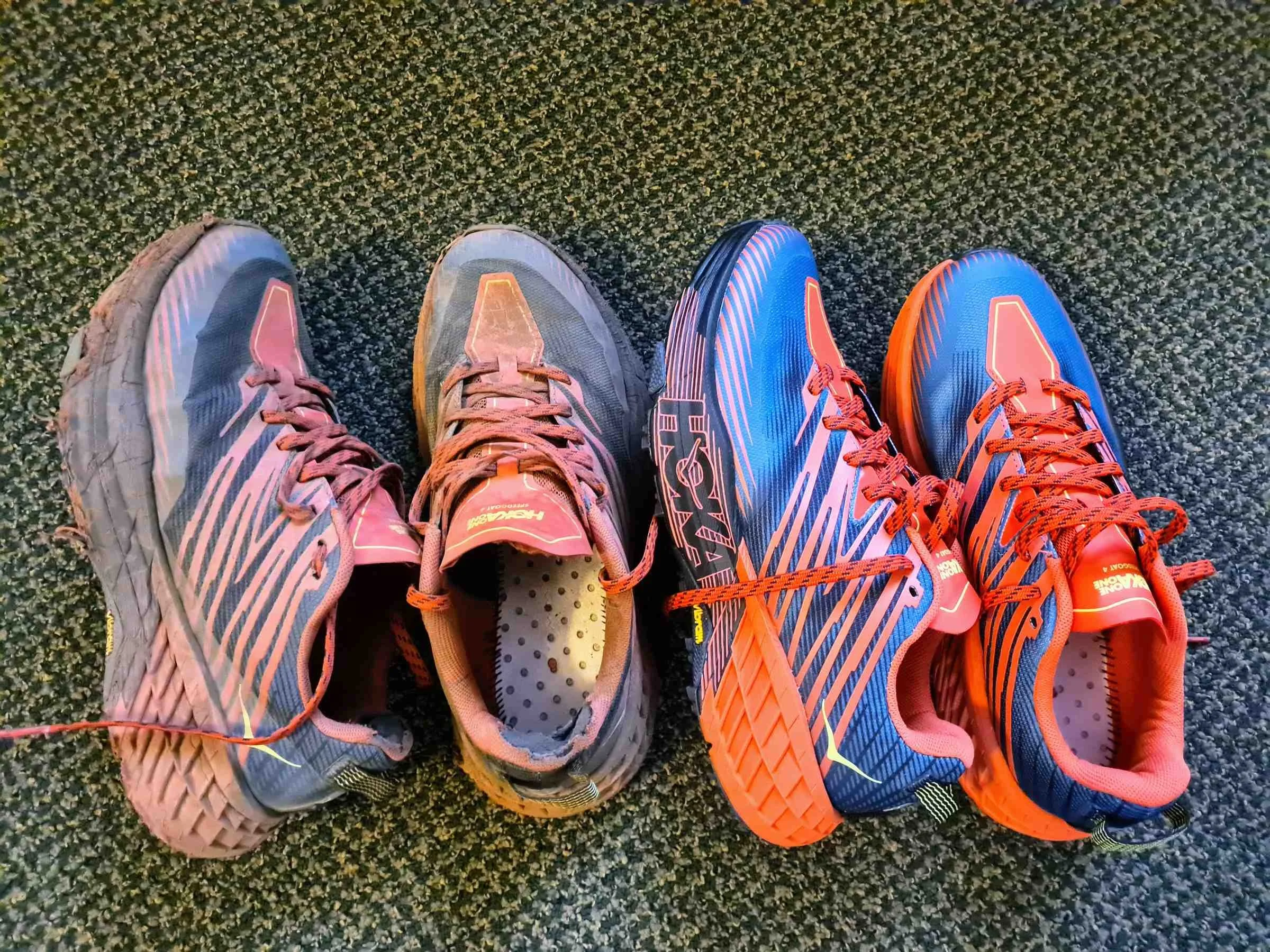
Comparing the Vibram MegaGrip outsole on a HOKA Speedgoat with 300+ miles on the left and a newer pair of HOKA Speedgoat trail running shoes.
Traction and lug pattern
Lug pattern for trail running shoes for running and trail running shoes for hiking are different. For hiking, lug depth, spacing, and rubber compound all matter. Lug patterns optimized for mud (deep, widely spaced lugs) perform poorly on dry rock and hard-packed dirt, while shallower multi-directional lugs work across a lot more types of terrain.
If you're thru-hiking from desert to alpine areas like you do on the PCT, versatility will matter more than specialized traction. If you stick to one kind of ecosystem, like muddy trails on the Appalachian Trail, you have more room to specialize.
The main outsole rubber options are Vibram Megagrip (arguably, the best compound for traction for hikers), Continental rubber (common in running shoes, less proven over high hiking mileage), and proprietary brand compounds. Note that your traction degrades over mileage. We tested grip towards the beginning and end of a shoe's life (past 300 miles) to let you know how long it lasts.
Cushioning and stack height
Trail running shoes for hiking go anywhere from minimal to maximal. Minimal trail running shoes have a closer ground feel, less protection, and more proprioceptive feedback. Maximal cushioning has more protection, less ground feel, and may better on your feet after back-to-back, high-mileage days.
The right cushioning level for hiking depends on your daily mileage, pack weight, and where you are hiking — hikers covering 20+ miles per day under a heavy pack typically benefit from more cushioning than those doing moderate day hikes. Unfortunately, midsole foam compresses over time and a shoe that feels well-cushioned at mile 50 may feel noticeably flatter at mile 400.
Drop and hiking biomechanics
A higher drop shoe (8–12mm) resembles the geometry of a traditional hiking shoe and suits hikers transitioning from heeled footwear. A lower drop (0–4mm) encourages a more natural foot strike and suits hikers already adapted and conditioned to minimal footwear. It usually takes most hikers weeks or months for their Achilles and calves to adjust and move from a higher drop shoe to a lower drop shoe. While this is also true for runners, it is especially true for hiking because hiking involves carrying a heavier backpack over more hours (and if you're thru-hiking, it is harder to take a rest day off your feet).
Durability and mileage lifespan
There's a few things that commonly fail on trail running shoes for hiking that impact the number of miles you get per paid. The outsole rubber compound and thickness, upper material and abrasion resistance, midsole foam density, and toe cap construction all contribute to how much life you'll get out of a shoe. Trail running shoes are built lighter than hiking shoes and typically wear through faster — 300–500 miles is a realistic lifespan for most trail runners used for hiking, compared to 600–900 miles for some of the more durable hiking shoes we tested.
For high-mileage hikers, a better way to calculate value of a shoe may be cost-per-mile and expected lifespan vs. the upfront price.
Fit under load and over distance
Feet swell throughout the day. That’s just a fact of hiking. Your foot slides forward on descents, pressing toes into the front of the shoe. A thumb's width of space in the toe box is the standard recommendation, but try to take this measurement at the end of a long day, not first thing in the morning.
A loose heel counter causes blisters on long descents, so make sure your heel fits well before you commit to a shoe. Similarly, midfoot lockdown becomes more important if you're carrying a backpacking pack.
Waterproof vs. non-waterproof
Most thru-hikers prefer non-waterproof shoes. Feet will get wet eventually, and a shoe that dries fast is more useful across a long trail than one that stays dry for the first 10 minutes of a stream crossing and then traps moisture. However, waterproofing genuinely is worth it in cold shoulder-season hiking, sustained rain in cold climates, and short hikes where keeping feet dry matters more than managing sweat over distance.
Wide sizing and toe box fit
Because hikers’ feet swell, many hikers find that width is the single most important factor in a trail running shoe for hiking. To avoid blisters, we considered hiking-specific fit such as toe splay on descents, swelling over distance, and foot volume at the end of the day carrying a pack.
In short, the fit you need for hiking is different than what you want for running. Brands that offer official wide sizing include Altra, Brooks, and New Balance. There are also bands where the standard last is naturally wider such as most Altra models and Topo Athletic. Fair warning: some trail runners marketed as "wide" are only marginally wider than standard sizing. Community fit reviews from hikers with similar foot shapes are more reliable than brand sizing alone.
Trail running shoes vs hiking shoes — the actual trade-offs
We cover trail running shoes vs. hiking shoes extensively in our Trail Running Shoes vs. Hiking Shoes guide. Here is what you need to know:
When trail runners do better for hiking: When you want something lighter weight with a faster break-in. Trail runners are also quicker drying. Many hikers like that they have a more natural foot feel. This all translates to being a better option for high daily mileage.
When hiking shoes do better: If you're out for a shorter period, are newer to hiking, or on more technical terrain, hiking shoes are a better bet. They have a more protective midsoles and rockplates, more durable uppers and outsoles, better ankle structure in boot versions, more suitable for heavy pack weights and technical off-trail terrain.
People with known injuries: Hiking shoes are often a better option for people newer to hiking who are working on building ankle and foot strength and muscles. They are also a better option for people who are serious hikers who have had injuries in the past and know ankles or toes may be a spot that needs extra protection from gear. Check with your medical professional, who may recommend a traditional hiking boot or lightweight hiking boot instead.
Choosing a trail running shoe for hiking by trip length
Day hikes under 10 miles. Most trail runners work for most people most of the time; cushioning and traction are the primary criteria. Fit issues won't compound significantly.
Long day hikes and peak-bagging (10–20+ miles). You may care more about cushioning and durability over this distance. Towards the end of a day on your feet, foot swelling matters. Your pack's weight and load will also affect your midsole performance.
Overnight and backpacking trips. For these kinds of trips, your pack weight and load is going to matter a lot. You'll want to look for trail running shoes with more durability and heel counter stability. If you like waterproof shoes, you'll want to find trail runners that have good waterproofing as the more days you are out, the more likely you will encounter rain.
Thru-hiking and long trails. Thru-hikers want lightweight shoes that have decent durability. They're often thinking about cost-per-mile more than cost upfront. It's important to remember the fit of the same shoe may change over time as thru-hikers often find their foot volume change over months of walking. One of our writers permanently saw her foot change by 2 sizes over a thru-hike!
Break-in and transition guidance
Note that trail running shoes require far less break-in than traditional hiking boots, which is one of their main advantages for hiking.
Most trail runners can be worn on a moderate hike within the first few uses — no months-long break-in needed
Hikers transitioning from high-drop boots to low-drop trail runners should reduce drop gradually to avoid Achilles and calf strain. Most manufacturers suggest a 4–6 week transition period as a reasonable guideline
What to know about Zero-drop: the transition period is longer and more important to take seriously. Note that skipping your transition regimen or doing it too fast leads to injury, not just discomfort. We’re big fans of Zero-drop, but you have to work your way to it.
Fit testing: test new shoes on a short hike with the same sock and pack weight before committing them to a long trip.
Care and maintenance
Rinse trail running shoes after muddy or dusty hikes. Mud left to dry in the lugs hardens and reduces traction
Remove insoles and dry separately after wet hikes. Insoles trap moisture and can make them stink and lead to foam compression over time
Do not put trail running shoes in a dryer: Heat degrades EVA foam and adhesives faster than any amount of trail use
Waterproof shoes: reapply a DWR spray to the upper periodically. The membrane remains functional but the upper fabric loses its DWR with each use, which causes it to absorb water and slow drying
Check the outsole: check lug depth periodically. When lugs wear flush, traction on wet surfaces becomes nearly non-existant. Don't wait until a fall to replace your shoes!
Storage: Store loosely rather than compressed. Stuffing trail runners into a small space deforms the midsole foam over time. We’ve learned the hard way!
How we researched and tested
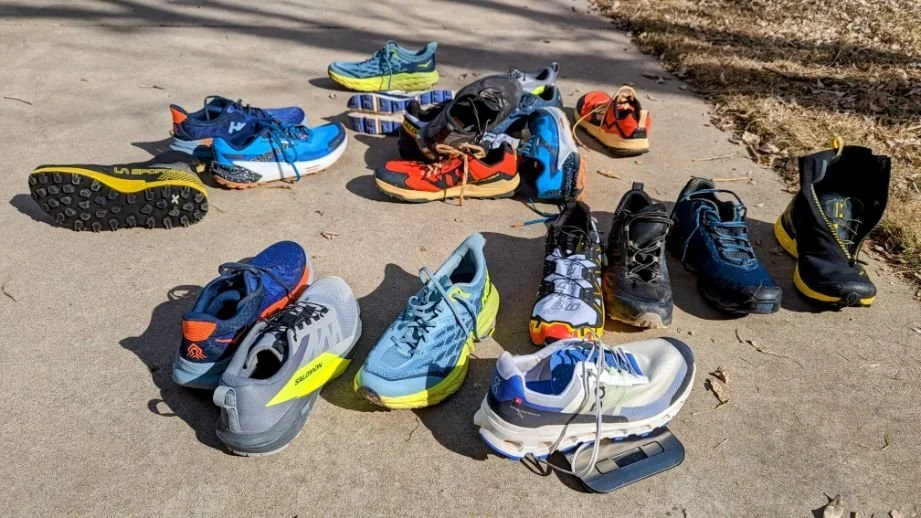
Just a fraction of the trail running shoes we tested for hiking.
We tested over 50 pairs of trail running shoes across nine writers and tens of thousands of miles. Many we originally tested for Treeline's existing trail running shoe stores (which already include hiking-specific categories), our thru-hiker community feedback, and our writers' prior long-distance testing by Treeline writers
Our testing methodology included:
Each shoe was worn on real hikes, often thru-hikes, before we judged it a winner. Each of our winners has at least a hundred miles and some of our winners have thousands of miles of testing
Terrain types tested: we tested on everything from rocky singletrack, to loose dirt, to wet rock, to scree.
Load testing: Almost all of the shoes we wrote about were used on a thru-hike, which means that testers wore a pack that weighed 12 - 40 pounds day after day for months
Durability: we checked our shoes for outsole wear, upper abrasion, and midsole compression at multiple mileage checkpoints.
Fit: Multiple testers wore these shoes to get a sense of how different feet and bodies work with these shoes. We also compared how shoes feel at the start of a hike and at the end of a long day when foot swelling is at its peak
- Day hikes, backpacking trips & thru-hikes
- Tested with a heavy pack loaded
- Varied terrain from groomed trail to rugged
- Different foot shapes & hiking styles
- Multi-month thru-hike use included
- All-day comfort under load
- Traction & stability with a heavy pack
- Durability over hundreds of trail miles
- Underfoot protection on rocky terrain
- Break-in time & long-term fit
Why you should trust us
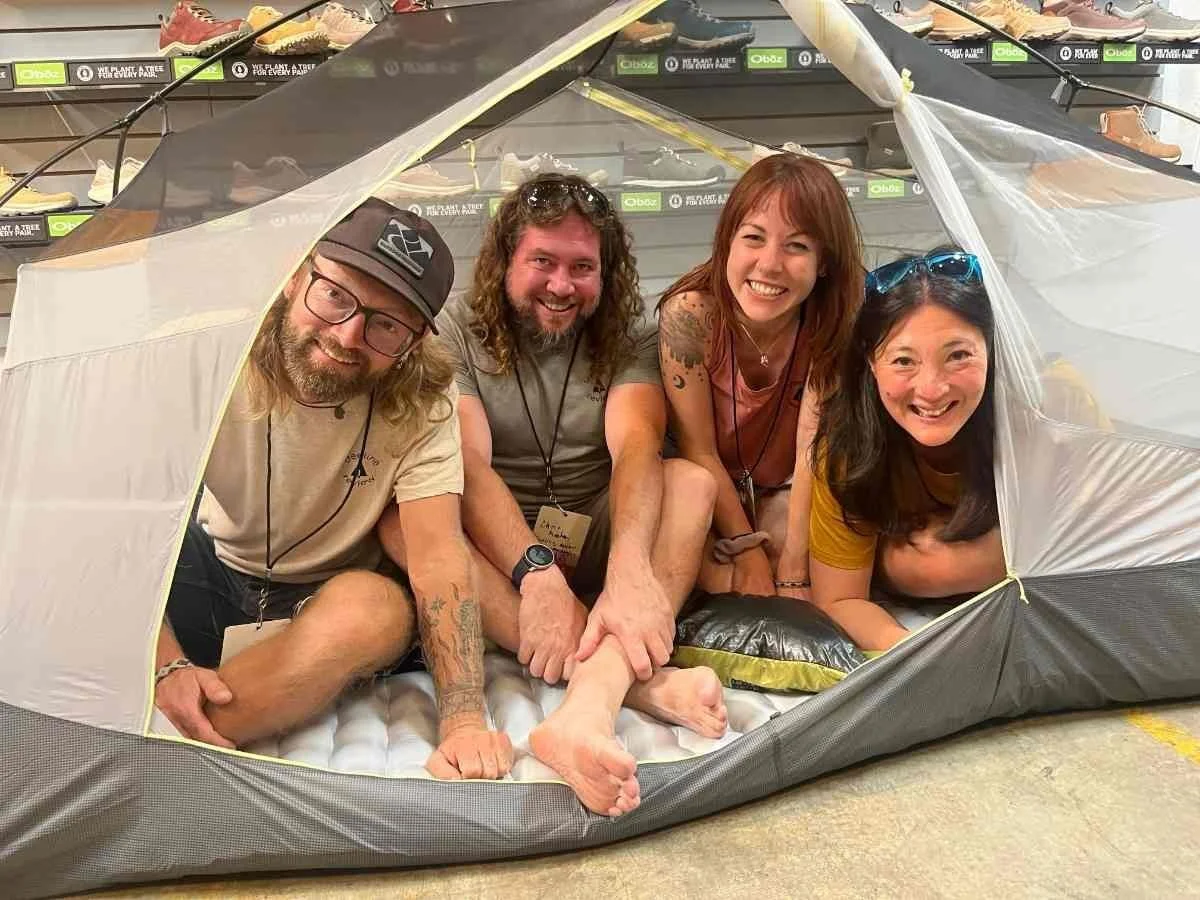
Treeline Review writers have spent thousands and thousands of miles and days hiking and backpacking in the outdoors, often using trail running shoes. To test trail running shoes, they’ve endured hot, humid, muggy days on the Appalachian Trail, hiked in persistent rain in the Pacific Northwest, bushwhacked through spiky plants in the Southwest, and post-holed in snow in the Colorado Rockies. They’ve tested these trail running shoes in almost every weather condition imaginable and all kinds of trails, hiking, backpacking, and thru-hiking.
Through all their adventures, they’ve used and tested trail running shoes. After years of testing over 50 models of trail running shoes, they’ve found their favorite timeless, durable, reliable, useful go-tos.