Shikoku 88 Temple Pilgrimage (Henro) Japan Backpacking Guide
A 750-mile pilgrimage connecting 88 Buddhist temples around the Japanese island of Shikoku
January 14th, 2026
Home → Trip Guides → Backpacking
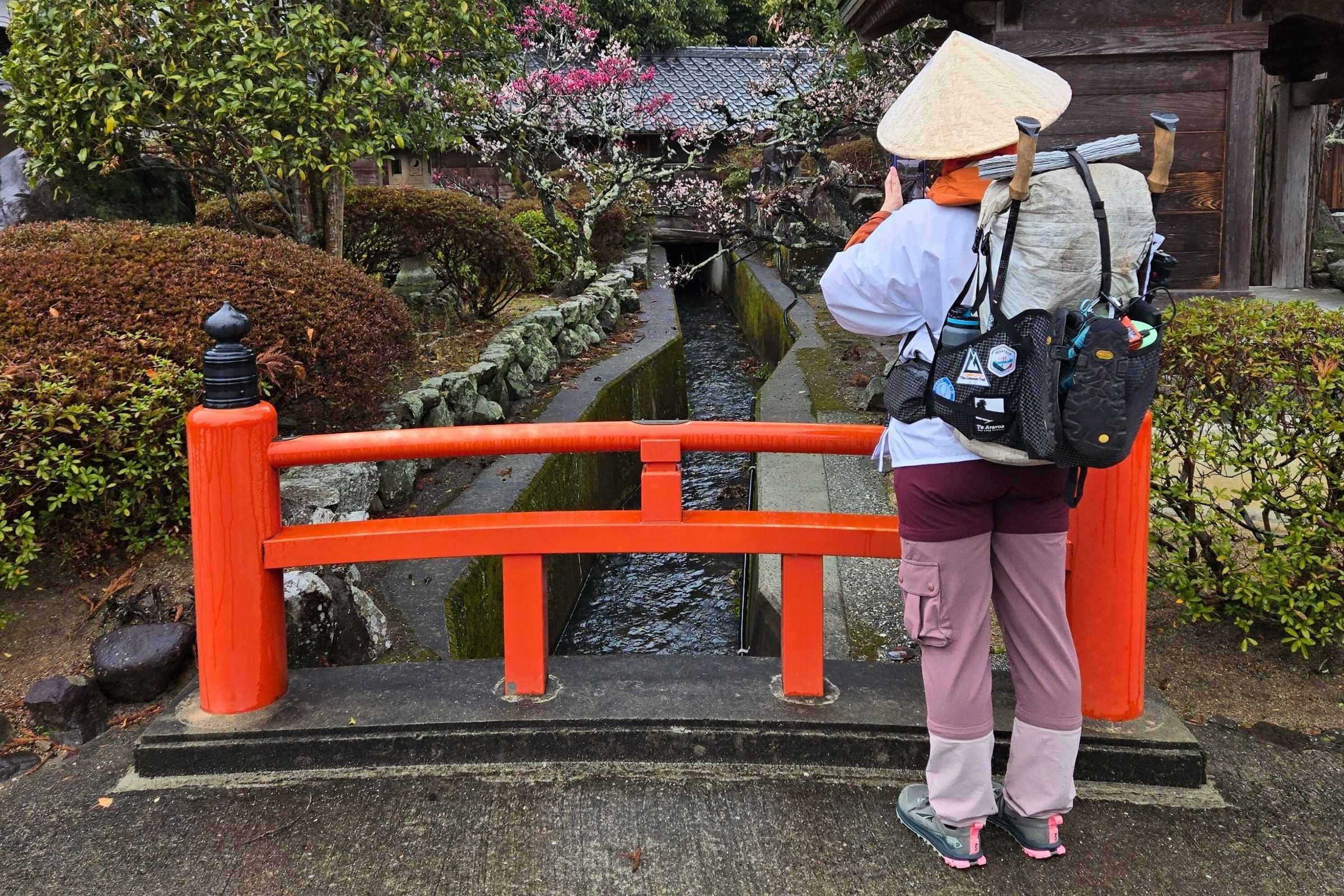
I walked the entire Shikoku 88 Temple Pilgrimage, completing all 88 temples clockwise over 53 days. This 1,200-kilometer (750-mile) pilgrimage circles the Japanese island of Shikoku, connecting ancient Buddhist temples through cities, coastal towns, quiet villages, and forested mountain paths. While often mistaken for a thru-hike, the Henro is a deeply cultural journey shaped by tradition, ritual, and community—one that rewards respect and curiosity as much as physical endurance.
Distance: ~1,200 km / 750 miles
Days: 40-60 days (we took 53)
Elevation gain/loss: ~22,000 / 25,000 m
Best season: March–May, October–November
Permits: None required
Difficulty: Moderate to hard (long distances, heat, extensive road walking)
We create reader-supported, mission-driven objective gear reviews independently selected by our editors. This story may contain affiliate links, which help fund our website. When you click on the links to purchase gear, we may get a commission — without costing you an extra cent. Thank you for supporting our work and mission of outdoor coverage for every body! Learn more.
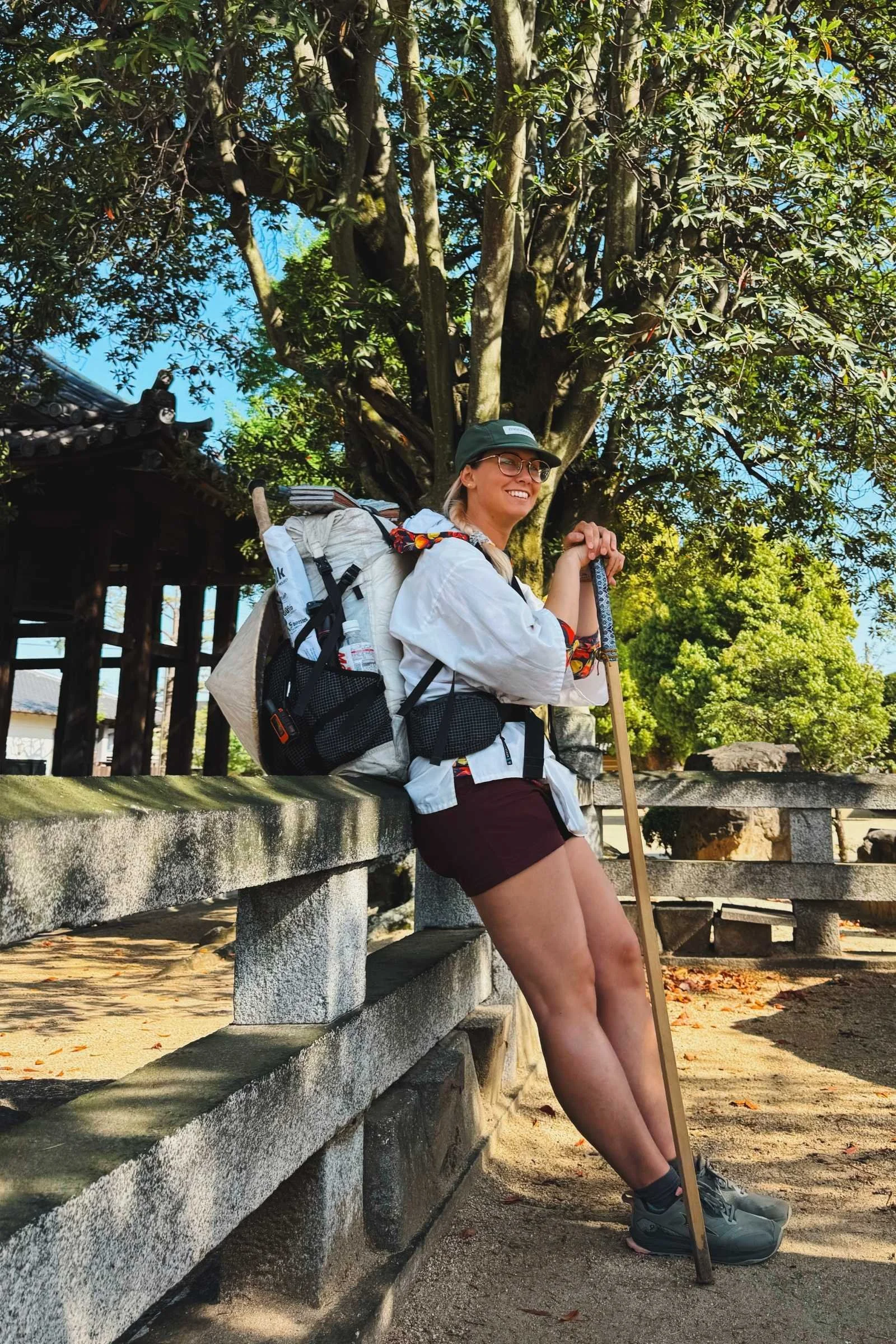
Lauren resting at a temple.
Background
The Shikoku Henro is one of Japan’s oldest pilgrimage routes, traditionally associated with the Buddhist monk Kūkai (Kōbō Daishi). The circular route links 88 temples across four prefectures—Tokushima, Kōchi, Ehime, and Kagawa—and has been walked for more than a thousand years. Pilgrims, known as “henro,” complete the route by foot, bicycle, car, or tour bus, though walking remains the most immersive and traditional way to experience it.
This is not a wilderness thru-hike. The pilgrimage passes through urban areas, small towns, highways, and manicured forest paths, with temples acting as the anchors of each day. The experience is shaped as much by daily interactions—receiving osettai (acts of kindness), staying in pilgrim lodging, and following temple schedules—as by distance covered.
Essential Facts and Whose Land You’re On
The pilgrimage travels through long-inhabited agricultural and coastal landscapes maintained by local communities and Buddhist institutions. Temple grounds are sacred spaces. Pilgrims are guests here—following etiquette, cleaning up after themselves, and honoring local customs is essential to keeping the Henro accessible for future walkers.
The Shikoku 88 Temple Pilgrimage is rooted in the legacy of Kūkai (774-835 CE), also known as Kōbō Daishi, the founder of Shingon Buddhism. Born on Shikoku, Kūkai later traveled to Tang-dynasty China in the early 9th century, where he studied Buddhism before returning to Japan to establish the Shingon practice.
Many of the temples on today’s pilgrimage are associated with places where he is believed to have trained, meditated, or taught, and over time, these sites became destinations for pilgrims seeking healing, merit, or guidance. By the Edo period (1603–1868), these locations had coalesced into a widely recognized circuit of 88 temples, accessible to people from all walks of life.
The number 88 is symbolically linked to the 88 earthly desires (bonnō) believed to cause human suffering, with each temple representing a step toward purification. A central concept of the pilgrimage is dōgyō ninin—“two traveling together”—the belief that pilgrims walk alongside Kōbō Daishi himself, symbolized by the pilgrim staff.
Today, the Henro is walked for many reasons, religious and secular alike, but it remains a living cultural tradition supported by local communities through acts of generosity known as osettai.
Highlights
Visiting all 88 exquisitely built temples, each with unique architecture
The opportunity to reflect and meditate
Receiving osettai—food, encouragement, and generosity from locals
Affordable pilgrim lodging and free or donation-based shelters
Nightly access to hot springs (onsen)
A strong sense of rhythm and purpose
Experiencing rural Japan far beyond the tourist path
Challenges
Approximately 75% road walking, including highways and urban streets
Heat and humidity outside shoulder seasons
Temple hours that shape daily mileage
Cultural expectations around behavior and cleanliness
Language barriers in rural areas
Repetitive stair climbing at temples
Best season
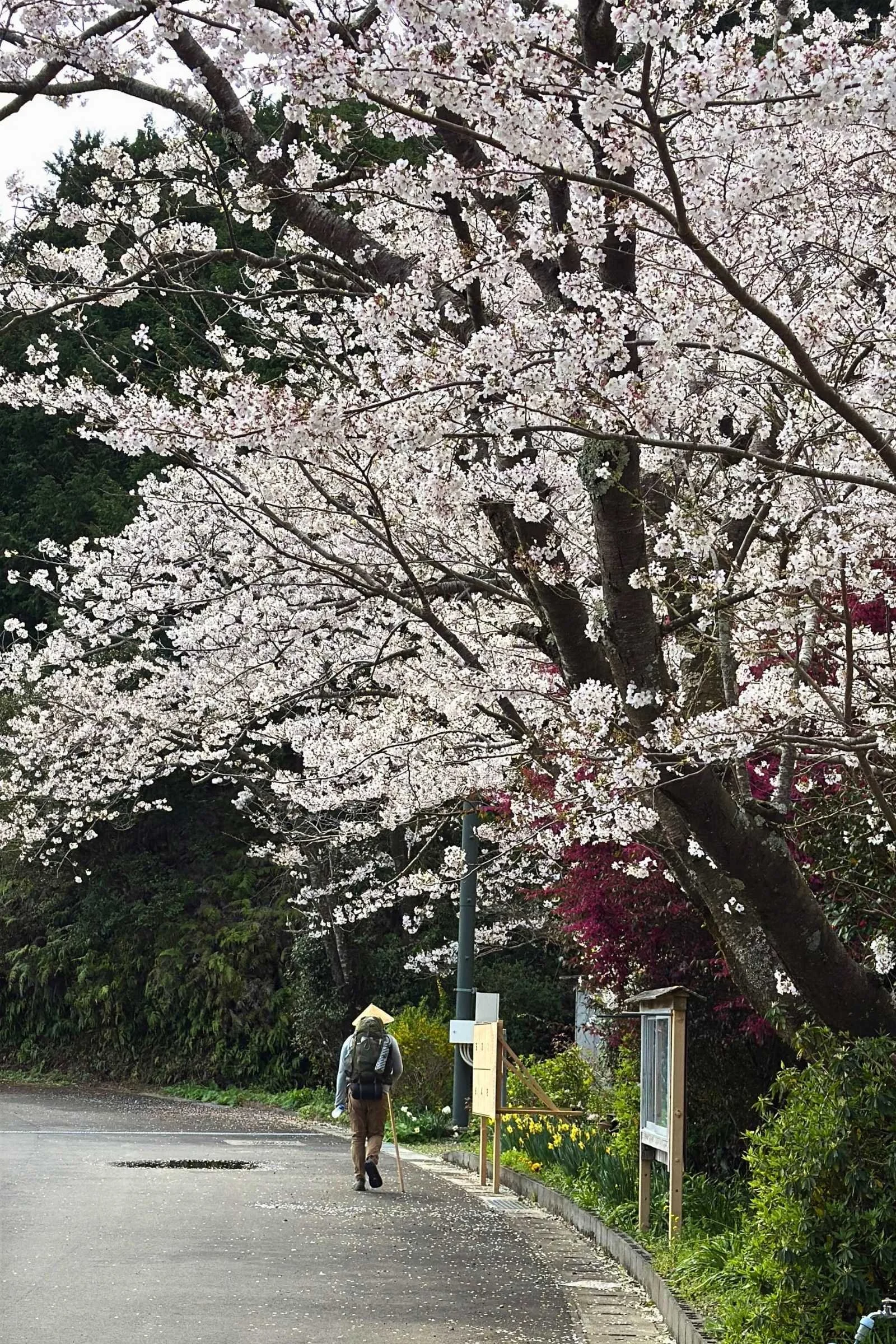
Spring (March–May) and fall (October–November) offer the best conditions, with mild temperatures and lower humidity. Summer is extremely hot and humid, while winter can bring icy conditions at higher-elevation temples. We walked before peak season, which made lodging and shelters easier to access.
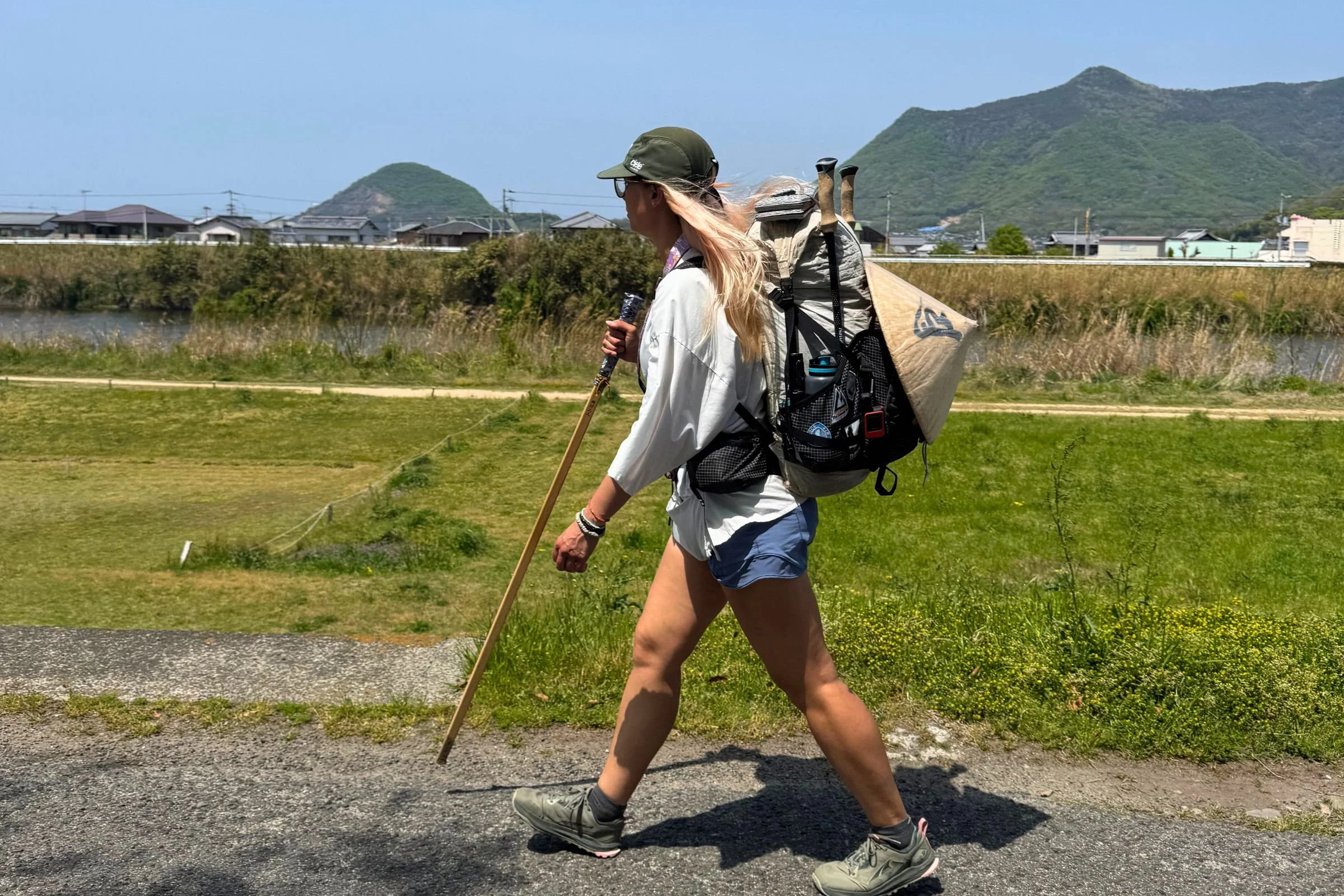
Lauren walking along the road between temples.
Difficulty and skills
Navigation
Navigation is straightforward. Temples are well marked, and signage is frequent. We relied primarily on the Henro Helper app, which clearly lists walking routes, pilgrim huts, tsuyado, zenkonyado, and notes where sleeping or camping is allowed.
Terrain and Exposure
This is a non-technical walk. Expect:
Long stretches of pavement
Steep staircases
Well-maintained forest paths
Narrow road shoulders in places
No scrambling or climbing skills are required.
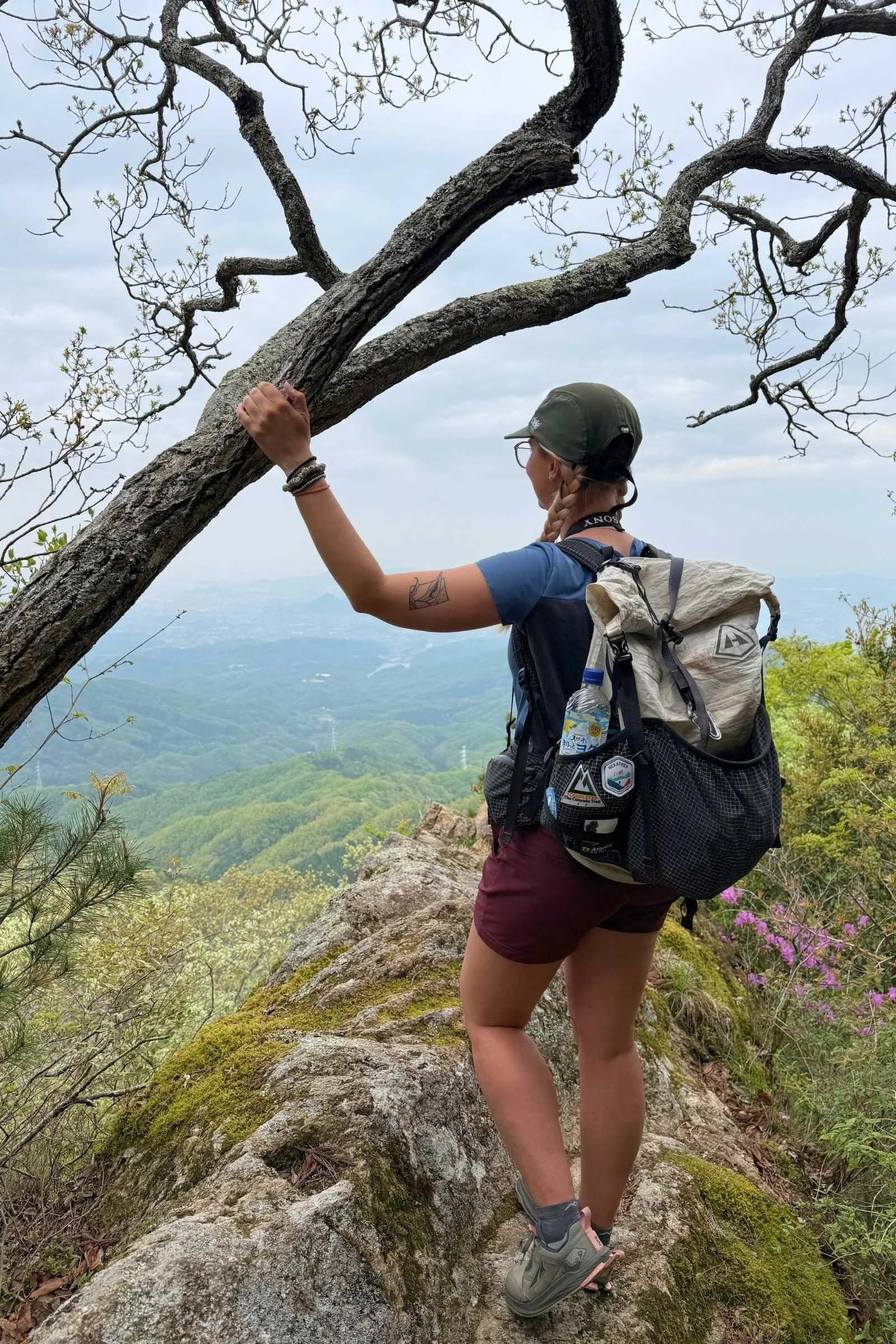
The author standing at the top of the mountain before Temple 88.
Elevation gain/loss
Elevation gain is steady rather than extreme, with repeated climbs to mountaintop temples. While no single ascent is overwhelming, the cumulative impact is significant. While the Shikoku 88 Temple Pilgrimage is not a high-alpine route, the cumulative elevation gain is significant.
Depending on exact routing, estimates place total elevation gain and loss between 24,000 and 29,000 meters (78,000–96,000 feet) over the full 1,200-kilometer circuit. Much of this comes from repeated short climbs to hillside and mountaintop temples rather than long mountain passes.
While many temples sit near sea level, others—such as Temple 66 (Unpen-ji)—are located close to 1,000 meters in elevation, making the overall physical challenge one of steady, repeated ascent and descent rather than dramatic single climbs.
Permits
No permits are required to walk the pilgrimage.
Route Summary
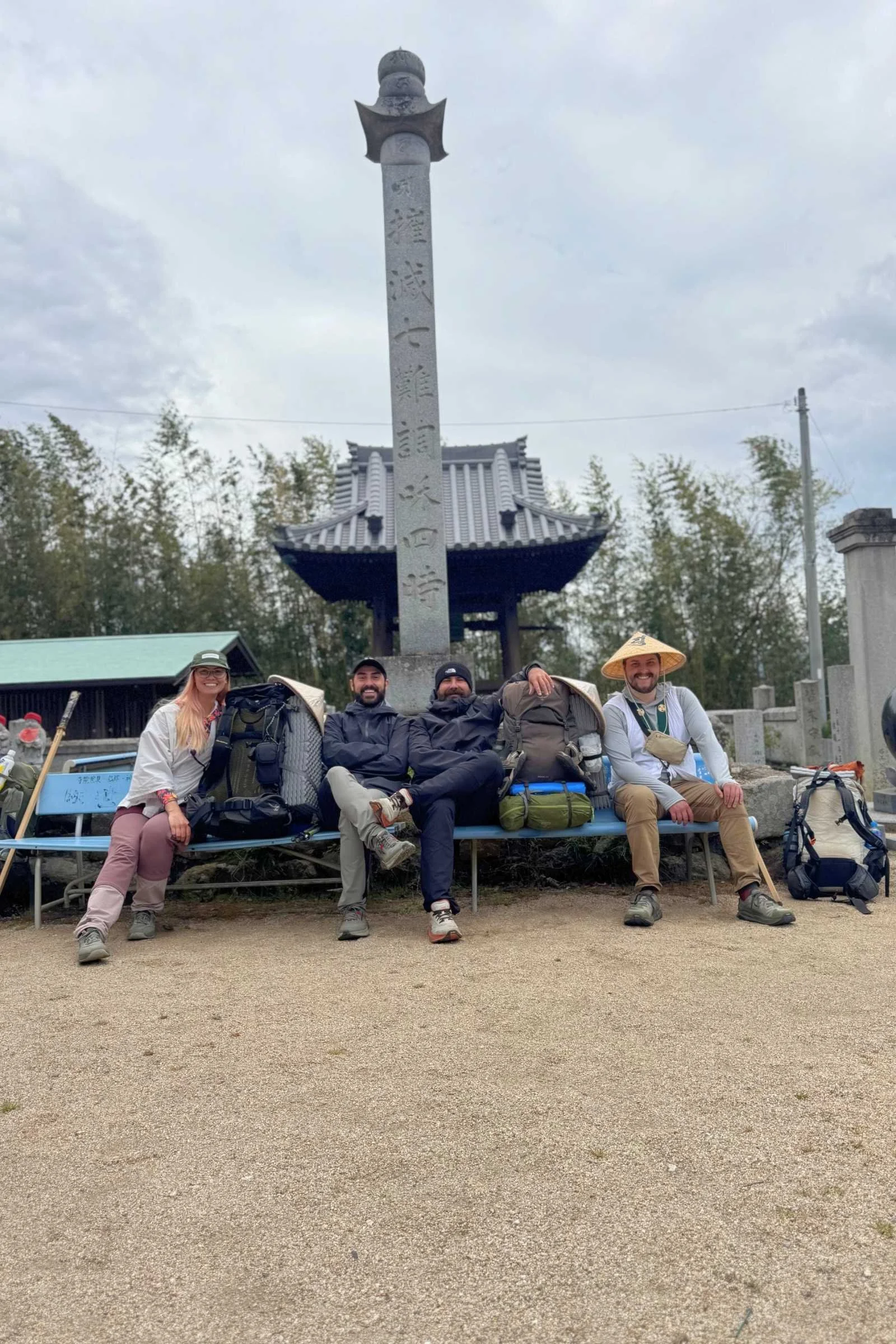
Resting with other pilgrims on a bench at a temple.
Most walkers complete the route clockwise, starting at Temple 1 (Ryōzenji) in Tokushima and finishing at Temple 88 (Ōkuboji) in Kagawa.
The Shikoku 88 Temple Pilgrimage is a clockwise, circular route that spans approximately 1,200 kilometers (750 miles) and passes through four prefectures: Tokushima Prefecture, Kōchi Prefecture, Ehime Prefecture, and Kagawa Prefecture. Most walking pilgrims begin at Temple 1 (Ryōzenji) in Tokushima and finish at Temple 88 (Ōkuboji) in Kagawa, completing all 88 temples in order.
While the pilgrimage is often described as a single route, each prefecture feels distinct in terms of distance between temples, terrain, scenery, and daily rhythm.
Tokushima (Temples 1-23)
Character: Traditional, forested, physically demanding start
Tokushima is considered the spiritual and physical gateway to the pilgrimage. This section includes 23 temples and introduces walkers to the Henro’s rhythm immediately, with several steep climbs to mountain temples, including some of the most physically demanding ascents on the entire route.
Average distance between temples: ~10–20 km
Terrain: Forest paths, stair-heavy temple approaches, some road walking
Landscape: Cedar forests, rural villages, mountain passes
Vibe: Quiet, traditional, fewer services once outside the city
This section can feel challenging early on, especially for walkers still adjusting to daily mileage and repeated elevation gain.
Kōchi (Temples 24-39)
Character: Longest distances, coastal, mentally demanding
Kōchi is often considered the hardest prefecture for walkers, not because of elevation, but due to long distances between temples and extended stretches of road walking.
Number of temples: 16
Average distance between temples: 25-40+ km (some of the longest gaps on the route)
Terrain: Predominantly paved roads, coastal highways
Landscape: Pacific coastline, fishing towns, rural farmland
Vibe: Remote, quiet, fewer lodging options
Careful planning is required here, especially for accommodation and food. Many walkers adjust their daily pace or take rest days before or after Kōchi. You may even need to add a bit of public transportation to cover more ground between lodging options. Consider booking in advance through this section. Kochi is a great city to take a couple of rest days in.
Ehime (Temples 40-65)
Character: Balanced, social, and comfortable
Ehime is often a favorite among walking pilgrims. With 26 temples, it offers a more forgiving rhythm, more frequent towns, and some of the best pilgrim lodging on the route.
Average distance between temples: ~10-20 km
Terrain: Mixed road walking and forest paths
Landscape: Rolling hills, valleys, rivers, agricultural land
Vibe: Friendly, social, well-supported
This section feels more relaxed and is where many pilgrims find their stride. Lodging, food, and rest days are easier to manage.
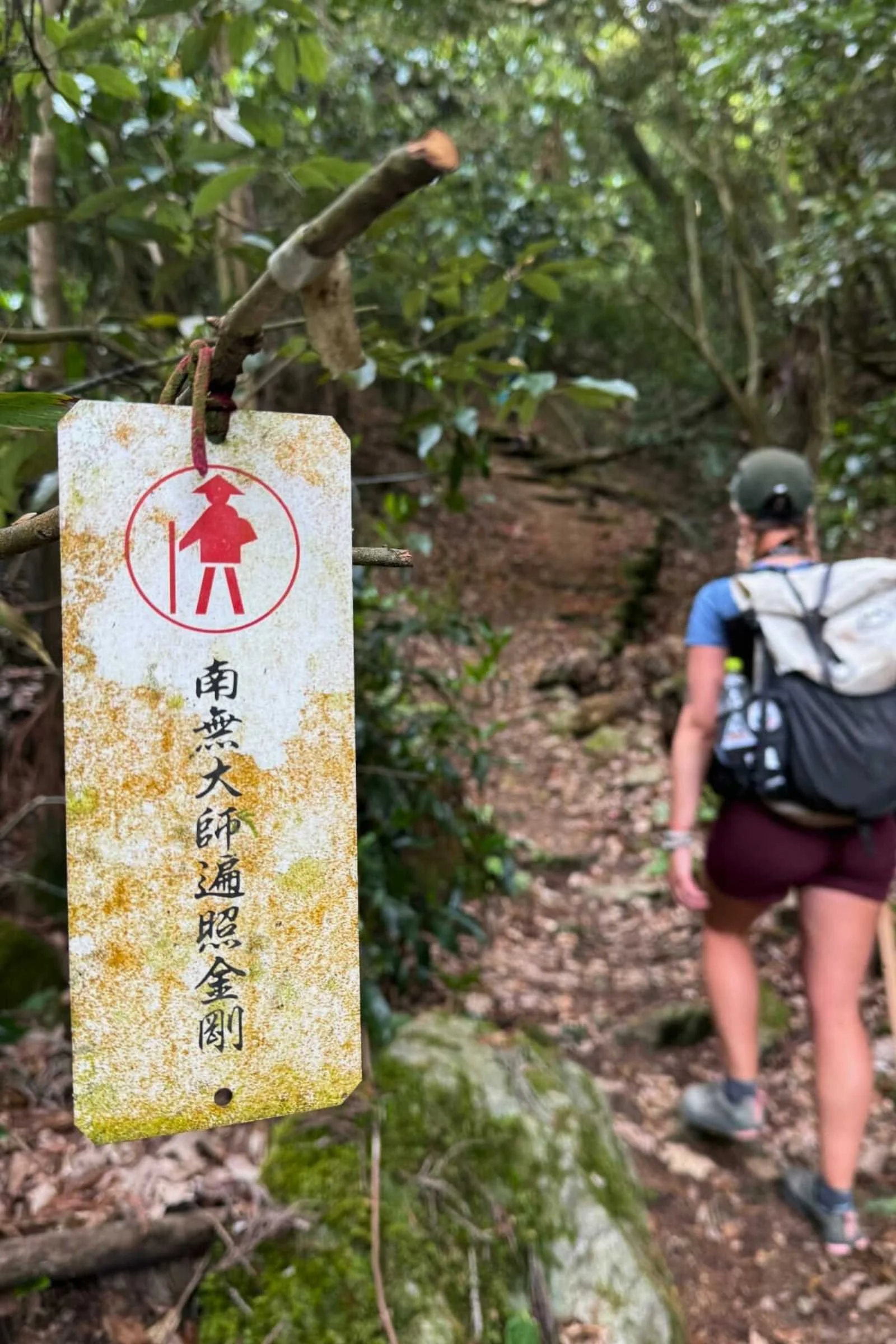
The author hiking toward temple 88.
Kagawa (Temples 66-88)
Character: Urban, celebratory, and fast-paced
The final prefecture includes 23 temples and marks the approach to the end of the pilgrimage. Distances shorten, urban walking increases, and the atmosphere becomes more social as pilgrims near completion.
Average distance between temples: ~5-15 km
Terrain: Mostly paved, urban and suburban roads
Landscape: Cities, farmland, low hills
Vibe: Lively, reflective, celebratory
Kagawa is also famous for its udon culture, making it a popular place to slow down, reflect, and enjoy the end of the journey before finishing at Temple 88.
Navigation Resources
Henro Helper app (essential)
Google Maps
Lodging: Henrohouse.jp
Getting There
By Plane
Fly into Tokushima, Takamatsu, Matsuyama, or Kōchi. Or fly into Okinawa and bus down to Tokushima.
Public Transit
Buses and trains connect airports to trail towns. I found navigating public transit with google maps to be quite straightforward. You will need change to use the buses. Most temple entrances can be accessed by car, bus, or train, but getting up to most of the temples requires climbing many stairs.
Trailhead
Temple 1 (Ryōzenji), Tokushima. The trailhead is easily accessible by transit once you arrive in Tokushima.
Trailheads
Most walkers start at Temple 1 (Ryōzenji) and finish at Temple 88 (Ōkuboji). Public transit access is straightforward and available on google maps.
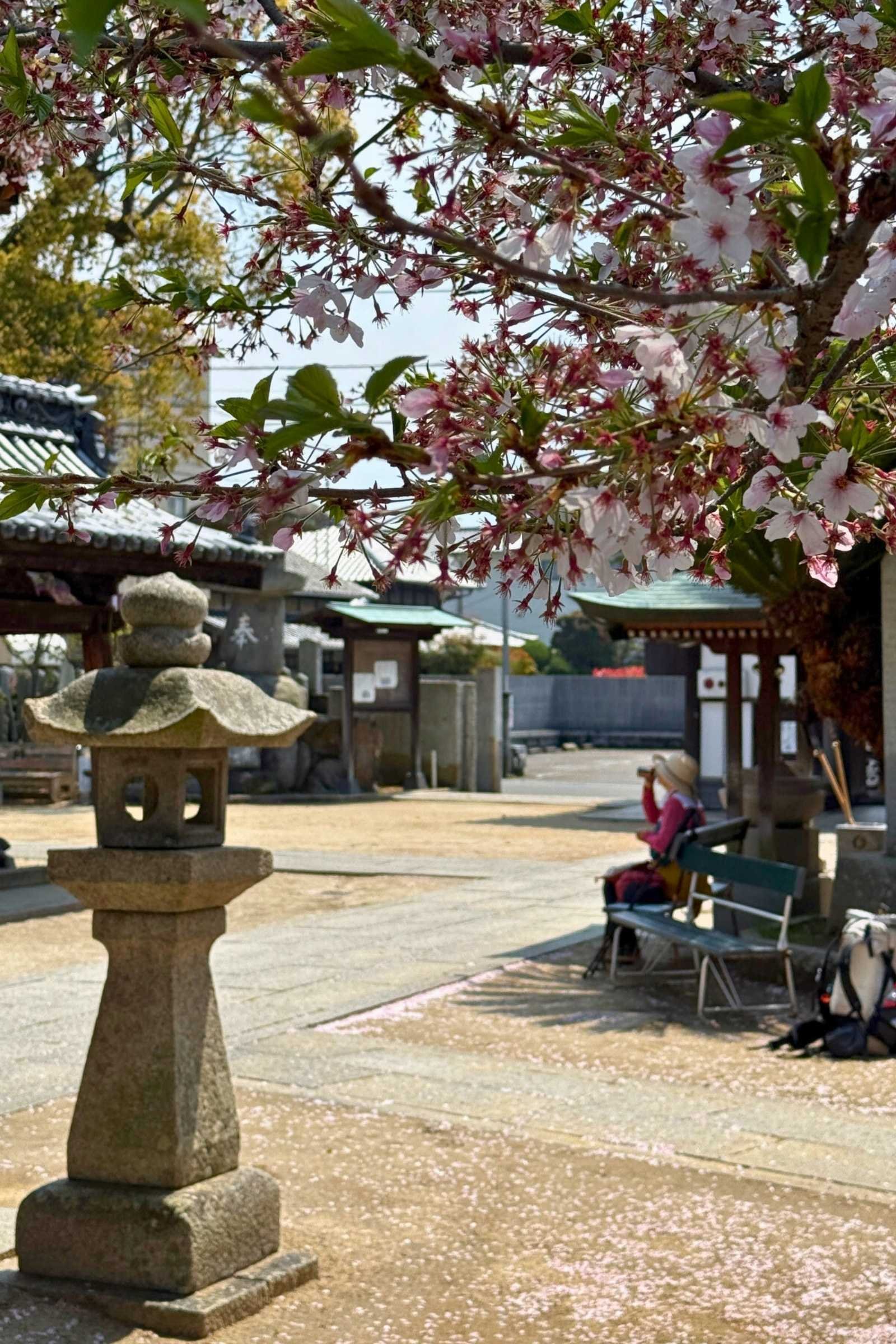
Cherry blossoms on a tree on temple grounds.
Post-Trip Recommendations
Kagawa is famous for udon—an excellent post-pilgrimage celebration meal. There are udon restaurants at the base of Temple 88 to celebrate and pick up souvenirs.
Ehime is famous for oranges—orange mochi or orange ice cream are delicious.
If you go in the spring, Sakura season (cherry blossom season) is amazing. There are cherry trees all along the trail in many places and the blossoms are beautiful.
Make sure to visit as many Onsens (bath houses) as you can! They’re great after a long day on trail. The Dogo Onsen in Matsuyama is particularly famous. A note that if you have extensive tattoos, you may not be allowed to enter the baths. I have a few small ones and didn’t encounter any problems, but they often have posted signs that say no tattoos.
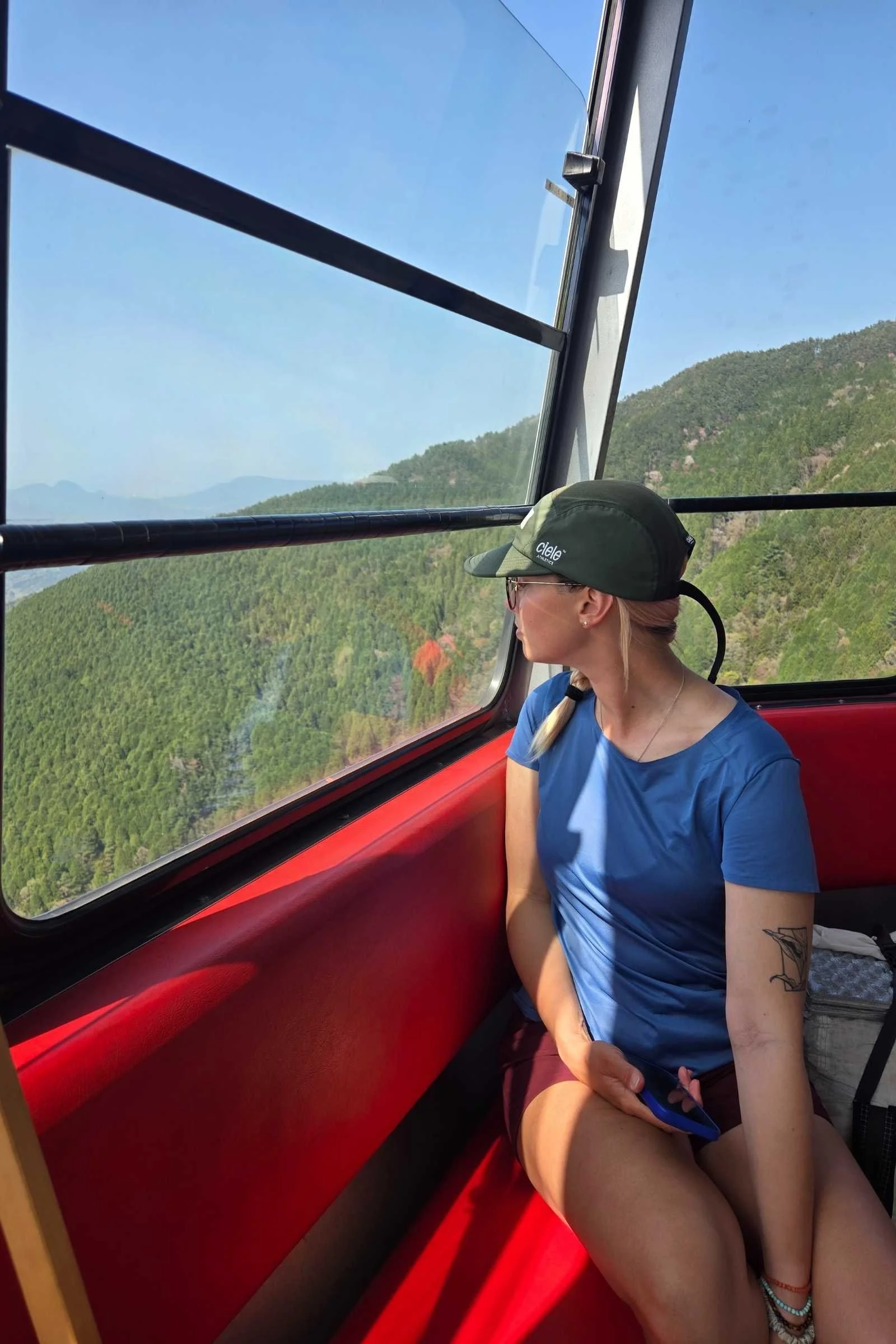
Riding the gondola down from temple 66.
Regulations and Etiquette
Follow Leave No Trace principles
Wild camping is illegal
Camp only where explicitly allowed (listed in Henro Helper)
Clean shelters thoroughly and leave donations
Always cancel lodging if plans change—no-shows are a serious issue
Remove shoes inside temples and accommodations
Be respectful, courteous, clean, and kind—pilgrims represent more than themselves
Resupply and Food
Food access is easy. Convenience stores—7-Eleven, Lawson, and FamilyMart—are prevalent and reliable for meals, snacks, and coffee. Expect ¥500-¥1,000 ($3-$7) per meal if eating simply. Japanese food is significantly cheaper than Western food; ramen or udon typically costs ¥600–¥1,200 ($4-$8). Most walkers don’t need to carry more than snacks.
Accommodation and Budget
I completed the pilgrimage in 53 days, spending ¥132,750 (~$859 USD) total on accommodation.
17 nights were free or donation-based (camping, tsuyado, zenkonyado, pilgrim huts)
Paid lodging averaged ¥3,500-¥4,000 ($22-$26) per person per night
Lodging is priced per person, even when sharing rooms
Guesthouses were consistently clean and comfortable, often with laundry
We typically booked lodging 1 to 3 days ahead. During peak season, booking several days in advance is recommended.
How to book accommodations
Booking accommodation on the Shikoku 88 Temple Pilgrimage is generally straightforward, but it requires a bit of flexibility and cultural awareness, especially for walkers unfamiliar with Japan.
Most pilgrims use a mix of guesthouses, hostels, business hotels, pilgrim lodging (tsuyado and zenkonyado), and occasional camping. We found that a hybrid approach worked best, adjusting plans based on location, fatigue, and availability.
How Far in Advance to Book
Outside of peak season, we typically booked accommodation one to three days in advance, and occasionally showed up without a reservation and still found a place to stay. In busier sections or near cities, booking a few days ahead helped reduce stress.
During peak season (spring and fall), it’s wise to book two to three days ahead consistently, as popular pilgrim lodgings and budget guesthouses can fill up, especially in areas with limited options, such as parts of Kōchi Prefecture.
How to Find Lodging
We primarily relied on:
Henro Helper (for pilgrim lodging, huts, and notes on availability)
Google Maps (for guesthouses, hostels, and hotels)
Pilgrim lodging (tsuyado and zenkonyado) is usually first come, first served and cannot be booked in advance. Some locations require asking permission at the associated temple, though we were never refused. These stays are typically free or donation-based and should be treated with care and respect.
Calling Ahead and Language Barriers
Many smaller guesthouses and pilgrim lodgings do not use online booking platforms and require a phone call to make a reservation. English is not widely spoken in Shikoku, so having Google Translate ready—or asking a Japanese speaker to help—can make a big difference, especially during busy periods. You can often find someone at the temple who can help you book accommodation, or have your current host call ahead to your next intended guest house.
Pricing and What’s Included
Accommodation is almost always priced per person, even when sharing a room. Expect to pay ¥3,500-¥5,000 ($22-$32) per person per night for budget guesthouses and hostels. In return, lodging was consistently:
Very clean
Quiet
Equipped with showers, linens, and often laundry facilities
Important Etiquette: No-Shows Matter
One critical cultural note: no-shows are a serious issue on the pilgrimage. If you book accommodation and later change plans, it’s essential to call and cancel. Failing to show up without notice has become a growing problem and risks reducing access for future foreign pilgrims.
Being punctual, communicative, and respectful when booking lodging goes a long way in maintaining trust and goodwill along the route.
Flexibility Is Helpful
Having camping gear or being open to pilgrim shelters provided an important safety net when plans changed unexpectedly. That flexibility made the walk far less stressful and allowed us to adapt day by day without overbooking far in advance.
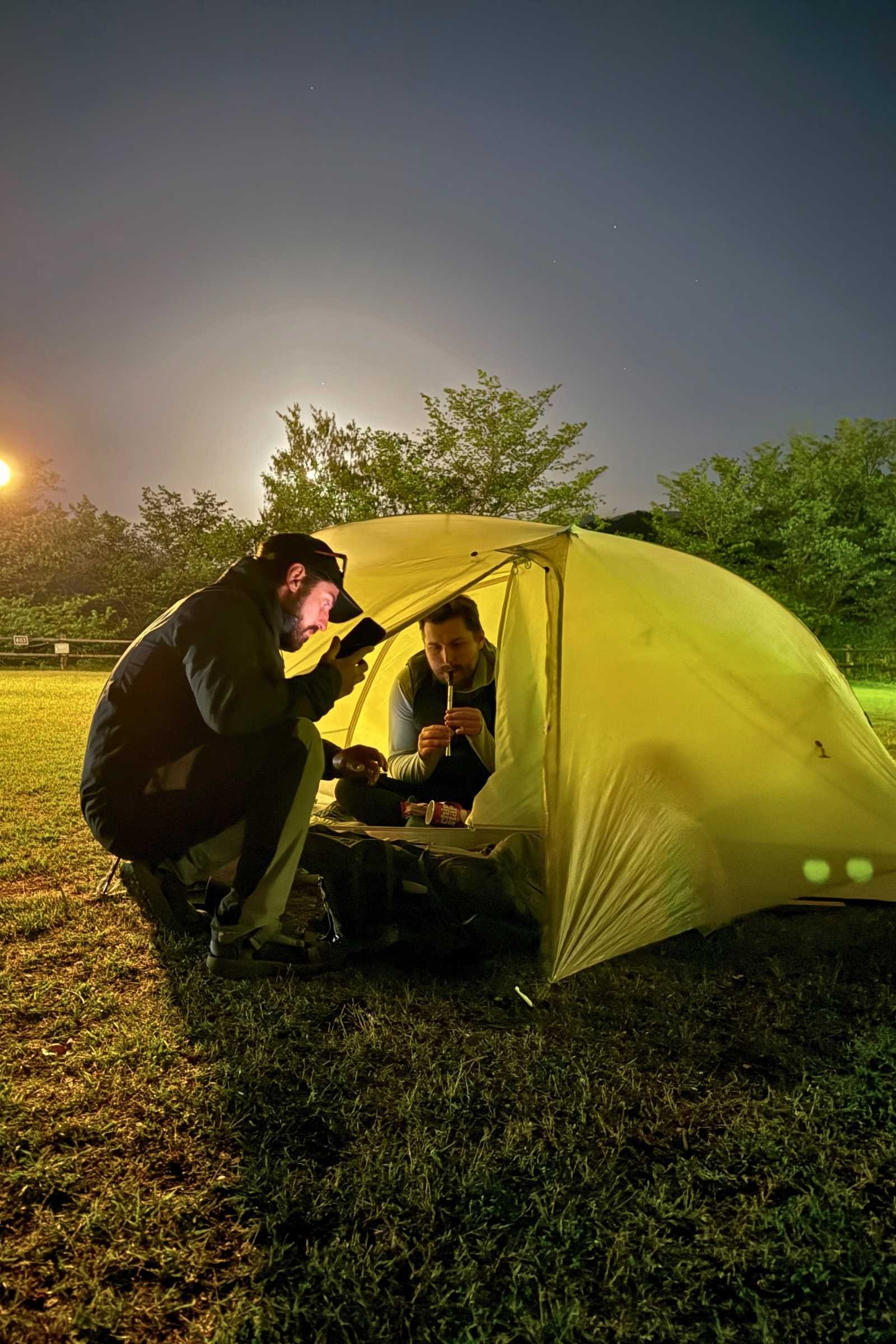
The author’s brother playing the tin whistle for a fellow pilgrim while camping.
Camping
Wild camping is illegal and socially discouraged. Camping is only acceptable in locations explicitly listed in the Henro Helper app. Poor pilgrim behavior has already reduced tolerance—following rules is essential to protect future access.
Water Planning
Tap water is potable. Convenience stores and vending machines are frequent. Carry 1-2 liters. Most temples will have vending machines.
Bears and Food Storage
No bear-related regulations. Standard food storage practices are sufficient.
Money and Payments
Credit cards are accepted at all convenience stores. Some restaurants are cash only. Temple stamps and donations require cash. Carry daily cash, but no large sums are necessary.
Language
Very little English is spoken in Shikoku. Google Translate is essential if you aren’t already fluent in Japanese. Learning basic phrases and some Japanese characters is strongly recommended.
Safety
We found the route extremely safe, including for solo women. Locals were friendly and helpful, and we encountered no safety issues.
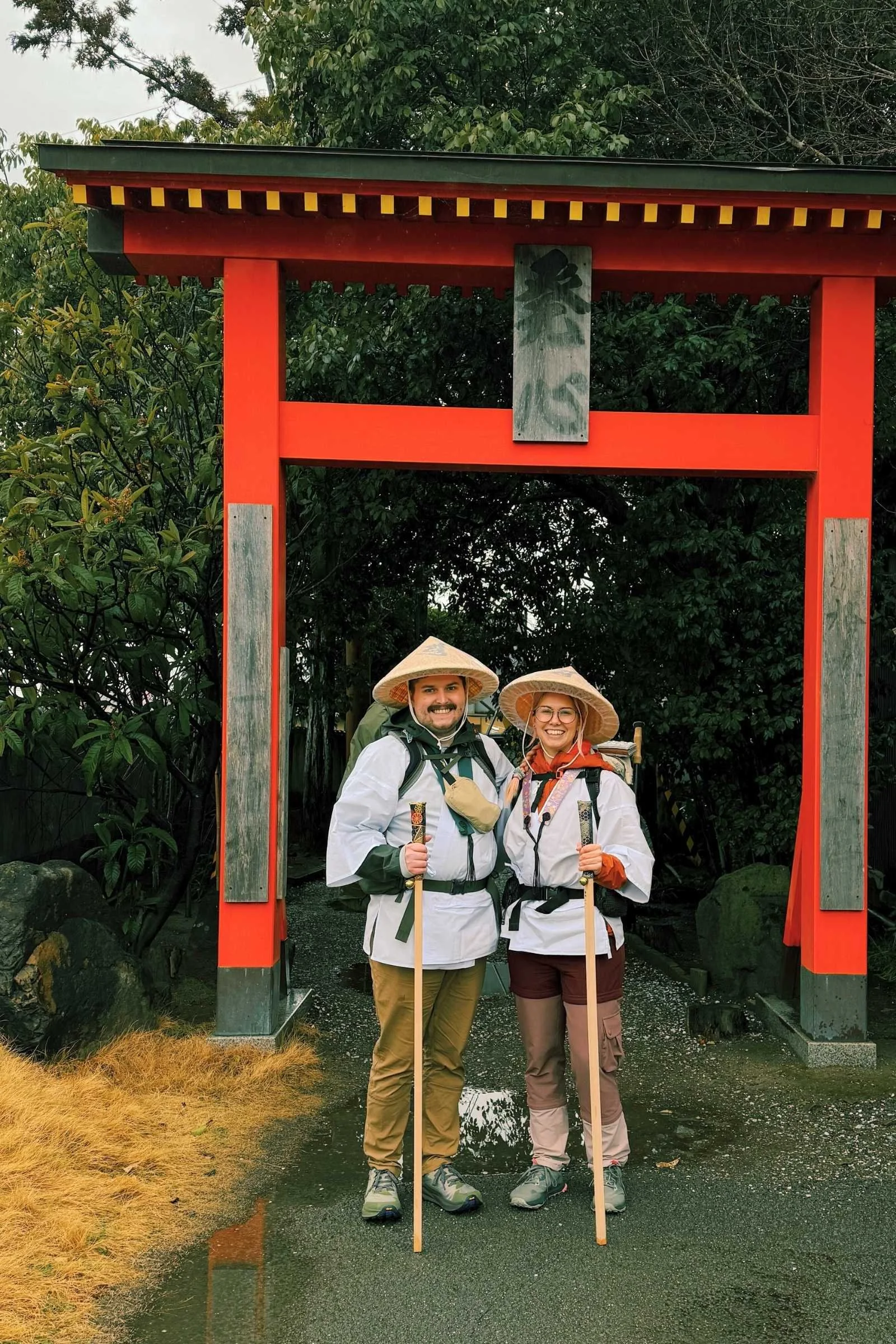
Lauren and her brother Adam at the very beginning of the pilgrimage.
Pilgrim Clothing and Identification (Important Cultural Context)
Most walking pilgrims wear some form of traditional attire, including a white pilgrim jacket or vest (hakui) and a wooden staff (kongō-zue). Wearing at least these two items is strongly recommended, as they signal to locals that you are a pilgrim on a journey. It may also lead to extra kindness and osettai. Pilgrim gear can be purchased at the first temple and early trail towns.
Temple Stamps (Nōkyō)
We carried a nōkyōchō book (¥3,000). Each temple stamp costs ¥500, totaling ~¥44,000 for all 88 temples. This is a fairly significant expense but will become a cherished souvenir. Stamp offices are typically open 8:00 a.m. to 5:00 p.m., which shapes daily schedules. Expect to spend at least 30 minutes at each temple, if not longer.
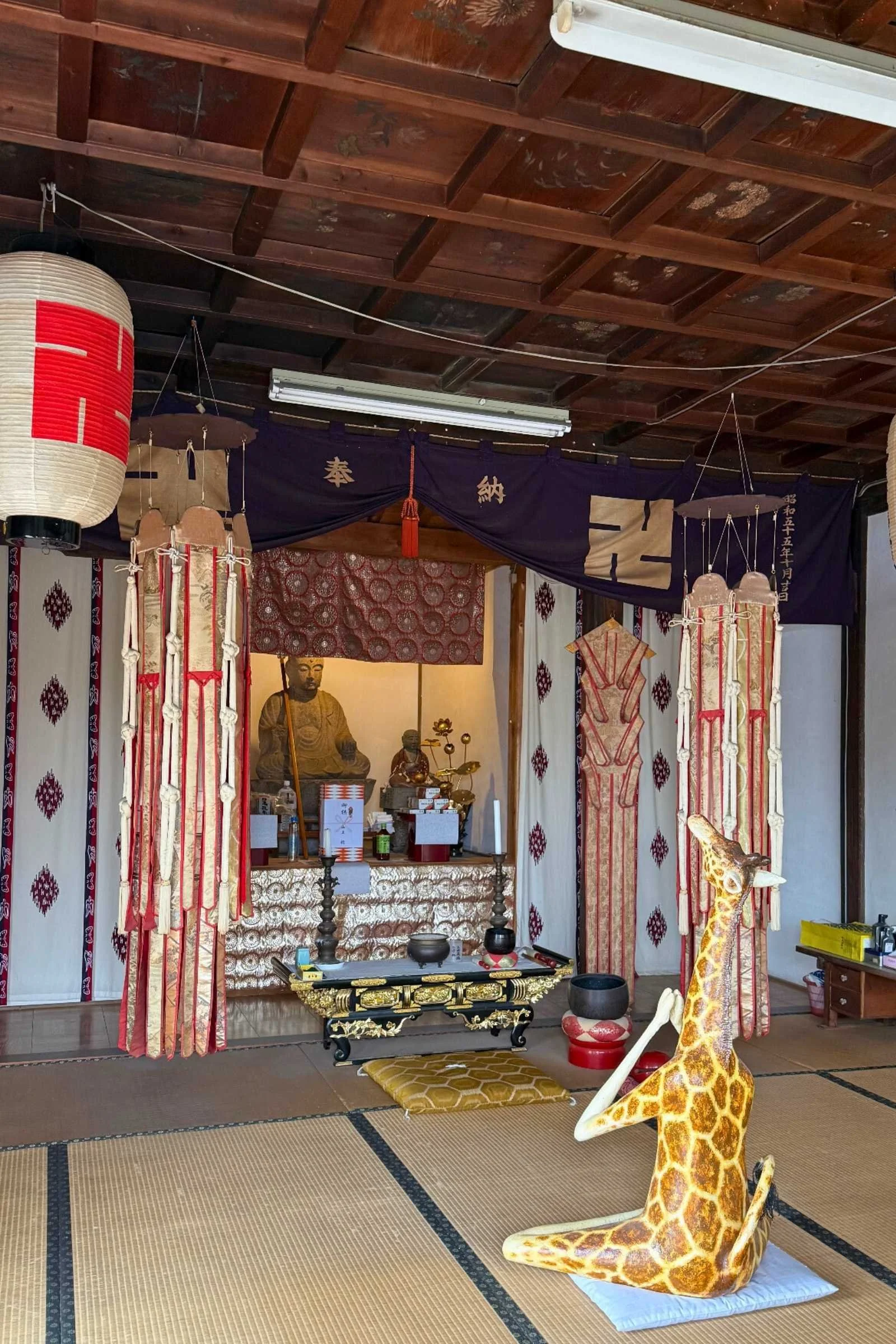
Giraffe statue in a temple on the Shikoku 88 Temple Henlo.
Pilgrim Rituals at the Temples (What to Expect)
Pilgrims on the Shikoku Henro traditionally perform a short series of rituals at each temple. These practices are rooted in Shingon Buddhism and honor Kūkai (also known as Kōbō Daishi), who is believed to be spiritually present along the pilgrimage. While these rituals are meaningful to many, participation is optional, and walkers are welcome to observe, simplify, or engage at their own comfort level. If you have questions, feel free to ask temple staff or other pilgrims.
Typical Temple Visit Flow
Most pilgrims follow a similar sequence at each temple:
Purification
At the entrance, pilgrims wash their hands and rinse their mouths at a water basin (chōzuya) as a symbolic cleansing before entering the sacred space.Main Hall (Hondō)
Pilgrims light incense, place a small offering, and offer prayers at the main hall. Many recite sutras here, though silent reflection is also acceptable.Daishi Hall (Daishidō)
A second stop is made to honor Kōbō Daishi specifically. This is often the emotional heart of the visit for many pilgrims.Stamp Office (Nōkyōsho)
Pilgrims with a stamp book (nōkyōchō) or scroll receive a handwritten calligraphy stamp for ¥500 per temple. Stamp offices are typically open 8:00 a.m. to 5:00 p.m..
Sutra Chanting
Many pilgrims chant one or more sutras at each hall. Full chanting can take several minutes per stop and includes:
The Heart Sutra
The mantra of Kōbō Daishi
Dedication prayers
Some pilgrims chant everything, others chant selectively, and some simply bow or pause quietly. All approaches are respected.
What If You’re Not Religious?
You do not need to be Buddhist—or religious at all—to walk the Henro. Many walkers approach the rituals as:
A cultural practice
A meditative pause
A moment of gratitude or reflection
Even a brief bow or moment of silence is considered respectful.
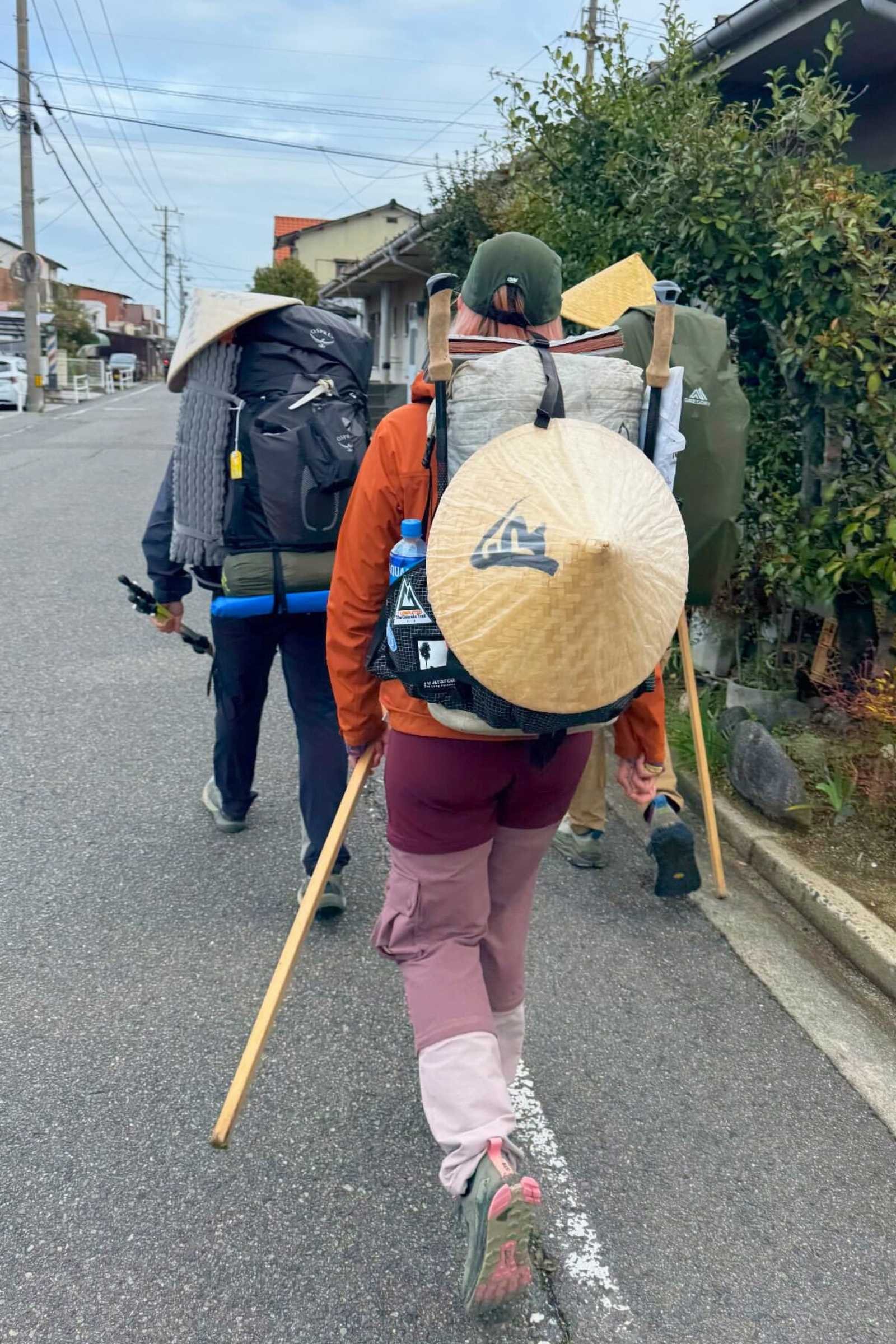
Three pilgrims walking through town.
Time Commitment
A full ritual at both halls can take 10–20 minutes per temple, while a simplified visit may take less. Most walkers naturally find a rhythm that balances walking distance with time spent at temples.
Etiquette Notes
Remove hats inside temple halls and leaves walking sticks at the front in the holder
Be quiet and mindful of others praying
Photography may be restricted indoors, look for signs or ask permission
Follow posted signs and local guidance
Finding Your Own Rhythm
Pilgrims engage with these rituals differently over time. Some begin enthusiastically and later simplify; others grow more invested as the pilgrimage unfolds. There is no “correct” way to perform the rituals—what matters most is approaching each temple with respect and intention.
Who This Pilgrimage Is (and Isn’t) For
This pilgrimage is ideal for travelers seeking cultural immersion, routine, community, and a meaningful long walk. It is not suited for hikers looking for wilderness solitude or singletrack trails. This is a pilgrimage first, and a physical challenge second.
Gear List
I carried the same gear on the Shikoku Henro as I did for most of my thru-hikes. While non-technical, the route’s long distances, rain, humidity, and extensive road walking made comfort and durability especially important.
Tent
I used the NEMO Hornet Elite OSMO 1P tent, which is the Best Lightweight winner in our Best Backpacking Tents guide.
Sleeping pad
I recommend the Therm-a-Rest NeoAir Xlite NXT sleeping pad, which won Best Overall in our Best Sleeping Pads guide.
Sleeping bag/quilt
Rather than a sleeping bag, I opted for the Neve Gear Waratah Quilt 0°C. For more of our favorites, check out our Best Backpacking Quilts and Best Backpacking Sleeping Bags guides.
Cookware
For cookware, I used the BRS 3000T Titanium Stove and the TOAKS 750ml pot. Find more of our favorites in our Best Backpacking Stoves and Best Cookware Pots guides.
Trekking poles
While I backpacked with old second-hand trekking poles, you can find our top picks in our Best Trekking Poles guide.
Sun shirt
I packed the Town Shirt Sun Hoodie. Find more of our favorites in our Best Sun Shirts guide.
Hiking pants
My favorites are the Outdoor Voices zip-off pants. Check out our Best Men’s Hiking Pants and Best Women’s Hiking Pants guides for more options.
Jackets/shells
I packed the Montbell Down Jacket and a REI waterproof shell. Find our favorite puffy jackets in our Best Down Jackets and Best Synthetic Jackets guides. For waterproof shells, check out our Best Lightweight Rain Jackets guides.
Base layers
For base layers, I opted for a pair of REI wool leggings and a UNIQLO HEATTECH long-sleeved base layer shirt.
Footwear
I wore the Astral Designs Nosobo trail running shoes. Look for something rugged that can handle varied terrain, but is also comfortable enough for long road walking sections.
For our top picks, check out our Best Men’s Trail Running Shoes, Best Women's Trail Running Shoes, Best Men’s Hiking Shoes, Best Women’s Hiking Shoes, Best Men’s Hiking Boots, and Best Women's Hiking Boots guides.
Not sure if trail runners or hiking shoes are right for you? Learn more in our guide to Trail Running Shoes vs. Hiking Shoes.
Hiking socks
I wore Darn Tough Merino Hiking Socks. Learn more in our Best Hiking Socks guide..
Additional miscellaneous items:
Pilgrim staff (kongō-zue)
White pilgrim jacket/vest (hakui)
Osprey dry bags
Ulanzi phone tripod
Small first-aid kit
Shampoo bar, soap, toiletries
Kula Cloth
| SHIKOKU PILGRIMAGE GEAR | AUTHOR'S PICK | OTHER OPTIONS |
|---|---|---|
| Hardgoods | ||
| Tent | NEMO Hornet Elite OSMO 1P tent | Best Backpacking Tents Best Ultralight Tents |
| Backpack | Hyperlite Mountain Gear Southwest 40 Pack | Best Lightweight Backpacks |
| Sleeping bag | Neve Gear Waratah Quilt 28°F | Best Backpacking Sleeping Bags Best Backpacking Quilts |
| Sleeping bag stuff sack | Sea to Summit Evac Dry Bag - 13L | Best Dry Bags |
Why you should trust us / About the author

Lauren Roerick (trail name “Longway”) is a filmmaker and outdoor content creator who documents long-distance journeys on foot around the world. She has walked over 12,000 kilometers across North America, Europe, Oceania, and Asia—including the Pacific Crest Trail, Te Araroa, HexaTrek, and Via Dinarica.
She is a certified Wilderness First Responder and shares stories and advice to inspire more women to get out into the backcountry.
Find her work at www.laurenroerick.com and on Instagram, YouTube, and TikTok @laurenroerick.
Resources
Henro Helper App
Lauren’s series on YouTube