Best Hiking Umbrellas of 2026
Lightweight, durable hiking Sun Umbrellas and umbrellas for rain and wind
March 25th, 2026
Home > Gear Reviews > Hiking
Hiking umbrellas are lightweight personal shelters for any time you spend on trail in heat, snow, or wet weather. If it is 10F degrees cooler in the shade than in the sun, having your own personal shade that moves with you as you hike can help you avoid heat stroke. On cold rainy days, an umbrella can help your rain jacket from soaking through and make you feel warmer. Testers told me using a hiking umbrella is a "game changer," "opens up a whole new world of hiking for me," and "makes impossible hikes possible."
Early ultralight backpackers, including Ray Jardine, championed the use of a hiking umbrella, and now it is a standard backpacking gear accessory among thru-hikers and backpackers.
We've used hiking umbrellas for over a decade and spent the past year testing nearly a dozen side-by-side. We tested everything from sun umbrellas with chrome domes to ultralight and ultra-compact rain umbrellas for just-in-case emergencies.
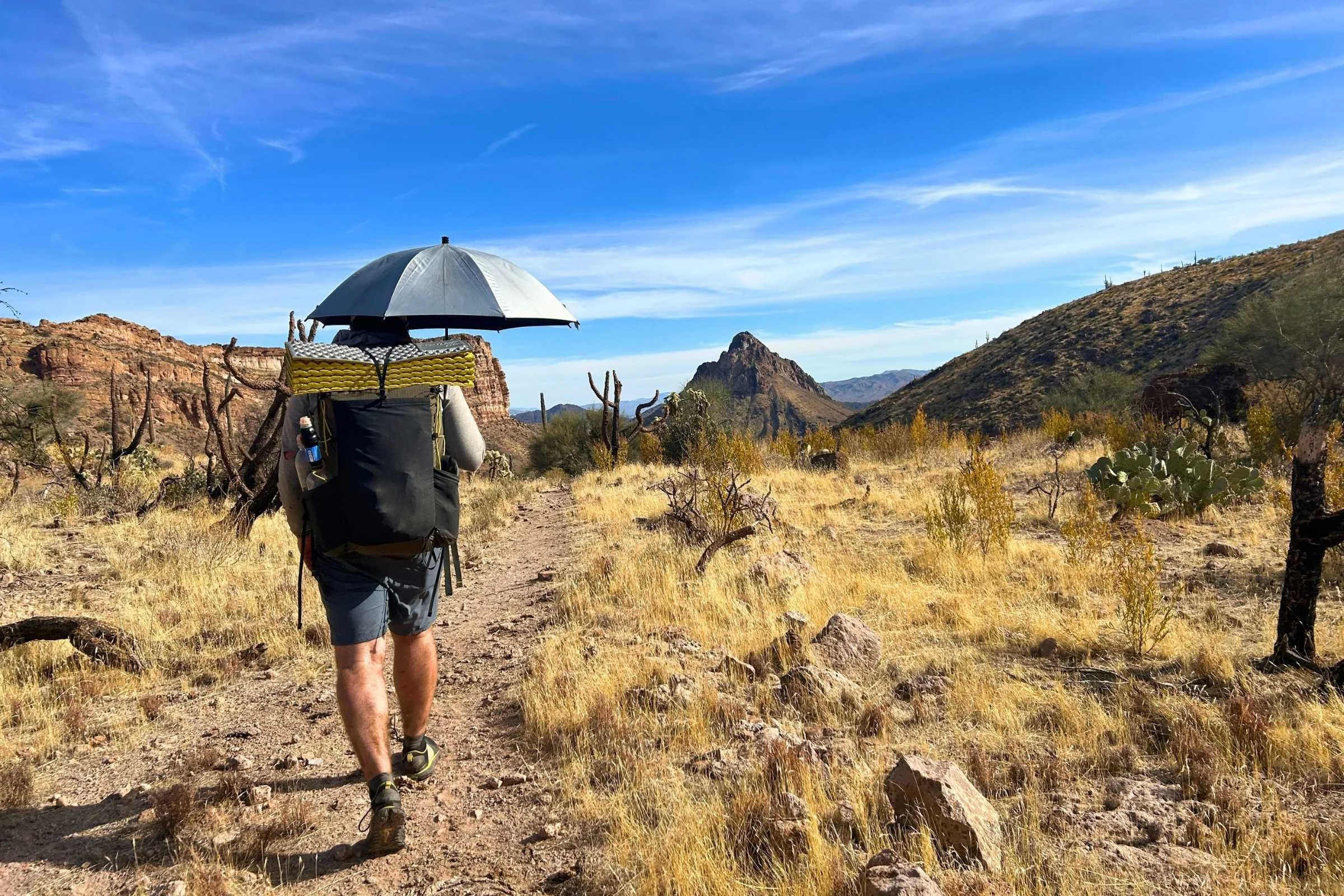
We tested sun umbrellas while thru-hiking the Arizona Trail, Oregon Desert Trail, Grand Enchantment Trail in Arizona and New Mexico, San Diego Trans County Trail, and on the Pacific Crest Trail. Where I live in Southern California, hiking umbrellas are necessary year-round for day hikes and backpacking trips. Treeline testers took umbrellas in extreme heat, high winds, at altitude, wet weather, and even snow. We had testers of different levels of experience and with different weights of backpacking backpacks test hiking umbrellas.
We tested sun, rain, and wind protection as well as long-term durability. We also judged umbrellas by weight and compactness. We tested how well they connect to backpacking backpack straps and how well they stay in place for hands-free umbrella carry systems.
The top pick: The Six Moon Designs Silver Shadow is our overall winner for best hiking umbrella for its sun protection, excellent performance in the wind, grippable handle that is easy to attach to a backpack, and value for its price.
We create reader-supported, objective gear reviews independently selected by our editors. This story may contain affiliate links, which help fund our website. When you click on the links to purchase gear, we may get a commission — without costing you an extra cent. Thank you for supporting our work and mission of outdoor coverage for every body! Learn more.
Comparison table
| PRODUCT | TREELINE AWARD | PRICE | WEIGHT | SHAFT LENGTH | CLOSED LENGTH | RIBS | SHAFT/ RIBS MATERIAL | COVERAGE AREA | UPF RATING |
|---|---|---|---|---|---|---|---|---|---|
| Six Moon Designs Silver Shadow Ultralight | Best overall Read why |
$45 | 8.9 oz | 23.5 in | 25.0 in | 8 | Fiberglass | 7.5 ft² | 50+ |
| Gossamer Gear Lighttrek | Best ultralight Read why |
$43 | 5.8 oz | 25.0 in | 25.0 in | 8 | Aluminum | 7.7 ft² | 50+ |
| Six Moon Designs Silver Shadow Carbon | Best lightweight Read why |
$55 | 6.8 oz | 23.0 in | 25.0 in | 8 | Carbon fiber | 7.5 ft² | 50+ |
| Repel Windproof Travel Umbrella | Best windproof/ best durable Read why |
$40 | 16.0 oz | 22.3 in | 11.6 in | 9 | Fiberglass | 7.5 ft² | 50+ |
| Six Moon Designs Silver Shadow Mini | Best collapsible Read why |
$50 | 6.8 oz | 20.5 in | 10.0 in | 6 | Aluminum/ carbon fiber | 7.5 ft² | 50+ |
The winners
Best overall hiking umbrella: Six Moon Designs Silver Shadow Ultralight Umbrella

Weight: 8.9 oz | 252 g
Length when open: 25" | 63.5 cm
Length when closed: 25" | 63.5 cm
Shaft length: 23.5" | 60 cm
Shaft and ribs material: Fiberglass
Canopy size (diameter): 37" | 94 cm
Canopy coverage: 7.5 ft² or .7 m²
UPF: 50+
Water column: 5,000 mm
What we liked: Best wind resistance, doesn't flip inside out, durable, versatile, affordable, steady in the wind, optional hands-free kit
What we didn’t like: Not the lightest
The Six Moon Designs Silver Shadow Ultralight Umbrella is the best hiking umbrella for most hikers. The Silver Shadow Ultralight is a workhorse umbrella that handles sun, wind, rain, and tossing around in a pack for thousands of miles.
It opens and closes smoothly with a manual mechanism (our preferred closure mechanism for hiking umbrellas). In the wind, it stays in the open position without flipping inside out. All these features make it the most versatile. Like many of the umbrellas we tested, it has a large reflective waterproof top, in this case, Polyester 210T Silver, that deflects sunlight. The underside of the umbrella is black, which absorbs the sun's rays.
We've tested it for everything from thru-hiking to travel to daily walks in the city. We've even heard of people using this umbrella while watching sports games and track meets. It does all that at a reasonable price.
Six Moon Designs Silver Shadow Ultralight Umbrella
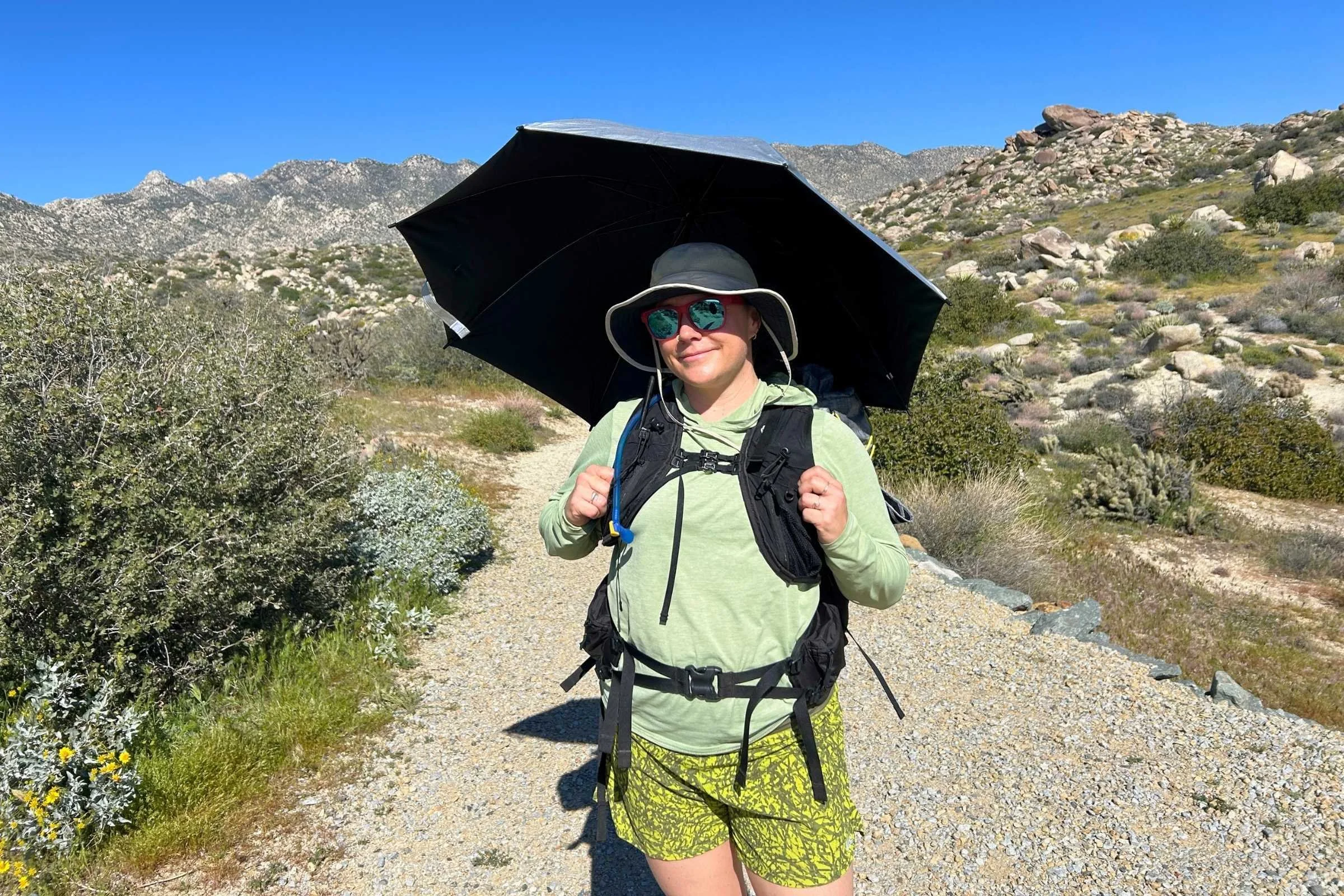
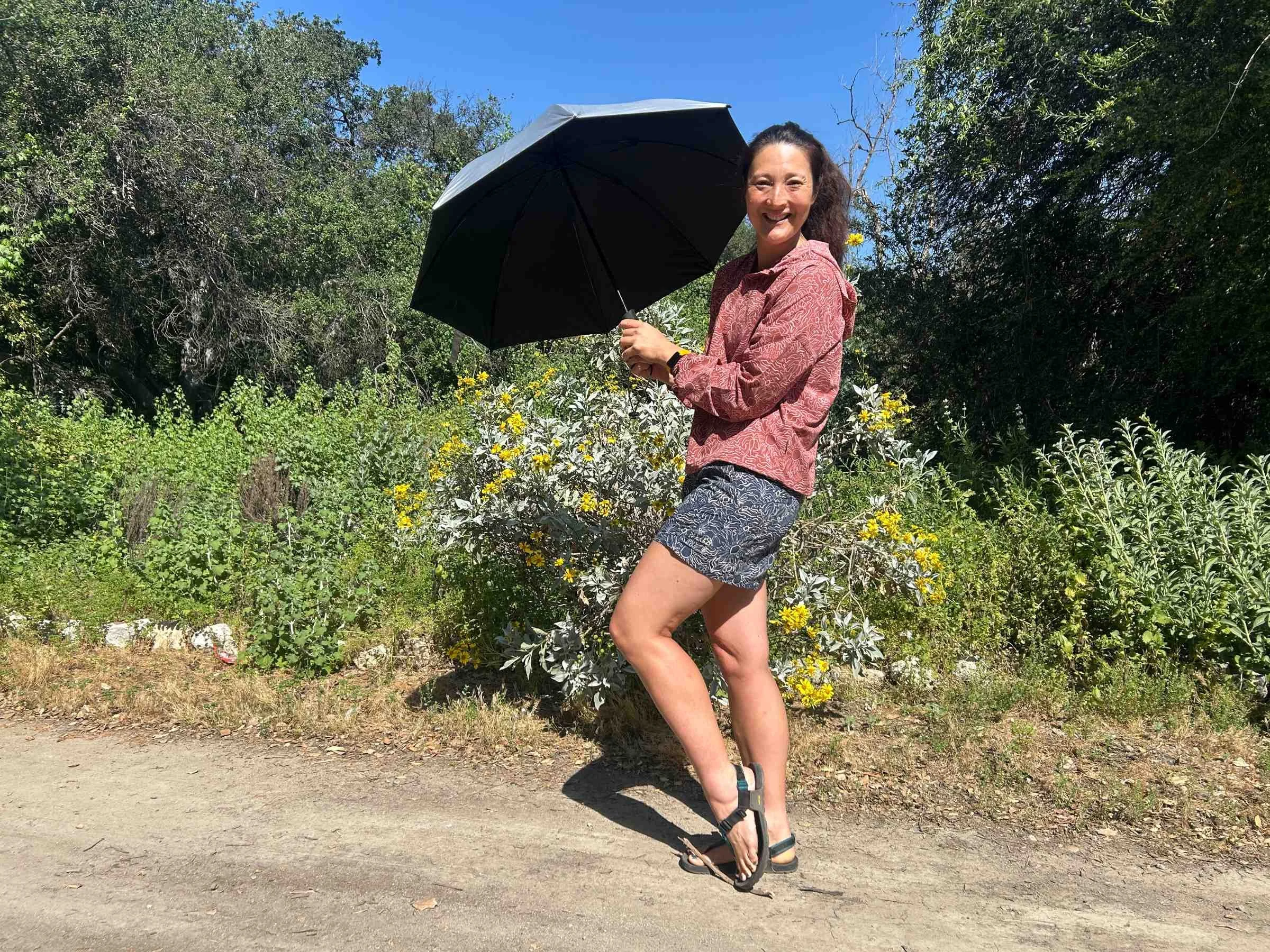
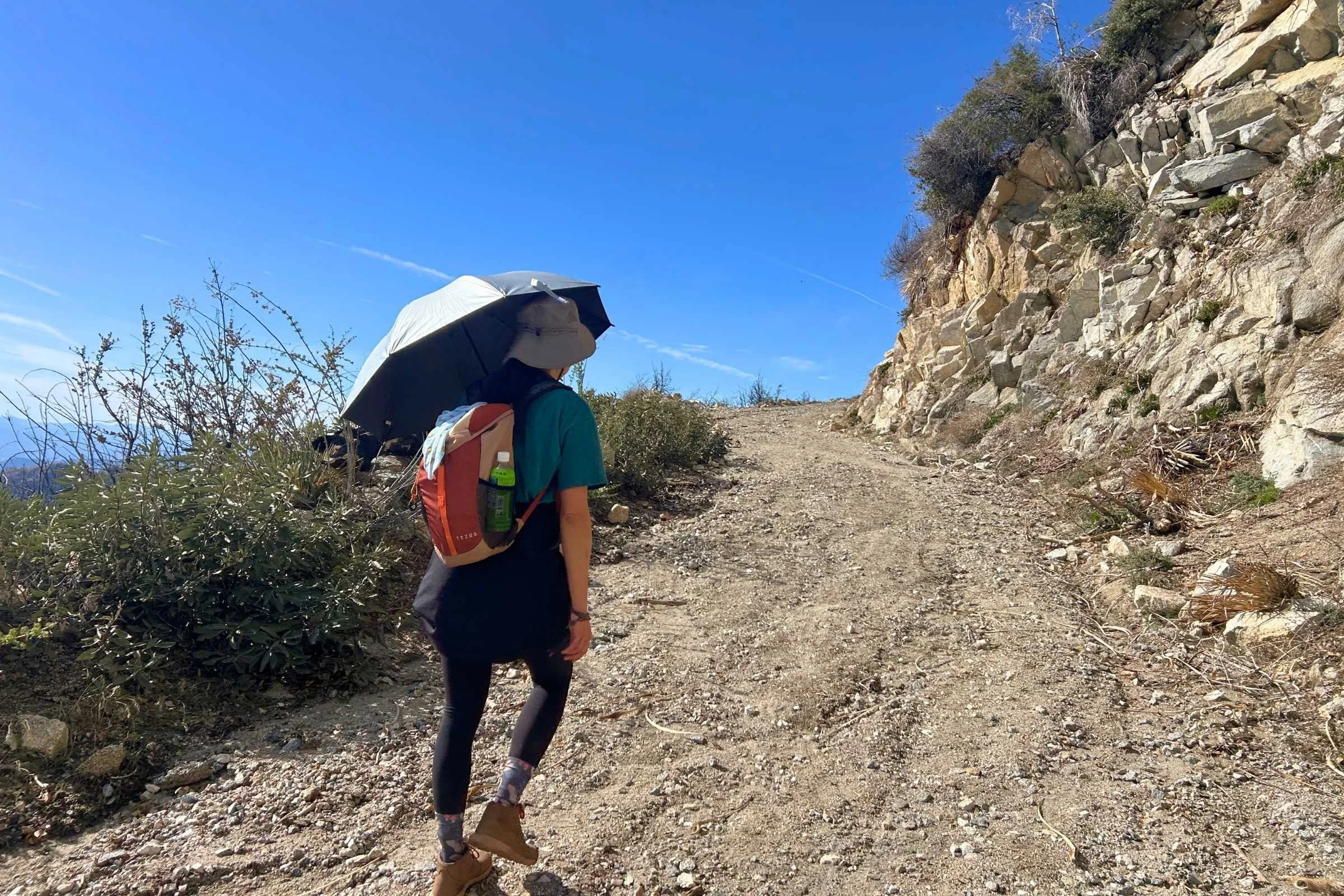
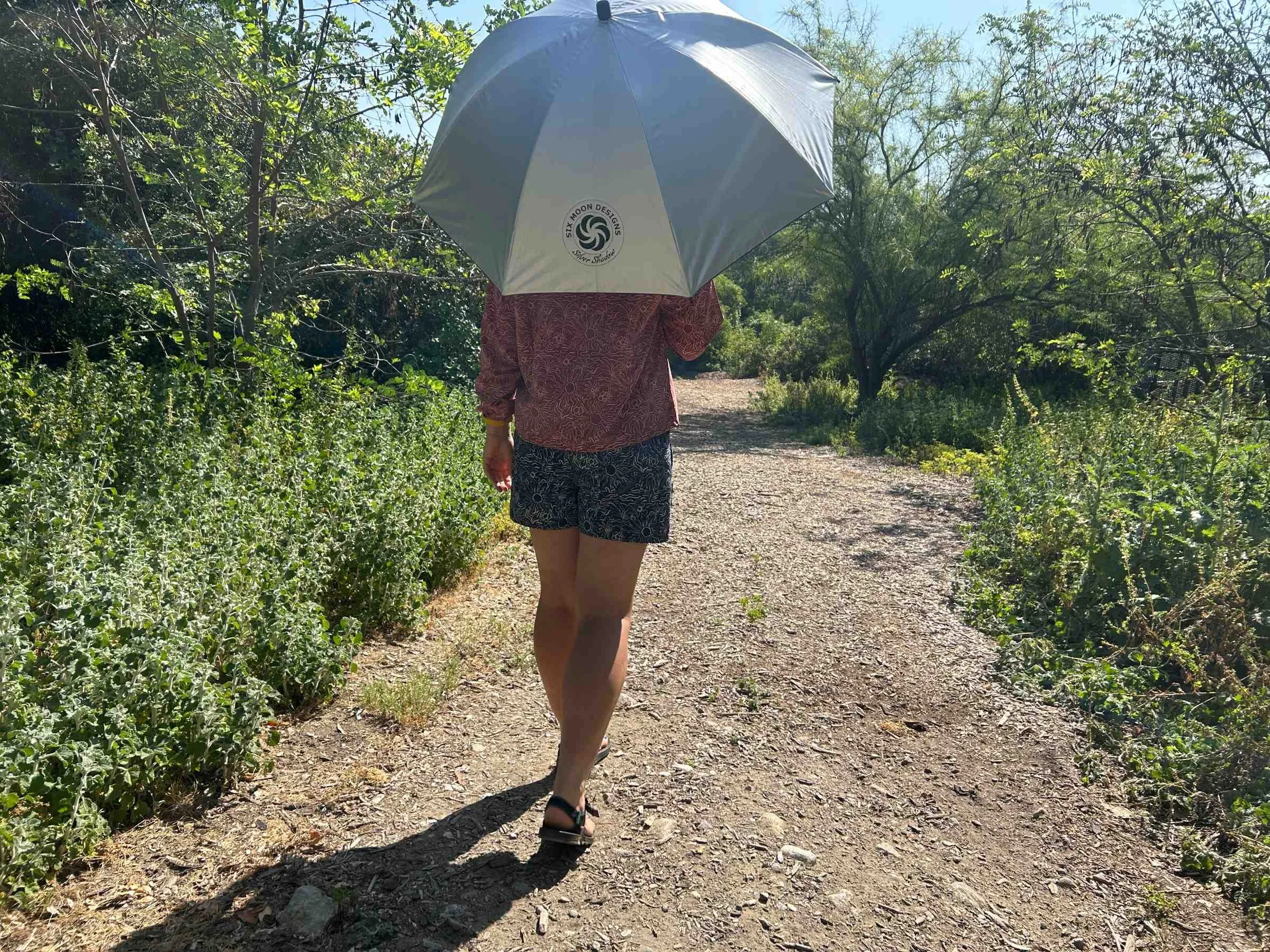
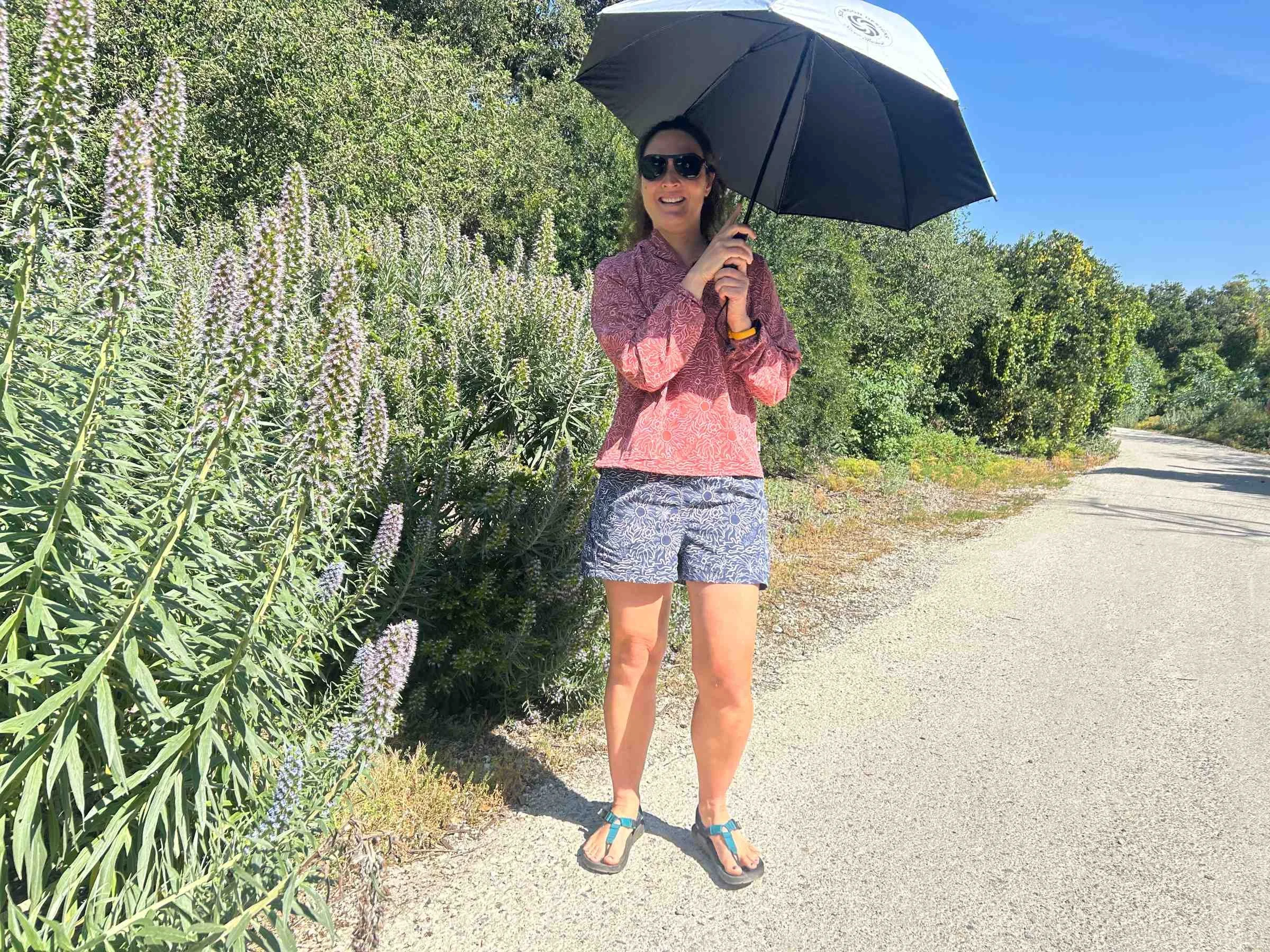
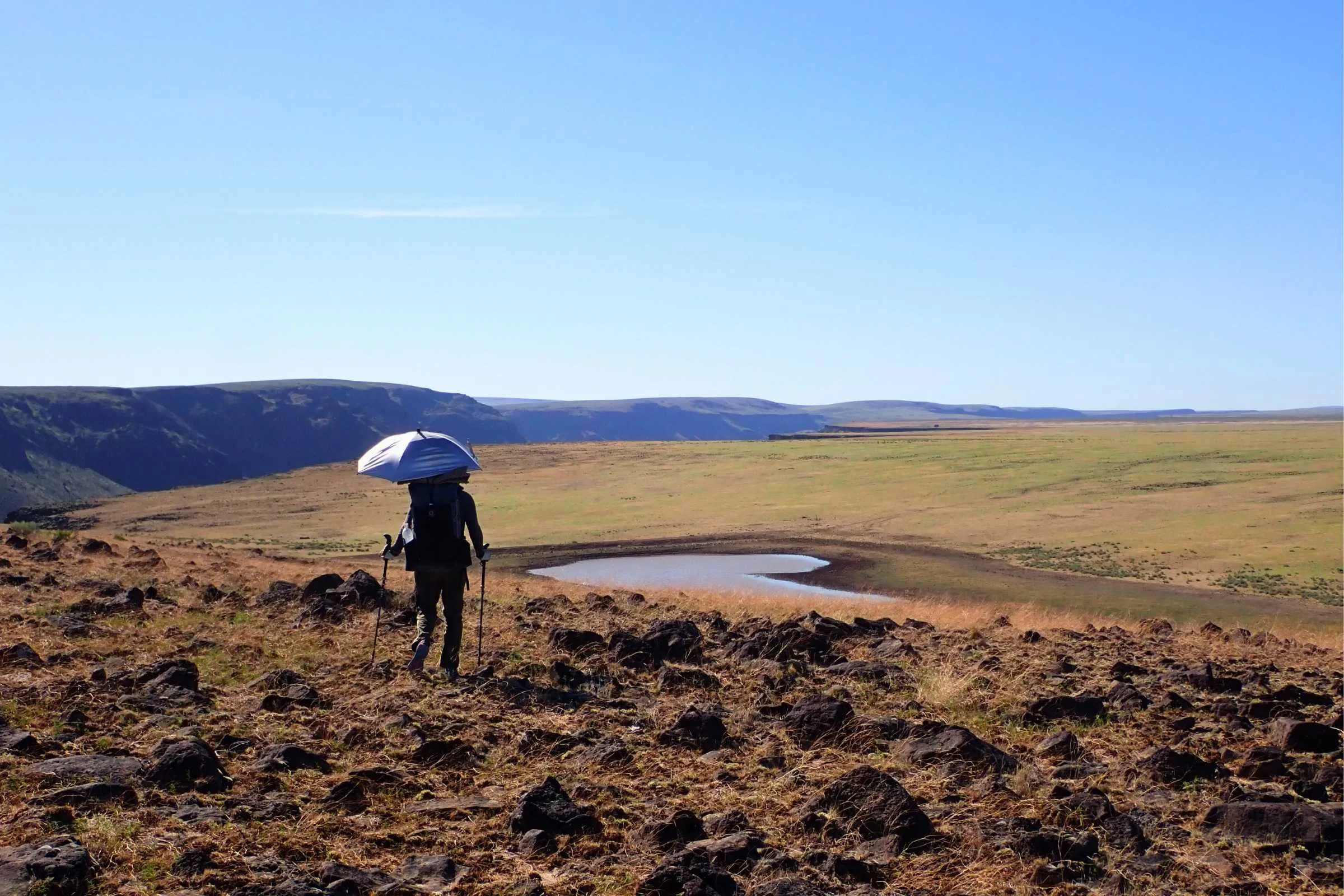
We tested this umbrella on the Arizona Trail, Oregon Desert Trail (during the 2021 heat dome), day hikes, and backpacking trips totaling more than a thousand miles of direct desert hiking. It makes a noticeable difference in reducing the temperature under the umbrella.
In lab testing, the temperature under the Silver Shadow umbrella differed by up to 15 degrees. That means on a sunny day, you may feel 15 degrees cooler with this umbrella than without one.
The Silver Shadow Ultralight has a 37-inch canopy, so you and your backpack can really tuck in. As with all hiking umbrellas, the shaft isn't as long as your umbrella at home, so if this is your first time using a hiking umbrella, it can feel awkward. Similarly, it doesn't collapse down as much as a folding umbrella, so some hikers don't like how it sticks out up the top of the pack and can catch on branches. Unfortunately, this was a problem with all the full-length umbrellas we tested, so if you know that will annoy you, go with a collapsible umbrella like the Six Moon Designs Silver Shadow Mini umbrella.
The SMD Silver Shadow has a fiberglass shaft and ribs that don't collapse in the wind. The generous 7.5 ft canopy comes in handy when you're using it in the rain as it can also keep your pack dry.
Unlike many hiking umbrellas, the Pacific Northwest-based brand tested and reported their waterproof rating (5,000 mm hydrostatic head, which is better than many backpacking tents). Like all the umbrellas we tested, it isn't seam sealed or taped, but we didn't find this to be an issue. We also liked that it is made of fiberglass instead of metal. Not that any hiker should be on top of a pass with an umbrella during a thunderstorm, but since fiberglass doesn't conduct electricity like metal, we felt more comfortable when we may have found ourselves doing stuff we shouldn't have.
The Silver Shadow umbrella is designed to attach to a pack using the Six Moon Designs umbrella attachment system. The hands-free system (sold separately) lets you use this umbrella with trekking poles or while doing other things with your hands, like eating a snack or using your phone.
The Silver Shadow has an EVA foam ergonomic handle that feels like a trekking pole handle. Since it is designed to feel like a trekking pole handle, it is very long for an umbrella handle (5 inches or around 13 cm).
The Silver Shadow is one of the heaviest umbrellas we tested, but we think most hikers will find it worth it because it offers a sturdy, durable umbrella at a reasonable price. If you like the features of the Silver Shadow Ultralight but want something lighter, check out the similar and highly popular Silver Shadow Carbon, which is our choice for thru-hikers.
Best ultralight hiking umbrella: Gossamer Gear Lightrek
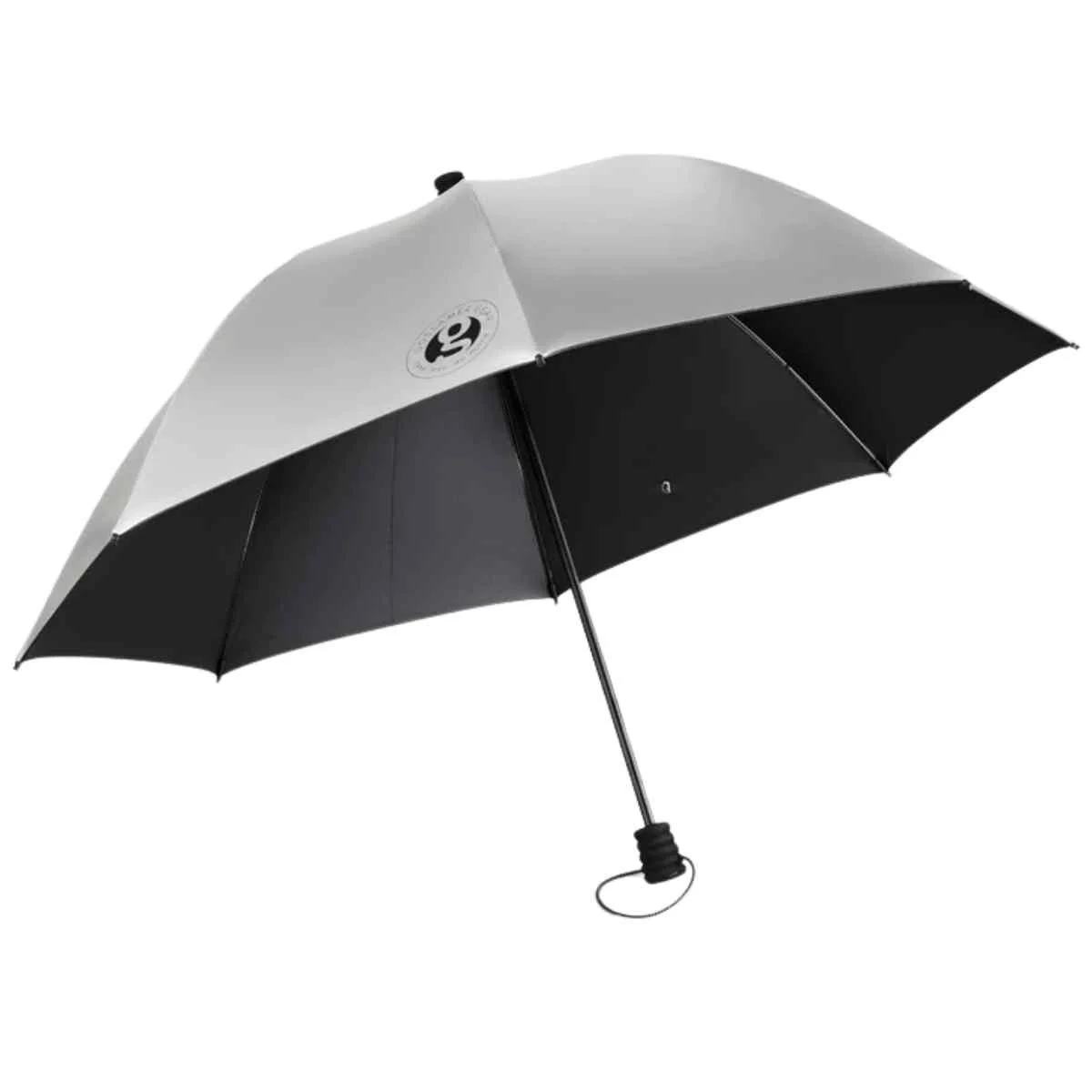
Weight: 5.8 oz / 164.4 g
Length when open: 25"
Length when closed: 25"
Canopy size: 37.5"
Shaft length: 23.5" | 60cm
Shaft material: Aluminum
UPF: 50+
Water column: not stated
What we liked: The lightest, price, available in gold color, optional hands-free kit
What we didn’t like: Not quite as windproof, has aluminum
If you are a thru-hiker or an ultralight hiker or backpacker, the best ultralight umbrella is the Gossamer Gear Lightrek. At 5.8 oz, it is the lightest full-size sun umbrella on the market. It has the same 50+ UPF rating and waterproofing of other umbrellas, but a smart use of an aluminum frame and lightweight components keep the weight low. It's got an effective handsfree umbrella clamp, so you can use it with trekking poles. The Gossamer Gear Lightrek is a good value, costing $2 less than similar hiking umbrellas, making this an easy choice for any lightweight backpacker. Plus, for a bit of style, it is available in silver or a unique gold color, unlike any umbrella we tested.
Gossamer Gear Lightrek
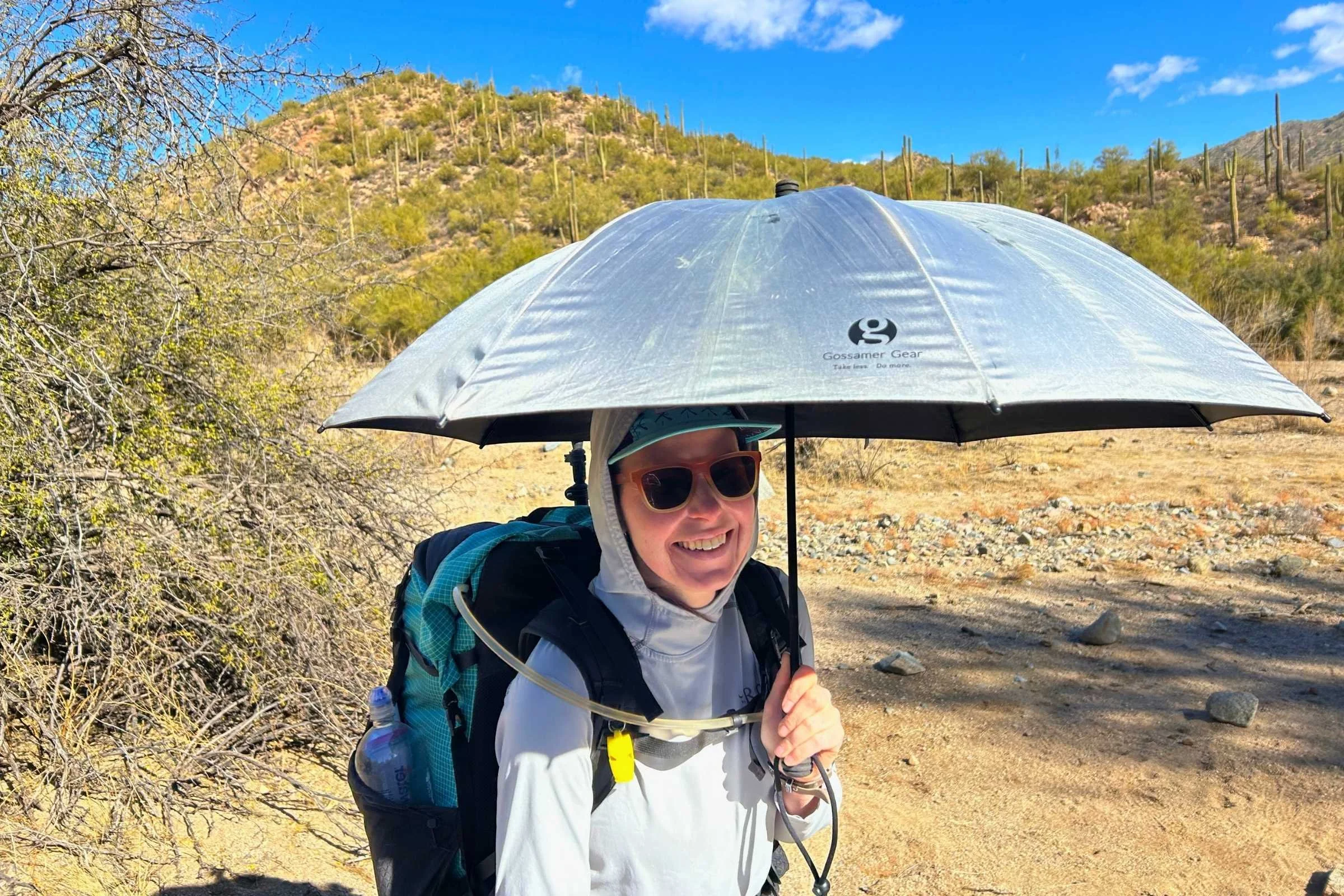
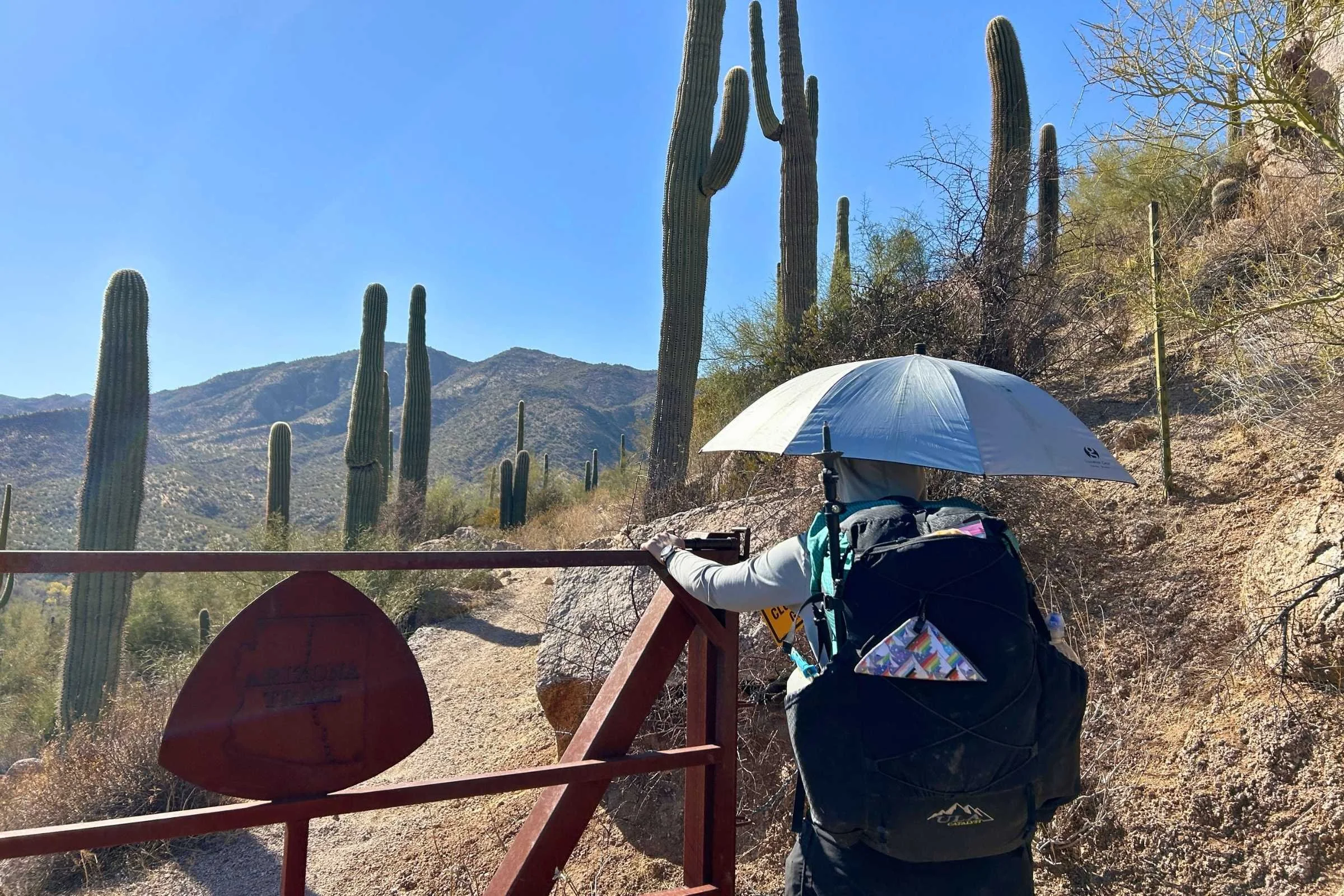
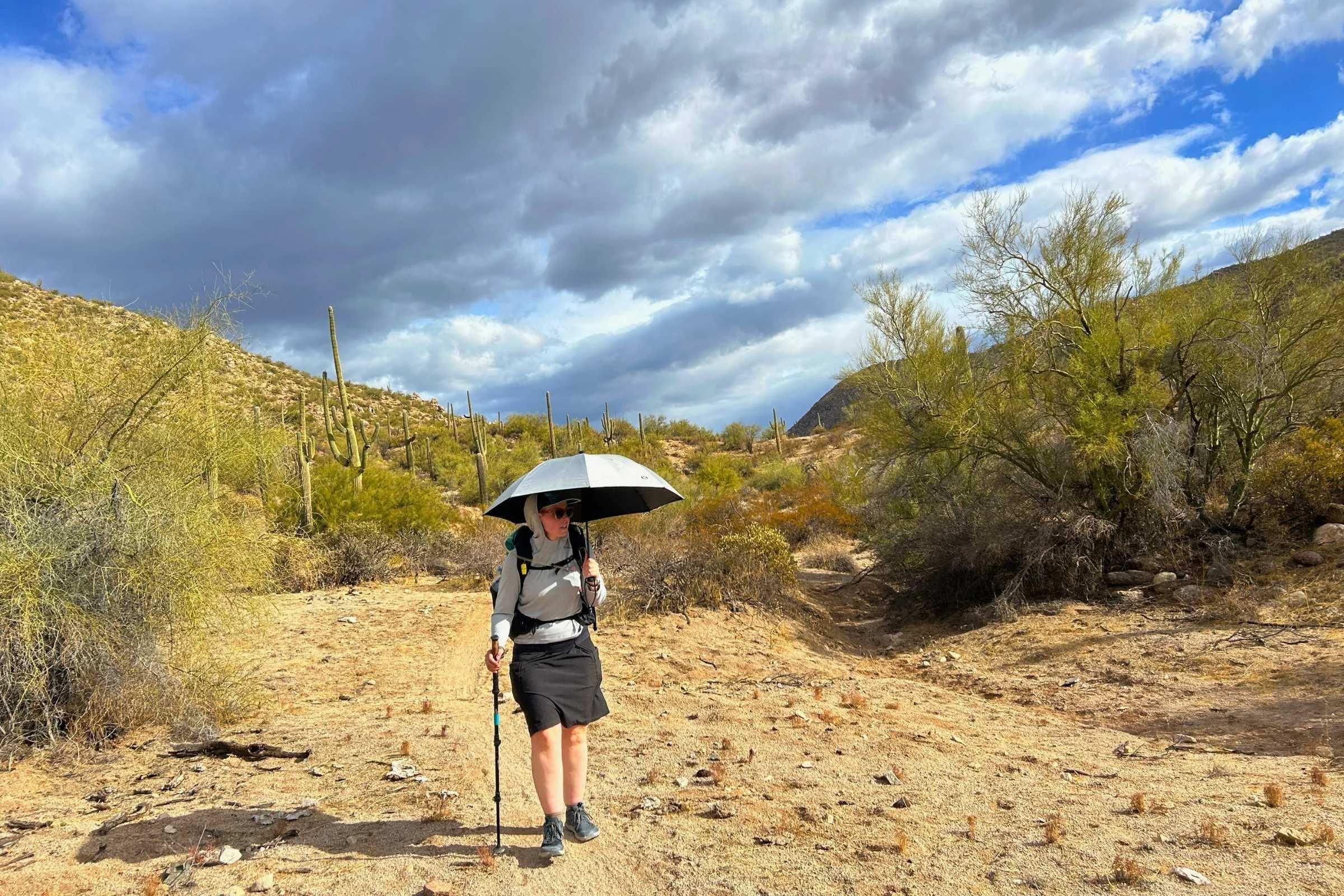
The Gossamer Gear Lightrek is similar to the Six Moon Designs Silver Shadow Carbon with a few key differences. The Lightrek uses an aluminum shaft rather than the carbon fiber found in the Six Moon Designs Silver Shadow Carbon. Aluminum can conduct electricity, though the presence of aluminum itself does not increase the likelihood of a lightning strike.
Additionally, we noticed that the Lightrek has a shallower slope, so it is not as effective in the wind as steeper sloped umbrellas. This may be counter-intuitive, but think of how a pyramid tent with steep, angled walls is often considered the best shape for a tent in the wind. The reason is that wind flows smoothly over steeper walls and doesn't catch or create pressure on the fabric. Flatter, lower slopes are more susceptible to that pressure, so can break.
The Lightrek has an aluminum frame, and we were initially concerned because aluminum can bend in the wind. However, after looking closely at the umbrella, the aluminum appears to only be in the shaft. Shafts almost never have durability issues, so aluminum should be fine there.
On both the Lightrek and the Silver Shadow Carbon, the ribs are fiberglass and the ribs are the most important factor for durability and wind resistance. Fiberglass ribs are better for wind resistance because they flex and snap back, whereas metal ribs may bend or break.
The Gossamer Gear Lightrek has had several iterations, and we tested the last two. The most recent version is the lightest and it does that by, among other things, removing a toggle cord lock and adding a reflective wrist strap instead. The reflective wrist strap was a feature we liked in the HMG Essential umbrella, as it makes it easier to find your umbrella at night. It's nice that the Gossamer Gear version picked up this feature.
There's no button or lock on the Lightrek. Fewer components means fewer things that can break.
The reflective 100% Polyester fabric on the Lightrek doesn't feel as thick as on the Six Moon Designs umbrellas, but still has a 50+ UPF rating. As with other umbrellas, it has a black underside to absorb heat.
We like that the Lightrek has a textured foam handle. It's shorter than the Six Moon Designs Silver Shadow Carbon, but the texture helps grip with sweaty hands or in high winds.
The Lightrek has a hands-free add-on so you can attach this umbrella to your pack and use it while also using trekking poles. If you're looking for an ultralight backpacking umbrella but don't want to compromise on performance, the Lightrek is it.
Best lightweight hiking umbrella: Six Moon Designs Silver Shadow Carbon Trekking Umbrella
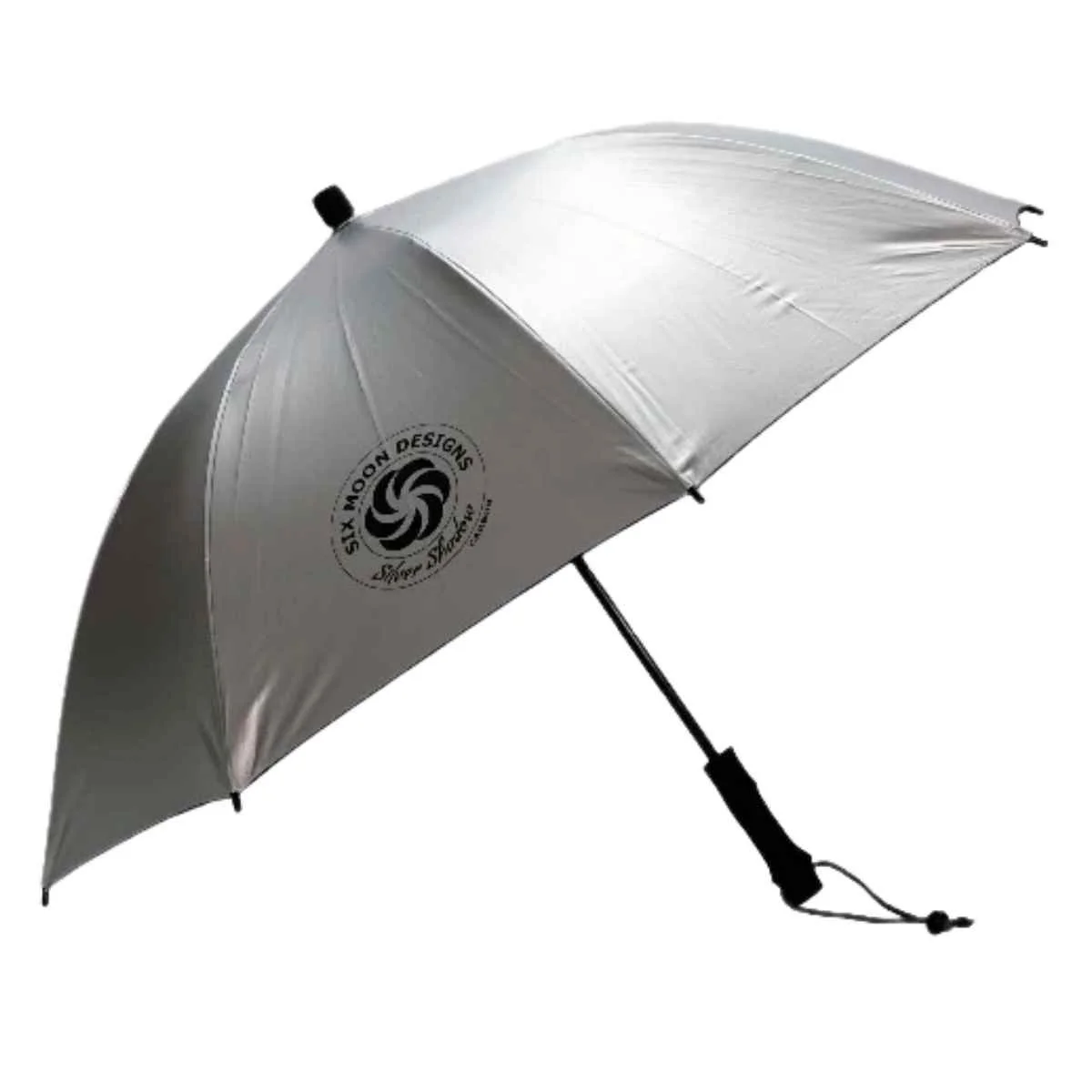
Weight: 6.8 oz | 193 g
Length when open: 25" | 63.5 cm
Length when closed: 25" | 63.5 cm
Canopy size: 7.5 ft² or 0.7 m²
UPF: 50+
What we liked: Light yet strong in wind, all carbon fiber means no metal, durable, optional hands-free kit
What we didn’t like: Price, lighter options are available
The Six Moon Designs Silver Shadow Carbon Trekking Umbrella is the best lightweight hiking umbrella. Recently, the Gossamer Gear Lightrek reduced its weight by an ounce, snagging our top spot for Best Ultralight Umbrella. Still, we think the Silver Shadow Carbon should be on your radar, even if you are an ultralighter. The Silver Shadow Carbon is more wind resistant and more durable and only has carbon fiber and fiberglass.
Six Moon Designs Silver Shadow Carbon Trekking Umbrella
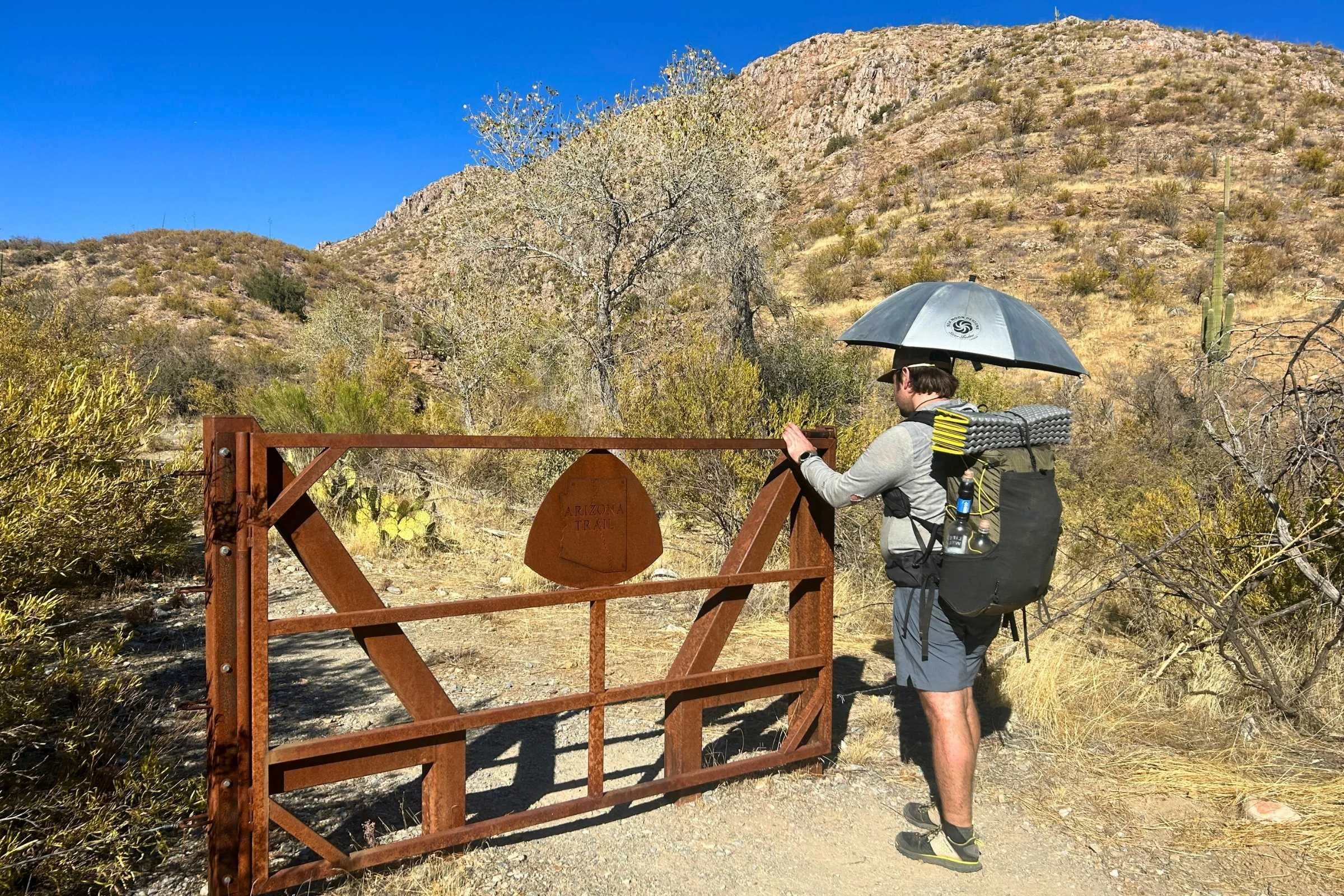
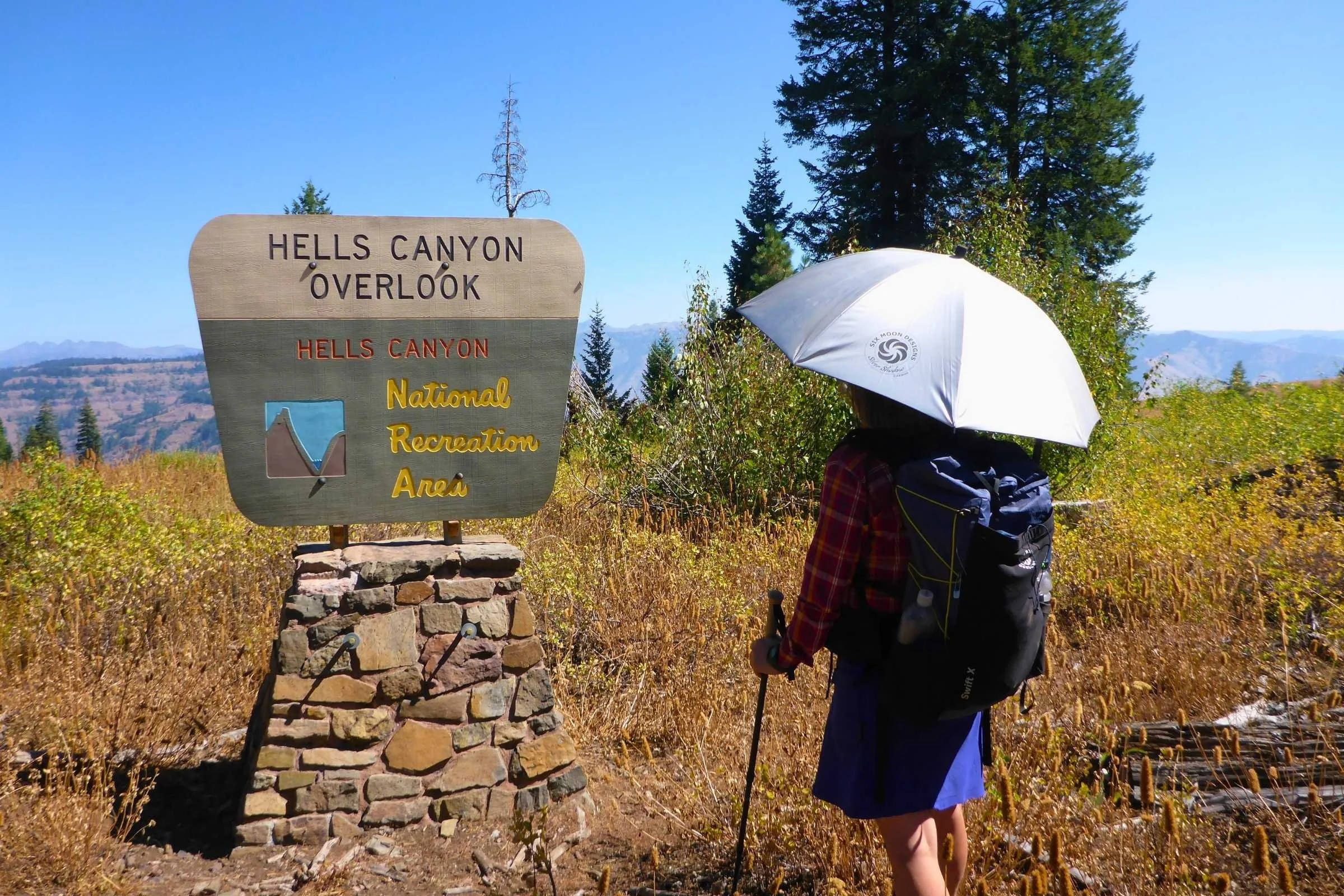
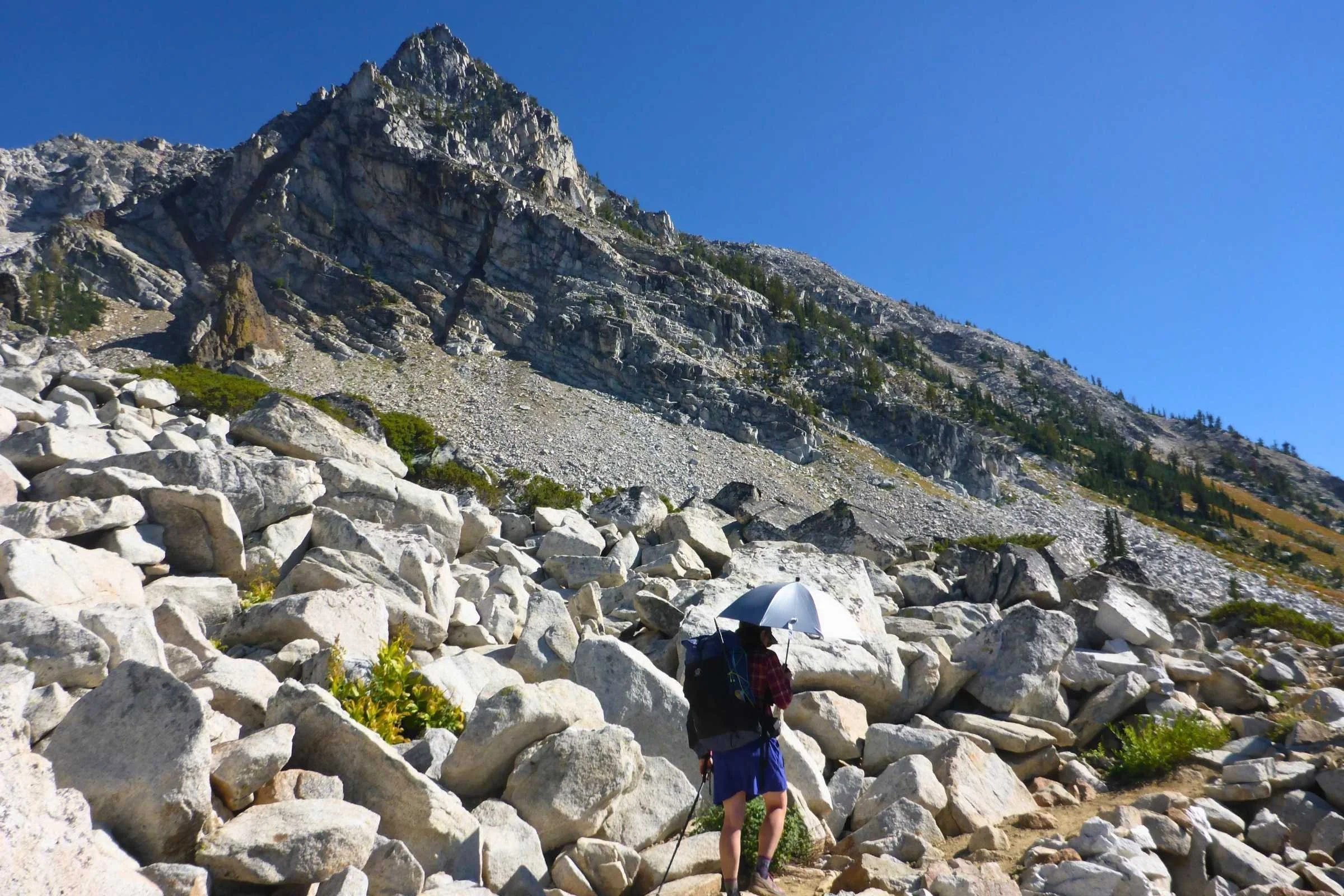
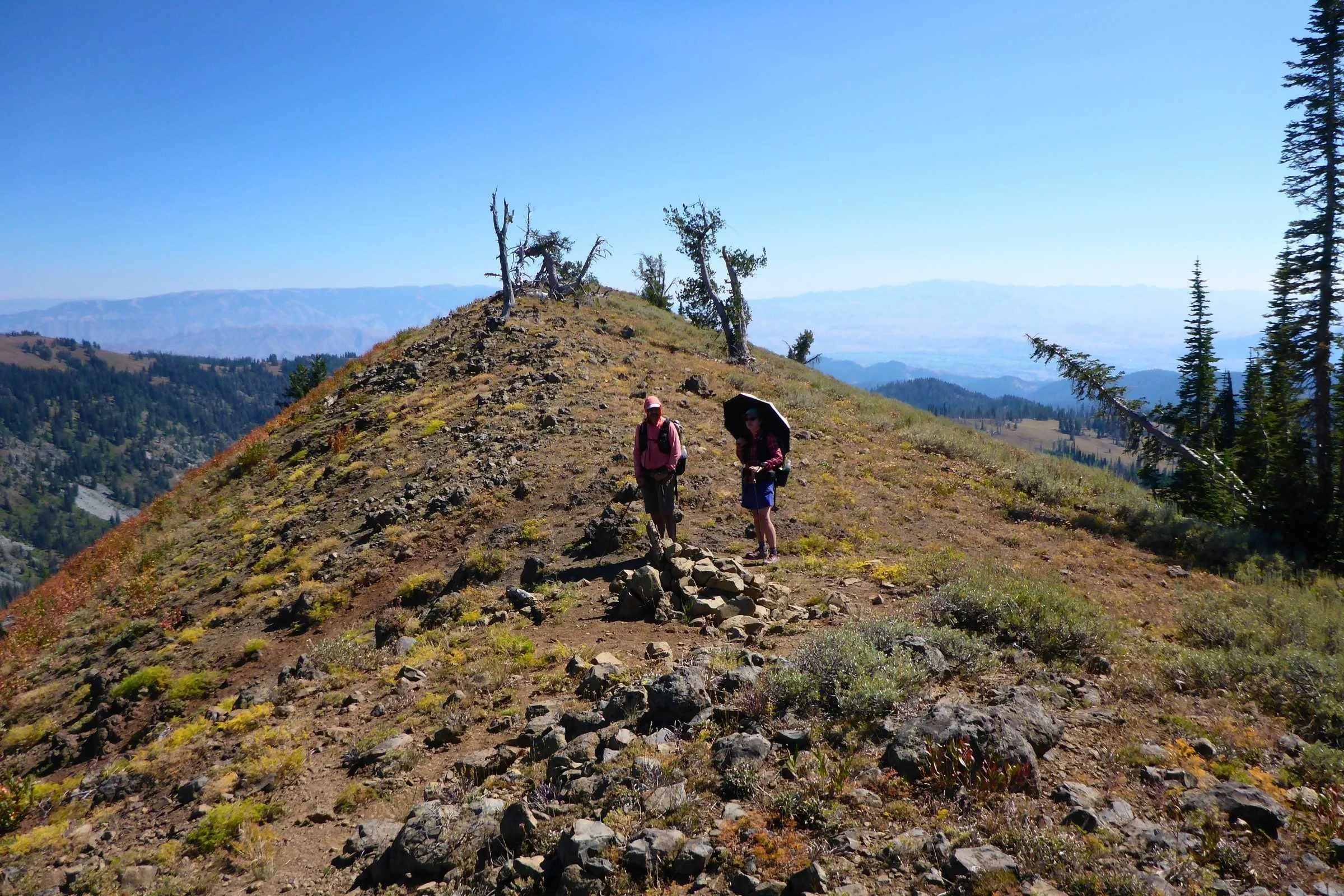
The Silver Shadow Carbon has almost the same features as the Silver Shadow original, except it is about 2 oz lighter. It has the same length when opened, same length when closed, and same canopy coverage area. Instead, the Silver Shadow Carbon saves weight by using a carbon fiber shaft and ribs. It has no metal. Aluminum and other metals traditionally used in umbrellas don't attract lightning, but they can conduct lightning. Carbon fiber doesn't conduct well compared to other metals.
The Silver Shadow Carbon canopy design has a steeper slope making it more resilient in the wind than the Lightrek. It also has a longer ergonomic foam handle resembling a trekking pole handle, which many hikers find easier to grip, especially over long periods.
The Six Moon Designs Silver Shadow Carbon is more expensive than both the original Silver Shadow and the Gossamer Gear Lightrek. So is it worth it? If you were eyeing the Silver Shadow original but want something lighter, the $10 upcharge on the Carbon isn't bad in the world of ultralight gear for saving 2 oz. If you were thinking about the Lightrek, consider where you'll be hiking, how hard you are on your gear, how long you will be out, and how windy it will be. You may be able to get away with the Lightrek, or you may find the 1 oz and extra $12 of the Silver Shadow Carbon to be worth it for the better durability and windproofness.
Best hiking umbrella for strong winds: Repel Windproof Travel Umbrella
Weight: 16.0 oz
Length when open: 22.3 in
Length when closed: 11.6 in
Canopy size: 7.5 ft²
UPF: 50+
What we liked: Very windproof, collapsible, value for the price, lifetime warranty, lots of colors,
What we didn’t like: Heavy, has steel components
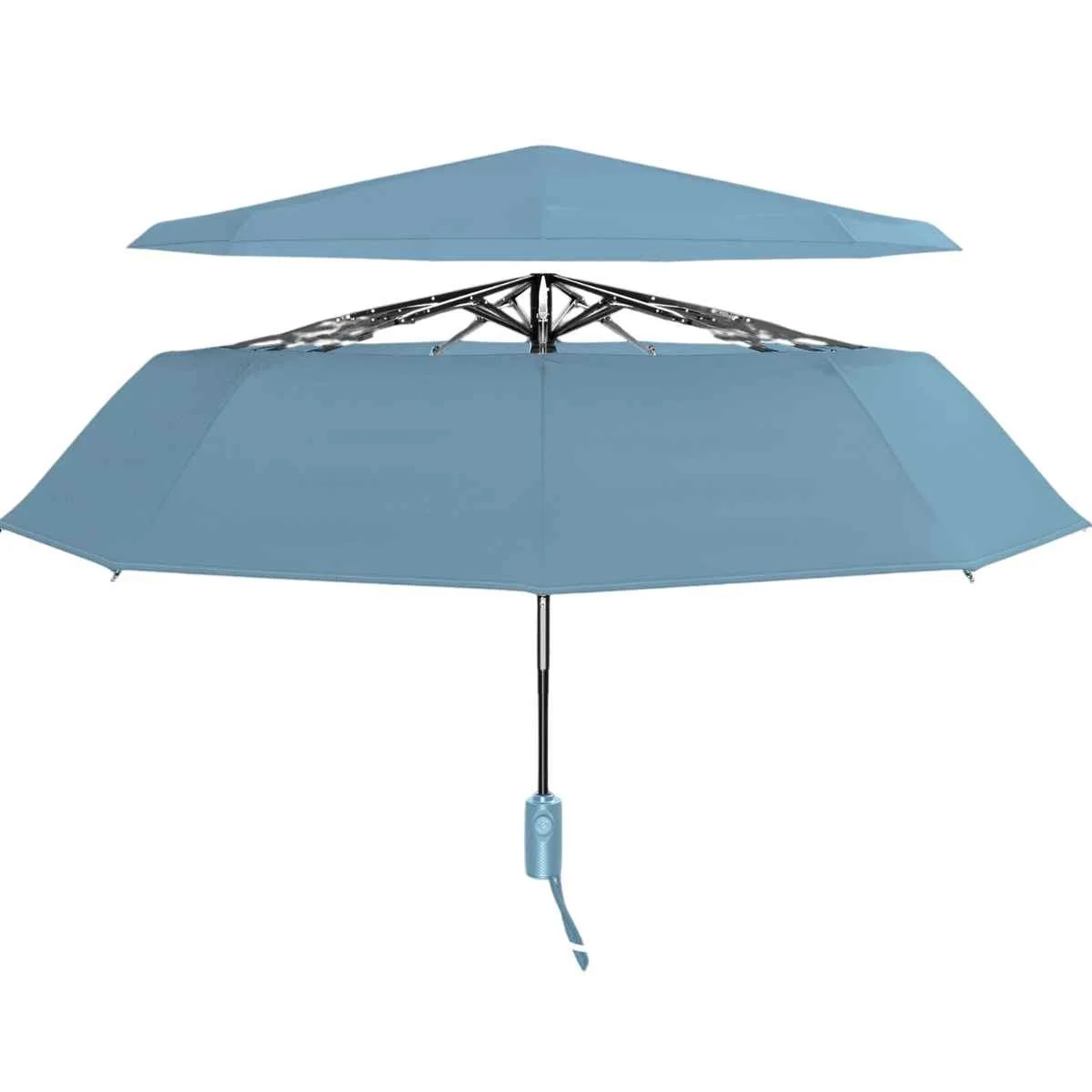
Although designed as a commuter or travel umbrella, the Repel Windproof umbrella is the most durable umbrella we tested. This collapsible umbrella was designed for everyday use, but it comes with a weight penalty. But, aside from our own testing, their website says the umbrella is made to withstand 50 mile per hour winds and has been tested at 85+ miles per hour. This is a durable folding travel umbrella that can be your workhorse for daily use and travel in addition to hiking.
Since it isn't silver like many of the other umbrellas we tested, it would be a great travel umbrella, especially if you are hiking Caminos or other long distance trails in Europe. If you want one umbrella to do everything, the Repel Windproof umbrella won't let you down(and if it does, it comes with lifetime replacements). Silver mylar umbrellas reflect the sun's rays so are the preferred material for sun umbrellas. Repel Windproof umbrellas are also available in silver, we just happened to test black.
Repel Windproof Travel Umbrella
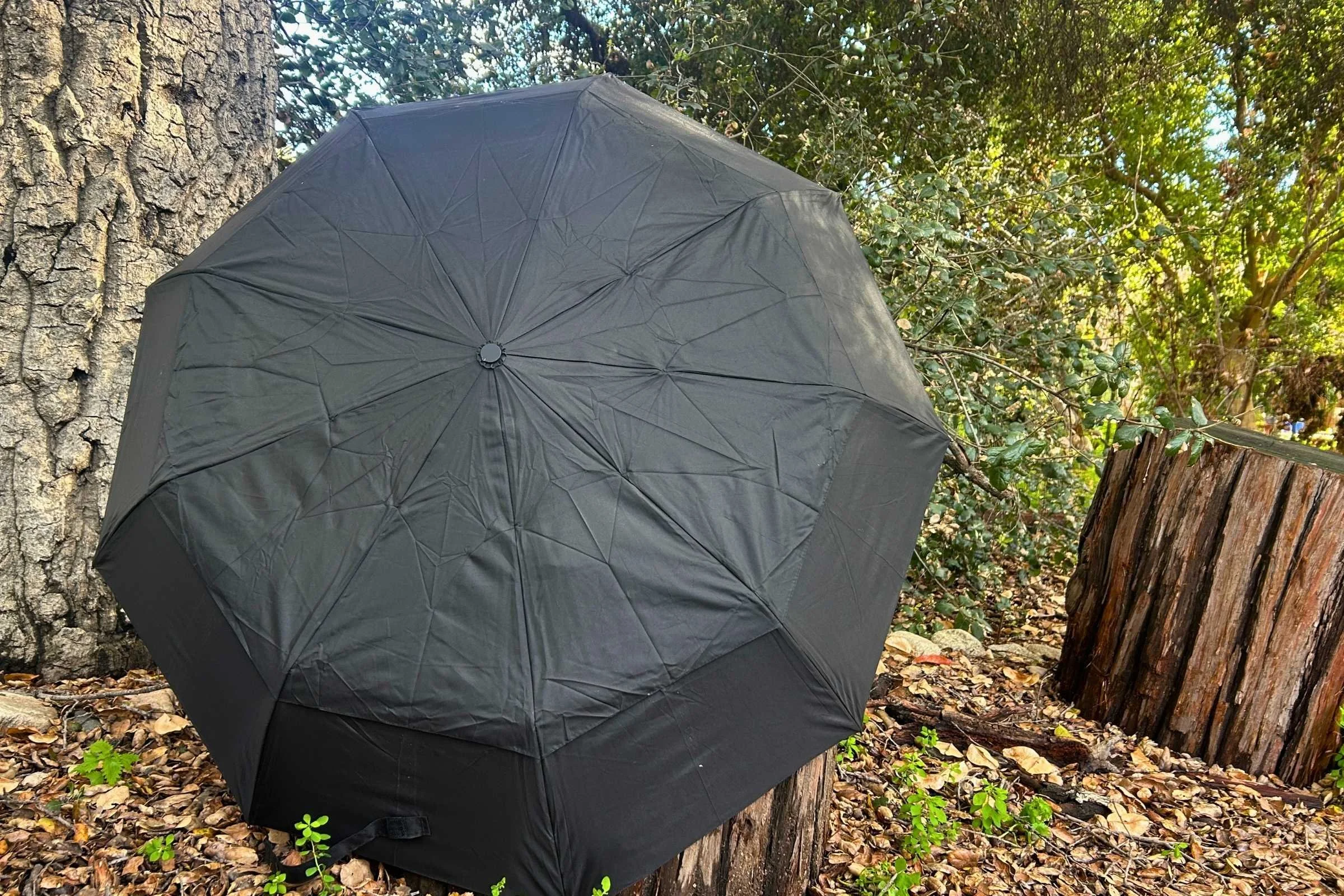
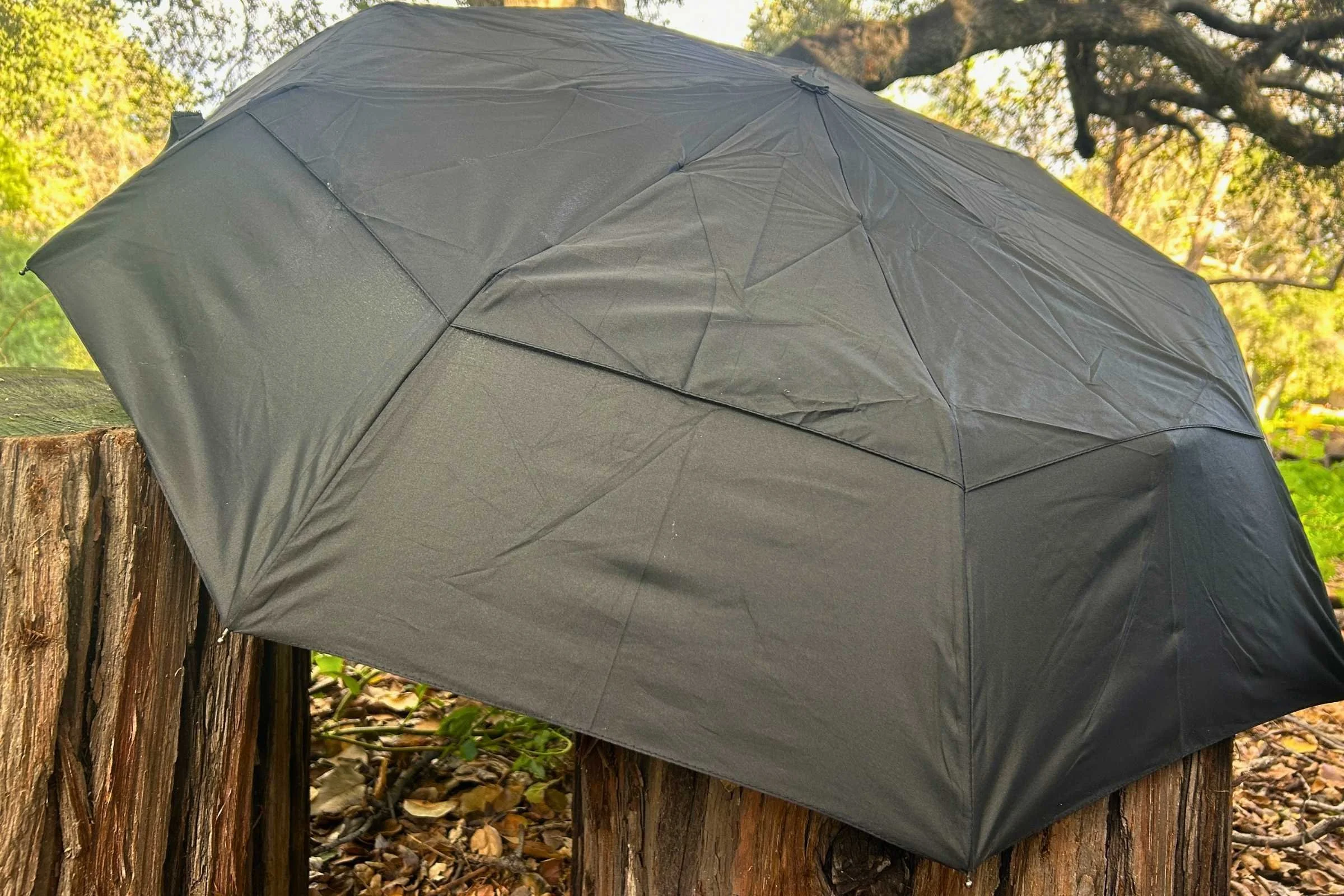
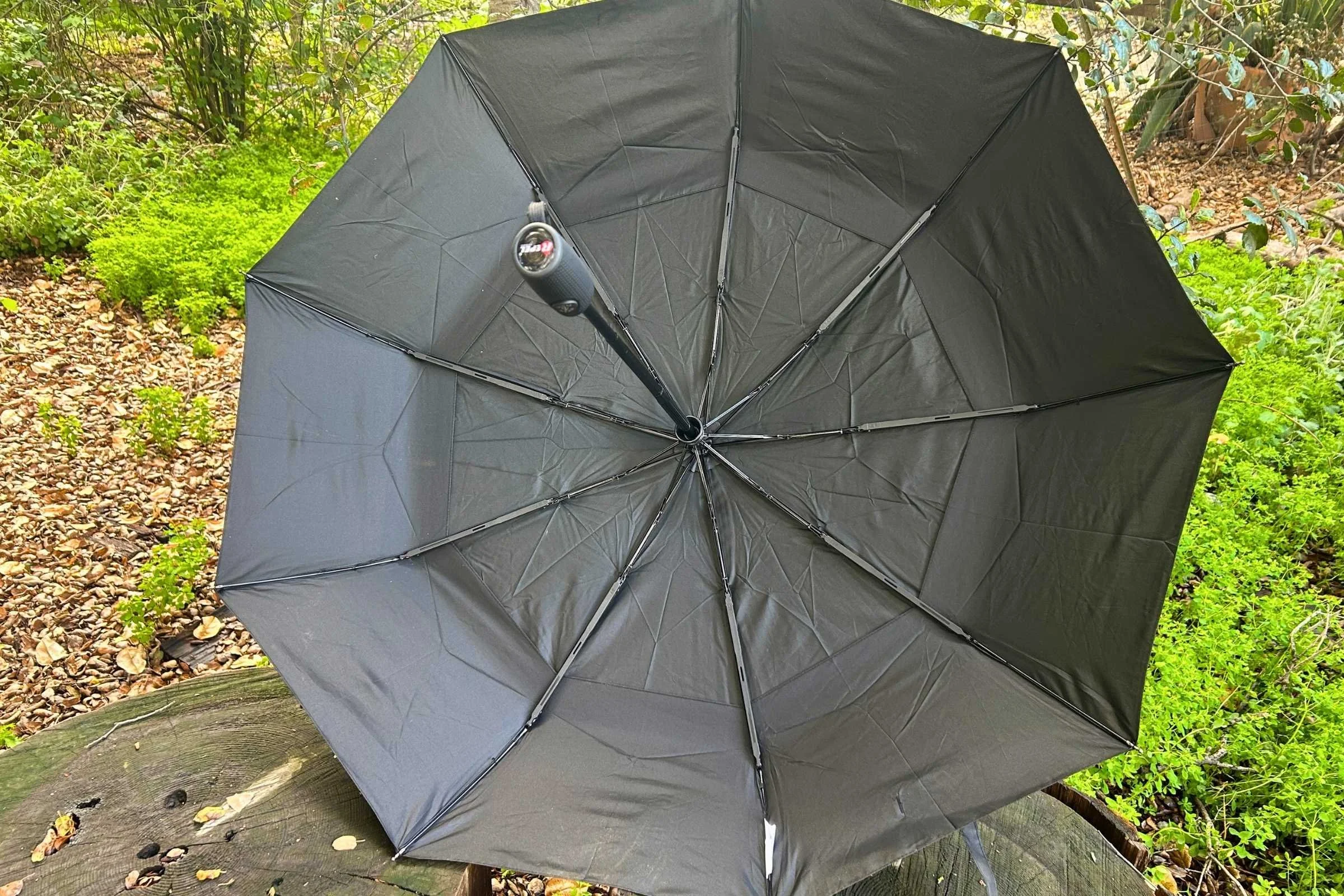
The Repel Windproof umbrella weighs 14 oz, more than double the weight of our best lightweight and best durable umbrella winners. It has a steel shaft. That could be a dealbreaker for some hikers. But for adventure travel, especially in places where you want to be less conspicuous, this could be a good option.
The Repel Windproof umbrella is a folding umbrella, which means that it is compact and shorter than most of the other umbrellas we tested. The smaller size makes it handy for stuffing in a purse or messenger bag while commuting. It also means it won't take up a lot of room in your backpack, making it a decent choice for a day hiking pack. Smaller backpacks usually have a harder time accommodating the long shafts found on umbrellas, so a shorter umbrella could be a good choice. Day hikers tend to be less concerned about weight than backpackers, so the extra weight of this umbrella may not be as much of a concern, either. For adventure travel, you could easily stuff this umbrella in a day bag for a sightseeing sidetrip.
The Repel Windproof umbrella has a large plastic handle. It was one of the only umbrellas we tested that has you click the button to open and close it. For hiking, we prefer umbrellas that have fewer moving parts. Still, we haven't had any issues with the mechanics of the button. We would recommend hikers be careful not to get sand or grit near the button, though.
Aside from the Hyperlite Mountain Gear Essential Umbrella, the Repel umbrella is the only one we tested that has a vented canopy reinforced with fiberglass ribs. The dual canopy design helps prevent wind from catching the umbrella and turning it inside out, while still offering ample protection.
We tested the Repel umbrella in black, but they also sell it in a UV Silver/Black that the brand says blocks 99% of UV rays (equivalent to UPF 50). The non-silver Repel umbrellas offer some UPF protection, but not as much as umbrellas with reflective tops. The Repel umbrellas in general have thicker fabric than many sun umbrellas, which means they will do a decent job of keeping the sun off of you. We chose to test black because it is less conspicuous for adventure travel than the UV Silver. The umbrella is also available in more than a dozen colors and patterns, including rainbow, starry night, and blue sky.
The Repel umbrella is highly regarded as a travel umbrella by Wirecutter, Good Morning America, and GQ. So while it isn't your typical hiking umbrella, we think it will work well for hiking in many situations.
Best collapsible hiking umbrella: Six Moon Designs Silver Shadow Mini Hiking Umbrella
Weight: 6.8 oz | 193 g
Length when open: 20.5" | 52 cm
Length when closed: 10" | 25.4 cm
Canopy size: 7.5 ft² or .7 m²
UPF: 50+
Water column: 5000 mm
Shaft material: Aluminum
Ribs material: Carbon fiber / aluminum
What we liked: Compact size means it can be carried anywhere
What we didn’t like: Shorter shaft, collapsible umbrellas aren't for everyone, price
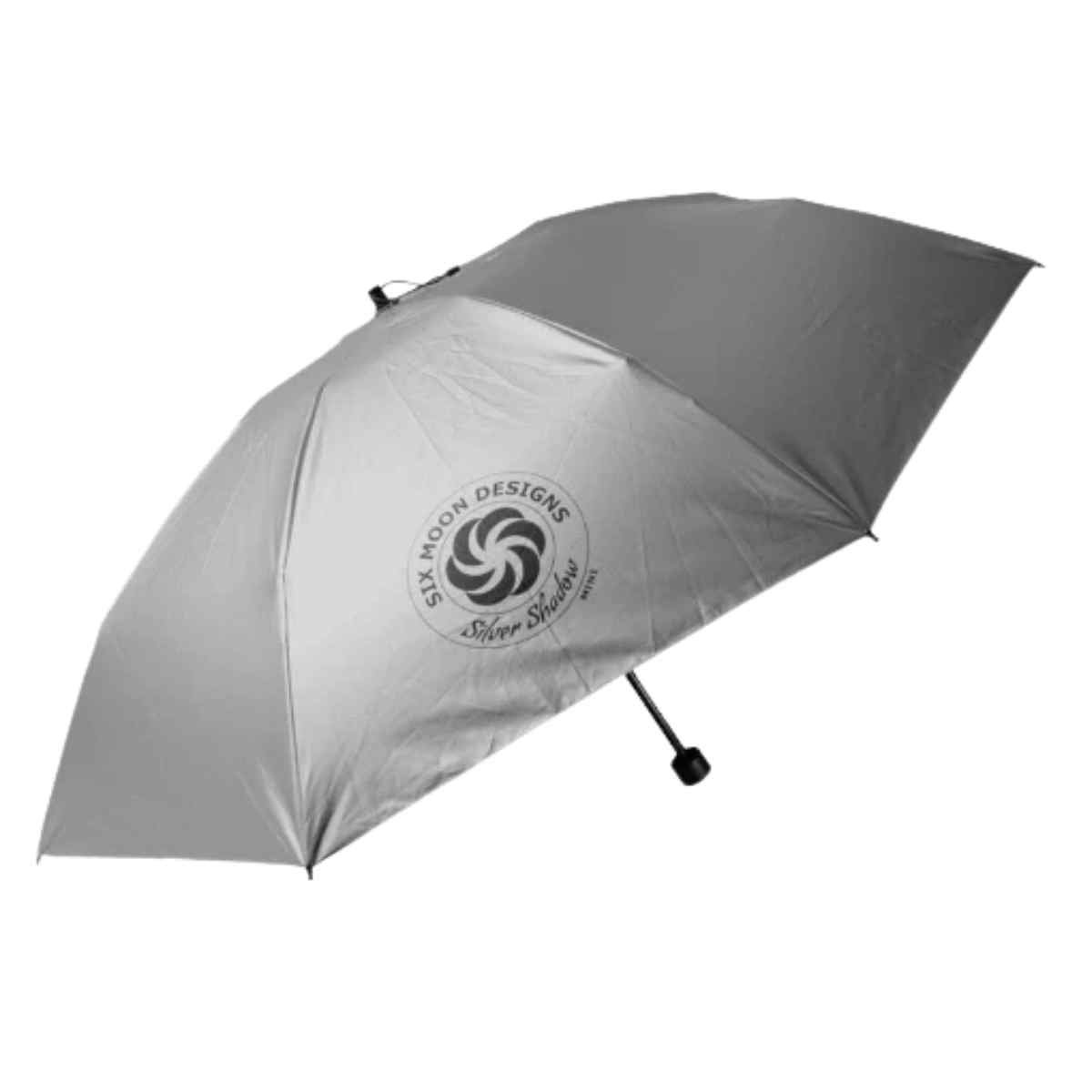
The Six Moon Designs Silver Shadow Mini Hiking Umbrella is the collapsible version of the Silver Shadow umbrella that won our best overall umbrella. Collapsible umbrellas aren't for everyone, and we think most hikers will find the functionality and durability of a full-length umbrella to be a better choice. Collapsible umbrellas have more parts that can fail, and by their very nature, are less durable.
The Silver Shadow Mini folds down to 10" and easily fits into even the shallowest water bottle pockets or front pockets of hiking backpacks. We can even fit it in some fanny packs for easy access.
If you want a collapsible umbrella with a telescoping shaft, this is an excellent choice.
Six Moon Designs Silver Shadow Mini Hiking Umbrella
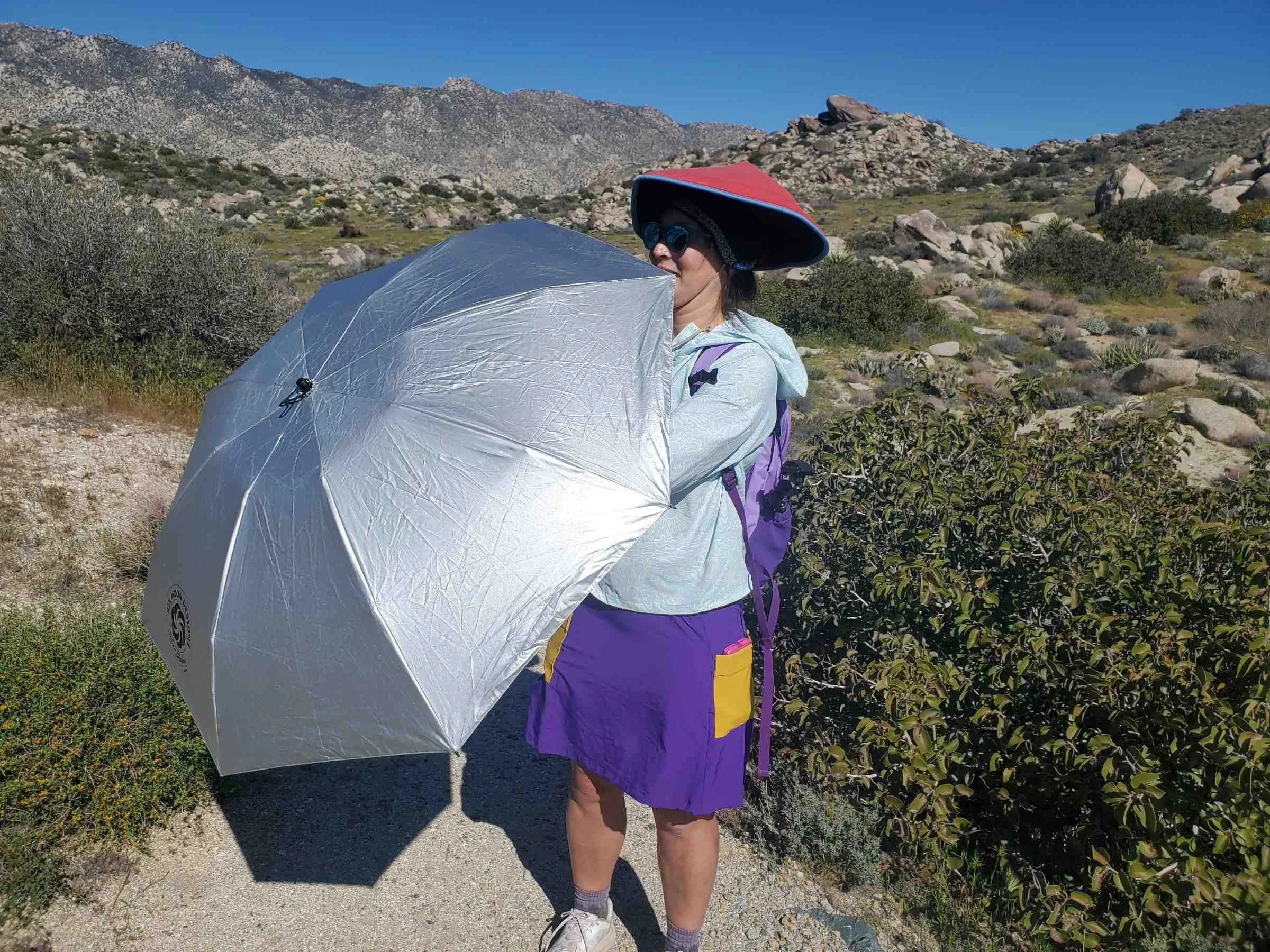
Treeline Review writer Liz Thomas hiking with the Six Moon Designs Collapsible sun umbrella on a windy day in Anza Borrego Desert. Photo by Katie Hawkes.
In testing side-by-side with the Silver Shadow, we found that the original non-collapsible version is far less likely to flip than the collapsible version. The Silver Shadow Mini is also more expensive than other umbrellas we tested.
Other hiking umbrellas we tested
We tested our main hiking umbrellas side-by-side with several other umbrellas that are no longer widely available, including the original hiking umbrella, the GoLite Chrome Dome. We also compared the umbrellas to two collapsible Montbell umbrellas: the Montbell Travel Umbrella and the Montbell Trekking Umbrella. Unfortunately, neither appears available in the U.S. anymore. Lastly, we tested an umbrella that is no longer available from the ultralight brand N/OW.
Hyperlite Mountain Gear Essential Umbrella
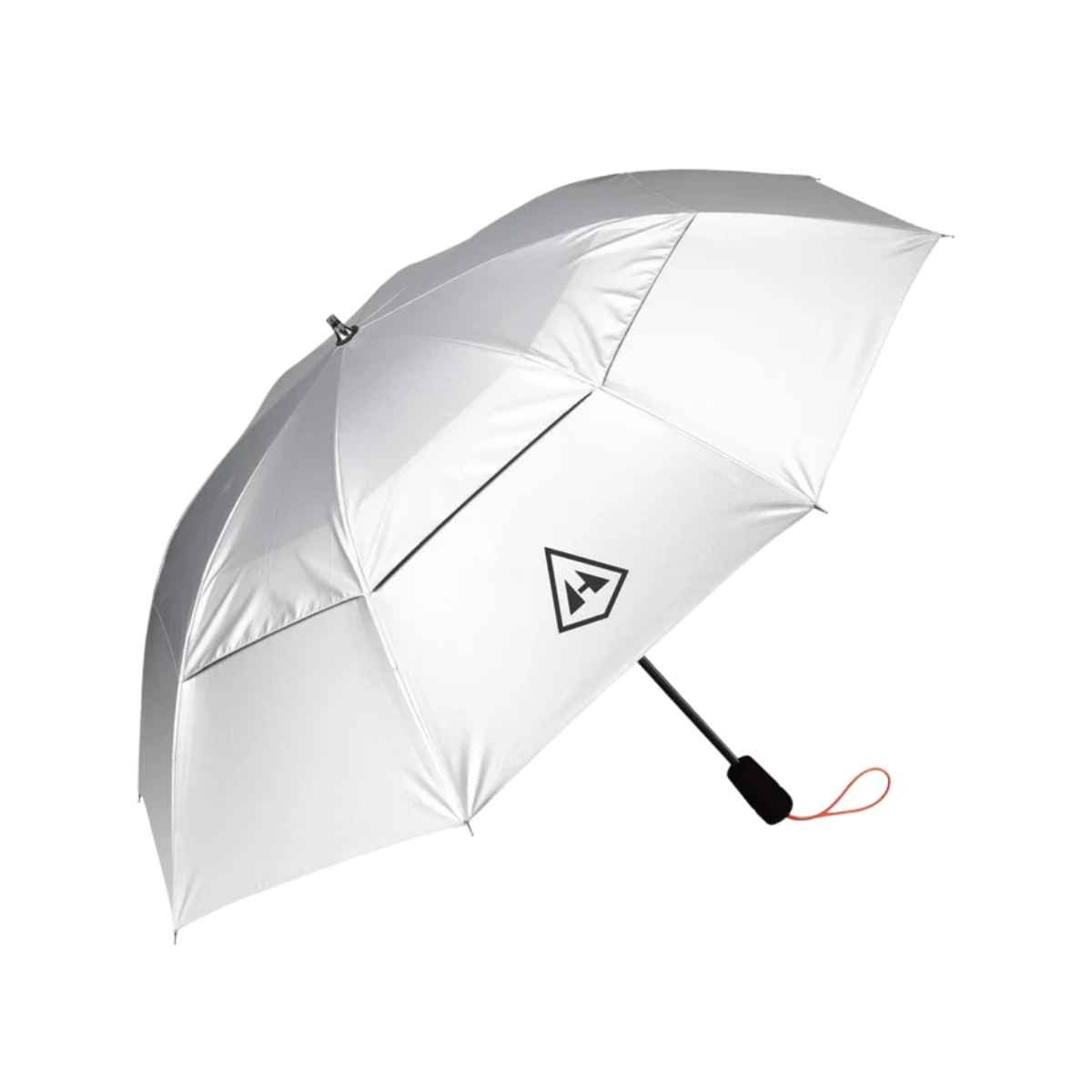
Weight: 6.8oz | 193g
Length when open: 24 in | 61 cm
Length when closed: 24 in | 61 cm
Canopy size: 38 in | 97 cm
UPF: 50+
What we liked: Dual canopy design works well in wind, reflective leash
What we didn’t like: Price, limited availability
The Hyperlite Mountain Gear Essential umbrella is a great umbrella and you won't be disappointed if you choose it. However, it is 20% more expensive than other umbrellas, and its stock is limited (at the time of publishing, it is currently out of stock).
Notably, along with the Repel umbrella, it is the only one on this list that has a vented canopy reinforced with fiberglass ribs. The dual canopy design helps prevent wind from catching the umbrella and turning it inside out, while still offering significant protection. It also has an easy to open button, which never gave us any issues, but we generally prefer umbrellas with fewer moving parts to fail in the field. We like the reflective leash it comes with, and until the most recent iteration of the Gossamer Gear Lightrek, it was the only umbrella with that feature.
Hyperlite Mountain Gear Essential Umbrella
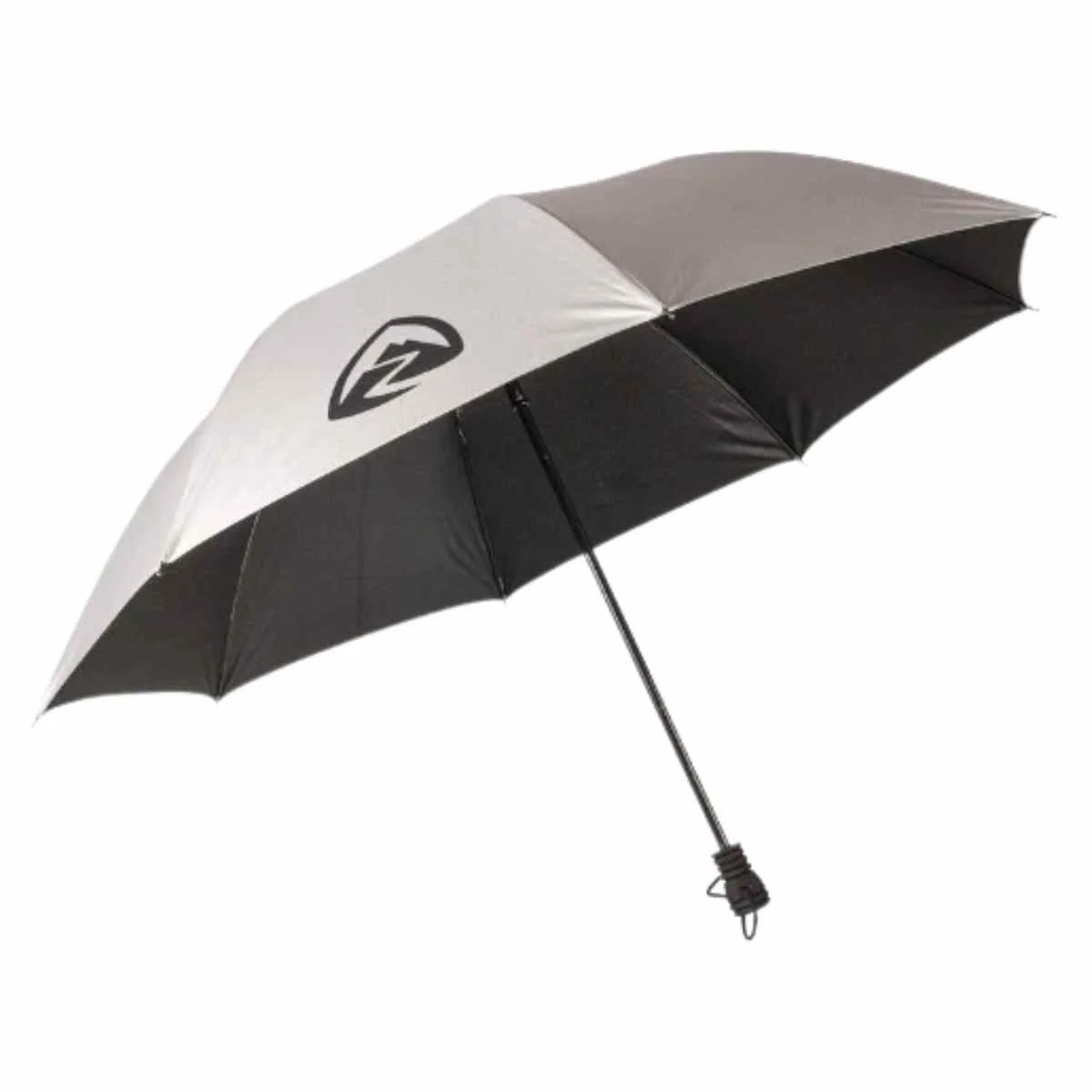
Weight: 6.8 oz | 192 g
Length when open: 25" (63.5 cm)
Length when closed: 25" (63.5 cm)
Canopy size: 38"
UPF: 40
What we liked: Tip is lower profile and can be used to set up ultralight tarps, larger canopy
What we didn’t like: Lower UPF rating than other umbrellas, price
The Zpacks Lotus Umbrella is a great hiking sun umbrella and pretty similar to other umbrellas we tested. It weighs the same as many umbrellas at 6.8 oz. It comes with a handy umbrella holster. The key difference is that it has a slightly longer shaft by 1" and a slightly wider diameter canopy than the others we tested (38" vs. 37" in Six Moons and Gossamer Gear umbrellas).
The one visually notable difference is a smaller metal tip point instead of foam, which actually is a huge advantage if you're using your umbrella to set up a shelter. Many ultralight tarps are set up with trekking poles, and the tip of this umbrella is more like a trekking pole tip.
Zpacks Lotus UL Umbrella
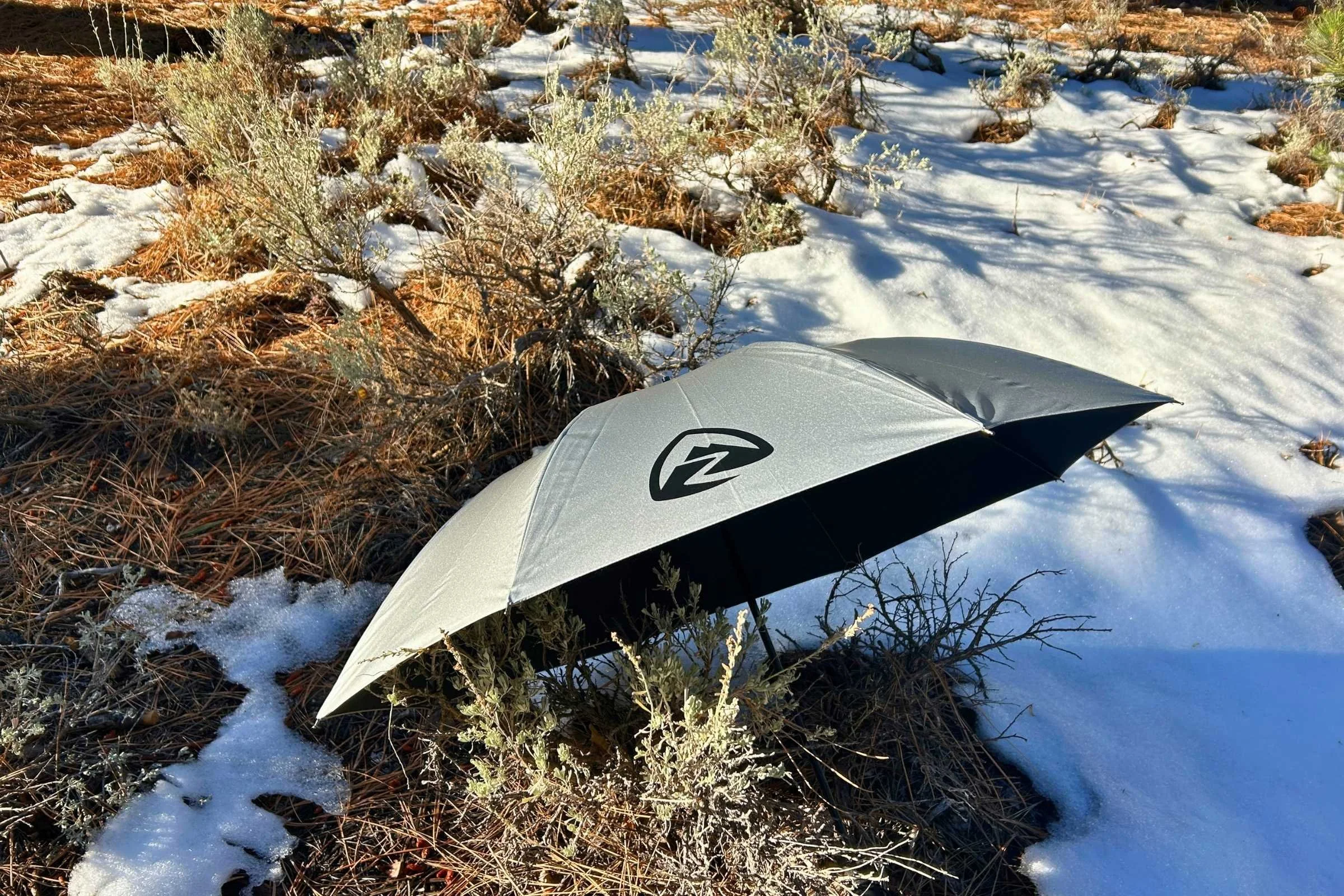
The Zpacks Lotus hiking umbrella on a high altitude trail in the Eastern Sierra.
It comes with a 2-year warranty. However, it has a lower UPF rating than the other umbrellas we tested, at UPF 40. UPF 40 means that approximately 97.5% to 98% of both UVA and UVB rays, or 1/40th of the rays, come through. Like Six Moon Designs and Gossamer Gear umbrellas, it has its own holster (sold separately), which weighs 0.21 oz / 6 grams. It has a button and locking mechanism, unlike the Six Moon Designs and Gossamer Gear umbrellas, and took some extra force to keep open. Once open, it locks securely.
The Lotus umbrella is made of fiberglass components and a polyester canopy fabric with water repellent treatment. We've seen some reports that the DWR is Teflon, which is not PFAS free.
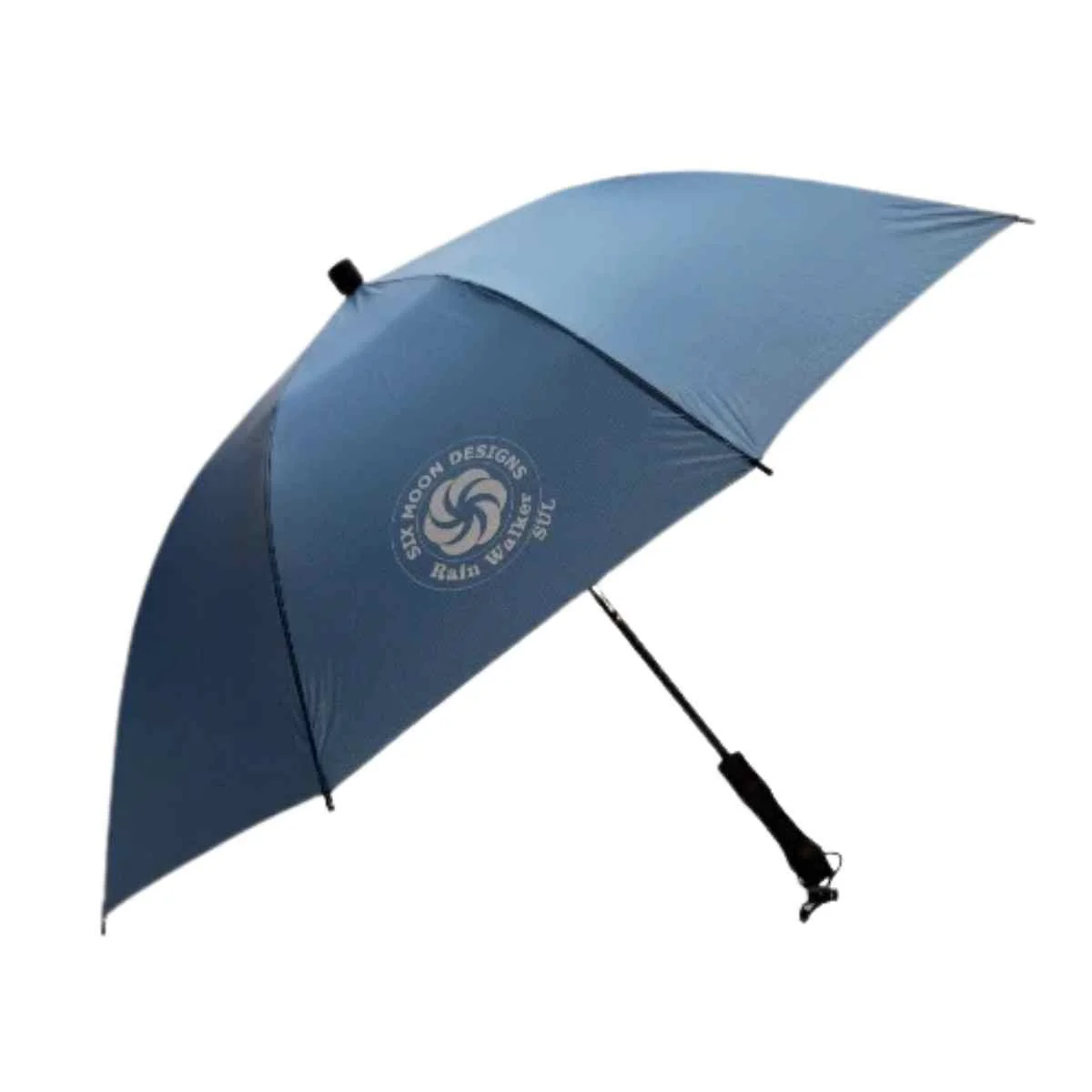
Weight: 6 oz | 171 g
Length when open: 25" | 63.5cm
Length when closed: 25" | 63.5cm
Canopy size: 7.5 ft² or .7 m²
UPF: not listed
Water column: 3,000 mm
Shaft material: Carbon fiber
Ribs material: Carbon fiber
What we liked: trekking pole handle, fiberglass components, ultralight weight
What we didn’t like: price, not as durable
The Six Moon Designs Rain Walker SUL Umbrella was, until recently, the absolutely lightest full-length umbrella you could buy at 5.6 oz. The newest version is slightly heavier at 6 oz. The main thing to know about the Rain Walker SUL is that it is designed for rain and not sun. It doesn't have a UPF rating, though it does offer some sun protection. It is also made of a light denier fabric that isn't as durable as the reflective material used on sun umbrellas for hiking.
Six Moon Designs Rain Walker SUL Umbrella
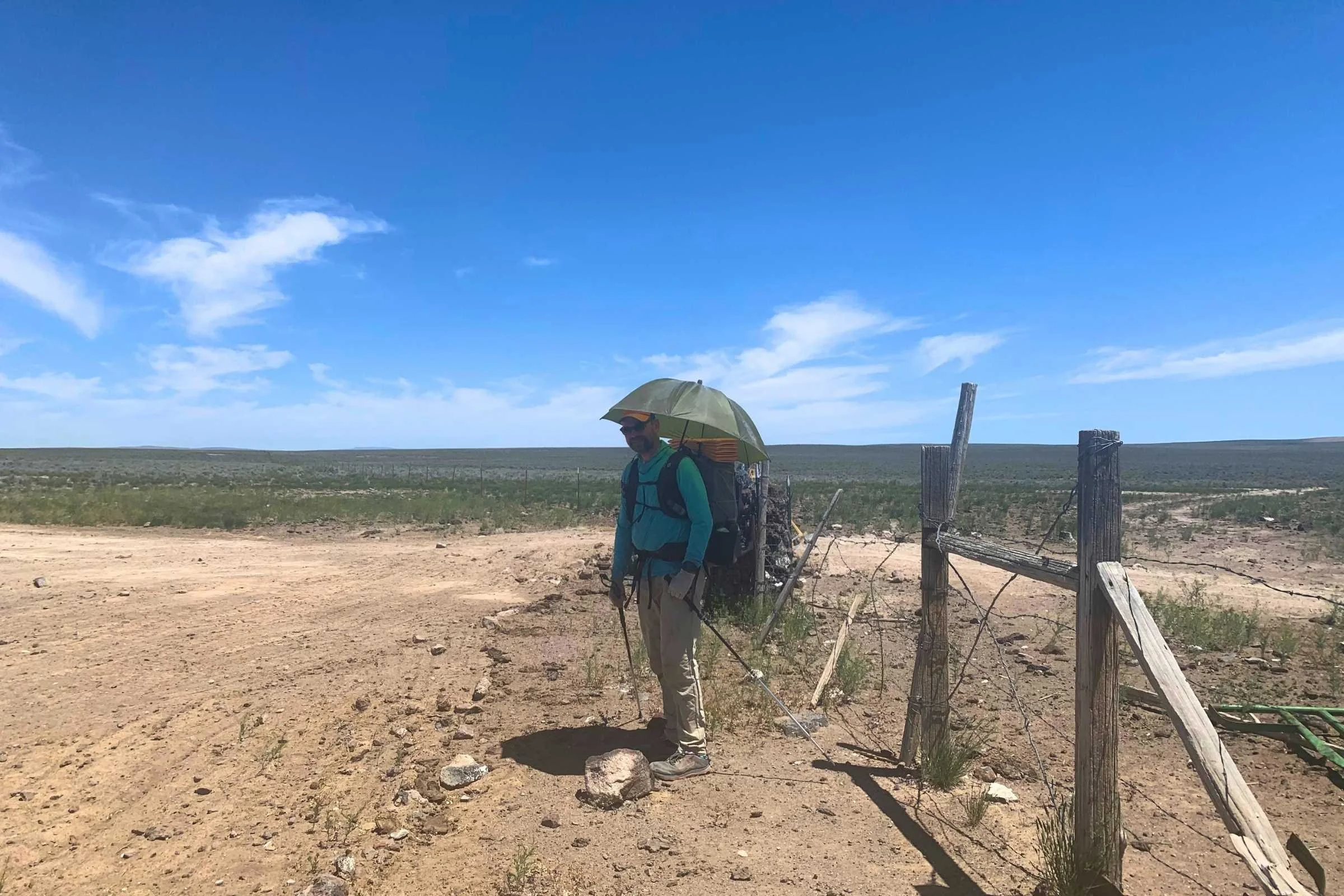
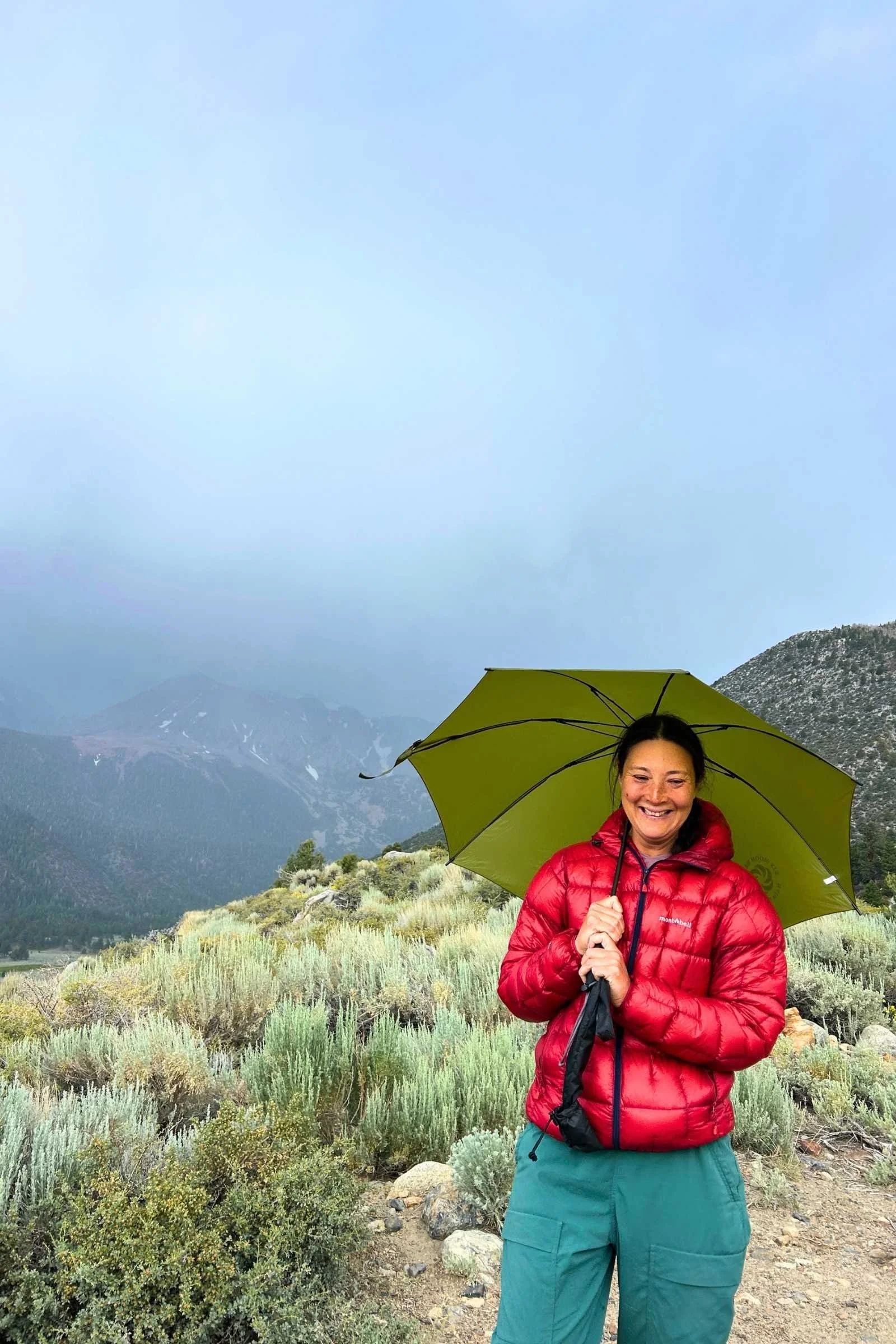
It's a niche product designed for people who want a more breathable alternative to wearing rain gear. A hiking umbrella works great in warm rain and humid climates, when wearing rain gear can otherwise feel swampy. We also liked this umbrella to use in addition to rain gear to prevent our rain jackets and rain pants from wetting out and to minimize the amount of cold rain directly hitting our bodies.
It's worth noting that as a rain umbrella, it absorbs infrared rays instead of reflecting them, like you'd find in a silver umbrella. This causes heat to radiate down instead of bouncing off. The end result is non-silver umbrellas can sometimes feel warmer underneath, while sun umbrellas usually feel cooler underneath.
Still, if you need a hiking umbrella for rain only, especially in humid conditions, this is a great wind-resistant and lightweight option.
GoLite Chrome Dome Umbrella
We tested a lot of classic umbrellas and it doesn't get more classic than the GoLite Chrome Dome. Alas, the company folded and the Chrome Dome (originally made by a brand called Euroshirm) is gone. Still, we had our old Chrome Dome to compare side-by-side with more modern inventions. The Chrome Dome, on my scale, weighs 9.0 oz, which is 0.2 oz more than even the heavier of the similar-looking hiking umbrellas. Perhaps that is because it has accumulated thousands of miles of trail grime. It was also difficult to test the waterproofing on my Chrome Dome, what with it having sustained holes from being carried for across the PCT, CDT, and many other trails and routes. We salute you Chrome Dome and are grateful that you spawned an entire generation of similar-looking hiking umbrellas.
Why you need a hiking umbrella
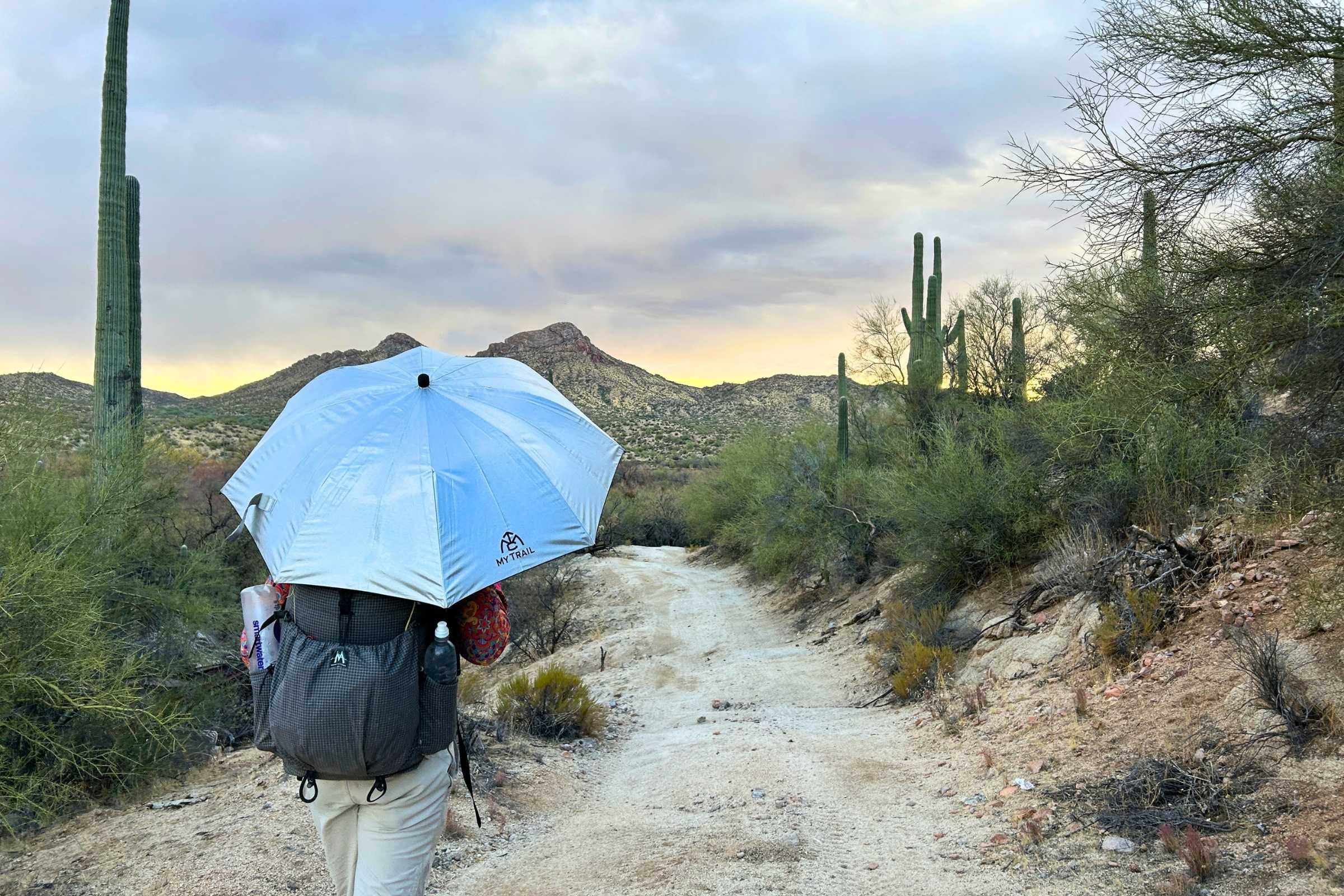
One of our testers with a now discontinued sun umbrella on the Arizona Trail.
A hiking umbrella is primarily used to provide your own personal shade while hiking on sunny trails. You've heard the saying that it is 10F degrees cooler in the shade. A sun umbrella can help reduce exposure to direct sun and lower the temperature of your skin as you hike, even in desert or high-altitude areas where there are no trees to provide shade.
Hiking umbrellas are also useful against rain. Rain can make hikers feel cold, even when you're wearing a rain jacket. That is because cold rain on your rain jacket can still cause heat transfer from your body. An umbrella keeps that rain off your rain jacket, which also helps protect it from "wetting out" as quickly.
Another reason we like hiking umbrellas is that you can angle them in front of your face in windy conditions. This can prevent sand and dirt from flying into your face and make walking into the wind slightly more pleasant.
I've also used my hiking umbrella as an extra layer of protection when using an ultralight tarp with limited coverage. It's pretty common for people who use tarps to put their umbrella at the head of their shelter for extra protection, or some put it at their toe box for extra waterproofing.
What to look for in hiking umbrellas
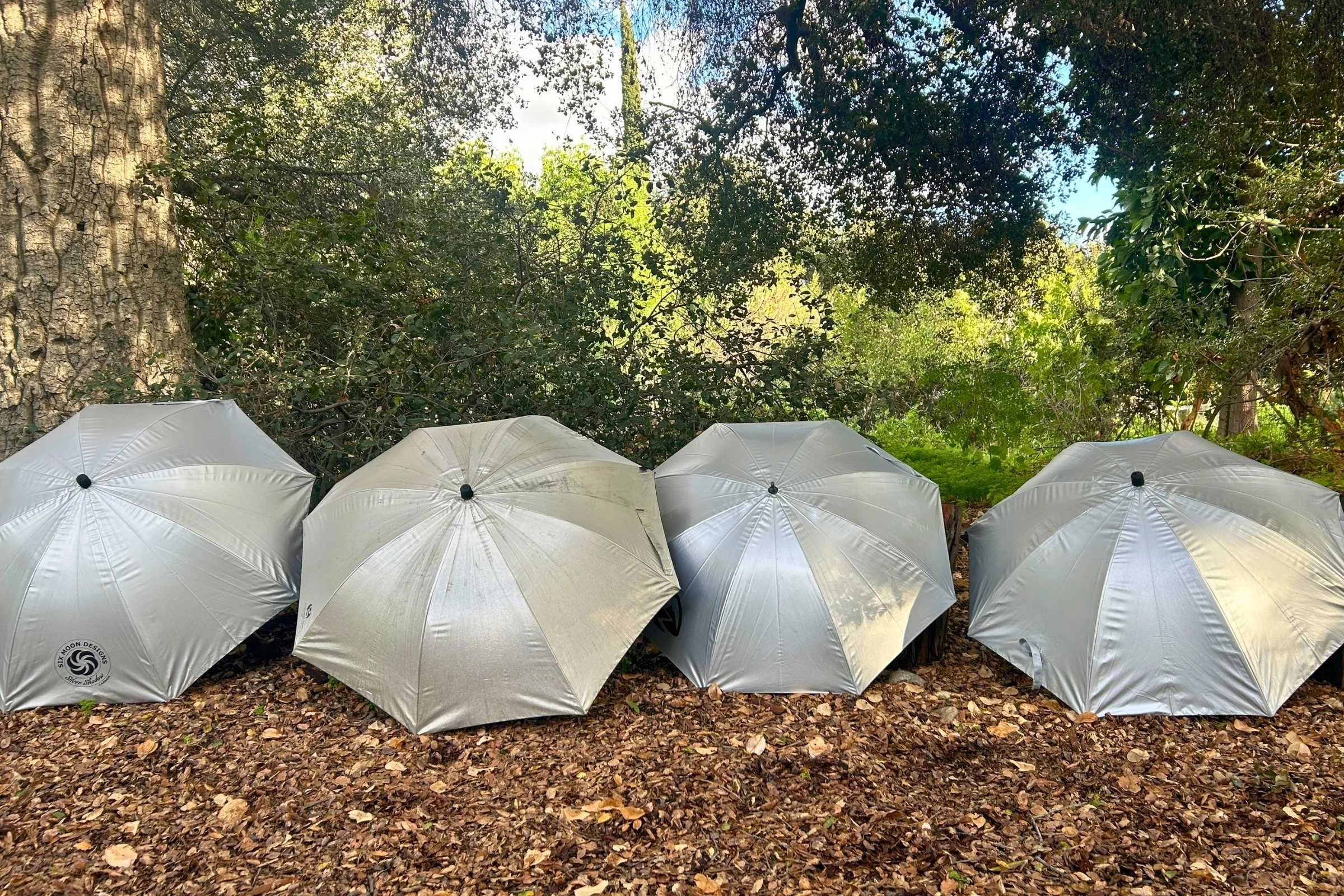
Testing hiking umbrellas side-by-side to compare canopies.
Weight
Hikers—especially backpackers and thru-hikers—will prioritize the weight of an umbrella over many other features. Most hiking umbrellas weigh around 8 oz, with the lightest ones being sub-6 oz.
Size when opened
Hiking umbrellas differ significantly in dome size. Depending on your body size and shape, you may prefer an umbrella with a dome of a wider diameter, or you may be able to get away with a smaller diameter. If you're carrying your umbrella for just-in-case rain, a smaller one may be good enough. If you expect to use it for hours a day in sun and other conditions, you may opt for a wider-diameter umbrella.
Packability and compactness
Hiking umbrellas are designed to be more packable and compact than umbrellas you'd use for commuting and everyday use. They often fold down to smaller sizes that fit in the water bottle pockets or mesh of your backpacking backpack. You want to have easy access to your umbrella. After all, if you don't use it, then an umbrella is dead weight and not helping your backpacking trip.
Material durability
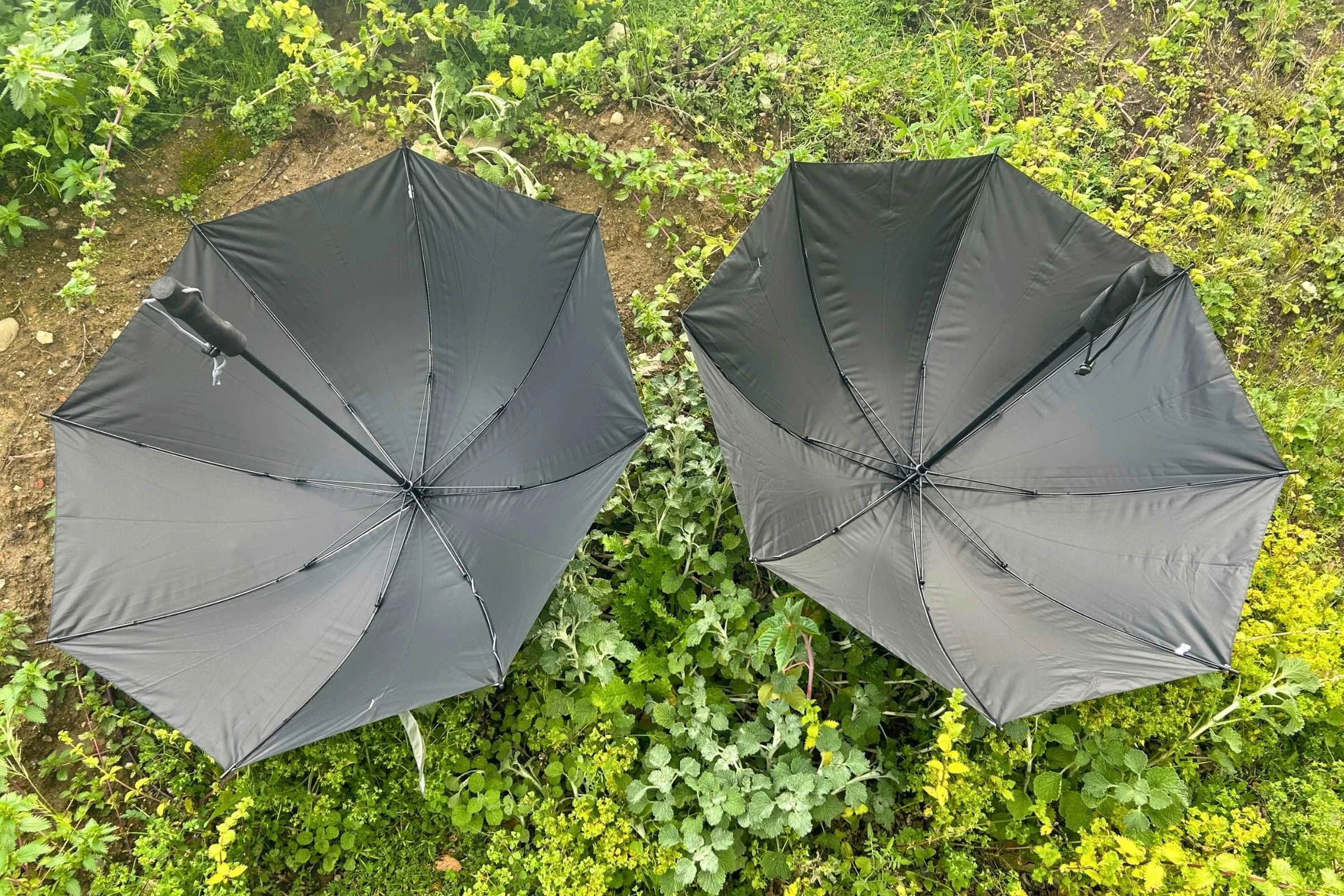
Comparing the Six Moon Designs Silver Shadow with the Silver Shadow Carbon, you can see the similarity in the design.
Over more than a decade of using chrome dome-style hiking umbrellas while on thru-hikes, we've seen umbrellas develop holes. It's partially our fault. Most hikers store umbrellas on the outside of their backpacks, and when they throw their pack down on the ground, the material can abrade or develop holes from sand or pine needles. We think an umbrella should reasonably last a 2,000+ mile thru-hike. Depending on how careful you are with the material, it may remain free from holes over even more hikes.
Wind resistance
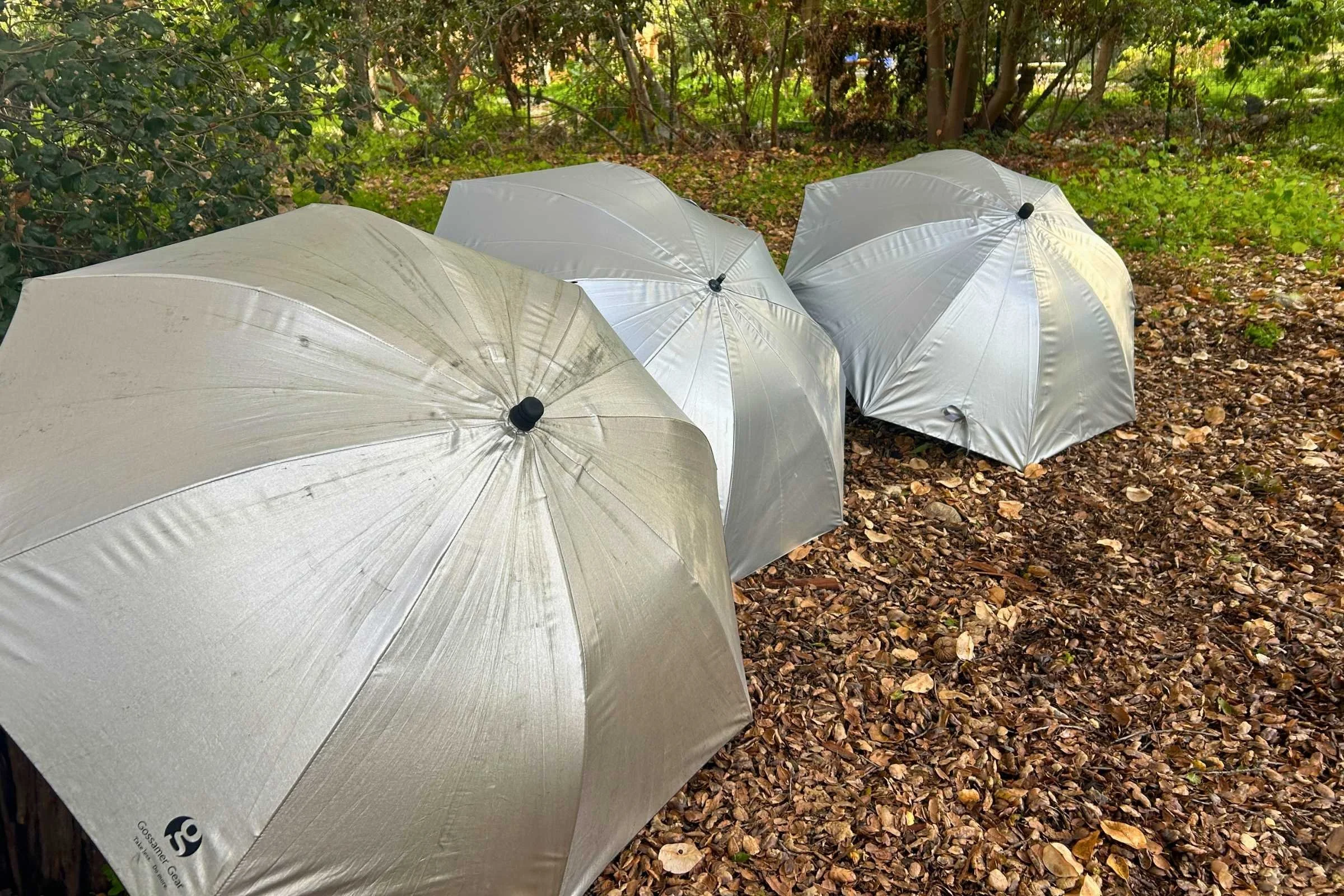
A minor difference in the angle of the slope of the umbrella can make a big difference in wind resistance of hiking umbrellas.
The weather resistance of your umbrella depends on several design features, including dome diameter and the angle of the dome. A wider umbrella will usually cover more of you and your backpacking backpack, so it can provide more shelter, even when the wind is blowing. A dome with a more curved, concave design will better protect your face and body and function like a personal bubble, at least for the upper half of your body.
Additionally, steeper walled umbrellas tend to do better in the wind than shallower umbrellas,. This may seem counterintuitive, but think of how it applies to tents. A pyramid-style ultralight tent or tents with steeper walls are actually more wind-resistant than lower angled tents. For example, Durston tents say their tents are built at 50–55 degree angled panels that shed gusts rather than catching them, which creates structural rigidity. A similar, steeper angle helps umbrellas.
Weather resistance and waterproofing
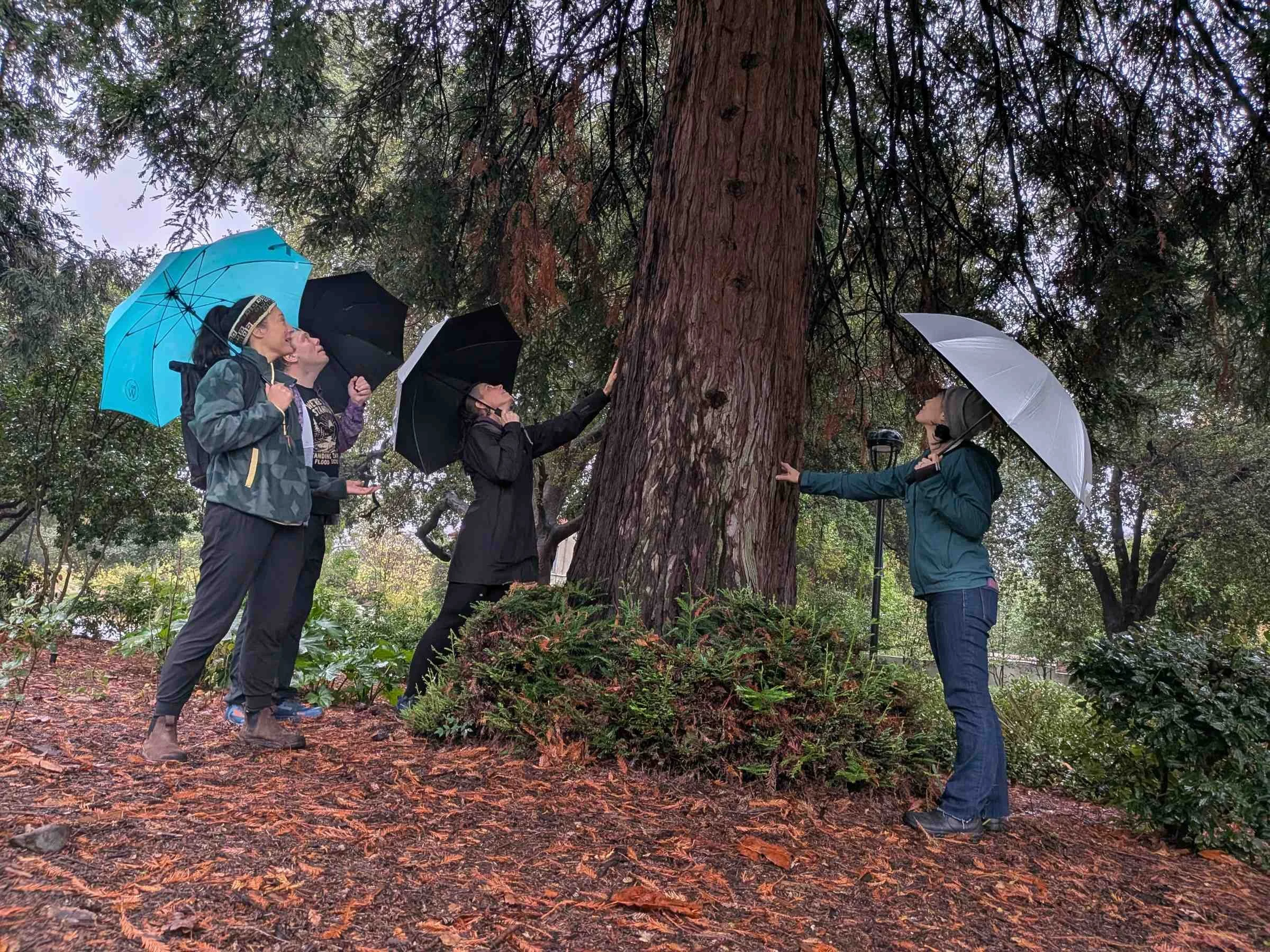
We tested hiking umbrellas on a rainy day trip to visit this redwood tree. Photo by Kate Hoch.
All the umbrellas we tested had extremely waterproof material, and none of them wet out, so the material does not seem related to the weather resistance of your umbrella. Some umbrella makers report their water column.
UV protection
Hiking umbrellas primarily serve as a way for hikers to have their own personal shade while walking through the desert. Mylar and chrome-colored fabrics provide greater sun protection by absorbing UV rays and preventing them from coming through and hitting the hiker. Lighter-colored domes or colored fabrics tend to be thinner and provide less UV protection, but still offer some additional protection over clothing alone. Lighter-colored umbrellas are good options if you are mostly using your hiking umbrella for rain protection. An umbrella is meant to work alongside your sun shirt and body sunscreen to protect your body from harmful rays. While a sun umbrella may protect your face from UV rays, we recommend using it in conjunction with face sunscreen and SPF lip balm.
Ease of use
Some umbrellas are easier to use than others. Some have better grips that are more comfortable to use. Some are easier to open or close than others. Some have tricky locking mechanisms or fold up in complicated ways. Some attach more easily to backpack shoulder straps than others. Ultimately, the umbrella that is easiest for you to use is the one you are most likely to use. After all, an umbrella that you are carrying without using is just dead weight in your pack.
Handle design and grip
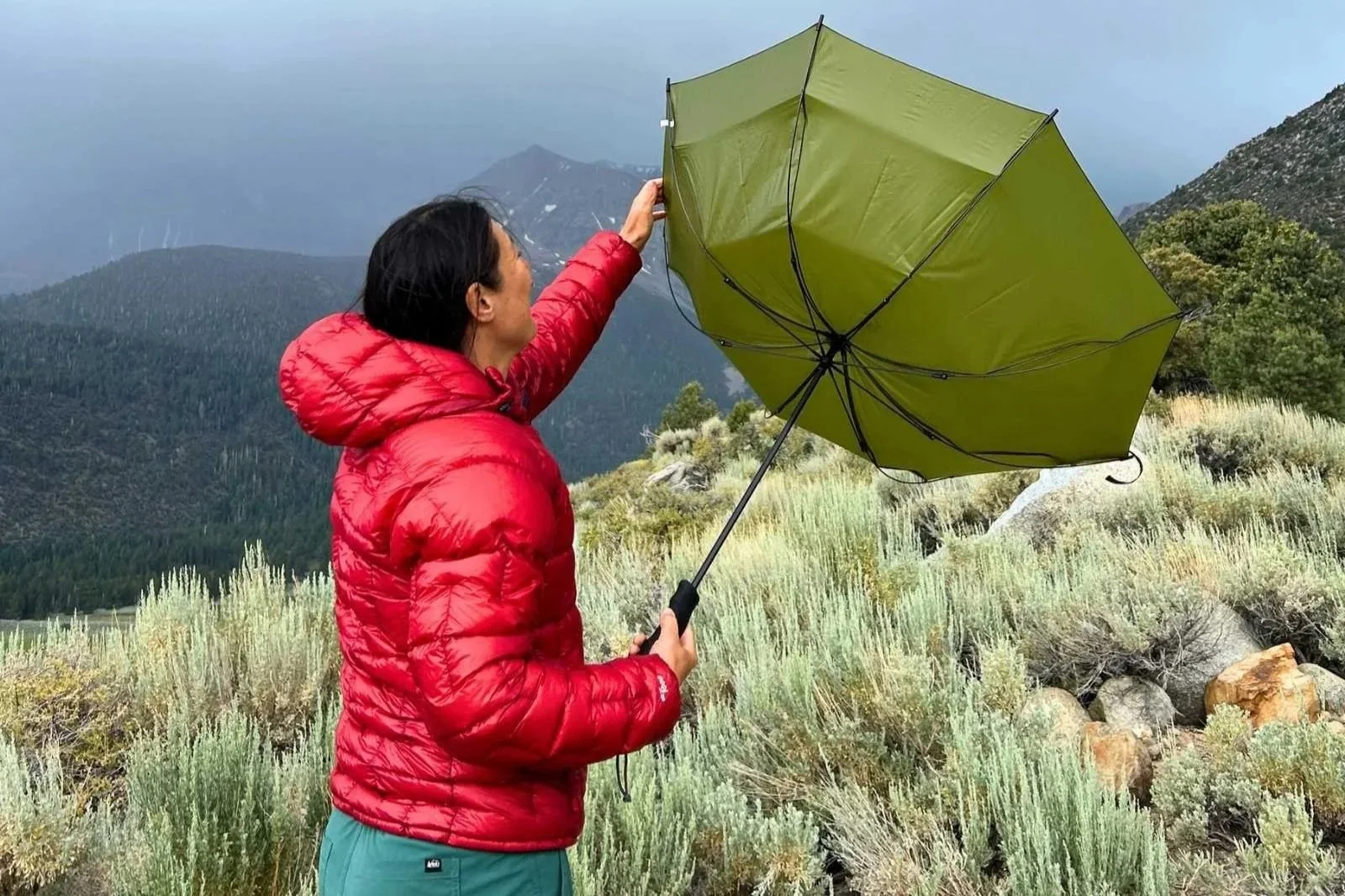
Hiking umbrellas are susceptible to flipping inside-out in high winds.
We tested short and long-handle umbrellas with different shaped foam grips. Long handles are easier to attach to backpacking backpack straps, but add weight. Short handle grips may stay more secure and may be less likely to flip inside out in wind, but also offer less coverage.
Attachment options for backpacks
Some brands like Six Moon Designs,Gossamer Gear, and Zpacks offer hands-free cord systems that let you attach your hiking umbrella to your backpack shoulder straps. These hands-free systems mean you can have the benefits of sun or rain protection from the umbrella while still using trekking poles. Other brands don't sell hands-free umbrella cords, but most umbrellas are compatible with the cords sold by Gossamer Gear and Six Moon Designs. You may also be able to fit your umbrella into a water bottle or stretch pocket on vest-style shoulder straps.
Price and value
Umbrellas range in price from around $40 to $60.
Eco-friendliness
At Treeline Review, we strive to champion eco-friendly gear made of sustainable materials. Unfortunately, most of the umbrellas we researched have very little information about sustainability. In this case, a more durable, long-lasting umbrella is the most eco-friendly purchase as it can reduce the need to keep buying new umbrellas year after year. We note any recycled materials or other sustainability features the brands mention.
Warranty and repairability
Other than Repel, which has a lifetime warranty, most hiking umbrellas don't have much of a warranty. However, most canopies are easily repaired with a patch from Gear Aid.
How to use a hiking umbrella effectively
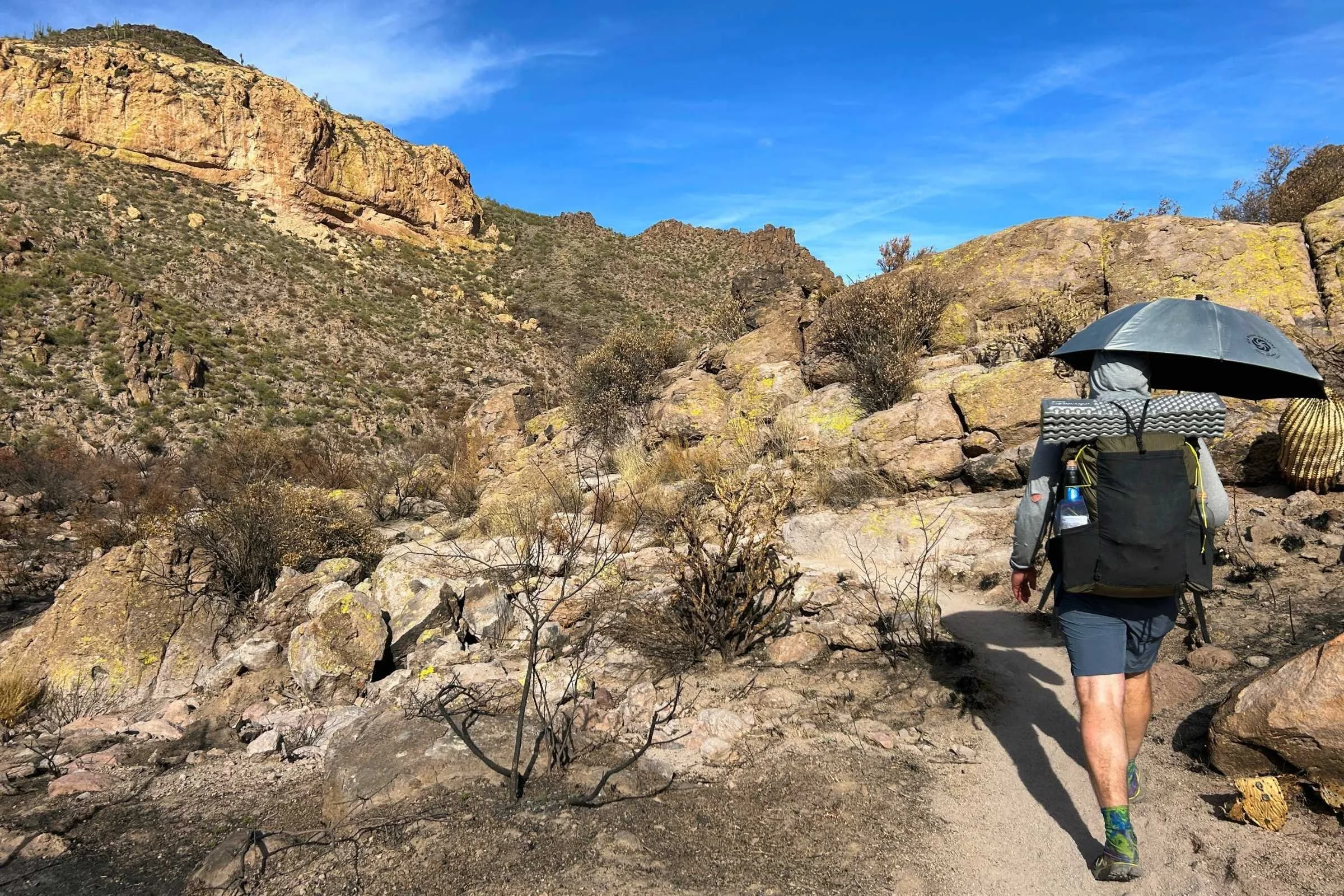
Testing the SMD Silver Shadow hiking umbrella on the Grand Enchantment Trail in Arizona. Photo by Kate Hoch.
How to hold a sun umbrella effectively
Holding a hiking umbrella is similar to using an umbrella for commutes or everyday use, with a few extra things to keep in mind. If you are using your hiking umbrella to protect yourself from the sun, remember that the sun isn't always 12 o'clock overhead. Angle your umbrella so that the top of the dome faces the sun. If you're using your hiking umbrella in the rain and wind, angle your umbrella against the wind.
Depending on the size of your umbrella's dome and the height and size of your backpack, you may be able to cover the top of your pack with your umbrella. This can offer extra protection for your gear in addition to what you may have from your pack liner or pack cover.
How to attach an umbrella
Six Moon Designs,Gossamer Gear, and Zpacks sell hands-free hiking umbrella attachment kits that include a cord and a few toggles to secure your umbrella in place. These kits usually weigh about an ounce, but allow you to be hands free while using your umbrella. This is useful if you want to use trekking poles. In the rain or snow, if your hands are cold, you can keep them in a handwarmer pocket while still getting protection from the umbrella.
How to store an umbrella during a hike
I find that I'm more likely to use my umbrella if it is easily accessible while I'm hiking. I store it on the outside of my backpack in a water bottle side pocket. I found it best for the durability of the umbrella to store the handle side down in the pocket and the pointy top part of the umbrella facing up towards the sky.
For backpackers and thru-hikers, keep in mind that the foam grip of your umbrella can absorb sweat, which contains salt. Before I go to sleep in camp, I bring my umbrella into my tent or close to where I am sleeping to prevent animals from chewing on the foam grip to get the salt from my sweat. This has happened to me!
FAQ
-
For most hikers, yes—especially if you hike in hot, sunny, or rainy conditions. A hiking umbrella creates a personal shade bubble that can make you feel up to 15°F cooler on exposed trails with no trees. In the rain, an umbrella keeps cold water off your rain jacket, slowing the rate at which it wets out and helping you stay warmer. The tradeoff is weight (typically 6–9 oz) and the occasional awkwardness of holding it on windy or technical terrain. Most thru-hikers who try one don't go back.
Some of our testers say their umbrella is their favorite piece of gear!
-
Hiking umbrellas are lighter, more compact, and built from tougher materials than standard commuter umbrellas. Most hiking umbrellas weigh between 5–10 oz, compared to 12–20 oz for a typical commuter umbrella. Most hiking umbrellas are designed with UV-reflective silver or chrome canopy material that provides UPF 50+ sun protection—something most regular umbrellas don't offer. The shafts and ribs are typically made from fiberglass or carbon fiber rather than metal, making them more flexible in wind and less likely to snap.
-
Most full-size hiking umbrellas have a canopy diameter of 37–38 inches, which is large enough to cover your head, shoulders, and (hopefully) the top of your backpack. If you're using it primarily as a just-in-case rain umbrella and weight is your top priority, a smaller or collapsible umbrella will work. If you run hot or hike in exposed sun for hours at a time, a larger, reflective umbrella will serve you better.
-
Yes, with the right setup. Brands like Six Moon Designs, Gossamer Gear, and Zpacks sell hands-free attachment kits (usually around 1 oz) that use a cord and toggle system to secure your umbrella to your backpack shoulder strap. This leaves both of your hands free for trekking poles, eating a snack, or using your phone. Most hiking umbrellas are compatible with these third-party attachment systems, even if the brand doesn't sell its own.
-
The Gossamer Gear LightTrek is currently the lightest full-size hiking umbrella on the market at 5.8 oz. The Six Moon Designs Silver Shadow Carbon comes in close behind at 6.0 oz, and both offer UPF 50+ protection. If you're willing to sacrifice some sun protection for even less weight, the Six Moon Designs Rainwalker is designed primarily for rain and comes in at around 6 oz.
-
Yes, though with some caveats. Hiking umbrellas designed for sun—like the Six Moon Designs Silver Shadow and Gossamer Gear LightTrek—are also highly waterproof (the Silver Shadow has a 5,000 mm hydrostatic head rating, which is better than many backpacking tents).
The main limitation is coverage: an umbrella won't protect your legs in a heavy downpour the way rain pants will. Used together with a rain jacket and rain pants, an umbrella keeps cold rain off your torso and face, reduces how quickly your rain gear wets out, and can make a miserable rainy day significantly more comfortable.
-
No. You should never use a hiking umbrella—or be on an exposed ridge with trekking poles, for that matter—during a thunderstorm. If your umbrella has a metal shaft, there is an additional consideration, since metal conducts electricity. Most dedicated hiking umbrellas use fiberglass or carbon fiber shafts, which do not conduct electricity, but that still doesn't make umbrella use safe in lightning. According to this article, "lightning is attracted to tall structures, isolated structures, and pointy structures." If a storm approaches, get off exposed terrain and head to lower ground.
-
The most common method is using a hands-free cord system sold by Six Moon Designs, Gossamer Gear, or Zpacks. The cord threads through a loop on the umbrella handle and attaches to your shoulder strap with a toggle, positioning the umbrella overhead while you hike. Some hikers also wedge their umbrella handle into a vest-style shoulder strap pocket or a hip belt pocket for quick access. For storage between use, a water bottle side pocket works well — store it handle-down with the tip pointing up to protect the canopy material.
-
A well-made hiking umbrella should last several thru-hikes or many years of regular use. The most common failure points are the ribs (fiberglass ribs outlast metal ones) and the canopy material, which can develop pinholes. Avoid throwing your pack down on rough ground with the umbrella exposed. Most damage is repairable with a Gear Aid patch. The Repel Windproof umbrella comes with a lifetime warranty, which is unique among the umbrellas we tested.
Care and maintenance of hiking umbrellas
After your hike, completely dry your umbrella before putting it away, especially if you store it in a stuff sack. This prevents mold from growing on your umbrella. Gross!
It's worth checking all the buttons and spokes of your umbrella to make sure nothing is broken or jammed. Clean off any dirt or pine needles that may be on the outside of your umbrella. While they are unlikely to cause damage in the short term, they can sometimes cause punctures or abrasions of the material over time.
How we researched and tested
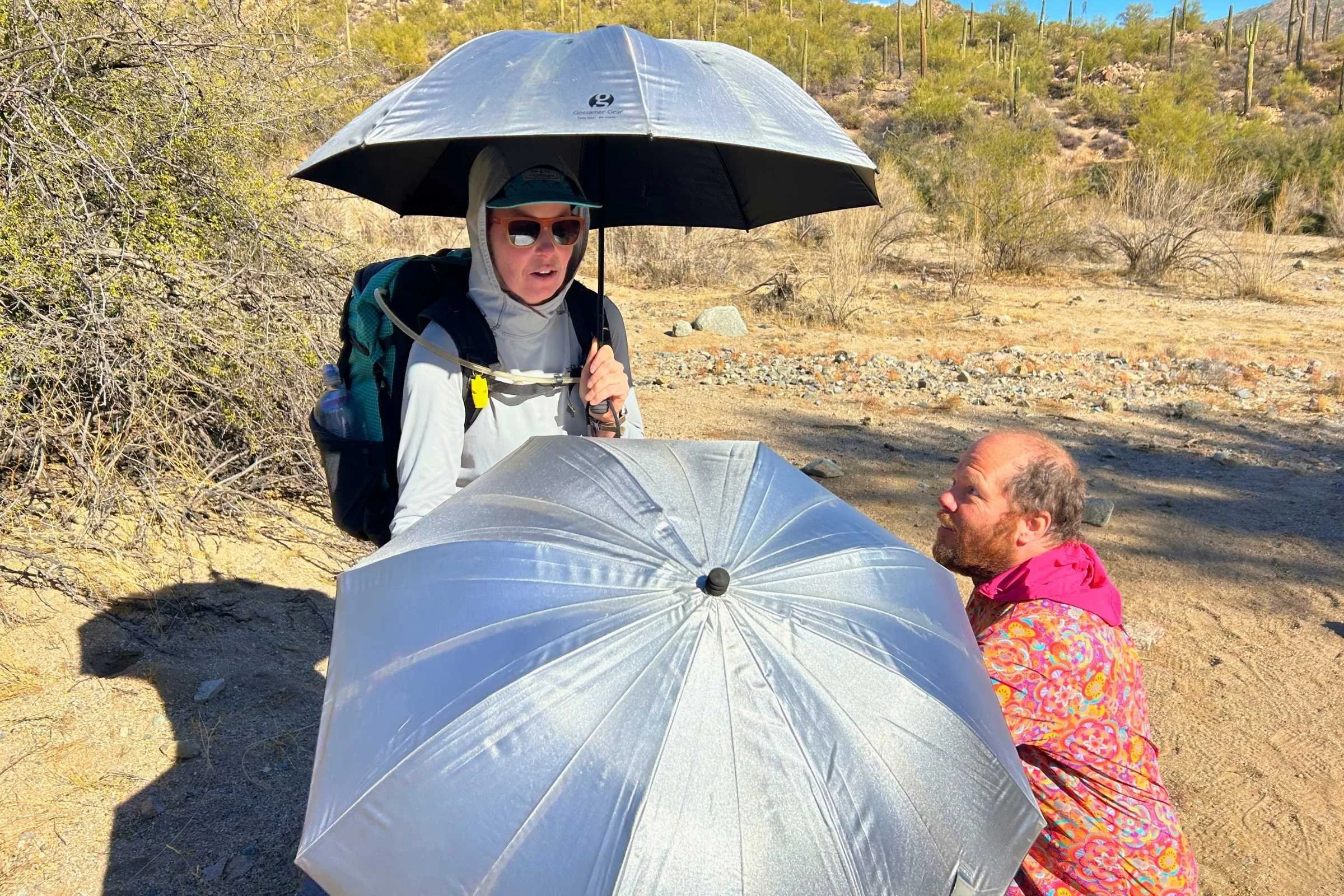
Treeline Review writer Tiffany Searsdodd testing hiking sun umbrellas with a friend on the Arizona Trail.
We've used hiking umbrellas for thousands of miles of thru-hikes from the Pacific Crest Trail and Arizona Trail to a hike across Death Valley, to hikes across Anza Borrego Desert, including the San Diego Trans County Trail, and traversing Joshua Tree National Park on the Boy Scout Trail and California Riding and Hiking Trail. We've also tested hiking umbrellas in wetter conditions, including thru-hikes of the Appalachian Trail and the Superior Hiking Trail. Other Treeline Review users have used umbrellas on the Continental Divide Trail and the Oregon Desert Trail.
Curious about which hiking umbrella is the best, we spent the past year and a half systematically testing 12 sun hiking umbrellas side by side. We tested everything from sun umbrellas with chrome-colored domes to ultralight and ultra-compact rain umbrellas for just-in-case emergencies.
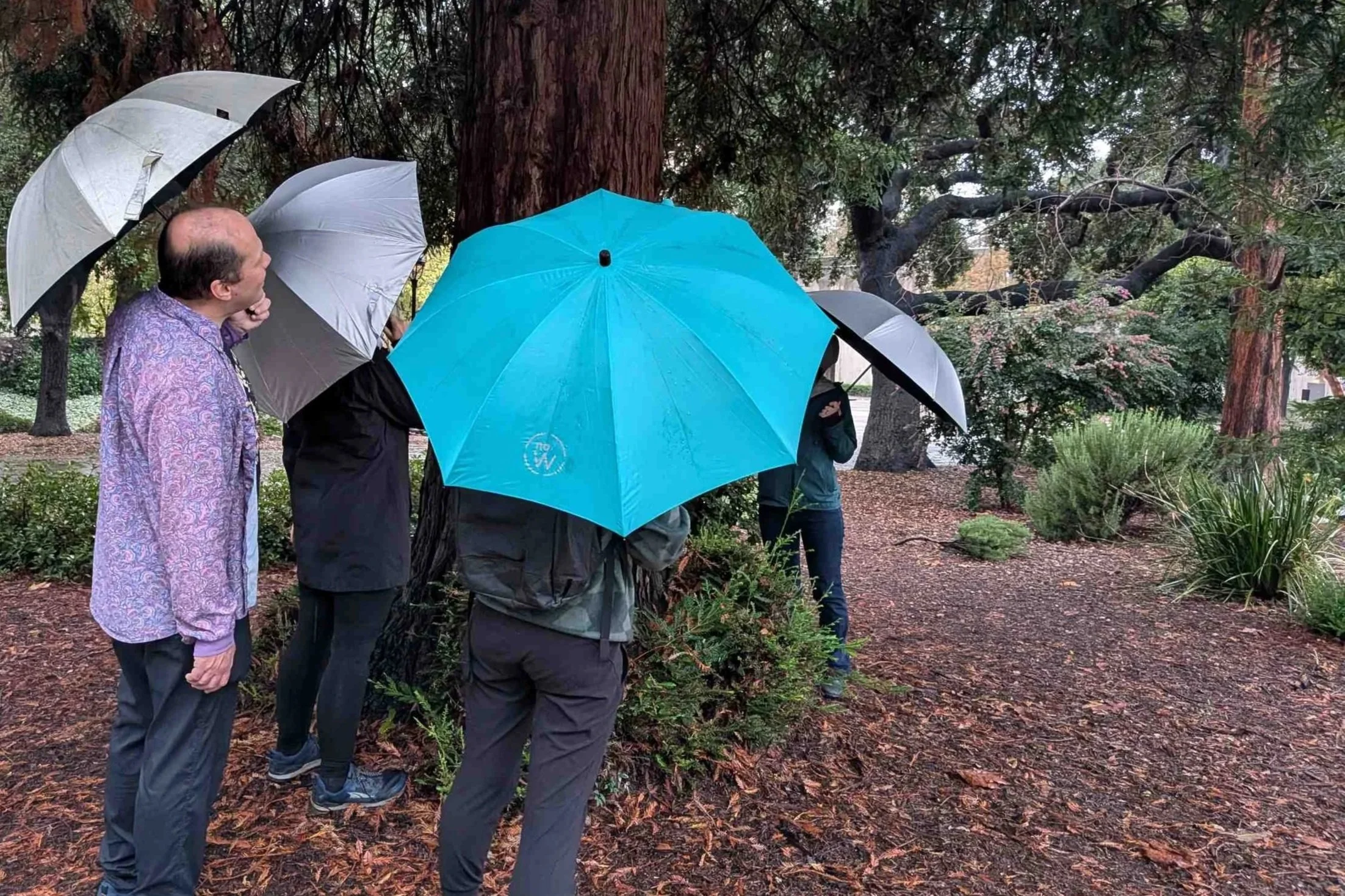
We tested hiking umbrellas in the sun and in the rain, as seen here. Photo by Kate Hoch.
We tested easily available umbrellas alongside the classic GoLite Chrome Dome (no longer available). We also compared umbrellas with harder to find umbrellas that were once commonly seen on long distance trails, like Montbell Trekking Umbrellas, Montbell Travel Umbrellas, and N/OW Umbrellas.
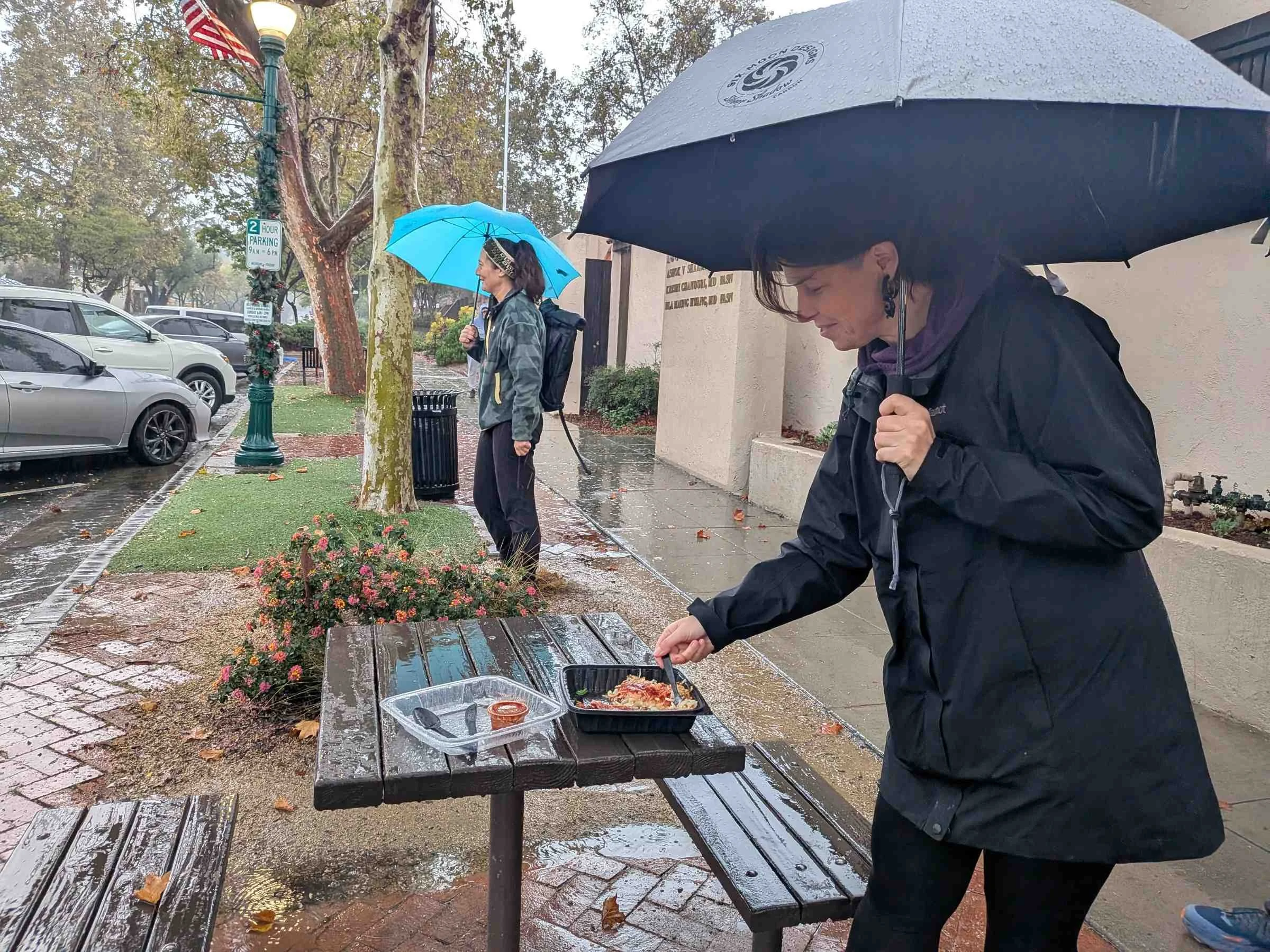
We tested umbrellas not just on hikes in the sun and rain, but also for everyday use around town. Hey, thru-hikers will use an umbrellas on town days, too. Photo by Kate Hoch.
We tested in extreme heat, high altitude, and wet weather. We had testers of different levels of experience and with different weights of backpacking backpacks test hiking umbrellas.
We also judged umbrellas by weight and compactness. We tested how well they connect to backpacking backpack straps and how well they stay in place for hands-free umbrella carry systems.
- Thru-hikes on PCT, AZT, CDT & more
- Side-by-side comparison of all models
- Tested in extreme heat, wind & rain
- Evaluated hands-free attachment systems
- Tested on day hikes & backpacking trips
- Wind resistance & flip resistance
- UV & sun protection (UPF rating)
- Weight & packability
- Durability of ribs & canopy material
- Ease of backpack attachment
Why you should trust us / About the author
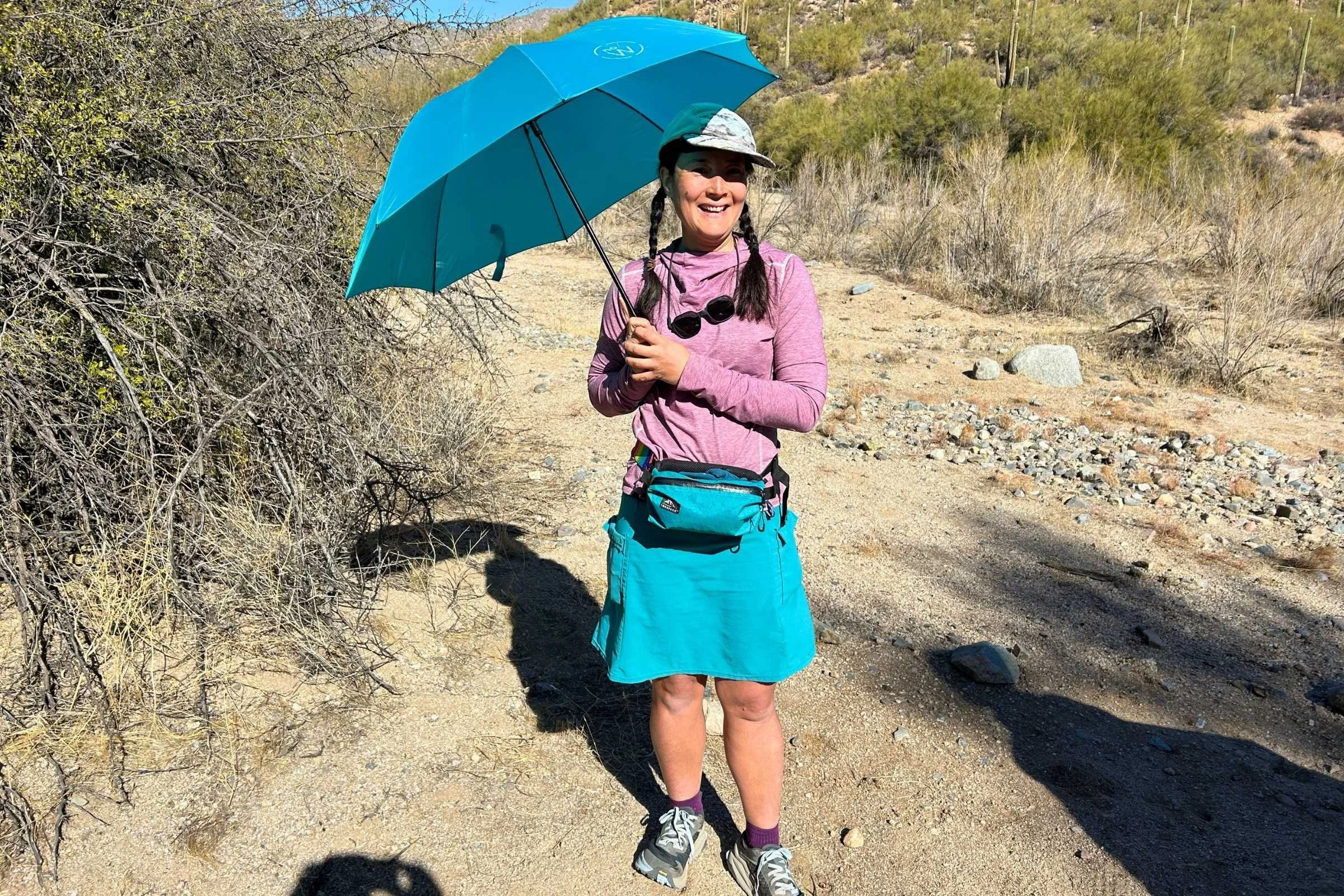
Liz Thomas, sporting a hiking umbrella, while hiking an off-trail route in Arizona. Photo by Kate Hoch.
Liz Thomas is an award-winning Los Angeles-based writer and Editor-in-Chief of Treeline Review. A former Fastest Known Time (FKT) record holder on the Appalachian Trail, Liz came to Treeline Review from New York Times/Wirecutter, the New York Times’ product review site, where she was a staff writer on the outdoor team.
To test umbrellas, Liz and half a dozen other Treeline Review testers took umbrellas on thru-hikes over thousands of miles, including on the PCT, CDT, Arizona Trail, San Diego Trans County Trail, Grand Enchantment Trail, and Oregon Desert Trail. We also tested on day hikes in Southern California and backpacking trips in Joshua Tree National Park.
Liz was a guest editor at Backpacker Magazine, where she is currently the columnist of “Ask a Thru-hiker” and instructor of their online class, Thru-hiking 101.
Her first book is Long Trails: Mastering the Art of the Thru-hike. The book was the recipient of the National Outdoor Book Award for Best Instructional Book, and was deemed by judges as destined to become the “Bible of the Sport.”
She represented the sport of hiking at President Obama’s Great American Outdoors Initiative.
Liz’s keynote speaking engagements have included colleges and universities including Yale and MIT and on Capitol Hill, the Trust for Public Land, American Hiking Society, and BikeTexas.
You can read more about Liz at her website or on her wikipedia page. All her Treeline Review articles are on her author page.